
When Conservative Management Reaches Its Limit: The Case for Ksheera Basti
In chronic lumbar degeneration, a patient may arrive after physiotherapy, analgesics, bracing, injections, and repeated flare management have reduced the sharpness of pain but not restored comfortable sleep, easy walking, or confidence in daily movement. In Ayurveda, this kind of persistent low-back pain, stiffness, fatigue, disturbed sleep, and radiating discomfort is assessed through the lens of aggravated Vata, especially when the picture resembles Sandhigata Vata, Katigata Vata, Gridhrasi, or Asthi-Majja-gata Vata. The case for Ksheera Basti is strongest when the presentation is dry, degenerative, painful, sleep-disturbing, and function-limiting, yet without emergency neurological red flags.
Ksheera Basti is a supervised Panchakarma procedure in which milk is used as the principal medium of a therapeutic enema. Its clinical aim in this setting is to pacify aggravated Vata in the lower body, support depleted tissues with a nourishing and unctuous medium, reduce pain and stiffness, and improve the patient’s ability to rest, walk, and continue rehabilitative care. It should be understood as a classical Ayurvedic intervention for Vata management and functional support, not as a substitute for urgent spine evaluation when nerve compression is progressive or severe.
What Ksheera Basti Is and How It Differs from Other Basti Types
The word ksheera means milk, and basti refers to therapeutic enema therapy. Classical Basti is broadly discussed as one of the principal treatments for Vata disorders, with different forms selected according to the patient’s strength, digestive capacity, dosha pattern, disease stage, and therapeutic intention. Niruha or asthapana basti is decoction-dominant, anuvasana basti is unctuous oil- or ghee-dominant, and ksheera basti is named for the use of milk as the chief medium.
A proper Ksheera Basti is not plain milk used casually. In clinical practice, it is prepared with milk processed with appropriate herbs and may include suitable sneha such as ghee or oil, saindhava lavana, and other ingredients according to the practitioner’s formulation. The Ayurvedic rationale is that milk is described as sweet, cooling, unctuous, heavy, nourishing, ojas-supporting, and rejuvenative. When combined with Vata-pacifying sneha and properly selected herbs, it becomes especially suitable for presentations marked by dryness, depletion, pain, stiffness, and poor recovery.
Ksheera Basti differs from ordinary oral milk intake because it is administered as a formal Basti procedure after preparatory measures such as oleation and fomentation. Its effect is understood through the Ayurvedic action of Basti on Pakvashaya and Apana Vata, the lower-body governing aspect of Vata associated with the pelvis, colon, bladder, anus, and downward-moving functions. This is why Basti is traditionally central in disorders where Vata is seated in the lower body, joints, bones, marrow, nerves, and channels of movement.
Classical Rationale in Lumbar Degeneration
Classical Ayurvedic descriptions of Asthi-Majja-gata Vata include deep pain in bones and joints, joint pain, loss of strength, continuous pain, and insomnia. Sandhigata Vata is described with painful joint movement, swelling or distension around joints, and discomfort during flexion and extension. These descriptions do not use the modern term “degenerative disc disease,” but they provide a useful Ayurvedic framework for chronic lumbar pain with degeneration, stiffness, radiating discomfort, impaired walking tolerance, and sleep disturbance.
For Vata located in bone and marrow tissues, the classical treatment emphasis includes internal and external oleation. When morbid Vata is localized below the umbilicus, Basti is specifically recommended. Ksheera Basti therefore fits the therapeutic logic of a Vata-predominant lumbar condition where nourishment, lubrication, downward Vata regulation, and support of depleted tissues are needed together.
Formula Principles for Ksheera Basti in Disc-Related Vata Pain
There is no single universal “disc disease formula” that should be applied to every patient. The practitioner must assess age, strength, digestive fire, bowel pattern, pain quality, degree of stiffness, presence of radiating symptoms, medication use, imaging findings, and red flags before selecting the formulation. In a Vata-degenerative pattern, the guiding principle is to combine a nourishing milk medium with appropriate unctuous substances and herbs that match the patient’s dosha, dhatu, and srotas condition.
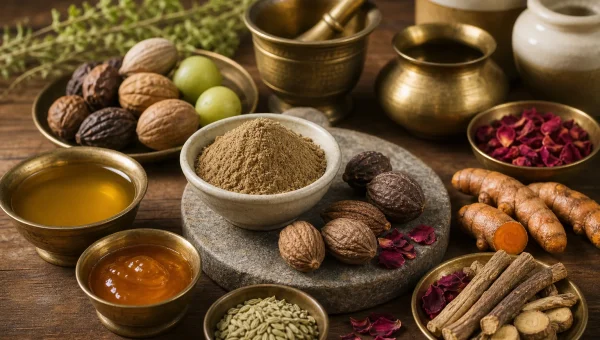
A clinically appropriate Ksheera Basti may be built around freshly prepared cow’s milk processed with selected herbs, with ghee or sesame oil added for snehana, and a suitable amount of rock salt to support mixing and Vata anulomana. When the emphasis is Asthi and Majja depletion, the practitioner may favor bitter and tissue-supportive herbs processed in milk or ghee. When the presentation includes weakness, poor sleep, and depleted strength, balya and brimhana herbs are considered. When stiffness, heaviness, or obstructive features are stronger, the formula is adjusted so that nourishment does not aggravate ama or congestion.
The quantity, temperature, retention expectation, and number of sessions are individualized. Classical Basti texts describe dose categories and different Basti schedules, but a lumbar-degeneration protocol should not be reduced to a fixed volume or fixed seven-day plan for every patient. A lighter patient with weak digestion, a constipated patient with dry Vata, and a heavier patient with ama or metabolic disease may require very different preparation, sequence, and aftercare.
Administration Protocol: Clinical Setting Requirements
Ksheera Basti requires clinical administration by a trained Ayurvedic practitioner. It is not a home enema, and it should not be attempted with kitchen-prepared milk or unsupervised herbal mixtures. The procedure requires proper assessment, fresh preparation, hygienic equipment, appropriate temperature, gentle technique, and observation before and after administration.
- The patient is assessed for strength, digestion, bowel habits, current medications, diabetes, infection risk, neurological symptoms, and contraindications before the procedure.
- Natural urges should be attended to before administration, and the patient should not be excessively hungry, overfull, exhausted, frightened, or acutely unwell.
- Preparatory snehana and swedana are commonly applied, especially over the lower back, abdomen, gluteal region, and thighs, to soften Vata stiffness and prepare the channels.
- The basti preparation is administered warm, not hot, after careful straining and proper mixing of milk, sneha, salt, and herbal components.
- The patient is placed in the left lateral position, the anal region and nozzle are lubricated, and the nozzle or catheter is inserted gently without force.
- The medicine is allowed to enter steadily through regulated pressure or gravity, avoiding sudden forceful instillation.
- After administration, the patient rests calmly, usually supine after the initial position, until the natural urge for evacuation appears.
- After evacuation, the patient is given suitable aftercare, which may include warm cleansing, rest, and light digestible food such as a simple soup or gruel according to dosha and digestive capacity.
- The procedure is stopped and medical evaluation is sought if there is severe abdominal pain, bleeding, fainting, fever, allergic reaction, worsening leg weakness, loss of bladder or bowel control, or new numbness in the saddle region.
| Clinical Presentation | Ayurvedic Reading | Role of Ksheera Basti | Essential Caution |
|---|---|---|---|
| Chronic low-back pain, stiffness, dry constitution, disturbed sleep, stable symptoms | Katigata Vata, Sandhigata Vata, or early Asthi-Majja depletion | Vata-pacifying, nourishing, lubricating support with supervised basti course | Continue posture correction, strengthening, and medical monitoring |
| Low-back pain with radiating leg discomfort but stable strength and bladder-bowel function | Gridhrasi or Vata involvement of deeper channels | Supportive Vata management along with external therapies and careful follow-up | Neurological signs must be tracked closely |
| Progressive weakness, numbness, severe nerve compression signs, bladder-bowel changes, or saddle numbness | Severe or complicated Vata presentation requiring urgent assessment | Not the first step; Ayurveda may be supportive only after appropriate medical decision-making | Immediate spine or emergency medical evaluation is required |
Oral Herbs That Complement Ksheera Basti
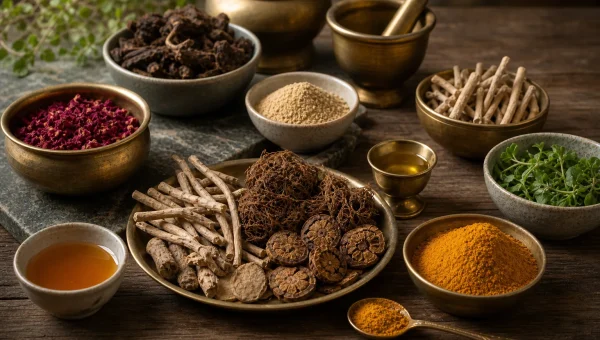
The basti protocol is best supported by individualized oral medicines, diet, and activity correction. Herbs should not be chosen only because a patient has an MRI report; they are selected according to the living pattern of pain, digestion, bowel habit, sleep, strength, and dosha state. The dose, form, timing, and anupana should be decided by a qualified practitioner.
Ashwagandha root is commonly selected in Vata-depletion patterns where low strength, poor sleep, nervous exhaustion, and tissue weakness accompany pain. It belongs to the strengthening and rejuvenative style of Ayurvedic management and is better suited to depleted Vata than to hot, inflamed, congested, or ama-dominant presentations.
Shallaki is traditionally used in musculoskeletal pain patterns where stiffness, swelling, tenderness, and inflammatory joint discomfort are prominent. In a lumbar-degeneration plan, it may be considered when periarticular irritation and pain sensitivity are part of the presentation, while still keeping nerve compression under appropriate medical observation.
Guggulu preparations such as Yogaraja Guggulu or Mahayogaraja Guggulu are practitioner-selected formulations for Vata-predominant musculoskeletal stiffness, obstruction, and chronic pain patterns. They are not casual supplements. They require caution in pregnancy, liver disease, anticoagulant use, thyroid disorders, significant metabolic disease, and in patients already taking multiple medicines. Mineral-containing preparations require special care and authentic sourcing.
Diet, Activity, and Follow-up Between Basti Courses
Ksheera Basti works best when the patient’s daily routine stops provoking Vata. Meals should be warm, freshly prepared, easy to digest, and moderately unctuous. Long fasting, dry packaged foods, cold foods and drinks, irregular mealtimes, excessive travel, night waking, overexertion, jerky exercise, and prolonged sitting on uncomfortable seats should be reduced. Gentle walking, supported stretching, breath-based relaxation, and progressive strengthening are usually more suitable than aggressive exercise during a basti course.
Follow-up should track sleep duration, walking tolerance, baseline pain, flare frequency, bowel regularity, medication reliance, leg symptoms, and ability to perform daily activities. The aim is steady functional improvement, not merely temporary pain suppression. When pain decreases, the patient should not immediately return to heavy lifting, long driving, or abrupt bending; the improved window should be used to rebuild strength and stability carefully.
Safety: When Ksheera Basti Is Not the Right First Step
Ksheera Basti should be deferred or avoided when the patient is extremely weak, acutely ill, febrile, suffering from acute digestive disturbance, has active rectal bleeding or severe anorectal disease, has uncontrolled metabolic disease, or is in a condition where purification or enema therapy is unsuitable. It also requires special caution in pregnancy, frailty, severe anemia, uncontrolled diabetes, immune compromise, recent surgery, active infection, and patients taking anticoagulants or complex medication regimens.
Urgent medical care is required when low-back pain is accompanied by loss of bladder or bowel control, numbness around the inner thighs or saddle region, severe or progressive leg weakness, inability to walk, fever, major trauma, unexplained weight loss, or rapidly worsening neurological symptoms. In such cases, Basti must not delay emergency evaluation, spine consultation, imaging, or surgical decision-making when indicated.
Disclaimer: This article is for educational purposes only and does not replace professional medical advice. Ksheera Basti should be administered only by a qualified Ayurvedic practitioner, and patients with lumbar disc disease, nerve compression, progressive neurological symptoms, diabetes, pregnancy, infection, or complex medication use should consult an appropriate healthcare provider before starting treatment.
References
- Charaka Samhita — Basti
- Charaka Samhita — Annapanavidhi Adhyaya
- Charaka Samhita — Vatavyadhi Chikitsa
- Kleijhsbr (kleijhsbr.researchcommons.org)
- Indianmedicine (indianmedicine.eldoc.ub.rug.nl)
- An overview on ashwagandha: a Rasayana (rejuvenator) of Ayurveda (2011), PubMed Central
- Ssgcbams (ssgcbams.co.in)
- Effectiveness of Boswellia and Boswellia extract for osteoarthritis patients: a systematic review and meta-analysis (2020), PubMed
- Natural Ingredient Resource Center
- Hopkinsmedicine (hopkinsmedicine.org)
- My (my.clevelandclinic.org)
- Spine (spine.org)

can Rajayapana Basti be done at home or does it strictly require clinical supervision? the complexity of the preparation suggests the latter.
My therapist was very clear that Rajayapana Basti should not be attempted at home, even by people who have had it done multiple times clinically. The preparation temperatures and retention timing matter more than they appear on paper, and errors aren’t just ineffective — they can cause real harm.
home administration guidance for enema therapies without clinical training is concerning. the rectal mucosa is delicate and self-cannulation errors cause real injury. ✨
That’s a fair concern and worth raising with the author. For what it’s worth, the protocol described here is clearly framed as a clinical one — the article even references the Panchakarma therapist and clinic setting throughout. But I agree that any home-enema guidance should carry explicit warnings about self-administration risks. ✨
Good question on the ratio — I couldn’t find it clearly stated either. My Panchakarma therapist mentioned that classical references suggest a roughly 1:4 decoction to milk ratio but that it varies by practitioner lineage. Might be worth posting that question directly to the author. ठीक है
rajayapana is correctly described here as the ‘king of enemas’ for a reason. my Vata Vyadhi symptoms (tremor, joint dryness) improved noticeably after the 14-day course.
the article conflates Anuvasana and Asthapana Basti protocols. they serve different purposes and the differences should be clearer.
ksheera basti for disc disease sounds advanced, not home remedy territory. a patient selection checklist would be useful.
would have preferred clinical outcome data beyond anecdotal reports. disc disease is serious and patients need evidence-based guidance. 🙌
how many Ksheera Basti sessions are typically needed for moderate disc degeneration versus severe? the article gives ranges but not severity-matched guidance.
the contraindication list for Rajayapana includes fever. what about chronic low-grade inflammation without fever?
for Vata Vyadhi beyond disc disease, does Rajayapana Basti apply to conditions like essential tremor or only musculoskeletal Vata disorders?
for Vata Vyadhi beyond disc disease, does Rajayapana Basti apply to condutions like essential tremor or only musculoskeletal Vata disorders? tbh
rajayapana Basti was intimidating at first but the protocol described here matchea exactly what my Pancha karma therapist administered. the warm oil retention for 48 minutes was challenging but effective. tbh
oil milk enema protocol is the kind of thing that needs clinic supervision. the article should say that louder maybe.
the article mentions combining Rajayapana with oral Vata-pacifying herbs. which specific herbs and for how long before the Basti course?
The case of the retired schoolteacher shows how conventional treatments hit a wall before trying Ayurvedic basti.
Same here.
Has anyone here tried Ksheera Basti for a cervical disc issue rather than lumbar? All the case examples in the article are L4-L5 or L5-S1 and I’m curious whether the protocol differs when the degeneration is higher up in the spine.