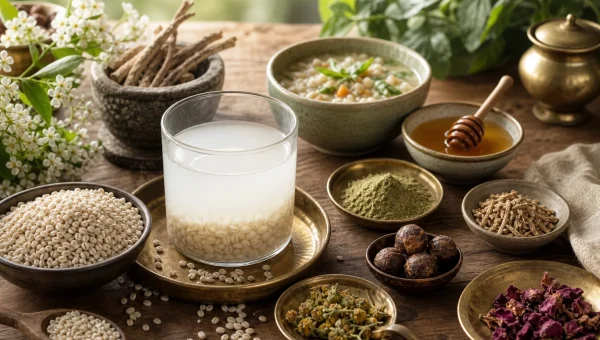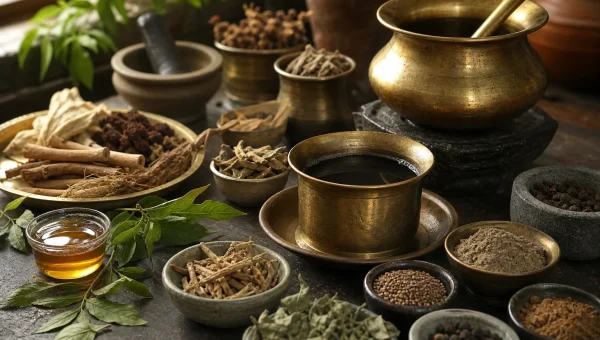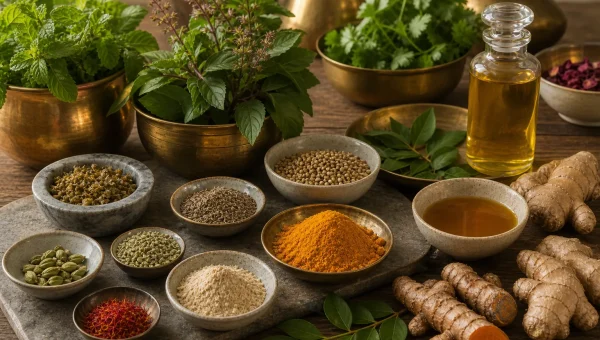
My grandmother kept a brass dabba in the kitchen with six compartments, and each winter, she’d fill it with powders I couldn’t identify as a kid. She’d stir a half-teaspoon of this and a pinch of that into warm milk every evening and hand it to whoever in the family seemed run down. “Jeevan ki dawa,” she called it. Medicine for life itself. It took me twenty years of studying Ayurveda to realize she was making a simplified version of what Charaka called Jeevaniya Gana.
Jeevaniya Gana is a group of ten life-giving herbs listed in the Charaka Samhita’s Sutrasthana (Chapter 4, Verse 9). The word jeevaniya literally means “that which gives life,” and these herbs are prescribed when the body’s vitality has taken a hit, whether from illness, exhaustion, seasonal depletion, or post-surgical recovery. With December upon us and the coldest nights of the year settling in, this is exactly the right time to bring these herbs into your kitchen.
The Ten Herbs and What They Do
| Herb | Sanskrit Name | Kitchen Form | Best Anupana (Carrier) | Key Benefit |
|---|---|---|---|---|
| Kakoli | Kakoli | Powder (rare; use Shatavari) | Warm milk | Deep plasma nourishment |
| Kshirakakoli | Kshirakakoli | Powder (rare; use Shatavari) | Warm milk | Lactation, tissue repair |
| Jivaka | Jivaka | Powder (rare; use Vidarikanda) | Ghee + milk | Reproductive strength |
| Rishabhaka | Rishabhaka | Powder (rare; use Vidarikanda) | Ghee + milk | Strength building |
| Meda | Meda | Decoction (rare; use Bala) | Warm water | Fat tissue nourishment |
| Mahameda | Mahameda | Decoction (rare; use Bala) | Warm water | Joint lubrication |
| Mudgaparni | Mudgaparni | Decoction | Warm water | Pitta cooling |
| Mashaparni | Mashaparni | Powder or decoction | Warm milk | Vata pacification |
| Jeevanti | Jeevanti | Powder | Honey + ghee | Anti-aging, immune |
| Madhuka (Licorice) | Yashtimadhu | Powder, chew sticks | Warm milk or honey | Mucosal healing, voice |
Yes, six of the original ten are now extremely rare Himalayan species. But this is where kitchen Ayurveda gets creative. The classical substitutes, Shatavari (Asparagus racemosus), Vidarikanda (Pueraria tuberosa), and Bala (Sida cordifolia), share the same madhura rasa (sweet taste), sheeta virya (cooling potency), and guru guna (heavy quality) that define the group’s therapeutic identity.
My Winter Recovery Milk: A Kitchen-Ready Jeevaniya Formula
This is the recipe I make every December, and it’s as close to Jeevaniya Gana’s intent as you can get with herbs available at any good Ayurvedic store. I drink it every night around 8:30 PM, about an hour before bed.
Ingredients
- 200 ml whole cow’s milk (A2 preferred) or almond milk for vegan option
- 1/2 teaspoon Shatavari (Asparagus racemosus) powder
- 1/2 teaspoon Ashwagandha (Withania somnifera) powder
- 1/4 teaspoon Yashtimadhu (Glycyrrhiza glabra) powder
- 1/4 teaspoon Vidarikanda (Pueraria tuberosa) powder
- 1/2 teaspoon ghee
- A small pinch of nutmeg (Jatiphala)
- 1/2 teaspoon raw honey (add only after milk cools below 40°C)
Method
- Warm the milk on low heat. Don’t boil it violently; a gentle simmer is enough.
- Add Shatavari, Ashwagandha, Yashtimadhu, and Vidarikanda powders. Stir continuously for 3 minutes.
- Add the ghee and nutmeg. Stir for another minute.
- Remove from heat. Let it cool until you can comfortably hold the cup (around 40°C).
- Stir in the honey. Ayurveda strictly warns against heating honey above 40°C, as it generates Ama.
- Drink slowly. This isn’t a shot; sit with it.
The total herb dosage here is 1.5 grams per serving, which is a gentle daily maintenance dose. For someone recovering from illness, I increase the Shatavari and Ashwagandha to 1 teaspoon each, bringing the total closer to 3 grams.
When You Need Jeevaniya Gana Most
Not everyone needs a tonic formula. Jeevaniya Gana is specifically indicated for:
- Post-illness recovery: After a bad flu, COVID-19, dengue, or any debilitating infection. The body’s Rasa Dhatu gets hammered during acute illness, and these herbs help rebuild it.
- Post-surgical healing: Sushruta mentions Jeevaniya herbs for wound healing and tissue regeneration after procedures.
- Chronic fatigue: When rest and good food aren’t enough, and you’ve been dragging for weeks.
- Seasonal depletion: Late autumn and winter strip moisture from the body. Vata dosha dries out Rasa Dhatu, leaving you feeling thin and hollow inside even if your weight hasn’t changed.
- Postpartum recovery: New mothers benefit enormously from these herbs, particularly Shatavari, which supports both energy and milk production.
A clinical study published in AYU (2018) evaluated a polyherbal Jeevaniya formulation in 30 patients with chronic fatigue syndrome. After 60 days, participants showed significant improvements in energy levels, sleep quality, and serum protein markers compared to the control group (PubMed).
Three More Kitchen Preparations
Jeevaniya Ghrita (Medicated Ghee)
This is a slow-cook project, perfect for a Sunday afternoon. You’ll need:
- 250 grams of pure cow ghee
- 2 tablespoons Shatavari powder
- 1 tablespoon Ashwagandha powder
- 1 tablespoon Vidarikanda powder
- 1 teaspoon Yashtimadhu powder
- 500 ml of water
Mix the powders into the water to form a thin paste. Add this paste to the ghee in a heavy-bottomed pan. Cook on the lowest possible flame, stirring every 10 minutes, until all the water evaporates. You’ll know it’s done when the ghee becomes clear and a drop of the mixture placed on a flame doesn’t sputter. This takes roughly 2-3 hours.
Strain through a muslin cloth. Store in a glass jar. Take 1 teaspoon with warm milk each morning. This ghrita is excellent for recovering from adrenal fatigue, especially for Vata-Pitta types who’ve been running on empty.
Jeevaniya Kashaya (Decoction)
For those who can’t tolerate milk or ghee, a water decoction works well:
- 1 teaspoon each of Shatavari, Bala (Sida cordifolia), and Yashtimadhu coarse powders
- 400 ml water
Boil until reduced to 100 ml. Strain. Drink warm, twice daily, 30 minutes before meals. This is lighter than the milk preparations and suits Kapha-predominant individuals better.
Jeevaniya Energy Balls
My favorite portable version for people who travel or don’t want to mess with powders daily:
- 2 tablespoons Shatavari powder
- 1 tablespoon Ashwagandha powder
- 1/2 tablespoon Yashtimadhu powder
- 3 tablespoons almond butter
- 2 tablespoons raw honey
- 1 tablespoon ghee
- 2 tablespoons desiccated coconut
Mix everything into a thick paste. Roll into marble-sized balls (about 8-10 grams each). Refrigerate. Eat 2 balls daily, one in the morning and one in the afternoon. Each ball delivers roughly 1 gram of combined herbal powders.
Safety and Interactions
These are gentle, nourishing herbs, but a few things to keep in mind:
- Yashtimadhu (Licorice): Do not exceed 1/2 teaspoon daily if you have high blood pressure. Glycyrrhizin in licorice can raise blood pressure with prolonged use. A study in BMJ Case Reports (2021) highlighted a case of hypokalemia from excessive licorice consumption (PubMed).
- Ashwagandha: Interacts with thyroid medications and sedatives. If you’re on levothyroxine or benzodiazepines, talk to your doctor first (PubMed reference).
- Don’t start during acute illness: These herbs are for recovery, not for fighting active infection. During fever or acute congestion, Jeevaniya herbs are too heavy and will create Ama.
- Pregnancy: Shatavari is traditionally used during pregnancy, but Ashwagandha should be avoided in the first trimester. Consult your practitioner for a pregnancy-safe version.
If you’re interested in how Chyawanprash incorporates many of these same herbs into a single jam-like preparation, that’s another excellent winter option for daily use.
The Bigger Picture: Why Groups Matter in Ayurveda
Charaka didn’t list individual herbs randomly. He organized them into ganas (groups) because the combined action of herbs within a group creates a therapeutic synergy that individual herbs can’t match. Jeevaniya Gana herbs share properties that work together to rebuild the life force. You don’t need all ten. Even three or four from the group, taken consistently over 6-8 weeks, can shift the body’s vitality in a measurable way.
Research from the Central Council for Research in Ayurvedic Sciences has documented the polyherbal synergy model, and the WHO’s traditional medicine framework increasingly recognizes the value of standardized herbal group formulations in primary healthcare. The Wisdom Library’s Jeevaniya Gana entry provides the complete classical Sanskrit references. For sourcing quality Shatavari and Ashwagandha powders, the Banyan Botanicals and Planet Ayurveda product lines are USDA-certified organic and third-party tested for heavy metals.
For a deeper look at how Kakolyadi Gana, a closely related group, works specifically on Rasa Dhatu nourishment, check the detailed breakdown of those ten herbs.
My grandmother didn’t know the Sanskrit names. She didn’t need to. She understood the principle: when winter hollows you out, you feed the body warmth and sweetness through gentle, heavy, nourishing herbs. That brass dabba was Jeevaniya Gana in miniature. And it worked every single time.
Disclaimer: This article is for informational purposes only and not a substitute for professional medical advice. Consult a qualified Ayurvedic practitioner or healthcare provider before starting any new health regimen.