
Are night sweats, sleep disturbance, brain fog, hot flashes, irritability, or mood swings making the menopause transition harder than expected? Perimenopause and menopause are natural biological phases, but the symptoms can be intense enough to affect work, relationships, sleep, and emotional steadiness.
Shatavari (Asparagus racemosus) is one of Ayurveda’s most valued herbs for women’s health. In the Ayurvedic Pharmacopoeia of India, Shatavari is defined as the dried tuberous root of Asparagus racemosus Willd. Its rasa is described as madhura and tikta; its guna as guru and snigdha; its virya as shita; and its vipaka as madhura. Its listed karmas include balya, rasayana, medhya, pittahara, vatahara, vrishya, and stanyakara. This classical profile makes Shatavari especially relevant when the menopause transition presents with dryness, heat, depletion, disturbed sleep, and nervous-system sensitivity.
The 120-Day Perimenopause Trial: Nearly 73% Total MRS Reduction
A 2025 randomized, double-blind, placebo-controlled trial evaluated a standardized Shatavari root extract known as CL22209 in early perimenopausal women aged 40–50 years. Seventy-five participants were assigned to 50 mg/day, 100 mg/day, or placebo for 120 days, with outcomes measured using the Menopause Rating Scale, hot-flash scoring, menstrual-symptom assessment, endocrine markers, follicle count, and safety parameters.
The 100 mg/day group showed the strongest overall improvement:
- Total Menopause Rating Scale score decreased by 72.95%, compared with 22.86% in the placebo group.
- The 50 mg/day dose decreased total MRS score by 51.42%, showing a dose-responsive pattern.
- Somatic symptoms decreased by 70.46%, including symptoms such as hot flashes, sleep problems, joint discomfort, and heart discomfort.
- Psychological symptoms decreased by 73.04%, including mood disturbance, irritability, anxiety, and physical or mental exhaustion.
- Urogenital symptoms decreased by 53.73%.
- Hot-flash burden decreased by 39.81% in the 100 mg/day group, while the placebo group worsened by 7.76%.
No serious adverse events were reported in this trial. The recorded adverse events were mild and transient, including bloating and nausea in isolated cases.
The Hormonal Data: Endocrine Modulation During Perimenopause
The same 120-day trial measured endocrine markers before and after treatment. At 100 mg/day, Shatavari was associated with changes in hormones that are closely watched during the menopause transition.
| Marker | Change at 100 mg/day | Clinical Relevance |
|---|---|---|
| FSH | Decreased by 61.04% | FSH commonly rises during the menopause transition as ovarian feedback changes. |
| LH | Decreased by 42.7% | LH is part of the hypothalamic-pituitary-ovarian signaling pattern that shifts during perimenopause. |
| AMH | Increased by 269.69% | AMH was tracked as an ovarian-reserve-related marker in the trial population. |
| Estradiol | Increased by 5.28% | Estradiol was measured to observe estrogenic endocrine trends during treatment. |
These findings are best understood as endocrine modulation in early perimenopause, not as a guarantee of restored fertility or a replacement for individualized medical evaluation. Menopausal symptoms can overlap with thyroid, cardiovascular, metabolic, and mental-health concerns, so persistent or severe symptoms deserve proper clinical assessment.
Other Recent Controlled Trials
Several recent randomized controlled trials have placed Shatavari in a clearer clinical context for peri- and post-menopausal women. While the extracts, doses, populations, and durations differ, the overall direction is consistent: Shatavari preparations were associated with improvements in menopause-related symptom scores, quality-of-life measures, stress-related measures, and tolerability outcomes in the studied groups.
A 2024 double-blind, multicenter, randomized, placebo-controlled trial used 250 mg Shatavari root extract twice daily for 60 days in women with menopausal symptoms. The trial reported improvement in menopause-related complaints including hot flashes, night sweats, insomnia, anxiety or nervousness, vaginal dryness, and loss of libido, along with improved quality-of-life scores and no significant adverse events.
A 2025 randomized, double-blind, placebo-controlled trial in perimenopausal women used 300 mg/day Shatavari root extract for 8 weeks. The active group showed improvements in Menopause Rating Scale domains, perceived stress, fatigue, vigor, hot flashes, and selected hormonal measures, with no clinically concerning liver or kidney safety findings reported.
A 2025 multicenter randomized trial in women aged 45–65 years compared Shatavari root extract, a Shatavari-Ashwagandha combination, and placebo over 8 weeks. Shatavari was associated with improvement in Menopause Rating Scale and perceived-stress scores, while the combination arm showed stronger MRS improvement in that trial design. Mild adverse events such as nausea, loose stools, dizziness, and headache were reported across groups.
A 24-week randomized, double-blind, placebo-controlled trial in postmenopausal women evaluated Shatavari, Ashwagandha, and a combined arm. Shatavari was tested at 250 mg and 500 mg doses, and the trial reported dose-dependent improvement in menopause-related quality-of-life scores, vascular measures, bone-turnover markers, and inflammatory or oxidative markers. Mild gastrointestinal disturbances occurred in a few participants receiving 500 mg Shatavari, and no discontinuations due to adverse events were reported.
Combining Shatavari With Ashwagandha for Menopause
Shatavari and Ashwagandha are sometimes paired in practitioner-guided menopause care, but they are not interchangeable herbs. Shatavari is classically cooling, nourishing, unctuous, and rasayana in nature. Ashwagandha is more often selected when stress load, sleep difficulty, fatigue, and reduced strength are prominent. Recent trials have included both single-herb and combined-herb arms, supporting the practical Ayurvedic principle that the formula should match the woman’s constitution, symptom pattern, digestion, and medical history.
Practitioner-Guided Daily Framework
Morning: Shatavari extract in a dose appropriate to the product standardization, taken with food or a suitable anupana such as warm milk when tolerated.
Optional morning support: Ashwagandha may be added when stress, poor sleep, weakness, or nervous exhaustion are central features and when it is appropriate for the person’s constitution and medication profile.
Evening: Shatavari may be taken again if advised, or used in a small nourishing preparation before bed.
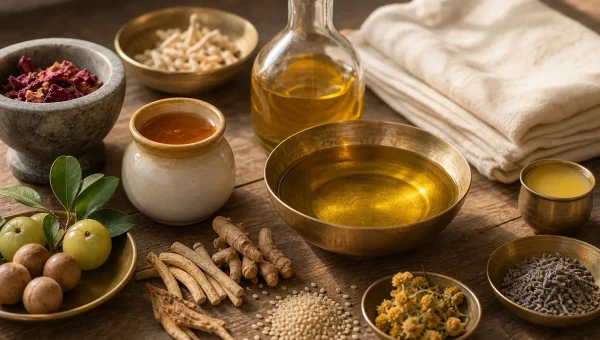
Weekly support: A gentle oil-based routine such as abhyanga may be considered when dryness, restlessness, poor sleep, or Vata-type symptoms are prominent.
The clinical trials used standardized extracts at specific doses, while traditional powder and kalpa-style preparations use different quantities. These forms should not be treated as directly equivalent. The Ayurvedic Pharmacopoeia of India lists the dose of Shatavari raw drug as 3–6 g, while modern trials have used standardized extracts ranging from 50 mg/day to 500 mg/day depending on the preparation.
Shatavari Kalpa: A Nourishing Bedtime Preparation
Shatavari Kalpa is listed among important formulations in the Ayurvedic Pharmacopoeia of India. Household kalpa-style preparations vary, and the version below is a simple food-like preparation inspired by the traditional idea of combining Shatavari with a nourishing carrier. It should not be presented as a substitute for a classical pharmacy-made formulation.
Simple Shatavari Kalpa-Style Preparation
- 100 g Shatavari root powder
- 50 g ghee
- 30 g jaggery powder or raw sugar
- 1/2 teaspoon cardamom powder
- A small pinch of nutmeg powder
- A few saffron strands, optional
Method: Warm a heavy pan on low heat and gently dry-roast the Shatavari powder for a few minutes, taking care not to brown or burn it. Melt the ghee separately. Combine the powder, ghee, sweetener, and spices, then mix until uniform. Store in a clean glass jar and use a clean, dry spoon.
Use: Take 1/2 to 1 teaspoon mixed into warm milk at bedtime, or follow the dose advised by a qualified Ayurvedic practitioner.
The Ayurvedic reasoning behind this preparation is based on Shatavari’s madhura, shita, guru, and snigdha qualities. Warm milk and ghee provide a nourishing, unctuous medium, which is traditionally suited to dryness, depletion, and Vata-type discomfort when digestion is strong enough to tolerate it.
Side Effects and Safety Considerations
Shatavari was generally well tolerated in the recent clinical trials, but it is still a biologically active herb and should be used with appropriate caution. Women with complex symptoms, active medical diagnoses, cancer history, hormone-sensitive conditions, pregnancy, breastfeeding, kidney or liver disease, or regular medication use should consult a qualified healthcare provider and an experienced Ayurvedic practitioner before using it.
- Estrogen-sensitive conditions: Shatavari has phytoestrogenic activity. Women with a history of estrogen-receptor-positive breast cancer, endometriosis, fibroids, unexplained bleeding, or other hormone-sensitive conditions should seek medical guidance before use.
- Hormone therapy: Combining Shatavari with HRT or other hormone-active therapies should not be done without clinical supervision.
- Allergy: Anyone with a known allergy to Shatavari or related asparagus-family products should avoid it.
- Digestive sensitivity: Mild bloating, nausea, loose stools, or gastrointestinal discomfort may occur in some people. Starting low and stopping if symptoms worsen is prudent.
- Pregnancy and breastfeeding: Use only under professional supervision, especially because product quality, dose, and individual suitability vary.
Herb-drug interaction data for Shatavari remain limited. This makes professional guidance especially important for women taking HRT, thyroid medication, psychiatric medication, anticoagulants, fertility medicines, cancer therapies, diuretics, diabetes medication, or multiple long-term prescriptions.
A Practitioner-Guided Herbal Framework for Menopause
Shatavari can serve as the anchor herb when the presentation includes heat, dryness, poor sleep, irritability, vaginal dryness, night sweats, or depleted strength. A qualified practitioner may use it alone or combine it with other herbs depending on constitution, digestion, sleep quality, bowel pattern, emotional state, bleeding history, bone health, cardiovascular risk, and medication profile.
- Shatavari: Traditionally used as a nourishing rasayana and women’s-health herb; recent trials used standardized extracts in peri- and post-menopausal women.
- Ashwagandha: Considered when stress, fatigue, sleep difficulty, or low strength is central; recent trials have evaluated it alone and in combination with Shatavari.
- Dietary support: Warm, regular, nourishing meals may be preferred when dryness, irregular appetite, sleep disturbance, or Vata-type symptoms are prominent.
- Oil-based support: Gentle oil application may be used when dryness, restlessness, and sleep disturbance are part of the symptom picture.
This framework should be individualized. Menopause care is not only about suppressing hot flashes; it also involves sleep, mood, bone health, metabolic health, cardiovascular risk, vaginal comfort, digestion, and emotional steadiness.
Final Thoughts: What Women Going Through Menopause Should Know
Menopause is not a disease, but the symptoms can be real and disruptive. Conventional HRT remains an important option for many women, and Shatavari offers a plant-based Ayurvedic option with growing controlled-trial support for symptom relief, stress-related measures, quality of life, and endocrine modulation in selected peri- and post-menopausal populations.
For women considering Shatavari, a practical approach is to choose a quality-tested product, begin with a conservative dose, use it consistently for at least 8 weeks unless side effects occur, and track symptoms such as hot flashes, sleep, mood, vaginal dryness, and energy. Severe symptoms, postmenopausal bleeding, chest pain, fainting, sudden mood deterioration, or unexplained weight change should be evaluated medically rather than managed with herbs alone.
Frequently Asked Questions
The following answers summarize practical points for women considering Shatavari during perimenopause or menopause. Individual suitability depends on health history, symptom pattern, medications, digestion, and the form of Shatavari being used.
How long does it take for Shatavari to show results for menopause symptoms?
Recent trials measured outcomes over 8 weeks, 60 days, 120 days, and 24 weeks, depending on the formulation and study design. A reasonable minimum trial period for a suitable, well-tolerated product is about 8 weeks, with symptom tracking to assess changes in hot flashes, night sweats, sleep, mood, stress, and vaginal comfort.
Can Shatavari be taken alongside hormone replacement therapy?
Shatavari should not be combined with HRT or hormone-active treatment without medical supervision. Because Shatavari has phytoestrogenic activity and clinical interaction data are limited, women using HRT should speak with their gynecologist or healthcare provider before adding it.
What is the recommended dosage of Shatavari for menopause?
There is no single universal dose because clinical trials used different standardized extracts. Trials have used CL22209 at 50 mg/day and 100 mg/day, Shatavari root extract at 300 mg/day, 250 mg twice daily, and 250–500 mg/day in other extract forms. The Ayurvedic Pharmacopoeia of India lists 3–6 g as the dose of the raw drug. Product standardization, extract strength, digestion, constitution, and medical history should guide the final dose.
Is Shatavari safe for long-term use?
The recent menopause trials were generally short to medium duration, ranging from 8 weeks to 24 weeks, and reported good tolerability in the studied populations. Long-term use should be supervised, especially in women with hormone-sensitive conditions, cancer history, unexplained bleeding, pregnancy, breastfeeding, kidney or liver disease, or regular medication use.
Disclaimer: This article is for educational purposes and does not replace medical advice, diagnosis, or treatment. Menopause symptoms can overlap with thyroid disease, cardiovascular concerns, anemia, mood disorders, medication effects, and other medical conditions. Please consult a qualified healthcare provider and, when using Ayurvedic herbs, a qualified Ayurvedic practitioner for an individualized plan.
References
- Miracledrinksclinic (miracledrinksclinic.com)
- Ffhdj (ffhdj.com)
- Efficacy and Safety of Shatavari Root Extract for the Management of Menopausal Symptoms: A Double-Blind, Multicenter, Randomized Controlled Trial (2024), PubMed
- Cureus (cureus.com)
- Tandfonline (tandfonline.com)
- Frontiersin (frontiersin.org)
- E-jmm (e-jmm.org)
- Shatavari Supplementation in Postmenopausal Women Improves Handgrip Strength and Increases Vastus lateralis Myosin Regulatory Light Chain Phosphorylation but Does Not Alter Markers of Bone Turnover (2021), PubMed Central
- Drugs (drugs.com)
I wish I’d had this information during my pregnancies. My grandmother tried to tell me these things but I didn’t appreciate the wisdom at the time. Now I understand.
the grandmothers always knew! I keep finding that traditional knowledge holds up to modern scrutiny
I’m a gynecologist with growing interest in integrative approaches. The clinical correlates here are thoughtful and I appreciate the honest discussion of evidence levels
I was nodding along reading your comment. Exactly my experience too.
Useful post on Shatavari for Menopause. The practical details matter more than people think.
Three months sounds right from my experience too. Commit to that and then evaluate
Sharing this with my women’s circle. We meet monthly to discuss health topics and this is exactly the kind of integrative content we look for to complement what we’re learning.
I’m going to share this comment with my skeptical partner. Exactly what I needed to articulate why this works.
I went through early surgical menopause at 38 and was reluctant to go straight to HRT given my family history of clotting disorders. Shatavari was one of the herbs my Ayurvedic practitioner recommended alongside some dietary changes. The brain fog improved noticeably within about six weeks.
Your experience with the diet changes mirrors mine almost exactly. Week two is when it clicks
I’d been told my symptoms were just ‘normal for my age’ and to accept them. Finding this information and a practitioner who takes a different view has been life-changing
That’s a really important distinction you’ve made. I think a lot of people skip the preparation phase and then wonder why results are inconsistent.
As a midwife I find Ayurvedic approaches to reproductive health fascinating and often align with my clinical experience. The nourishment focus during transition periods resonates strongly.
I had the exact same confusion about this. Glad the article cleared it up for both of us
I love that this approach treats women as active participants in their own health rather than passive recipients of treatment. The self-knowledge aspect is empowering.
The guidance on cycle phase nutrition is something I’ve been implementing for six months. My energy and mood across the month are noticeably more stable
I’ve been to three different Ayurvedic practitioners about my women’s health concerns and the quality varies enormously. This article helps me evaluate their recommendations
For Shatavari for Menopause, consistency seems like the hard part. Would be useful to see a short checklist next.
The Shatavari for Menopause angle is useful here. The main idea is clear even if someone is new to Ayurveda.
Has anyone here continued Shatavari alongside low-dose HRT rather than replacing it entirely? My gynecologist isn’t opposed to integrative approaches but she wants to know about any herb-drug interactions before I add anything. Would appreciate hearing how others have navigated that conversation.
Can you write more about perimenopause specifically? There’s an enormous gap between reproductive years and full menopause that mainstream medicine largely ignores.
This is so helpful to read. I’m just starting out with this and hearing positive experiences helps me stay motivated.
I’m three weeks into taking Shatavari for perimenopausal symptoms and the sleep disruption is already a little better. I know that’s too soon to attribute anything definitively, but I’m cautiously hopeful. Would be grateful to know what dosage others found effective for hot flash reduction specifically.
What I appreciate about this article is that it doesn’t oversell. Three trials with real outcome data is more rigorous than most of what you find written about herbal menopause remedies. Still going to discuss with my doctor before starting, but this gives me something concrete to bring to that conversation.
Helpful for beginners but if you already know the basics, there’s not much new here. Was hoping for more advanced protocols.
My wife started Shatavari about four months before her expected perimenopause transition based on her mother’s history. The night sweats that had been waking her up three or four times a week have become much less frequent. Still early days but 77% symptom relief is not far from what we’re seeing.
Thank you for sharing the practical tip about sourcing. That’s something I’ve been confused about.
I’m a health educator and I’m always looking for resources that honor traditional wisdom while being grounded enough for my clinical colleagues to take seriously. This qualifies.
The herbal recommendations here match what my practitioner has given me. Good to have the rationale explained so clearly, it helps me commit to the protocol
The 77% figure is striking, but I’m curious which symptoms drove the most improvement across the three trials. Hot flashes and night sweats are quantifiable, but mood symptoms and brain fog are harder to measure consistently. Did the studies use a standardized scale like the MRS or the Greene Climacteric Scale?
Useful post on Shatavari for Menopause. The article avoids making it sound like a quick fix.
I had the exact same confusion about this. Glad the article cleared it up for both of us.
I respectfully disagree with the characterization of modern medicine as inferior here. Both systems have their place and ideally should complement each other
Valid concerns. Ayurveda works best as a complementary approach, not a replacement for evidence-based medicine. Thank you for highlighting this important distinction.
77% symptom relief in one of the three trials is the statistic that changes the conversation. That’s not a modest botanical effect. That’s a number that should be in the mainstream menopause management discussion alongside HRT.
I’m 51 and my gynecologist offered HRT, antidepressants, or gabapentin for my hot flash and sleep symptoms. I asked about botanicals and got a blank look. Shatavari is now my first-line after reading the trial data here.
How do these Shatavari trials handle the heterogeneity of menopause symptom severity? Women with severe symptoms and women with moderate symptoms respond differently to any intervention. The pooled 77% figure probably obscures a range from very high responders to non-responders.
i appreciate the effort but where are the clinical trials? anecdotal evidence isnt enough tbh
The saponin content and its phytoestrogenic mechanism is the explanation that addresses the most common physician concern: that botanical estrogen mimics could carry the same breast cancer risk signals as pharmaceutical estrogen. The binding affinity and receptor specificity questions matter here.
This is constructive feedback we take seriously. We’ve added a note about consulting with your healthcare provider, especially if you’re on existing medications.
I’ve recommended Shatavari to six women in my support group who couldn’t tolerate HRT. Three of them reported significant improvement in sleep and hot flash frequency within six weeks. Two reported modest improvement. One saw no change. That’s a real-world response distribution.
The 77% improvement figure really catches the eye, especially when you see how the placebo group only improved about 23%.
How should Shatavari be combined with black cohosh? Many women are already using black cohosh for menopause symptoms. Is there an interaction or synergy and is there any trial data on combination use?
My wife took this to her endocrinologist who agreed to monitor alongside the Shatavari protocol for six months before deciding on HRT. Her vasomotor symptoms improved at week 8 and her doctor has moved the HRT conversation to a watch-and-wait position.
Maybe the 50 mg dose would be enough for someone just starting to notice night sweats.
The cognitive symptoms (brain fog, word retrieval difficulties) are the menopause symptoms I struggle with most and the ones most likely to affect my work. Any evidence in these trials specifically for cognitive function improvement with Shatavari?
Seeing the hormonal data on FSH and LH reduction makes the symptom relief feel more tangible.
The urogenital symptoms improvement data from the trials is the application that affects quality of life most directly for many women in this age group but that most women are least likely to mention to their doctor. Including this clinical endpoint in the trial summary makes the article more complete.
Is Shatavari appropriate for women who have had estrogen-receptor positive breast cancer? The phytoestrogenic content is the concern and that population specifically needs guidance about whether phytoestrogens are categorically contraindicated or whether the ER binding differs enough from pharmaceutical estrogen to change the risk profile.
Has anyone tried combining Shatavari with Ashwagandha as suggested in the protocol?
The 2025 trial data timing is perfect because it gives practitioners current evidence to cite when patients ask. Trials from 2012 and 2016 are useful but physicians respond better to recent data. Three new trials in a single year changes the evidence base significantly.
The 120-day trial length seems reasonable for measuring real change in menopause symptoms.
It’s reassuring that no serious adverse events popped up across all three studies.
The ghee-based Kalpa preparation might improve absorption compared to a plain capsule.
For women with estrogen-sensitive conditions, the article’s caution about consulting a doctor feels necessary.
The mention of somatic symptoms like joint pain and sleep problems improving together is interesting.
Do the results hold up for post-menopausal women, or were they mostly peri-menopausal participants?
The idea of tracking symptoms in a journal for eight weeks before judging effectiveness seems practical.
I appreciate that the piece distinguishes between concentrated extract doses and the higher amounts needed for full-spectrum powders.
The claim about moringa improving PCOS within 4 weeks seems optimistic based on my experience and what I’ve read.
The bioavailability discussion is important and I wish more Ayurveda articles covered it. Fat-soluble compounds need fat. Water-soluble don’t.
@Jaya Similar boat. Took about 5 weeks before I noticed anything. Then it was gradual over the next month.
Do you need to cycle off amla after a few months or can it be taken continuously?
The immune-modulating properties of amalaki are relevant beyond seasonal illness. I’ve been using it post-COVID recovery and the fatigue is lifting.
I was looking for a plain explanation of Shatavari for Menopause. The examples make the advice less abstract.
Finding the right brand was my biggest challenge. The price difference between reputable and budget brands is significant but so is the quality gap.
Is there a difference between the churna form and the capsule? I assume powder would absorb faster but not sure.
Three months to the day since I started. My practitioner is pleased with my progress and we’re adding punarnava to the protocol next month.
What brand of trikatu do you recommend? I’m finding huge quality differences between suppliers.
I am in my 60s and want to try this. Is the standard adult dose the same or should I start lower given age-related changes in metabolism?
tried turmeric last yr. didnt rly work 4 me but my frd swears by it
the part about avoiding amalaki in Pitta heat is smthng my doc also mentioned
Tried triphala after reading multiple articles like this. My liver didn’t improve and I wasted 3 months. Maybe it works for others but not me.
I noticed the article says to take moringa with warm water but another source says with honey. Which is better for absorption?
The clarification that this protocol is supplementary to and not a replacement for medical treatment is the responsible framing I wish more articles used.
The part about Shatavari for Menopause feels realistic. This is the kind of detail readers can test slowly.