
A simple household rice gruel, lightly sour from natural fermentation, sits at the meeting point of food and medicine in Ayurveda. It is not necessary to force it into one single classical name: plain rice gruels such as peya, manda, and vilepi belong to the classical dietetic family of light, warm, digestible foods, while sour fermented grain liquids are discussed under names such as kanjika, aranala, and dhanyamla. Together, these traditions explain why a warm, thin, gently sour rice preparation has long been used after illness, during weak appetite, and when digestion needs simple support.
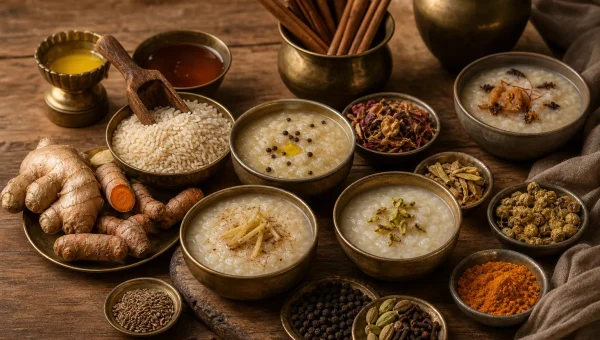
In practice, the home version is humble: soft cooked rice or rice gruel, clean water, a clean clay or glass vessel, a warm room, and time. By morning, the liquid may become mildly sour and aromatic. Served warm with a pinch of rock salt, roasted cumin, or a little fresh pasteurised buttermilk, it becomes a light food that is easy to sip when heavy meals feel unsuitable. Ayurveda values this kind of preparation not because it is exotic, but because it is simple, warm, fluid, digestive, and adaptable to the strength of the person taking it.
How Fermentation Changes Rice
During natural rice fermentation, lactic acid bacteria and other food microbes can convert cooked starches and sugars into organic acids. This gives the gruel its sour taste, helps lower the pH, and changes the texture and digestibility of the grain. Modern profiling of South Indian fermented rice gruel has identified lactic acid bacteria such as Pediococcus pentosaceus and Lactobacillus plantarum in tested samples, while work on rice-based fermented beverages has described increased organic acids, phytase activity, and release of free minerals during fermentation.
- Acidity and sour taste: The pleasantly sour taste of fermented rice comes from organic acids formed during fermentation. In Ayurvedic language, this brings the preparation closer to the amla family of fermented foods, while still remaining lighter than dense cooked grains.
- Digestibility: Fermentation can soften the cooked grain matrix and partially transform carbohydrates, making the preparation easier for many people to sip and digest than a heavy rice meal.
- Mineral availability: Fermentation of rice-based foods can increase phytase activity and release bound minerals. This supports the traditional view that thin fermented gruels can nourish without overloading weak digestion.
- B-vitamin contribution: Some tested South Indian fermented rice gruels have contained folate and vitamin B12. This should be understood as a variable food contribution, not as a dependable treatment for vitamin B12 deficiency.
Ayurvedic Logic: Agni, Anulomana, and Light Nourishment
Classical Ayurveda repeatedly returns to the same principle: when agni is weak, food should be warm, thin, simple, and proportionate to digestive strength. Charaka describes rice gruels such as peya and manda as useful in conditions involving thirst, fatigue, weakness, feverish states, abdominal discomfort, and after cleansing or fasting contexts. Manda, the thin watery portion of rice gruel, is specifically associated with digestive stimulation and vata anulomana, the proper downward movement of Vata.
Fermented sour preparations add another layer. Classical discussions of dhanyamla describe it as sour, light, sharp, digestive, and useful where Vata and Kapha qualities predominate. This helps explain its use in stiff, heavy, cold, sluggish, or obstructed presentations. The same sour and sharp qualities also mean it is not suitable for everyone: people with strong burning, acid reflux, aggravated Pitta, bleeding tendencies, active inflammatory bowel symptoms, or marked heat signs should use sour fermented preparations cautiously and under guidance.
Preparation Guides: Three Traditional Forms
These three preparations are related but not identical. Tandulodaka is fresh rice water and is the mildest. Simple home kanji or kanjika-style gruel is a lightly fermented food. Dhanyamla is a more specialised sour grain liquid used in Ayurvedic clinical practice, including external therapies.
1. Tandulodaka (Fresh Rice Water)
Tandulodaka is not fermented kanji. It is fresh rice water prepared by soaking and macerating rice in water, then filtering the liquid. It is mild, cooling, and traditionally used as an anupana, a co-drink or vehicle with certain Ayurvedic medicines, and as a gentle liquid when the digestive system needs a light support.
Preparation: Rinse about 10 grams of clean raw rice. Add 6 to 8 parts potable water, cover, and let it stand for 2 to 6 hours. Rub or macerate the rice in the water for a few minutes and filter. Use the liquid fresh, preferably the same day. Discard it if it smells stale, foul, or contaminated. This is the most appropriate of the three forms when the person is delicate, overheated, or unable to tolerate sour fermented foods.
2. Simple Kanji or Kanjika-Style Fermented Rice Gruel
This is the household fermented form: thin cooked rice gruel or cooked rice with water, allowed to sour gently in a clean vessel. It is best understood as a food preparation that borrows the Ayurvedic logic of light rice gruels and the digestive quality of mild sour fermentation.
Preparation method:
- Cook 1/4 cup white rice with 4 to 5 cups water until the grains are very soft and the liquid is thin. A small quantity is better than a large batch.
- Cool until lukewarm. Transfer to a very clean clay or glass vessel. Do not use rice that has already been left at room temperature for many hours before fermentation.
- Cover with a clean cloth and leave in a clean warm place until mildly sour and pleasant-smelling, usually overnight in warm climates. In very hot weather, check earlier.
- Once pleasantly sour, use promptly or refrigerate. Discard the batch if there is mould, foul odour, unusual sliminess, or a rotten smell.
- Before serving, warm gently. Add a pinch of rock salt and roasted cumin. A small amount of fresh pasteurised buttermilk or yoghurt may be stirred in after warming, if tolerated.
- Take it warm as a light breakfast, a convalescent food, or a small digestive support with a simple meal.
3. Dhanyamla (Classical Sour Grain Liquid)
Dhanyamla is a more therapeutically potent sour grain preparation. Classical formulas vary by text and lineage, but they commonly use grains or grain products such as rice, rice flakes, puffed rice, horse gram, small millets, and digestive adjuncts such as dry ginger and aromatic seeds. The liquid is fermented for several days and used when its sour quality is fully developed.
Classical direction: Large-batch dhanyamla should not be treated as the same thing as simple home kanji. It is a specialised preparation from the sandhana or fermented category and is used internally or externally according to indication. For therapeutic internal use, dosage and suitability should be decided by a qualified Ayurvedic practitioner. For external use, it appears in procedures such as dhanyamla dhara, where warm fermented liquid is poured in a steady stream over the body as a form of drava sweda.
Therapeutic Use as Food Support
Kanji and related rice gruels are best used as food support rather than as a stand-alone treatment. Their main value is that they are warm, simple, hydrating, and easy to adjust. The sour fermented version is better suited to sluggish, cold, heavy, Vata-Kapha patterns; the plain fresh rice-gruel version is better suited to delicate digestion, convalescence, children, or anyone who does not tolerate sour foods.
| Use-case | Preferred form | Typical home serving | How to use | Important caution |
|---|---|---|---|---|
| Weak appetite or heavy feeling after rich food | Warm kanji with rock salt and roasted cumin | 100-150 ml | Before a light meal or as a light breakfast | Avoid if sour foods trigger burning, reflux, or acidity |
| Post-illness light nourishment | Fresh peya, manda, or very thin kanji | 100-200 ml | Warm, once or twice daily as tolerated | Use medical care for persistent fever, dehydration, vomiting, or severe weakness |
| Dryness, gas, or sluggish bowel tendency with Vata features | Warm thin rice gruel; mildly fermented kanji only if tolerated | 150 ml | Warm, not cold; may be taken with a simple evening meal | Persistent constipation, pain, bleeding, or weight loss needs clinical evaluation |
| After digestive disturbance or antibiotic use | Small serving of clean fermented kanji with fresh pasteurised yoghurt or buttermilk, if suitable | 100-150 ml | With food, not as a replacement for treatment | Avoid home ferments during active infection, severe diarrhoea, or immune compromise unless a physician approves |
| Post-cleansing Ayurvedic diet sequence | Plain peya, manda, vilepi, yusha, and gradual return to normal food | As directed | Follow the practitioner’s samsarjana krama | Fermented sour kanji is not automatically the first post-cleansing food |
| Vata-Kapha stiffness, heaviness, or musculoskeletal discomfort in Ayurvedic care | Dhanyamla external therapy such as dhanyamla dhara | Clinical procedure only | Performed by trained practitioners | Not a home treatment for paralysis, stroke, severe arthritis, or acute injury |
Kanji in the Panchakarma Context
In Panchakarma, the most important dietetic principle after cleansing is gradual refeeding according to digestive strength. Classical samsarjana krama begins with very light rice preparations such as peya or yavagu, then moves toward thicker rice gruel, pulse soup, and later more substantial food. This does not mean every fermented kanji is automatically suitable immediately after cleansing. Plain rice gruel is the safer classical starting point, while sour fermented preparations are selected only when the practitioner judges them appropriate.
For related guides on therapeutic Ayurvedic foods, see our piece on mung bean therapeutics and Khichadi, our guide to pranic cooking methods, and classical Avaleha jam preparations.
Safety and Contraindications
Fermented rice preparations are traditional foods for many healthy adults, but they must be prepared hygienically. Cooked rice can carry food-safety risk if held improperly, so use clean water, clean vessels, small batches, and discard anything with mould, foul odour, or abnormal texture. Avoid home-fermented rice during active food poisoning, severe diarrhoea, high fever with dehydration, strong acid reflux, burning Pitta symptoms, pregnancy-related complications, or severe immune compromise unless approved by a healthcare provider. Children, older adults, pregnant people, and people with chronic disease should use only carefully prepared fresh food and consult a qualified Ayurvedic practitioner or physician for therapeutic use.
Nothing in this article diagnoses, treats, or cures a medical condition. Use it as educational information and consult a qualified Ayurvedic practitioner or healthcare provider before starting herbs, supplements, detoxes, Panchakarma procedures, or therapeutic protocols, especially if pregnant, immunocompromised, managing a medical condition, or taking medication.
References
- Easyayurveda (easyayurveda.com)
- Charaka Samhita — Upakalpaniya Adhyaya
- Easyayurveda (easyayurveda.com)
- Ayurvedicpoint (ayurvedicpoint.it)
- Wjpr (wjpr.s3.ap-south-1.amazonaws.com)
- Office2 (office2.jmbfs.org)
- Frontiersin (frontiersin.org)
- NIH Office of Dietary Supplements
- CDC
- Fsis (fsis.usda.gov)
- CDC
- FDA
the fermented kanji recipe mentions leaving it for 2-3 days. in summer with room temp at 38C, does the fermentation time change?
asking about the Takra (buttermilk) reconmendation is it safe during active flare or only during remission phase?
@Sunita the Kapha-type diarrhea protocol here is different from what my Ayurvedic doctor recommended and interestingly my symptoms match the Kapha description better.
the low-FODMAP Ayurvedic adaptation in the article is clever. removing garlic and onion but keeping asafoetida in ghee is something I hadn’t tried. ❤️
would have liked a clearer explanation of what ‘Sama Agni’ means practically and how to measure if my Agni is balanced.
Honestly that explanation would help me too. The article mentions Sama Agni as the goal of Kanji therapy but practically I have no idea what signs to look for. Is it purely about bowel regularity, or does appetite timing also count? My digestion is inconsistent enough that I cannot tell where I land.
Same situation here, the dosha categories never quite fit me either. What I found helpful was starting with plain Kanji for a week before trying any herbal additions — it seemed to calm things down enough that patterns became clearer. Worth trying even if you cannot pinpoint a single dosha imbalance.
My grandmother used to make something almost identical to the Kerala Kanji described here — rice soaked overnight, a little salt, sometimes a dried chilli — and she called it the ‘sick day food.’ Reading this I finally understand why it works. The fermentation pre-digests the starch and makes it gentle on a stressed gut. Would have been nice to have had this article to explain it to her in clinical terms.
That is interesting — I tried something similar but with Kanji instead of the CCF tea and saw comparable results. Did you take it hot or at room temperature? I find the warm version works faster for me but someone told me it reduces the probiotic benefit if it is too hot.
i have SIBO confirmed on breath test. does the article’s protocol apply or is SIBO a different issue in Ayurvedic classification?
frustrated that every Ayurvedic IBS article recommends the same 4 herbs without addressing the dosage variability between churna vs liquid extract.
can children take the Bilva (bael fruit) preparation mentioned? my 8-year-old has chronic loose stools.
the FODMAP overlap with Ayurvedic restricted foods is interesting. Is there any formal research comparing both protocols head to head?
That is a good point actually — from what I have read, the FODMAP list and the Ayurvedic Vata-aggravating food list overlap heavily on things like legumes and raw vegetables. Whether there is head-to-head trial data I am not sure, but the mechanistic logic seems to converge even if the terminology is completely different.
I have not seen formal comparative research but would also love to know. My instinct from reading both literatures is they are probably complementary — FODMAP addresses fermentable substrates while the Ayurvedic approach also targets digestive fire and the nervous component of gut function. A trial combining both would be genuinely useful.
The connection the article draws between Dhanyamla and Agni restoration is something I had not read about elsewhere. I make a rough version at home using sour rice water and it has noticeably helped with post-meal heaviness. Would be curious whether the fermentation time affects potency — mine sits for about 48 hours.
The description of the clay pot fermentation caught my eye
my gastro prescribed Rifaximin and I’m also taking Kutaj. is there a known herb-drug interaction concern here?
i have SIBO confirmed on beeath test. does the article’s protocol apply or is SIBO a different issue in Ayurvedic classification? tbh
I wonder if using a glass jar instead of clay changes the flavor
gave Triphala a 3-month trial and my IBS-D actually got worse initially. some people with Pitta excess seem to react badly to Haritaki.
what doea ‘Vata-type diarrhea’ look like in terms of stool characteristics? the article describes the dosha but not the stool pattern specifically.
Reading about tandulodaka as a gentle option for kids makes sense
Useful info.
It’s interesting that the article links GABA production to calming Vata
the article doesn’t address IBS-M (mixed) which is extremely common. I dont fit cleanly into Vata or Pitta type.
tried the Musta and Kutaj combination for IBS-D. significant improvement in consistency and frequency within 10 days.
A pinch of rock salt seems simple but essential for the fermentation
I tried the basic kanji recipe and noticed a mild tang
The mention of dhanyamla dhara as a stream therapy sounds intense
Off topic question but is Triphala safe for long-term daily use?
This article connected something for me I had not considered before — the link between fermented rice preparations and convalescent care in classical texts. My family used to give Kanji to anyone recovering from fever, and reading Charaka’s description here it is clearly the same tradition. Glad someone is writing about this with actual textual references.
tried the Musta and Kutaj combination for IBS-D. sigmificant improvement in consistency and frequency within 10 days. धन्यवाद
Could the fermentation time be shortened in a warmer climate?
the Kapha-type diarrhea protocol here is different from what my Ayurvedic doctor recommended and interestingly my symptoms match the Kapha description better.
I appreciate the dosage table for constipation relief
can children take the Bikva (bael fruit) preparation mentioned? my 8-year-old has chronic loose stools.
Seeing the connection to mineral bioavailability made me reconsider leftovers
the FODMAP overlap with Ayurvedic restricted foods is interesting. Is there any formal resrarch comparing both protocols head to head?
asking about the Takra (buttermilk) recommendation is it safe during active glare or only during remission phase? tbh