
A Single Cup Changed How I Think About Kitchen Medicine
A brass pot in a South Indian kitchen can turn ordinary spices into a focused Ayurvedic preparation: a light infusion, a short simmer, a deeper kwatha or kadha, or a warm milk-based tonic. The value is not in making every cup stronger, but in matching the herb, dose, timing, and constitution to the purpose.
These seven everyday formulations cover common household needs: sluggish digestion, Kapha-type congestion, restless evenings, mild constipation, joint stiffness, study fatigue, and low appetite. The measurements are intentionally specific so the result is repeatable while still staying within kitchen-level use.
1. CCF Tea (Cumin-Coriander-Fennel): The Digestive Reset
Best for: Bloating, gas, sluggish digestion, post-meal heaviness
Best time: 15-20 minutes after lunch or dinner
Recipe
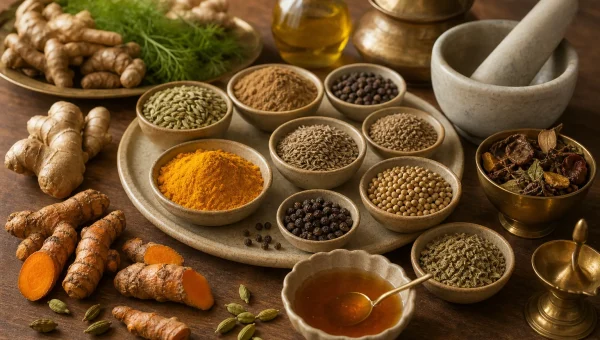
Use whole seeds and crack them lightly just before simmering so the aromatic fraction releases into the water without turning the drink harsh.
- 1/2 teaspoon whole Cumin seeds (Jiraka / Svetajiraka, Cuminum cyminum)
- 1/2 teaspoon whole Coriander seeds (Dhanyaka, Coriandrum sativum)
- 1/2 teaspoon whole Fennel seeds (Mishreya / Madhurika, Foeniculum vulgare)
- 2 cups (480 ml) water
Method
Lightly crush the seeds using a mortar and pestle, just enough to crack them open. Bring the water to a boil, add the crushed seeds, reduce heat to low, and simmer for 5-7 minutes. Strain into a cup and drink warm.
Why It Works
This is a balanced digestive tea: cumin brings dipana and pachana qualities for appetite and digestion, fennel adds anulomana support for comfortable downward movement of Vata, and coriander softens the blend with its aromatic, lighter profile. It is especially useful when heaviness follows a meal but a very hot, pungent formula would feel excessive.
2. Ginger-Tulsi Kadha: The Cold-Season Comfort Cup
Best for: Early-stage cold discomfort, scratchy throat, sinus heaviness, Kapha-type congestion
Best time: Morning, or at the first sign of throat irritation or heaviness
Recipe
This kadha is intentionally pungent and aromatic; reduce the black pepper for a Pitta-dominant person or when there is strong burning, acidity, or mouth ulcers.
- 1-inch piece fresh ginger (Ardraka, Zingiber officinale), sliced thin
- 5-6 fresh Tulsi leaves (Tulasi, Ocimum sanctum) or 1/2 teaspoon dried Tulsi leaf
- 1/8-1/4 teaspoon ground black pepper (Maricha, Piper nigrum)
- 1/2 teaspoon raw honey, added only after the drink is warm rather than hot
- 2 cups (480 ml) water
Method
Add ginger and black pepper to the water. Bring to a boil, then simmer for 8-10 minutes. Remove from heat, add Tulsi leaves, cover, and steep for 3 minutes. Strain, let it cool until comfortably warm, then stir in honey. Do not boil honey.
Why It Works
Ginger, black pepper, and Tulsi are a classic warming direction for Kapha-Vata respiratory discomfort. Ginger is valued for dipana, pachana, and Vata-Kapha pacifying action; black pepper is pungent, hot, and appetite-kindling; Tulsi leaf is listed with kaphahara, vatahara, and respiratory uses such as kasa, svasa, hikka, and pratishyaya.
3. Ashwagandha Moon Milk: The Evening Vata Tonic
Best for: Restless evenings, nervous exhaustion, difficulty settling at night, Vata imbalance
Best time: 30-45 minutes before bed
Recipe
Use root powder for this kitchen preparation. Standardized extracts are different products and should be dosed according to the label or practitioner guidance.
- 1 cup (240 ml) whole milk, or unsweetened almond milk if dairy is not suitable
- 1/4-1/2 teaspoon Ashwagandha root powder (Ashwagandha, Withania somnifera)
- 1/8 teaspoon ground nutmeg (Jatiphala, Myristica fragrans)
- 1/4 teaspoon ground cardamom (Ela, Elettaria cardamomum)
- 1/2 teaspoon ghee
- 1 teaspoon jaggery, if sweetness is needed
Method
Warm the milk on low heat. Add Ashwagandha powder, nutmeg, and cardamom, then whisk for 2-3 minutes. Add ghee and jaggery at the end. Drink warm and keep the dose modest, especially when starting.
Why It Works
Ashwagandha is classically described as rasayana, balya, vata-kapha-apaha, and vajikarana. Warm milk and ghee give the preparation a nourishing, grounding quality that suits evening Vata support, while cardamom helps keep the milk lighter and more digestible.
4. Triphala Tea: The Gentle Nightly Cleanser
Best for: Mild constipation, sluggish elimination, travel-related bowel irregularity, gentle nightly reset
Best time: Before bed for a morning bowel movement, or first thing in the morning on an empty stomach
Recipe
Start low if your digestion is sensitive. Triphala can taste astringent, sour, and bitter because the three fruits are tannin-rich and strongly rasa-forward.
- 1/4-1/2 teaspoon Triphala powder, traditionally made from Amalaki, Bibhitaki, and Haritaki
- 1 cup (240 ml) hot water, off the boil
Method
Add Triphala powder to hot water, stir well, and steep for 10 minutes. Drink the liquid warm. The sediment may be swallowed if tolerated, or strained out for a gentler cup.
Why It Works
Triphala combines Amalaki (Emblica officinalis / Phyllanthus emblica), Bibhitaki (Terminalia bellirica / Terminalia belerica), and Haritaki (Terminalia chebula). Haritaki is listed with anulomana and use in vibandha, Bibhitaki is also listed in vibandha, and Amalaki brings rasayana and tridosha-balancing qualities to the blend.
5. Turmeric-Pepper Golden Milk: The Warming Inflammation-Support Staple
Best for: Joint stiffness, post-exercise soreness, cold-weather body heaviness, skin-support routines
Best time: Late afternoon or after exercise
Recipe
This recipe uses turmeric with black pepper and fat so the drink is not merely turmeric suspended in water; it becomes a more traditional, warming, unctuous preparation.
- 1 cup (240 ml) whole milk, coconut milk, or oat milk
- 1/2-1 teaspoon ground turmeric (Haridra, Curcuma longa)
- 1 pinch to 1/8 teaspoon ground black pepper (Maricha, Piper nigrum)
- 1/2 teaspoon ghee or virgin coconut oil
- 1/4 teaspoon ground cinnamon (Twak, Cinnamomum verum)
- Jaggery to taste, optional
Method
Combine milk, turmeric, and black pepper in a saucepan over medium-low heat. Whisk continuously for 4-5 minutes without bringing it to a hard boil. Add ghee or coconut oil and cinnamon, whisk for another minute, remove from heat, and sweeten if desired.
Why It Works
Haridra is described as pungent, bitter, hot, Kapha-Pitta pacifying, and useful in skin and metabolic contexts. Black pepper contributes dipana and rucya action, while ghee or coconut oil gives the drink the unctuous carrier quality that suits a golden milk preparation better than plain hot water.
6. Brahmi-Shankhpushpi Brain Tonic Tea: The Focus Formula
Best for: Mental fatigue, study routines, memory support, steady concentration
Best time: Morning, 30 minutes before work or study
Recipe
This is a steady tonic cup rather than a stimulant. Omit licorice if you have high blood pressure, low potassium, kidney disease, heart disease, or use diuretics unless a clinician approves it.
- 1/2 teaspoon Brahmi powder (Brahmi, Bacopa monnieri)
- 1/2 teaspoon Shankhpushpi powder (Shankhpushpi, commonly Convolvulus pluricaulis)
- 1/8 teaspoon licorice root powder (Yashtimadhu, Glycyrrhiza glabra), optional
- 1.5 cups (360 ml) water
- 1/2 teaspoon ghee
Method
Bring water to a boil. Add Brahmi, Shankhpushpi, and optional Yashtimadhu. Reduce to a gentle simmer for 8-10 minutes. Strain through a fine mesh and stir in ghee while still warm.
Why It Works
Brahmi is a classical medhya herb used for mental clarity and learning support. Shankhpushpi is listed with medhya, rasayana, balya, and pittahara actions, making the pair suitable for a calm, non-jittery study routine. Ghee gives the tea a grounding finish and helps soften the sharpness of powdered herbs.
7. Ajwain-Ginger Digestive Fire Tea: The Agni Kindler
Best for: Low appetite, slow digestion, post-meal bloating, Kapha-type heaviness
Best time: 15-20 minutes before lunch, or after a heavy meal when appetite and digestion feel dull
Recipe
This is the most heating digestive formula in the list. Use less ginger and skip lime if there is acidity, burning, mouth ulcers, or a strong Pitta pattern.
- 1/2-1 teaspoon Ajwain seeds (Yavani, Trachyspermum ammi)
- 1/2-inch piece fresh ginger (Ardraka, Zingiber officinale), grated
- 1 small pinch rock salt (Saindhava Lavana)
- Juice of 1/4 lime, optional
- 1.5 cups (360 ml) water
Method
Dry-roast the Ajwain seeds for about 30 seconds until fragrant. Add water and grated ginger. Boil for 5 minutes, then simmer for 3 more minutes. Strain, add rock salt and optional lime juice, and drink warm.
Why It Works
Yavani is listed as pungent, bitter, light, dry, sharp, hot, and dipana, pachana, anulomana, shulahara, and rucya. Ginger brings the same digestive direction with dipana, pachana, and Vata-Kapha pacifying action, while a small amount of rock salt and lime can sharpen taste and appetite when tolerated.
Quick Reference: Which Tea for Which Problem
Choose the tea by the dominant pattern: heaviness after eating, cold-season congestion, evening restlessness, sluggish elimination, stiffness, mental fatigue, or low appetite.
| Concern | Tea | Preparation Time | When to Drink |
|---|---|---|---|
| Bloating / Gas | CCF Tea | 5-7 minute simmer | After meals |
| Cold-season congestion | Ginger-Tulsi Kadha | 8-10 minute simmer + 3 minute steep | Morning or early discomfort |
| Restlessness / Vata-type sleeplessness | Ashwagandha Moon Milk | 2-3 minute warm whisk | 30-45 minutes before bed |
| Mild constipation / Sluggish elimination | Triphala Tea | 10 minute steep | Before bed or morning |
| Joint stiffness / Post-exercise soreness | Golden Milk | 4-5 minute warm whisk | Afternoon or post-exercise |
| Mental fatigue / Study support | Brahmi-Shankhpushpi | 8-10 minute simmer | Morning before work |
| Low appetite / Slow digestion | Ajwain-Ginger | 5 minute boil + 3 minute simmer | Before lunch |
Storage and Batch Preparation
These teas are best prepared fresh. If needed, pre-mix only the dry whole seeds or powders in airtight glass jars, keep them away from heat and moisture, and prepare the liquid the day it will be consumed. Strained decoctions may be refrigerated and gently rewarmed once, but the aroma and digestive effect are best when freshly made.
Safety note: These are household preparations, not replacements for diagnosis or medical treatment. Consult a qualified Ayurvedic practitioner or healthcare provider before regular use if you are pregnant or breastfeeding, have a chronic illness, have liver, kidney, heart, blood pressure, thyroid, gallbladder, bleeding, or autoimmune conditions, or take prescription medicines. Avoid licorice with hypertension, low potassium, kidney disease, heart disease, or diuretic use unless supervised. Stop any preparation that causes burning, rash, diarrhea, palpitations, breathing difficulty, or worsening symptoms.
References
- Ijam (ijam.co.in)
- Ayurvedic Pharmacopoeia of India
- Ia800501 (ia800501.us.archive.org)
- Ayurvedic Pharmacopoeia of India
- Studies on the physicochemical characteristics of heated honey, honey mixed with ghee and their food consumption pattern by rats (2010), PubMed Central
- NIH Office of Dietary Supplements
- Therapeutic Uses of Triphala in Ayurvedic Medicine (2017), PubMed Central
- Influence of piperine on the pharmacokinetics of curcumin in animals and human volunteers (1998), PubMed
- NCCIH
- Meta-analysis of randomized controlled trials on cognitive effects of Bacopa monnieri extract (2014), PubMed
- NCCIH
- NCCIH
I tried the morning routine recommended here including the warm water with lemon and ginger and within a week my afternoon energy crash was noticeably better
Good reminder on 7 Ayurvedic Teas for Every Common Ailment. This feels more usable than a long list of herbs.
This has been sitting in my bookmarks for weeks and I finally read it today. Going to implement starting Monday. Thank you for making this so approachable.
Great question, I’ve been wondering the same thing. Following this thread for the answers.
The spice information here overlaps beautifully with what I learned from my Indian mother-in-law. She always cooked this way intuitively. Now I understand the science behind it.
the recipe at the end is now a household staple. My kids even like it, which is the real test. So much easier to eat well when the food is genuinely delicious
the combination approach you described is exactly what my practitioner recommended too. Validation always feels good.
Good reminder on 7 Ayurvedic Teas for Every Common Ailment. Good starting point for a cautious reader.
The point about volatile oils being the key distinction really landed for me. I used to just steep a bag and wonder why nothing was happening. Once I started actually simmering whole spices for a few minutes the aroma alone told me something different was happening chemically. My go-to is now the ginger-tulsi preparation before bed.
Same here! The practitioner recommendation made all the difference for me. Don’t try to do this without guidance.
I’m a registered dietitian and while I approach nutrition from a Western evidence-based perspective, I find the Ayurvedic framework fascinating as a complementary lens.
This is so helpful to read. I’m just starting out with this and hearing positive experiences helps me stay motivated.
please consider adding a note about consulting with a healthcare provider before starting any new supplement regimen. Some readers might not know this.
What I appreciate is that each tea is tied to a specific complaint rather than being presented as a cure-all. I came here looking for something for chronic low-grade nausea and the ginger-cardamom combination is the first thing in a long time that has made a consistent difference.
I never knew there was an actual difference between throwing spices into hot water versus a proper simmer. Tried the cumin-coriander-fennel combination for my afternoon tea this week and the warmth it creates in the stomach is noticeably different from regular herbal tea bags. Which of the seven do you find most useful for post-meal heaviness?
The lifestyle changes recommended here are excellent. The supplement recommendations, less so. Hard to know what dose actually works.
The ashwagandha milk tea at the end — I had been taking ashwagandha in capsule form for months with mediocre results. Switched to the warm milk preparation three weeks ago and the quality of sleep is noticeably different. The fat medium apparently matters more than I thought.
I’ve been using it for a year and can confirm, the results you’re describing are consistent with my longer-term experience
Good reminder on 7 Ayurvedic Teas for Every Common Ailment. I would still ask a practitioner before changing medicines.
So encouraging to hear! Starting my first week and this is motivating me to stick with it.
Thank you for the honest feedback. You’re absolutely right that individual responses vary, and we should emphasize that more. We’ll update the article to include stronger caveats about individual variation.
I run a small Ayurvedic cooking class in my city and I share resources with participants. This article is going on the required reading list immediately.
Thank you so much for sharing your experience! It’s really encouraging to hear from others on this journey
I appreciate that you explained WHY these foods are recommended, not just what they are. Understanding the reasoning helps me make better choices when Im in situations not covered by the list
started drinking CCF tea after reading this. Two weeks in and my appetite feels more regulated and I’m not craving sweets the way I used to after meals.
it’s wonderful to see both believers and skeptics engaging respectfully in the comments. That’s how we all learn
do you have a guide on where to actually source some of these herbs? Brahmi and shankhpushpi are easy enough to find but I’ve been hunting for fresh guduchi for weeks. Would love a follow-up on what to look for in terms of quality when buying dried versus powder.
I had no idea that combining the wrong spices could actually work against each other. The section on pairing made me realize the random spice tea I had been improvising at home probably wasn’t doing much. Starting with the cumin-coriander-fennel combination as a baseline now.
The point about simmering time being the difference between a pleasant drink and an actual therapeutic preparation was something I had never considered. I always just steeped like a regular tea bag. Giving the CCF tea a proper ten-minute simmer this week and the taste alone tells you something different is happening.
the tulsi and black pepper tea for immunity is so simple I almost dismissed it. Made it through a bad cold season at work last month and I genuinely think that daily cup helped. Sometimes the oldest remedies are sitting right there in the kitchen.
I tried the ginger and licorice combination you described for the first time this week and the warmth it produces is unlike anything I get from a regular ginger tea. There is clearly something about simmering it for the full time that changes the character completely. My mother-in-law does this every morning and I finally understand why.
Good reminder on 7 Ayurvedic Teas for Every Common Ailment. The main idea is clear even if someone is new to Ayurveda.
The brass pot detail is exactly right. My Ammamma made all her teas in a specific small brass vessel reserved only for medicinal preparations. She had a theoretical explanation involving the metals influencing the medicine that I couldn’t evaluate at ten but that I find more credible at forty.
The 7 Ayurvedic Teas for Every Common Ailment explanation is clearer than most short posts. Would be useful to see a short checklist next.
The Tulsi-ginger-black pepper tea for immunity is the exact combination I was never quite sure about proportions for. The 1:1:0.5 ratio described here is the first standardized recipe I’ve found for a preparation my family has made by instinct for generations.
Your skepticism is healthy and welcome. We never intend for our content to replace medical advice, and we’ll make that clearer going forward.
Is there a caffeine-sensitive version of the Trikatu energy tea? The warming and digestive support without the stimulant crash sounds useful but I’ve had heart palpitations from even small amounts of caffeine. Trikatu itself doesn’t contain caffeine but the combination with other warming herbs has me cautious.
The CCF tea recipe looks straightforward, just crush cumin, coriander, and fennel seeds before simmering for five to seven minutes.
My mother started making the Triphala tea preparation instead of the powder in water and she says the decoction is much more palatable. Preparation method clearly affects the flavor profile and palatability matters for daily compliance.
tried this exact protocol for 6 weeks and honestly saw no difference. maybe it works for some people but wasnt for me
What makes the simmering time clinically significant? The article specifies 5-10 minutes for most preparations. Would a longer simmer extract more or denature the volatile compounds that carry the therapeutic effect?
I wonder if using a brass pot really makes a difference in extracting those volatile oils compared to stainless steel.
The Ashwagandha milk preparation in this article is the simplest possible entry point for someone completely new to Ayurvedic herbs. You can buy Ashwagandha powder at any health food store now and warm milk is already in most kitchens. No complicated sourcing required to start.
The ginger tulsi kadha instruction to never boil honey is a useful reminder; I’ll add it after the tea cools.
The Coriander-Cumin-Fennel combination for daily summer tea is cooling and pleasant. I switched from coffee to CCF tea in the mornings during July and my afternoon energy crashes reduced noticeably. Whether that’s the tea or the absence of coffee is something I’ll test this year.
For anyone dealing with bloating after meals, drinking the CCF tea fifteen minutes post dinner could be worth a try.
Storing pre mixed dried herb blends in airtight glass jars for up to three months is a handy tip for batch prep.
I appreciate the caution about licorice root raising blood pressure; limiting intake to four six weeks feels sensible.
The triphala tea’s astringent taste is normal, and starting with a quarter teaspoon makes the adjustment easier.
Golden milk’s reliance on fat from ghee or coconut oil to boost curcumin absorption matches what I’ve read elsewhere.
The brahmi shankhpushpi tea’s addition of ghee as a yogavahi is an interesting twist on a typical herbal infusion.
Roasting ajwain seeds for thirty seconds before adding water seems to unlock that thymol rich aroma.
Drinking the ajwain ginger fire tea twenty minutes before lunch might help kickstart digestion for a heavier meal.
The quick reference chart at the end is a nice cheat sheet for matching each tea to its ideal time of day.
I’m curious whether substituting almond milk for cow’s milk in the moon milk changes the fat soluble absorption of withanolides.
The advice around 7 Ayurvedic Teas for Every Common Ailment is specific enough to be useful. I appreciate that it does not oversell the result.
Ashwagandha moon milk’s step of whisking continuously to prevent clumping seems essential for a smooth drink.
The advice around 7 Ayurvedic Teas for Every Common Ailment is specific enough to be useful. I would like to know how long to try it before judging results.
The 7 Ayurvedic Teas for Every Common Ailment angle is useful here. This is the kind of detail readers can test slowly.
Does this protocol work for people with Pitta dominance? I’ve heard some of these herbs can aggravate heat conditions. ✨
The article says 500mg but I’ve seen clinical studies use higher amounts. Can you clarify which dosage this is based on?
My gym trainer uses neem for recovery and recommended it to me. The half teaspoon in water dose for this purpose is different from the stress-use dose.
Passed this along to my colleague who was asking about natural approaches for sleep. She found the explanation straightforward.
Tried amla for memory for 3 months. Noticed zero difference. Maybe the issue is my specific condition doesn’t respond to this herb.
I use a combination of shatavari and shatavari as per my Ayurvedic practitioner’s advice. The article aligns with what she told me.
Tried moringa for sleep for 3 months. Noticed zero difference. Maybe the issue is my specific condition doesn’t respond to this herb. 🙏
My gym trainer uses turmeric for recovery and recommended it to me. The 1 teaspoon churna dose for this purpose is different from the stress-use dose.
I came for 7 Ayurvedic Teas for Every Common Ailment and this answered the main question. I would like to know how long to try it before judging results.
@Priyanka Same experience here. The first month felt like nothing but then gradually noticed differences.
I use a combination of shatavari and ashwagandha as per my Ayurvedic practitioner’s advice. The article aligns with what she told me.
Been taking neem for about 5 weeks now and honestly my acidity has improved quite a bit. Wasn’t expecting this much difference.
Trying licorice root specifically for low energy, started 3 weeks ago. The 1 teaspoon churna dose felt manageable from day one.
My hair thinning has been my main health concern for 4 years. This is the first protocol that’s making a dent after 7 weeks.
The 3g dose of ginger seems standard across multiple sources I’ve checked. Good to see consistency in the recommendation.
The information on combining triphala with trikatu is solid. This combination is what traditional practitioners have used for centuries.
I would like more detail on 7 Ayurvedic Teas for Every Common Ailment. This would be easier to follow with a one-week sample plan.