
Ayurvedic Intermittent Fasting: What the Classical Texts Say About Langhana
Intermittent fasting is often described today through eating windows, metabolic switching, insulin response, and cellular recycling. Ayurveda approaches the same broad terrain through a different clinical language: Langhana, the set of therapies that make the body light, reduce excess burden, and restore functional digestive capacity. In this framework, fasting is not a stand-alone wellness trend. It is one expression of a wider therapeutic principle that must be chosen according to constitution, strength, digestion, season, age, and the nature of imbalance.
Langhana in the Classical Texts
In the Charaka Samhita, Langhana is discussed in Sutra Sthana, chapter 22, the Langhanabrimhaniya Adhyaya. Charaka defines Langhana as that which produces lightness or reduction in the body. The same chapter places Langhana among the six broad therapeutic measures: Langhana, Brimhana, Rukshana, Snehana, Swedana, and Stambhana. This makes Langhana a major Ayurvedic treatment principle, not merely a synonym for skipping food.
Classically, Langhana is selected when the therapeutic goal is lightening: reducing heaviness, easing obstruction, digesting accumulated morbid material, and relieving conditions dominated by excess Kapha, Pitta, waste products, or obstructed Vata. The text repeatedly places emphasis on clinical judgment, especially the patient’s strength, the strength of the disease, the state of Agni, the season, and the correct measure of the intervention.
The 10 Classical Methods of Langhana
Charaka lists ten methods of Langhana. Four are purification-oriented measures, and six are non-procedural or lifestyle-oriented measures. This classification is important because it shows that Ayurveda never reduced Langhana to food restriction alone.
Purification-oriented Langhana, 4 methods:
- Vamana – therapeutic emesis, used in appropriate cases of Kapha-dominant morbidity.
- Virechana – therapeutic purgation, used in appropriate Pitta-dominant and related conditions.
- Niruha Basti – non-unctuous therapeutic enema, used under qualified supervision.
- Shirovirechana or Nasya – cleansing therapy directed through the head and nasal route.
Additional Langhana methods, 6 methods:
- Pipasa – regulated restraint of thirst in carefully selected settings, not casual dehydration.
- Maruta – exposure to air or wind, interpreted in practice as lightening through movement, breathing, and open-air activity.
- Atapa – appropriate exposure to sunlight and warmth.
- Pachana – digestive measures that help process undigested or morbid material.
- Upavasa – fasting or abstinence from food, the closest classical equivalent to modern fasting windows.
- Vyayama – exercise, used to create lightness through movement and expenditure.
This wider list is the key Ayurvedic contribution to the fasting discussion. Modern intermittent fasting usually focuses on when calories are consumed. Langhana includes fasting, but it also includes digestion-supporting measures, exercise, sunlight, air, and supervised cleansing procedures. In this sense, a person may need Langhana without needing a long fast, and another person may need nourishment rather than restriction.
How Langhana Parallels Modern Intermittent Fasting
Modern intermittent fasting is generally organized around alternate-day fasting, whole-day fasting, or time-restricted eating. Ayurveda organizes Langhana around clinical effect: whether the chosen method produces appropriate lightness without weakening the person. The two frameworks can be compared, but they should not be treated as identical.
In contemporary physiology, fasting periods are often discussed in relation to lower energy intake, reduced insulin exposure, increased use of stored fat, ketone production in longer fasts, and shifts in cellular maintenance pathways. Ayurveda describes a different model: when the digestive system is not constantly burdened by new intake, Agni may recover its capacity to process food and accumulated Ama. The comparison between Ama-pachana and cellular recycling is useful as an analogy, but Ama is an Ayurvedic clinical concept and should not be equated one-to-one with autophagy.
The modern idea of metabolic flexibility, the ability to adapt fuel use according to feeding, fasting, and activity, also resembles the Ayurvedic concern with balanced Agni. A person with stable digestion, appropriate hunger, clear elimination, and steady energy is closer to the Ayurvedic ideal of functional balance. A person with irregular appetite, heaviness, bloating, strong cravings, or fatigue after eating may need a different Langhana strategy than a rigid clock-based fasting plan.
Dosha-Specific Fasting Protocols
Ayurveda’s most practical contribution is individualization. The same fasting window may feel clarifying for a Kapha-dominant person, irritating for a Pitta-dominant person, and destabilizing for a Vata-dominant person. The hour ranges below are modern practical approximations based on Ayurvedic principles; they are not fixed classical prescriptions.
Vata Constitution: Light and Supported Fasting
Vata is light, dry, mobile, and variable. Because Langhana also uses lightening and often drying qualities, excessive fasting can aggravate Vata. Vata-dominant people often do better with regularity, warmth, moisture, and gentle restriction rather than heroic fasting.
- Recommended approach: A gentle overnight fast of about 12 hours, such as finishing dinner early and eating a warm breakfast when genuine hunger appears.
- Supportive options: Warm water, cumin-coriander-fennel tea, ginger tea if tolerated, or thin rice gruel on a light Langhana day.
- Frequency: Occasional light fasting, usually not daily strict fasting.
- Breaking the fast: Warm, moist, well-cooked food such as soft rice, mung soup, or kitchari with a small amount of ghee.
- Generally unsuitable: Dry fasting, one-meal-a-day patterns, repeated 24-hour fasts, and fasting that worsens anxiety, insomnia, constipation, tremors, or coldness.
Pitta Constitution: Moderate and Cooling Fasting
Pitta is hot, sharp, and transformative. Pitta-dominant people may have strong appetite and strong digestion, but excessive hunger can lead to acidity, irritability, headaches, heat, burning sensations, or inflammatory flare-ups. Their fasting should preserve steadiness rather than intensify heat.
- Recommended approach: A moderate overnight fast of about 12-14 hours, preferably created by taking an early, light dinner rather than skipping a needed midday meal.
- Supportive options: Plain water for strict time-restricted eating; coriander-fennel tea, diluted pomegranate, or coconut water only when the plan is an Ayurvedic light-food day rather than a zero-calorie fast.
- Frequency: A few days weekly, adjusted during hot weather, high stress, and periods of acidity or inflammation.
- Breaking the fast: Warm but not overly spicy food, with moderate portions and enough softness to protect digestion.
- Generally unsuitable: Fasting through intense hunger, fasting in peak heat, and breaking the fast with chilies, fried foods, sour ferments, alcohol, or very acidic foods.
Kapha Constitution: Stronger Langhana When Appropriate
Kapha is heavy, slow, cool, stable, and prone to accumulation when aggravated. Kapha-dominant people often tolerate Langhana better than Vata or Pitta types, especially when heaviness, lethargy, excess sleep, sluggish digestion, weight gain, or mucus accumulation are present. Even here, fasting should end at the signs of proper lightness, not at the ego’s idea of endurance.
- Recommended approach: A 14-16 hour overnight fast may be suitable for many robust Kapha-dominant adults; longer fasts should be supervised.
- Supportive options: Warm water, ginger tea, trikatu-type digestive support only when prescribed, and honey only in unheated or lukewarm preparations.
- Frequency: More frequent Langhana may be appropriate in Kapha season or during clear Kapha excess, provided strength and appetite remain healthy.
- Breaking the fast: Light, warm, spiced food in small portions, such as vegetable soup, mung soup, or thin kitchari.
- Encouraged: Pairing mild fasting with Vyayama, because exercise is itself one of Charaka’s listed Langhana methods.
Ayurvedic Langhana vs. Modern Intermittent Fasting
Langhana and intermittent fasting overlap most clearly at Upavasa, but their clinical logic differs. Modern protocols often begin with a fixed schedule. Ayurveda begins with the person, the disease pattern, the digestive state, and the signs that the intervention has become sufficient.
| Aspect | Ayurvedic Langhana | Modern Intermittent Fasting |
|---|---|---|
| Primary aim | Lightness, reduction of excess, restoration of Agni, processing of Ama | Meal timing, calorie reduction, metabolic switching, weight or cardiometabolic goals |
| Scope | Ten methods including fasting, exercise, digestive measures, sunlight, air, and supervised purification | Mainly fasting and eating windows |
| Individualization | Based on constitution, strength, disease, season, digestion, and age | Often based on standard patterns such as 16:8, 5:2, or alternate-day fasting |
| Completion marker | Signs of proper Langhana, such as lightness, clear elimination, restored taste, hunger, and well-being | Completion of the chosen fasting window |
| Food quality | Warm, light, digestible, constitutionally appropriate food is emphasized | Food quality varies by protocol |
| Risks | Over-lightening, Vata aggravation, loss of strength, loss of appetite, depletion | Hunger, fatigue, headache, overeating, disordered eating risk, hypoglycemia risk in susceptible people |
When Fasting Is Contraindicated
Classical Ayurveda is careful about the limits of Langhana. Lightening therapies are not suitable when the person needs building, protection, recovery, or stabilization. Modern safety guidance also cautions that intermittent fasting is not appropriate for everyone.
- Children and adolescents: Growth requires regular nourishment.
- Pregnancy and breastfeeding: Consistent nutrition is needed for the mother and child.
- Emaciation, debility, or recent wasting: Such people generally require Brimhana, not stronger Langhana.
- Elderly or very weak individuals: Fasting may reduce strength and resilience.
- Eating disorders or strong restrictive tendencies: Fasting can reinforce harmful patterns.
- Diabetes, hypoglycemia risk, or medications requiring food: Fasting should be used only with medical guidance.
- After surgery, major illness, blood loss, or exhaustion: Recovery usually requires nourishing measures.
- Vata-dominant disorders: Insomnia, anxiety, dryness, tremors, constipation, chronic pain, and neurological instability can worsen with excessive fasting.
- High physical workload or athletic training: Fueling and recovery needs may override fasting goals.
Signs of Proper vs. Excessive Fasting
Charaka gives practical signs for judging whether Langhana has been properly administered or taken too far. These signs are more body-responsive than simply counting hours.
Signs of proper Langhana include:
- Clear passage of flatus, urine, and feces.
- Lightness in the body.
- Clean feeling in the chest, throat, mouth, and belching.
- Reduction of drowsiness and exhaustion.
- Return of taste, appetite, and thirst.
- A sense of internal ease and well-being.
Signs of excessive Langhana include:
- Joint pain and body ache.
- Cough or dryness of the mouth.
- Loss of hunger or aversion to food.
- Excessive thirst.
- Weakness of body, hearing, or vision.
- Mental confusion, faintness, or instability.
- Loss of body strength, digestive power, and vitality.
In practical terms, a fast is not successful merely because it was long. It is successful when it creates lightness without depleting strength, restores appetite without provoking craving, and leaves the mind clear rather than agitated.
Modern Physiology Beside the Langhana Framework
Modern time-restricted eating and intermittent fasting literature describes fasting as a dietary pattern that alternates periods of little or no caloric intake with periods of eating. Common forms include alternate-day fasting, the 5:2 pattern, and daily time-restricted eating. Human findings vary by protocol, duration, calorie intake, baseline health, and adherence, so it is better to treat fasting as a tool rather than a universal prescription.
Early time-restricted feeding has been studied for glucose regulation, lipid metabolism, circadian gene expression, and markers related to cellular maintenance. Autophagy, the cellular process of degrading and recycling components, is a recognized biological pathway, and Yoshinori Ohsumi received the 2016 Nobel Prize in Physiology or Medicine for discoveries of mechanisms of autophagy. Ayurveda’s Agni-Ama language belongs to a different medical system, but the shared practical insight is simple: the body benefits from rhythm, intervals of non-feeding, and food that can be properly digested.
A Practical Weekly Langhana Template
The following schedule is a cautious example for a generally healthy Kapha-Pitta adult with stable digestion. It is not suitable for pregnancy, eating disorders, children, frailty, diabetes medication use, or active illness. A qualified practitioner should adapt it for individual constitution and health status.
- Monday: Early light dinner, then a 14-hour overnight fast. Break with warm kitchari or mung soup.
- Tuesday: Normal meals with the main meal at midday and a light dinner.
- Wednesday: 14-16 hour overnight fast if hunger, energy, mood, and elimination remain stable.
- Thursday: No strict fasting; focus on warm, freshly cooked, digestible meals.
- Friday: Light Langhana day with morning exercise, warm water, and simple meals without fried, cold, or heavy foods.
- Saturday: Flexible social eating while avoiding overeating at night.
- Sunday: Gentle 12-hour overnight fast, restorative breathing, and an early dinner.
Breaking a Fast the Ayurvedic Way
Ayurveda gives great importance to how food is reintroduced after a period of restriction or cleansing. After stronger purification procedures, classical dietetics uses a graduated return from lighter to heavier foods. For ordinary household fasting, the same principle can be applied gently: begin with warm, simple, easy-to-digest food and increase heaviness only as appetite and digestive comfort return.
Suitable fast-breaking foods include:
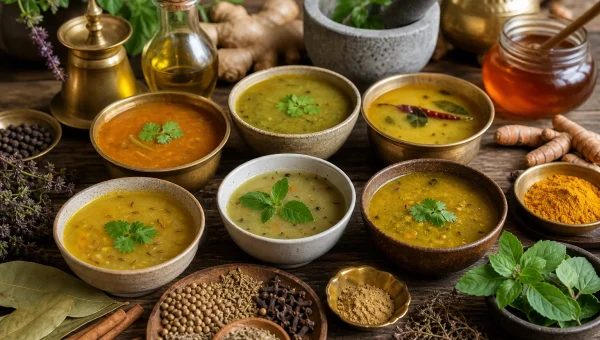
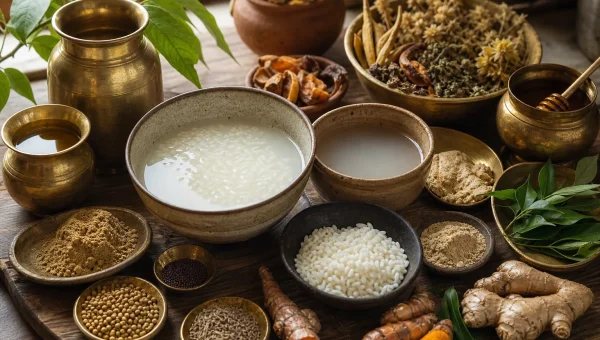
- Peya – thin rice gruel or rice water for very light digestion.
- Vilepi – thicker rice gruel when appetite is clearer.
- Mung soup – light protein in a digestible form.
- Kitchari – rice and mung cooked soft with mild digestive spices.
- Warm vegetable soup – especially when heaviness or sluggishness is present.
- Stewed fruit – useful for some Vata types after a mild overnight fast.
Avoid breaking a fast with cold smoothies, raw salads, fried foods, large portions, heavy dairy, alcohol, or highly spicy meals. These can burden digestion and reverse the purpose of Langhana. If honey is used, it should not be boiled or mixed into hot liquids; add it only when the preparation is lukewarm.
The Ayurvedic Takeaway
Langhana offers a more nuanced approach to fasting than a fixed eating window alone. It asks: Is the body heavy or depleted? Is Agni strong, weak, sharp, or irregular? Is the person Kapha-dominant, Pitta-dominant, or Vata-sensitive? Are there signs of proper lightness, or signs of over-restriction? When these questions guide practice, fasting becomes a carefully measured therapeutic tool rather than a rigid rule.
This article is for educational purposes only. It does not diagnose, treat, or replace medical care. Consult a qualified Ayurvedic practitioner and a licensed healthcare provider before starting fasting, herbs, supplements, detoxification, or therapeutic protocols, especially if pregnant, breastfeeding, underweight, elderly, diabetic, taking medication, recovering from illness, or managing a medical condition.
References
- Charaka Samhita — Langhanabrimhaniya Adhyaya
- Charaka Samhita — Upakalpaniya Adhyaya
- Nutritionsource (nutritionsource.hsph.harvard.edu)
- Mayoclinichealthsystem (mayoclinichealthsystem.org)
- Early Time-Restricted Feeding Improves 24-Hour Glucose Levels and Affects Markers of the Circadian Clock, Aging, and Autophagy in Humans (2019), PubMed
- Effects of Intermittent Fasting on Health, Aging, and Disease (2019), PubMed
- Metabolic Flexibility in Health and Disease (2017), PubMed Central
- Metabolic flexibility and insulin resistance (2008), PubMed
- NobelPrize.org
- Intermittent fasting modulates the intestinal microbiota and improves obesity and host energy metabolism (2023), PubMed
- Studies on the physicochemical characteristics of heated honey, honey mixed with ghee and their food consumption pattern by rats (2010), PubMed Central
I switched to eating this way about two months ago and my digestion has completely transformed. I used to have bloating every single day. It’s almost gone now
I’m going to share this comment with my skeptical partner. Exactly what I needed to articulate why this works.
The shopping list format is brilliant. I’ve tried following Ayurvedic diet advice before but always got stuck at the grocery store not knowing what to buy. This solves that.
That’s a really important distinction you’ve made. I think a lot of people skip the preparation phase and then wonder why results are inconsistent
I was resistant to giving up raw salads, feels counterintuitive when you’ve been told salads are healthy. But three weeks of warm cooked vegetables and my digestion is so much calmer
Your experience with the diet changes mirrors mine almost exactly. Week two is when it clicks.
I run a small Ayurvedic cooking class in my city and I share resources with participants. This article is going on the required reading list immediately.
Your comment prompted me to finally try this. Thank you for the push!
I love how this connects food to season rather than giving one-size-fits-all advice. I always felt worse eating the same things in winter as in summer. Now I understand why.
My nutritionist and my Ayurvedic practitioner have me working together and articles like this help me bridge the two frameworks in my own cooking.
I came here to say exactly this and you said it better. Completely agree
the seasonal eating section is so logical once you read it. Eating what grows locally and seasonally is the original human diet. We just forgot somewhere along the way.
I’ve been using it for a year and can confirm, the results you’re describing are consistent with my longer-term experience
The recipe at the end is now a household staple. My kids even like it, which is the real test. So much easier to eat well when the food is genuinely delicious.
Would love to see a version of this for people who travel frequently. Maintaining Ayurvedic eating habits while eating out or at hotels is really challenging.
I think the article could be improved by addressing the quality control issues with Ayurvedic herbs. Heavy metal contamination is a real concern with unregulated products.
The timing guidance around eating is new to me. I’d never considered when I eat as significant as what I eat. Already experimenting with making lunch my biggest meal.
I’m a chef and Ive been incorporating these principles into my menu development. The food combining guidance especially has influenced how I think about recipe creation.
the spice information here overlaps beautifully with what I learned from my Indian mother-in-law. She always cooked this way intuitively. Now I understand the science behind it.
the food combining rules here helped me understand why certain meals left me feeling heavy and uncomfortable even when the individual foods were healthy.
I’ve been following this for three weeks. The first week was an adjustment but by week two I felt notably more energized. The midday slump I used to have has mostly disappeared.
I appreciate that you explained WHY these foods are recommended, not just what they are. Understanding the reasoning helps me make better choices when I’m in situations not covered by the list
Started drinking CCF tea after reading this. Two weeks in and my appetite feels more regulated and I’m not craving sweets the way I used to after meals.
Thank you so much for sharing your experience! It’s really encouraging to hear from others on this journey.
For Intermittent Fasting, consistency seems like the hard part. I would still ask a practitioner before changing medicines.
Great question, I’ve been wondering the same thing. Following this thread for the answers.
For Intermittent Fasting, consistency seems like the hard part. The main idea is clear even if someone is new to Ayurveda.
I work in healthcare too and I appreciate you engaging with this from a clinical standpoint.
The explanation of why to avoid cold water was the first thing I implemented. Such a small change but I genuinely feel it makes a difference in how I digest my meals
The meal plan here is so practical. I was intimidated by Ayurvedic cooking but seeing it broken down like this makes it feel achievable for a busy working parent
I’d rate this a 6/10. Good foundational info but lacks the specificity needed to actually implement. More like an introduction than a protocol
The advice around Intermittent Fasting is specific enough to be useful. I appreciate that it does not oversell the result.
My grandmother used to swear by this and now I understand why. The part about classical specifically matches what I observed in her health over the years.
Tried 18:6 fasting for three months as a Vata-Pitta. The Vata aggravation was real. I was cold, anxious, and my sleep got worse by month two. Shortening to a 12 hour window as suggested here and adding warm broth in the morning changed everything.
Having studied both Ayurveda and Western nutrition, I think this article overstates some benefits while ignoring well-established nutritional science.
The Charaka description of Langhana as treatment for Ama is one of the most pragmatic classical applications. The contemporary research on autophagy from caloric restriction is the mechanism story that gives Langhana its modern validation.
This is constructive feedback we take seriously. We’ve added a note about consulting with your healthcare provider, especially if you’re on existing medications.
The article correctly identifies that Agni strength is a prerequisite for fasting benefit. A person with weak Agni who fasts will generate more Ama not less. My experience with Panchakarma supported fasting versus self-directed fasting confirms this difference.
I’m a Kapha type and the protocol seems designed more for Vata. Any modifications?
For Intermittent Fasting, consistency seems like the hard part. The examples make the advice less abstract.
That’s a very fair point. We always recommend working with a qualified practitioner alongside any self-guided protocol. We’ll add a more prominent disclaimer.
The advice around Intermittent Fasting is specific enough to be useful. This feels more usable than a long list of herbs.
The breakdown of the ten Langhana types really shows how Ayurveda sees fasting as more than just skipping meals.
The Ekadashi fasting tradition in Hinduism falls naturally in the 11th day of each lunar fortnight. The connection to the Ayurvedic logic of monthly digestive rest cycles is something I had never connected before reading this.
I wonder how the Kapha specific recommendations would feel during a hot summer month.
The article lacks any guidance for people with blood sugar management needs. Intermittent fasting protocols for diabetics or pre-diabetics require medical supervision. This is a significant omission given the readership likely includes many with metabolic health concerns.
Does the article suggest any herbs that work well for Vata types when trying a short fast?
It’s interesting to see the parallel between Ama digestion and modern autophagy research.
I do Phalahar on Mondays as a religious practice and have for fifteen years. The digestive rest and mental clarity I notice on those days is the same thing this article describes as Langhana benefits. The religious and Ayurvedic rationales converge.
I found the sample weekly schedule helpful for visualizing how to alternate fasting days with normal eating.
The emphasis on breaking a fast with warm, light foods makes a lot of sense for protecting Agni.
The Pitta fasting protocol here says avoid fasting during peak Pitta hours of noon. So essentially a Pitta type should have lunch and fast around it. This is almost the exact opposite of the standard IF advice to skip breakfast and eat in an afternoon window.
Are there any risks mentioned for Pitta types who try fasting during the peak of summer?
The discussion of Shodhana versus Shamana Langhana clarified why treatments like Virechana belong in the purification group.
I appreciate that the article warns against extended water fasts for Vata dominant individuals.
I have PCOD and my gynecologist recommended intermittent fasting. My Ayurveda practitioner initially advised against it given my Vata imbalance. This article helped me understand why they were in disagreement and how to find a middle approach.
Seeing the signs of proper versus excessive fasting gives a practical way to listen to the body instead of watching the clock.
The Charaka Samhita reference makes the historical depth of Langhana feel solid and well documented.
Tried water fasting for 24 hours based on a Langhana detox recommendation I read somewhere. Terrible experience. This article’s emphasis on warm water, herbal teas, and light preparations during therapeutic fasting rather than strict water-only is the guidance I needed beforehand.
How does sunlight exposure fit into the Langhana framework as a way to create lightness?
I like that the article mentions using ginger cumin tea as a supportive liquid for Vata types during a fast.
The contraindications list feels thorough, especially noting grief and extreme stress as times to avoid fasting.
Useful
The comparison to modern medicine approach was helpful. My doctor and vaidya recommend different things.
Does this interfere with standard medications? I take something daily and want to be careful.
It would be useful to see a comparison chart of the ten Langhana types alongside modern fasting methods.
The section on diet modifications alongside the herb protocol is what makes this more complete than other guides.
tried this and the results surprised me after only 10 days
Same here
The research citations are good but mostly from small studies. Would like to see larger trial data.
The historical context from Charaka Samhita grounding the recommendation was reassuring.
Just found this post through a search. Is the recommendation still current or has anything changed?
The morning routine elements you suggest are already part of my dinacharya. Adding the missing piece you mentioned now.
I came for Intermittent Fasting and this answered the main question. The article avoids making it sound like a quick fix.
my grandmother used to do something similar. not exactly this but the core principle was the same
Will try
The specific dosage mentioned in the article, is that for adults only or does it change for elderly users?
I wish you had included more on the Vata-specific approach. The article focuses heavily on Pitta.
The section on contraindications was the most useful part. I have a pre-existing condition and needed that clarity.
I started following the protocol you described 3 weeks back. Early results are encouraging.
Does this protocol vary by dosha type? I’m Pitta dominant and some of what you describe seems heating.
my vaidya recommends something slightly different but the core approach is the same
Doing this
This confirmed what I was already doing intuitively. Nice to have the Ayurvedic framework to understand why.
Late to this post but finding it very helpful. The practical step-by-step format makes it easy to follow.
Does the treatment timeline change if you’ve had this issue long-term vs recently?
I’ve been dealing with this issue for 2 years and tried multiple things. Starting the approach you outlined here.
The quality of the herb source makes a big difference I’ve found. The article should mention what to look for when buying.
The approach described here is different from what my vaidya recommends. Is there a regional variation in this protocol?
The 3-week timeline seems optimistic based on my experience. More like 6 weeks for me.
The historical references add credibility. Knowing this has been used for centuries matters to me.
Does age affect how this works? I’m 52 and wondering if the protocol needs adjustment.
Just tried this for the first time this week. Too early to say but no adverse effects so far.
Any guidance for people who travel frequently? Hard to maintain a consistent protocol.
I wish the article addressed what to do if you notice no effect after the recommended duration.
Skeptical but trying anyway because conventional medicine hasn’t helped. Will report back.
I have a question about the timing, morning or evening for best results with this?
started last week based on this article. will update in a month