
At 22 weeks pregnant, Kavitha noticed faint lines across her lower abdomen. She had already tried coconut oil and a commercial “stretch-mark” oil, but her midwife offered a more realistic explanation: pregnancy stretch marks are common, harmless changes in the deeper skin, and no oil or massage direction can guarantee prevention. A simple topical routine may reduce dryness or itching, yet heredity, skin characteristics, hormonal change, and the speed of stretching matter more than technique.
What Pregnancy Stretch Marks Are
Pregnancy stretch marks are called striae gravidarum, a form of striae distensae. They often begin as pink, red, purple, reddish-brown, or dark-brown lines and become paler with time. They commonly occur on the abdomen, breasts, hips, buttocks, and thighs as the dermis and its supporting connective tissue adapt to rapid growth. They are not wounds, infections, or evidence that the skin has been neglected.
Risk cannot be fully controlled. Reviews identify younger maternal age, a personal or family history of stretch marks, greater pregnancy weight gain, and higher infant birth weight among the more consistent associations. Hormonal changes and mechanical stretching both contribute, so two people using the same product may have very different outcomes.
An Evidence-Aware Ayurvedic View
Ayurveda’s verified classical antenatal framework is garbhini paricharya: individualized care of the pregnant woman through suitable food, conduct, rest, and gentle treatment. Charaka Samhita’s pregnancy guidance emphasizes special care and mild measures, while the reviewed classical summary cautions against repeated excessive oil massage. The recognized classical term for these abdominal lines is Kikkisa—the striae accompanied by itching that the texts describe on the gravid abdomen, addressed in Charaka Samhita (Sharira Sthana) and Ashtanga Hridaya. Kshata chinha, by contrast, is not a standard classical name for pregnancy striae, and I could not verify a trimester-specific oil schedule or a rule requiring clockwise abdominal massage.
A responsible contemporary interpretation is modest. An unperfumed oil or emollient may be used as external snehana for comfort when it suits the individual, but claims that it penetrates to a specific dhatu, redirects Vata, builds collagen, or prevents dermal tearing exceed the available evidence.
What Topical Products Can and Cannot Do
Moisturizers and oils can soften dry skin, reduce friction, and ease tightness or itch. Emollients mainly form a protective film that helps retain moisture. However, a Cochrane review found no high-quality evidence that any tested topical preparation reliably prevents pregnancy stretch marks, and the NHS states that evidence for creams and oils is limited.
| Option | Reasonable use | Not established |
|---|---|---|
| Fragrance-free cream or ointment | Hydrates dry or itchy skin | Guaranteed prevention or removal |
| Simple plant oil | Reduces dryness and improves glide | That sesame, coconut, almond, or olive oil is superior |
| Centella-containing cosmetic | Optional after reviewing the full label | That Centella oil alone prevents striae |
| Complex Ayurvedic medicated oil | Only after ingredient-by-ingredient clinical review | Routine pregnancy safety or proven anti-striae action |
| Retinoid or retinol product | Avoid during pregnancy | Pregnancy safety |
Reviewing the Common Ayurvedic Ingredients
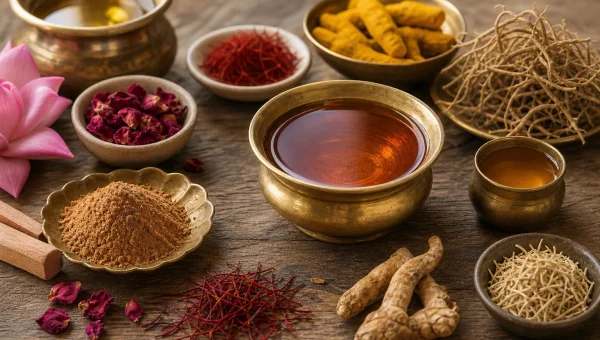
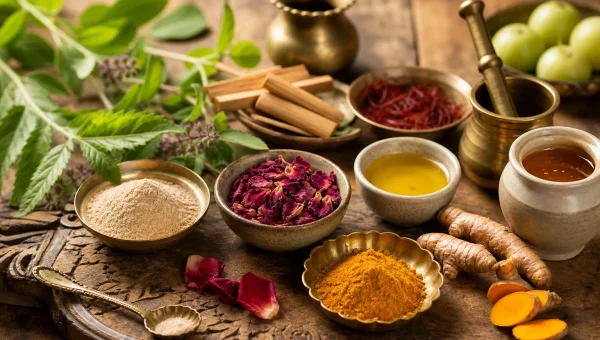
The Ayurvedic Pharmacopoeia of India includes monographs for Shatavari, Lodhra, Manjistha, Mandukaparni, and Haridra, but pharmacopoeial recognition does not prove prevention of pregnancy striae. Traditional use, laboratory findings, cosmetic use, and pregnancy safety are separate questions. Formula, route, dose, product quality, and the person’s medical history all matter.
Shatavari (Asparagus racemosus)
The proposed universal dose of 1–2 grams twice daily from the first trimester was not supported by a verified obstetric guideline or stretch-mark trial. Shatavari powder, ghee, or medicated oil should not be prescribed routinely for this cosmetic purpose. Oral use in pregnancy requires review by the obstetric clinician and a qualified Ayurvedic practitioner.
Lodhra, Manjistha, and Turmeric
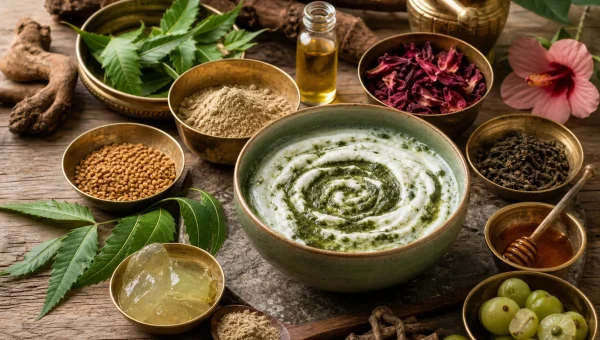
Classical texts do prescribe these herbs for Kikkisa: Charaka Samhita (Sharira Sthana 8) and later compendia such as Ashtanga Hridaya recommend gentle external application of an herbal paste (lepa)—including drugs such as Manjistha and Lodhra—on the pregnant abdomen. Their use rests on this classical authority rather than on modern trials, so it is a category error to demand a randomized trial before accepting the traditional indication. What does exceed the texts is the modern gloss: phrasing such as topical Lodhra “tightening the extracellular matrix,” Manjistha “reversing” striae pigmentation, or turmeric in sesame oil “preventing dermal inflammation” is contemporary mechanistic language, not a classical claim. Prepared as a smooth, gentle lepa in the classical manner, these pastes are appropriate; a coarse, dry powder rubbed on sensitive skin may abrade, irritate, or stain, so a fine paste, prior patch testing, and the guidance of a qualified practitioner are preferable to improvised home use.
Mandukaparni or Gotu Kola (Centella asiatica)
Centella contains triterpenoid compounds and has been studied in wound and cosmetic research. One older randomized trial reported fewer stretch marks with a multi-ingredient cream containing Centella extract, vitamin E, and collagen-elastin hydrolysates. It did not test Centella oil alone, and the broader Cochrane review judged the prevention evidence insufficient and low quality. Centella should therefore be described as uncertain, not as a proven collagen treatment.
Kumkumadi and Dhanvantaram Taila
These are compound medicated oils, and commercial ingredient lists may vary. I found no verified clinical evidence supporting five to eight drops of Kumkumadi Taila, nightly Dhanvantaram Taila, or either product as a trimester-specific anti-striae treatment. Complex formulas require a complete label, reputable manufacture, patch testing, and clinician approval.
A Safer Daily Skin-Comfort Routine
The aim of home care should be comfort and skin-barrier support, not a promise of prevention. It can begin whenever dryness or tightness appears; no verified “first-trimester window” has been shown to stop striae. More pressure, more products, and longer rubbing are not better.
- Choose one fragrance-free cream, ointment, or simple oil with a complete ingredient list.
- Test it on a small area before wider use; dermatologists advise repeated testing for seven to ten days when feasible.
- After a lukewarm bath, pat dry and apply a thin layer while the skin is slightly damp.
- Spread gently with the palms. Clockwise circles, upward “lymphatic” strokes, and a fixed ten-minute massage are not evidence-based requirements.
- Stop if burning, rash, swelling, hives, or worsening itch develops.
Abdominal massage should remain light and comfortable. Do not use deep pressure or attempt to manipulate the uterus. Anyone with pain, bleeding, contractions, leaking fluid, placental problems, a high-risk pregnancy, or medical advice to limit activity should consult the maternity team before massage.
Nutrition Without Cosmetic Promises
A varied pregnancy diet supplies protein, vitamins, minerals, essential fats, and energy needed by mother and fetus. Vitamin C participates in normal collagen synthesis, but that does not prove that amla powder or high-dose vitamin C prevents stretch marks. WHO and ACOG emphasize balanced eating and clinician-directed prenatal supplementation rather than a special “skin-elasticity” menu.
- Eat varied vegetables, fruits, pulses or other protein foods, whole grains, nuts or seeds, and pasteurized dairy or suitable alternatives.
- Take iron, folic acid, prenatal vitamins, or other supplements only in the form and dose advised by the antenatal clinician.
- Drink adequately for pregnancy and climate, but do not claim that coconut water or extra water prevents striae.
- Follow individualized guidance for pregnancy weight gain; do not restrict food merely to avoid marks.
Ghee, sesame seeds, amla, and coconut water may fit some diets, but none has been shown to prevent pregnancy stretch marks. Fixed daily amounts may be unsuitable with nausea, allergy, diabetes, reflux, kidney disease, or other dietary restrictions.
What Research Actually Shows
The most reliable synthesis located found no high-quality evidence for tested topical preparations. A small older trial of a cream containing Centella, vitamin E, and protein hydrolysates reported fewer striae, while later reviews describe Centella, hyaluronic acid, and massage only as promising or uncertain. These findings do not establish preventive efficacy for Gotu Kola oil, sesame oil, turmeric, Kumkumadi Taila, or Dhanvantaram Taila.
Existing marks usually fade and become less noticeable, though they may not disappear completely. Dermatologic procedures may improve appearance after pregnancy, but results vary. Retinoids must not be used during pregnancy, and postpartum treatment should be discussed with a dermatologist, especially during breastfeeding.
When Itching Needs Medical Attention
Mild tightness or itch can occur as skin stretches, but significant pregnancy itch should not automatically be blamed on dryness. Contact the midwife or obstetric clinician promptly if itching is intense, widespread, worse at night, involves the palms or soles, or occurs without an obvious rash, because intrahepatic cholestasis of pregnancy requires assessment. Seek urgent care for breathing difficulty, facial swelling, widespread blistering, fever, severe pain, or signs of infection.
Safety and Practical Bottom Line
Do not begin oral Shatavari, Manjistha, Lodhra, turmeric concentrates, proprietary Ayurvedic medicines, or other herbal regimens in pregnancy without professional review. Some Ayurvedic products may contain undeclared ingredients or harmful levels of metals, and herbs can interact with medicines. Choose reputable products with complete labels, avoid retinoids, patch test topicals, and disclose every herb, supplement, and medicated oil to the maternity team.
Actionable tip: Apply one fragrance-free moisturizer or clinician-approved simple oil gently to damp abdominal skin once or twice daily for comfort. Treat it as moisturization, not guaranteed prevention. Stretch marks are common and harmless; developing them does not mean you started too late or massaged in the wrong direction. Always consult your obstetrician, midwife, dermatologist, or qualified Ayurvedic practitioner before using medicated oils or herbs during pregnancy.
References
- NHS
- NHS
- Striae gravidarum: Risk factors, prevention, and management (2017), PubMed
- Topical preparations for preventing stretch marks in pregnancy (2012), PubMed Central
- Prophylaxis of Striae gravidarum with a topical formulation. A double blind trial (1991), PubMed
- NHS
- Charaka Samhita — Prenatal care %28garbhini paricharya%29
- NIH Office of Dietary Supplements
- World Health Organization
- NCCIH
- Ayurvedic Pharmacopoeia of India
- Ayurvedic Pharmacopoeia of India
- Ayurvedic Pharmacopoeia of India
- Ayurvedic Pharmacopoeia of India
- Ayurvedic Pharmacopoeia of India
- Aad (aad.org)
- NHS
Nothing in this article diagnoses or treats a medical condition. Use it as educational information and consult a qualified Ayurvedic practitioner or physician before starting herbs, supplements, detoxes, or therapeutic protocols, especially if pregnant, managing a condition, or taking medication.
I’m 18 weeks right now and started Nalpamaradi oil two weeks ago. The midwife’s question about direction of massage is something nobody told me. Upward strokes, right? The article is a bit unclear on the exact technique.
With my first pregnancy I started at 30 weeks and still got severe marks. With my second I started Kumkumadi and coconut from week 12 using the technique described here and the difference was real. Timing absolutely matters.
Reading this later and the Stretch Mark Prevention During Pregnancy advice still feels relevant. The main idea is clear even if someone is new to Ayurveda.
I was also 22 weeks when I first saw those faint pink lines on my belly.
Reading this later and the Stretch Mark Prevention During Pregnancy advice still feels relevant. This feels more usable than a long list of herbs.
Stretch marks are largely genetic in my experience as a midwife. I’ve had patients follow every protocol perfectly and still develop them. I’m not saying the oils have no benefit but managing expectations matters.
Did the midwife mention anything about using sesame oil instead of coconut?
The timing piece is so underemphasized in every pregnancy advice I’ve read. Starting at 22 weeks like the woman in your example is actually late according to what my doctor in Hyderabad told me. She said from positive test, slow and gentle.
I appreciate the reminder that stretch marks are common and not a sign of neglect.
Has anyone tried a simple fragrance free cream after a lukewarm bath as suggested?
I used plain coconut oil and it worked fine for me but i also started at week 8. My cousin used all the special Ayurvedic formulations from week 20 and has more marks than me. Starting time seems to matter more than which oil.
The article made me wonder if the timing of oil application really matters.
I’m curious about the classical Kikkisa description and whether herbal pastes help with itching.
This is thoughtful content but the photo in the linked post shows a massage direction that contradicts what the text describes. Can you clarify which is correct?
I stopped using commercial stretch mark oils after reading that evidence is limited.
My sister swears by almond oil for dryness, but she still got marks later.
The part about avoiding retinoids during pregnancy was a good safety tip.
Do you think taking Shatavari orally could affect skin elasticity, or is that not supported?
I plan to patch test any new oil on my forearm before applying it to my abdomen.
The Stretch Mark Prevention During Pregnancy explanation is clearer than most short posts. The practical details matter more than people think.
i have marks from my first child despite doing everything right. My second baby is due in August and I want to try this more systematically. Which formulation do you prefer between Shatadhauta Ghrita and straight Bala Taila for someone with sensitive skin?
The connection between skin elasticity and collagen synthesis rates at different pregnancy stages is genuinely interesting. Most dermatology advice just says moisturize and doesn’t explain why timing matters biochemically.
What brand of the extract do you personally use? the market has too many adulterated products.
The advice around Stretch Mark Prevention During Pregnancy is specific enough to be useful. This feels more usable than a long list of herbs.
The advice around Stretch Mark Prevention During Pregnancy is specific enough to be useful. The examples make the advice less abstract.
two months in and symptoms are slightly worse, going back to basics and stopping this protocol
the timing recommendation here is different from what i read elsewhere, which one should i follow
The science section feels thin, I’d want more than cell studies before calling something clinically proven.
Added the herbal tea from section 4 to my evening routine and sleep onset improved in about a week. नमस्ते
The Stretch Mark Prevention During Pregnancy angle is useful here. The practical details matter more than people think.
The seasonal adjustment chart is going into my practice journal, exactly what I was missing.
this works in theory but sourcing authentic ingredients is practically very difficult in most of india 💯
This is helpful but the lack of citations for the more specific claims is a problem for me.
can pregnant women follow this or are there specific modifications? the article does not address that directly
tried this for 6 weeks and saw no difference at all, maybe i applied it wrong but nothing changed
does the preparation method change during summer versus winter or is it the same year-round
starting this next week, will report back with results after about 6 weeks
How do I track whether results are genuine versus placebo effect? any objective markers to watch.
Helpful
quick question, does the dosage change if someone is already taking metformin or thyroid medication 🙏
packaging tradition as validated science without rigorous sourcing makes me cautious 🙌
The Stretch Mark Prevention During Pregnancy angle is useful here. I would like to know how long to try it before judging results.
I have low Agni according to my vaidya, does that change which phase of the protocol to start with.
my vaidya confirmed the exact dosing you described here, glad to see it written out clearly
The explanation of why classical sources emphasize preparation timing was genuinely new to me.
How long before seeing results typically? the article mentions 4 to 6 weeks but is that consistent across prakriti types.
Good reminder on Stretch Mark Prevention During Pregnancy. Would be useful to see a short checklist next.
does this protocol work for people who travel frequently and cannot maintain a fixed daily routine