
If you have been looking for an Ayurvedic facial oil for dullness, uneven tone, early fine lines, and a more luminous complexion, Kumkumadi Tailam is one of the most respected classical options. It is not a modern retinol replacement, and it should not be treated as a medical cure for pigmentation disorders, but its saffron-led formulation has a long Ayurvedic skincare history and a growing contemporary rationale.
Kumkumadi Tailam is best understood as a traditional varnya and mukha-kanti facial oil: a preparation intended to support complexion, glow, softness, and the appearance of healthy skin. Modern work on saffron and related botanicals helps explain why the formula remains popular for radiance, pigmentation care, antioxidant support, and age-related skin concerns.
What Exactly Is Kumkumadi Tailam?
Kumkumadi Tailam, also written as Kumkumadi Taila or Kumkumadi Thailam, is a classical Ayurvedic medicated oil whose name comes from kumkuma, meaning saffron. It is not one single fixed commercial recipe across all traditions; classical and formulary references describe related versions with differences in ingredient number, liquid media, and added substances.
One important classical version is associated with Ashtanga Hridaya, where the formula is described with a smaller core set of ingredients including saffron and goat milk. Later and regional versions, including those discussed in formulary and pharmacy traditions, may include a broader ingredient set and sometimes mineral ingredients such as gairika in specific variants. For consumers, this means that two products labelled “Kumkumadi Tailam” may not be identical.
Traditional Ingredient Profile
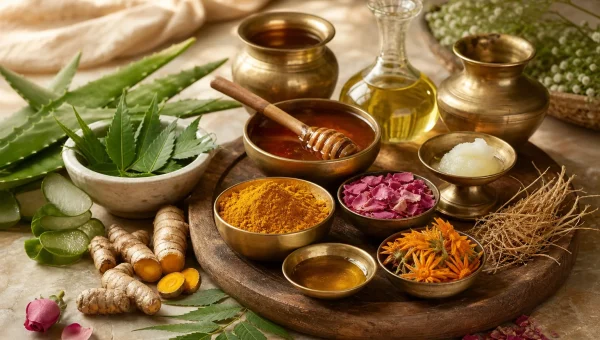
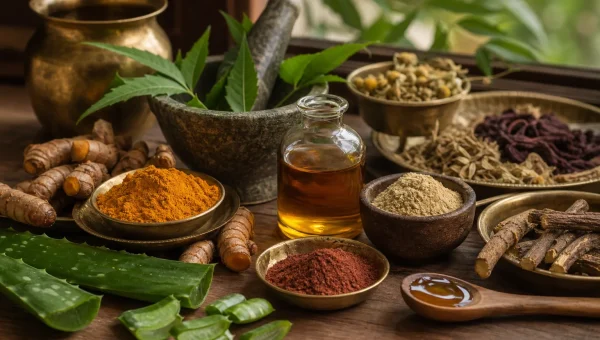
Although ingredient lists vary by textual lineage and manufacturer, saffron remains the defining ingredient. Commonly referenced ingredients in Kumkumadi-type oils include herbs and substances traditionally used for complexion, cooling, soothing, and skin-conditioning purposes.
- Kumkuma (Saffron — Crocus sativus)
- Chandana (Sandalwood — Santalum album)
- Manjistha (Rubia cordifolia)
- Yashtimadhu / Madhuka (Licorice — Glycyrrhiza glabra)
- Laksha (Lac resin)
- Padmaka (Himalayan cherry — Prunus cerasoides)
- Ushira (Vetiver — Vetiveria zizanioides)
- Utpala / Nilotpala (Blue water lily, used in some classical ingredient lists)
- Tila Taila (Sesame oil, the traditional oil base in many versions)
- Aja Ksheera (Goat milk, included in some classical versions)
Traditional Ayurvedic oil-making belongs to Sneha Kalpana, where herbs, liquid media such as decoctions or milk, and an oil or ghee base are processed together through controlled heating. This is different from simply soaking herbs in oil; the classical process is designed to transfer herbal constituents into the oleaginous base.
The Saffron Rationale
Saffron contains several well-described bioactive constituents that are relevant to skin appearance and oxidative stress. The most frequently discussed include crocins, crocetin, picrocrocin, and safranal. These constituents are part of the reason saffron is used in cosmetic and dermoprotective preparations.
- Crocins: Water-soluble carotenoid pigments associated with saffron’s colour and antioxidant activity.
- Crocetin: A carotenoid derivative studied for antioxidant and protective biological effects.
- Picrocrocin: A bitter-tasting constituent that contributes to saffron’s characteristic profile.
- Safranal: A volatile aromatic compound responsible for much of saffron’s aroma.
Dermatology-focused reviews of saffron describe antioxidant, antimicrobial, depigmenting, and repairing activities. Laboratory work on saffron extract has also examined tyrosinase inhibition, collagenase inhibition, antioxidant activity, fibroblast migration, and collagen and hyaluronic acid synthesis pathways. These mechanisms are relevant to the visible concerns for which Kumkumadi Tailam is traditionally used: uneven tone, dullness, dryness, and early signs of aging.
Modern Cellular Work on Saffron
A 2025 PLoS ONE in-vitro study examined saffron extract in a D-galactose-induced cellular aging model. The saffron extract was associated with improved cellular morphology, dynamics, and total dry mass in that model. This is best understood as general saffron biology rather than proof that any facial oil can reverse skin aging in humans.
For skincare use, the most practical interpretation is balanced: saffron is a serious botanical with plausible antioxidant and pigment-modulating relevance, while finished Kumkumadi oils still depend on formula quality, concentration, skin type, consistency of use, and daily sun protection.
Key Benefits of Kumkumadi Oil
Kumkumadi Tailam is most appropriate as a supportive cosmetic oil for complexion, texture, dryness, and radiance. Its benefits should be framed as gradual skin-supportive effects, not as a substitute for dermatological treatment.
- Supports a brighter-looking complexion: Saffron’s pigment-related mechanisms make it relevant for the appearance of uneven tone and dullness.
- Provides antioxidant support: Saffron and several traditional herbs in the formula are valued for protecting the skin from oxidative stress.
- Helps soften and moisturise dry skin: The oil base helps reduce transepidermal water loss and leaves the skin feeling smoother.
- Supports the appearance of smoother texture: Regular facial massage with a suitable oil can improve the look of dryness-related roughness and fatigue.
- Complements pigmentation care: It may support the appearance of post-blemish marks and uneven tone when paired with sunscreen, but persistent melasma or deep pigmentation needs professional care.
How to Use Kumkumadi Oil: Step-by-Step Evening Application
Kumkumadi Tailam is usually best used at night because it is an oil-based leave-on product and can feel heavy or shiny during the day. Start slowly, especially if you have sensitive, oily, or acne-prone skin.
- Cleanse thoroughly. Remove sunscreen, makeup, and pollution before applying the oil.
- Keep the skin slightly damp. Apply after washing or after a gentle hydrating mist so the oil spreads more evenly.
- Use a small amount. Begin with 2–3 drops. Dry skin may tolerate 4–5 drops, but more is not always better.
- Warm the oil between the palms. Rub the palms together briefly before application.
- Press gently onto the face. Apply to the cheeks, forehead, chin, and nose without dragging the skin.
- Massage lightly for 1–3 minutes. Use upward circular movements with gentle pressure. Avoid aggressive rubbing around the eyes.
- Leave on overnight if tolerated. If your skin feels congested or irritated, wash it off after 30–60 minutes or reduce frequency.
- Use sunscreen in the morning. Daily broad-spectrum SPF is essential when addressing pigmentation and photoaging.
Practical tip: Saffron-rich oils may stain pale fabrics. Use a dedicated pillowcase or apply the oil earlier in the evening so it has time to settle before sleep.
A Simplified DIY Kumkumadi-Inspired Oil
A true Kumkumadi Tailam is a pharmacy-style Ayurvedic preparation, not a quick kitchen infusion. The following version is only a simplified Kumkumadi-inspired facial oil for home use, built around saffron and a few commonly used complexion-supporting herbs.
At-Home Kumkumadi-Inspired Facial Oil
Use clean utensils, cosmetic-grade herbs where possible, and avoid essential oils unless guided by a qualified professional. Discard the preparation if it develops an unusual odour, visible mould, cloudiness from water contamination, or irritation on use.
- 100 ml cold-pressed sesame oil
- 10–15 strands of genuine saffron
- 1/2 teaspoon sandalwood powder
- 1/4 teaspoon manjistha powder
- 1/4 teaspoon licorice root powder
- Optional: a very small pinch of turmeric, used cautiously because it can stain skin and fabric
Method:
- Warm the sesame oil on the lowest heat setting. Do not let it smoke, boil, or bubble.
- Add the saffron and powdered herbs.
- Keep on very low heat for 30–40 minutes, stirring occasionally.
- Remove from heat and allow the oil to cool completely.
- Strain through clean muslin or a fine filter, pressing gently.
- Transfer to a clean dark glass bottle.
- Store away from direct sunlight and use within 2–3 months.
This home version is not equivalent to a classical Kumkumadi Tailam prepared through proper Sneha Paka. It is a simplified cosmetic oil and should be treated with the same caution as any new skincare product.
Side Effects and Limitations: What Kumkumadi Oil Will Not Do
Kumkumadi Tailam is generally used externally, but it can still irritate some skin types. Botanical oils, saffron, sandalwood, turmeric, fragrance compounds, preservatives, and other ingredients can trigger sensitivity in susceptible people.
It will not replace sunscreen. Antioxidant oils do not provide adequate UV protection. Use a broad-spectrum sunscreen with SPF 30 or higher during the day.
It will not work overnight. Cosmetic improvements in texture, glow, and uneven tone usually require consistent use over several weeks, and results vary widely.
It may not suit active acne. Oil-based products can feel heavy on some acne-prone or very oily skin types. Start with fewer drops, use it less frequently, and stop if breakouts worsen.
It will not treat melasma or deep hyperpigmentation alone. Hormonal pigmentation, persistent post-inflammatory hyperpigmentation, and medically significant skin conditions should be assessed by a dermatologist or qualified healthcare professional.
Patch testing is important. Test the product on a small area such as the inner arm or bend of the elbow before applying it to the face, especially if you have sensitive skin, eczema, allergies, or a history of reactions to botanicals.
Buying Guide: How to Spot a Better Kumkumadi Oil
The quality of Kumkumadi Tailam depends on the formula, ingredient authenticity, manufacturing method, storage, and transparency of the brand. Look for products that respect the classical identity of the oil rather than reducing it to saffron-coloured perfume in a carrier oil.
- Read the full ingredient list: A serious product should list saffron and other herbs clearly, not only “herbal blend” or “fragrance.”
- Check the base: Classical and traditional versions often use sesame oil, with goat milk or other liquid media in specific references.
- Avoid artificial colour and heavy perfume: Bright yellow colour or strong synthetic fragrance may indicate a cosmetic imitation rather than a carefully prepared oil.
- Prefer transparent manufacturers: Choose brands that provide batch details, manufacturing date, storage instructions, and quality-control information.
- Be cautious with exaggerated claims: Avoid products claiming to cure melasma, erase wrinkles permanently, replace sunscreen, or treat medical skin disease without professional care.
Frequently Asked Questions
The most common questions about Kumkumadi Tailam involve timing, skin type, results, and combining it with modern skincare actives.
Can Kumkumadi oil be used during the daytime?
It can be used during the day if your skin tolerates it, but nighttime use is usually more practical because the oil may look shiny and can interfere with makeup or sunscreen texture. If used during the day, apply sunscreen properly over it.
Is Kumkumadi oil safe for acne-prone skin?
It depends on the formula and the person. Some acne-prone skin tolerates a tiny amount well, while others develop congestion or breakouts from oil-based products. Start with 1–2 drops two or three nights per week, avoid active inflamed acne, and discontinue if breakouts worsen.
How long does it take to see results with Kumkumadi oil?
Softness and glow may appear earlier, but changes in uneven tone or post-blemish marks usually need consistent use for several weeks. Daily sunscreen, gentle cleansing, and avoiding irritation are essential for better results.
Can Kumkumadi oil be used alongside retinol, AHAs, or BHAs?
Use caution. Retinoids and exfoliating acids can already cause dryness, peeling, or irritation, and layering multiple active products may overwhelm the skin barrier. A safer approach is to use Kumkumadi oil on alternate nights from retinol, AHAs, or BHAs unless your dermatologist advises otherwise.
Can Kumkumadi oil be applied around the eyes?
It may be applied carefully around the orbital bone if the product is mild and the skin tolerates it, but avoid getting it into the eyes. Stop use if there is burning, watering, swelling, itching, or redness.
Disclaimer: This article is for informational purposes only and does not replace medical, dermatological, or Ayurvedic consultation. Perform a patch test before using any new topical product. If you have active acne, eczema, rosacea, melasma, allergies, pregnancy-related skin changes, or are under dermatological treatment, consult a dermatologist, qualified Ayurvedic practitioner, or healthcare provider before use.
Nothing in this article diagnoses, treats, or cures a medical condition. Kumkumadi Tailam should be used as supportive skincare, not as a substitute for prescribed treatment or sun protection.
References
- Ijapr (ijapr.in)
- Jaims (jaims.in)
- A comparative review study of Sneha Kalpana (Paka) vis-a-vis liposome (2011), PubMed Central
- Experts (experts.illinois.edu)
- Dermoprotective Effects of Saffron: A Mini Review (2021), PubMed
- Skin depigmentation activity of <i>Crocus sativus</i> extract cream (2014)
- Journals (journals.plos.org)
- Aad (aad.org)
- Aad (aad.org)
- Retinoids in the treatment of skin aging: an overview of clinical efficacy and safety (2006), PubMed Central
- Carolinaskin (carolinaskin.com)
I shared this with my book club, we have a wellness focus this month. Everyone immediately wanted to try the face mask recipe. It’s become our next group activity.
As someone with Kapha skin tendencies, the specific guidance for my skin type is so much more useful than generic skincare advice. My pores are visibly clearer.
Your persistence through the adjustment period is inspiring. Im currently in it and your comment helps.
The emphasis on oil as medicine rather than something to avoid on skin was hard to accept at first. Three months later, my formerly oily skin is actually balanced. Mind blown.
I switched to an Ayurvedic skincare routine six months ago and the improvement in my skin texture is genuinely remarkable. My esthetician keeps asking what I’m doing differently.
I came here to say exactly this and you said it better. Completely agree
The Why Kumkumadi Oil Is the Ayurvedic Anti-Aging explanation is clearer than most short posts. Would be useful to see a short checklist next.
This is so helpful to read. I’m just starting out with this and hearing positive experiences helps me stay motivated
I run a small Ayurvedic beauty brand and content like this educates customers in ways that make my work easier. Well-written educational material raises everyone.
I had a very similar experience! The first few weeks are the adjustment period, it really does get better
The stress-skin connection section is so important. My skin always flares during deadlines and understanding the cortisol-Pitta link gives me something actionable to work with.
Im a dermatologist interested in integrative approaches and the discussion of skin as a reflection of gut health is something I discuss with patients regularly
The ingredient explanations are practical. I’ve always read ingredient lists but this gives me a framework for understanding what those ingredients are actually doing.
Same here! The practitioner recommendation made all the difference for me. Don’t try to do this without guidance.
I appreciate the inclusion of internal herbs alongside topical treatments. True Ayurvedic skincare addresses both and most mainstream content focuses only on what goes on the skin
I appreciate you sharing the skeptical perspective too. It keeps the conversation grounded.
The Why Kumkumadi Oil Is the Ayurvedic Anti-Aging explanation is clearer than most short posts. This is the kind of detail readers can test slowly.
I was nodding along reading your comment. Exactly my experience too.
Reading this later and the Why Kumkumadi Oil Is the Ayurvedic Anti-Aging advice still feels relevant. The examples make the advice less abstract.
So encouraging to hear! Starting my first week and this is motivating me to stick with it
Some genuinely useful tips mixed in with some questionable claims. The dietary advice is spot on but the herbal recommendations feel too generic.
I’d been spending a fortune on fancy serums. After implementing the Ayurvedic basics here, oil cleansing, herbal toners, the diet changes, my skin looks better than it ever did.
I want to believe this works, but after trying three different Ayurvedic protocols with zero results, I’m starting to think individual mileage varies way more than these articles suggest.
I’ve been using Kumkumadi oil for three months. The improvement in my skin tone is real. Not dramatic overnight change but steady, consistent improvement that’s clearly accumulating.
The Why Kumkumadi Oil Is the Ayurvedic Anti-Aging explanation is clearer than most short posts. The safety notes could be expanded a little.
I liked the practical side of Why Kumkumadi Oil Is the Ayurvedic Anti-Aging. Small daily changes are easier to follow than a perfect plan.
Ive been incorporating these practices into my self-care ritual and the psychological effect is as meaningful as the physical. It’s a form of self-honoring that feels good.
The hair care section in your related article brought me here. Now Im going down a rabbit hole of Ayurvedic beauty knowledge. Everything connects so logically.
The Ubtan recipe here works better for my skin than any commercial exfoliant I’ve tried. And it costs a fraction of the price. My whole family has switched
Three months in, still waiting for the promised results. I’m not giving up yet but I’m managing my expectations now
The Rasa and tissue nourishment explanation is a really different way of thinking about skin health. Surface-level treatments make more sense when you understand the layers beneath
The clarification on why certain popular skincare ingredients can aggravate certain skin types according to this framework explains so much about my personal reactions
It’s wonderful to see both believers and skeptics engaging respectfully in the comments. That’s how we all learn.
I liked the practical side of Why Kumkumadi Oil Is the Ayurvedic Anti-Aging. Would be useful to see a short checklist next.
The saffron constituent crocin has published research on melanin synthesis inhibition. That’s a real mechanistic claim not just traditional attribution. The connection between Kumkumadi’s efficacy and specific bioactive compounds is testable and some testing has been done.
How authentic is commercially available Kumkumadi oil? The number of cheap products claiming to be Kumkumadi tailam is enormous and most use synthetic saffron or minimal quantities. Is there a quality standard or certification to look for?
The base oil composition matters. Traditional Kumkumadi uses Sesame oil base and some modern versions substitute jojoba or argan oil. The Sesame oil itself has lignans with demonstrated skin activity. Substituting the base changes more than just the carrier.
Used Kumkumadi for six months on my melasma patches and the results are subtle but real. My dermatologist who initially said it would do nothing commented that the patches were lighter at my last visit. Small vindication.
The saffron content really caught my eye, I wonder how noticeable the brightening effect is after a month
This makes sense for Why Kumkumadi Oil Is the Ayurvedic Anti-Aging. The article avoids making it sound like a quick fix.
That’s a very fair point. We always recommend working with a qualified practitioner alongside any self-guided protocol. We’ll add a more prominent disclaimer.
The 25 ingredient formulation in classical Kumkumadi seems difficult to source accurately outside India. The simplified versions with 8-10 herbs may lose some of the synergistic interactions. Has the classical full formulation been compared against simplified versions in any study?
A simplified DIY version sounds doable, but I’m curious if the sesame oil base might feel too heavy for my combination skin
My skin reacted badly to a Kumkumadi product bought online. Red, itchy reaction within two days. Probably an adulterated product or synthetic saffron. The anti-aging benefits require authentic preparation and this is a significant consumer safety issue.
It seems the article stresses nightly use because of the skin’s repair window, does anyone try it in the morning and notice any difference
Honestly, the price range for authentic Kumkumadi oil makes me hesitate before buying a small bottle
I liked the practical side of Why Kumkumadi Oil Is the Ayurvedic Anti-Aging. This would be easier to follow with a one-week sample plan.
I think the collagen boosting claim is interesting, yet I’d like to see more human studies before trusting it fully
Maybe the antioxidant activity from crocin explains why the oil feels so soothing after application
The step by step evening routine looks straightforward, though I worry about staining my pillowcase despite using a dark cloth
I liked the practical side of Why Kumkumadi Oil Is the Ayurvedic Anti-Aging. The safety notes could be expanded a little.
A patch test on the inner forearm for 48 hours seems like a smart precaution, especially with so many herbs in the mix
I’ve read that sesame oil can be comedogenic, so using fewer drops might work better for oily skin types
The mention of Sharangadhara Samhita adds a nice historical touch, making the oil feel more than just a trend
Maybe combining kumkumadi oil with retinol on alternate nights could reduce irritation while still giving benefits
It’s interesting that the oil may increase photosensitivity, which reinforces the need for daily sunscreen
I noticed the article warns against expecting results in just two days, which keeps expectations realistic
The deep gold to reddish amber color description helps me spot a genuine product when shopping online
A lighter carrier oil like grapeseed might be worth trying if the sesame base feels too rich for my skin