
The most transformative thing my grandmother ever said in the kitchen – and she was not one for dramatic pronouncements – was: “You do not season food to make it taste good. You season it to make people well.” She said this while adding asafoetida to a simple dal, explaining in kitchen language that Hing in the tempering helps a lentil dish feel lighter. Ayurveda gives that intuition a precise vocabulary: Hingu is described as Katu in taste, Ushna in potency, Deepana, Pachana, Anulomana, and Vata-Kapha pacifying. That is the practical heart of Rasa science – using taste, potency, quality, and preparation as therapeutic levers rather than treating flavor as decoration.
What follows is a practical guide to the six tastes and a working framework for building spice combinations with therapeutic intent – whether the goal is calming Vata, protecting Pitta in hot weather, kindling weak Agni, clearing Kapha heaviness, or using food as a daily support for steadier digestion and resilience.
The Six Rasas: A Practical Ayurvedic Pharmacology of Taste
Rasa in Ayurveda is not simply a sensory experience. Charaka Samhita Vimana Sthana Chapter 1, Rasa Vimana, explains the six tastes – Madhura, Amla, Lavana, Katu, Tikta, and Kashaya – and their broad effects on Vata, Pitta, and Kapha. In practice, Rasa is read together with Guna, Virya, Vipaka, dose, food medium, season, and the person’s present digestive state.
- Madhura (Sweet): Increases Kapha and pacifies Vata and Pitta. It is generally nourishing, building, softening, and grounding when used appropriately. Examples include ghee, milk preparations, dates, licorice, and Shatavari.
- Amla (Sour): Increases Kapha and Pitta and pacifies Vata. It supports appetite and salivation but can aggravate heat, acidity, and inflammatory Pitta patterns when excessive. Examples include lemon, tamarind, fermented preparations, and sour fruits.
- Lavana (Salty): Increases Kapha and Pitta and pacifies Vata. It softens, moistens, and supports downward movement, but excess salt is unsuitable when heat, swelling, or Pitta-Kapha accumulation is dominant. Examples include rock salt and other culinary salts.
- Katu (Pungent): Increases Vata and Pitta and pacifies Kapha. It is sharp, warming, drying, and useful in small amounts when the aim is Deepana, Pachana, or Kapha reduction. Examples include dry ginger, black pepper, long pepper, mustard, ajwain, and asafoetida.
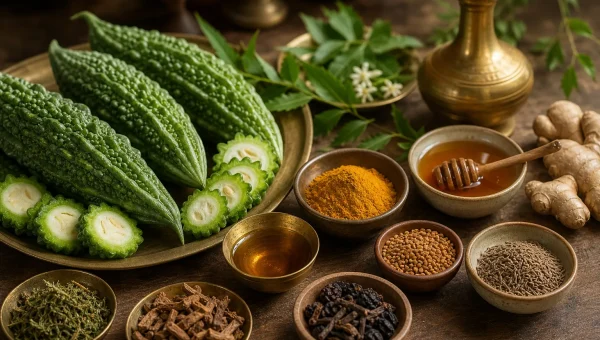
- Tikta (Bitter): Increases Vata and pacifies Pitta and Kapha. It is lightening and clearing, and is useful in formulas where heat, heaviness, skin disturbance, or metabolic dullness is part of the picture. Examples include turmeric, fenugreek, neem, bitter melon, Brahmi, and Shankhapushpi.
- Kashaya (Astringent): Increases Vata and pacifies Pitta and Kapha. It is drying, contracting, and stabilizing, so it is useful in moderation but can worsen dryness, gas, and constipation when overused. Examples include pomegranate rind, many tannin-rich foods, Brahmi, Shankhapushpi, and Haritaki.
The Framework: Building by Therapeutic Intent
Instead of choosing spices only by habit, build a blend by asking what needs to be corrected in the person and the meal: which Dosha is elevated, whether Agni is weak or irregular, and whether the dish itself is heavy, dry, oily, cold, heating, or difficult to digest. The same lentils can become Vata-calming, Kapha-clearing, or Pitta-gentle depending on the spices, oil, salt, sourness, and cooking method.
- What Dosha needs the most attention right now?
- Is Agni low, sharp, irregular, or steady?
- Is the meal heavy, light, dry, oily, cooling, heating, or gas-forming?
- Should the blend nourish, kindle, dry, moisten, cool, warm, or clear?
The answers determine which Rasas should dominate, which should appear only as supporting notes, and which should be minimized for that person and season.
Spice Blend 1: Pitta-Gentle Summer Blend
This blend is designed for hot weather, heat-prone digestion, thirst, burning sensations, loose stools from excess heat, or skin irritation that worsens with hot and sharp foods. It uses fennel and coriander as the center, keeps pungency modest, and avoids the mistake of making the food so cold and heavy that Agni becomes dull.
Blend composition (makes about 60 grams):
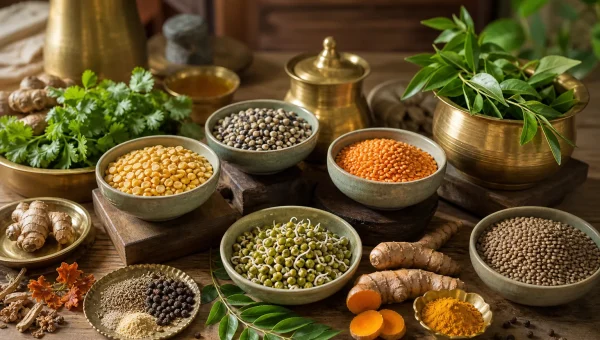
- 2 tablespoons coriander powder (Dhanyaka) – Deepana, Pachana, Grahi, Mutrala, and Tridoshanut in the Ayurvedic Pharmacopoeia of India
- 2 tablespoons fennel seeds, lightly toasted and ground (Mishreya / Madhurika) – Madhura-Katu-Tikta in Rasa, Shita in Virya, and Vatapittahara
- 1 tablespoon cumin powder (Jiraka) – Katu in Rasa, Ushna in Virya, Deepana, Pachana, Grahi, and Kaphavatahara
- 1 tablespoon dried mint – a light aromatic support for hot-weather cooking
- 1 teaspoon turmeric (Haridra) – Tikta-Katu in Rasa, Ushna in Virya, Kaphapittanut, Varnya, Kushthaghna, and Pramehanashaka
- 1/2 teaspoon cardamom powder (Ela) – aromatic support for palatability and lightness
- 1/4 teaspoon rock salt – only a small amount, because Lavana pacifies Vata but increases Pitta and Kapha when overused
Use for: Vegetable sautés, rice dishes, mung dal, thin lentil soups, summer kitchari, bottle gourd, ridge gourd, zucchini, or lightly cooked greens. Use medium heat and add the powdered blend after the oil or ghee is warm rather than smoking.
Therapeutic action: The dominant taste profile is Madhura-Tikta with restrained Katu and a small Lavana note. It is suited to meals that need to remain digestible without becoming sharply heating.
Spice Blend 2: Agni Deepana Digestive Blend
This blend is for Mandagni patterns: low appetite, heaviness after meals, gas a few hours after eating, coldness in the abdomen, and a dull, coated feeling after food. It is intentionally warm, pungent, and lightening, so it should be used cautiously when burning, reflux, loose stools, ulcers, or strong Pitta signs are present.
Blend composition:
- 2 tablespoons dry ginger powder (Shunthi) – Katu in Rasa, Ushna in Virya, Madhura in Vipaka, and described as Deepana, Pachana, Anulomana, Amadoshahara, and Vatakaphapaha
- 1 tablespoon black pepper powder (Maricha) – Katu-Tikta in Rasa, Ushna in Virya, Deepana, Rucya, Chedana, and Kapha-Vata reducing
- 1 tablespoon long pepper powder (Pippali) – Deepana, Rucya, Rasayana, Vatahara, Kaphahara, and Tridoshahara, but not a spice for casual high-dose daily use over long periods
- 1 tablespoon cinnamon powder – warming aromatic support for taste and digestion
- 1 tablespoon ajwain (Yavani) – Katu-Tikta in Rasa, Ushna in Virya, Deepana, Pachana, Anulomana, Shulahara, and useful in Adhmana and Anaha contexts
- 1 teaspoon hing powder (Hingu) – Katu in Rasa, Ushna in Virya, Deepana, Pachana, Anulomana, Krimighna, and Vata-Kapha pacifying
- 1/2 teaspoon rock salt
Use for: Tempering in ghee for dal, soups, mung preparations, and grain dishes. Start with 1/4 teaspoon of the total blend per serving. In sensitive digestion, use less and observe the response.
Therapeutic action: The dominant Rasa is Katu, with a small Lavana support. This is a kitchen-friendly Deepana-Pachana blend built around the same logic as classical pungent digestive combinations such as Trikatu, while keeping the dose culinary rather than medicinal.
Spice Blend 3: Vata-Calming Winter and Monsoon Blend
When the body feels dry, cold, tense, irregular, and restless, Vata-pacifying cooking should emphasize warmth, unctuousness, regularity, and grounding tastes. This blend is best used in soft, warm foods rather than dry snacks, because the food medium matters as much as the spice list.
Blend composition:
- 2 tablespoons cinnamon powder
- 2 tablespoons cardamom powder
- 1 tablespoon nutmeg powder (Jatiphala) – Tikta-Katu in Rasa, Ushna in Virya, Deepana, Grahi, and Kaphavatapaha; keep the amount small
- 1 tablespoon clove powder
- 1 tablespoon dry ginger powder (Shunthi)
- 1/2 teaspoon saffron (Kumkuma), optional
- 1/2 teaspoon vanilla powder, optional, for a sweet aromatic note
Use for: Warm milk preparations, oat or rice porridge, kheer, stewed apples, soft sweet rice, or warm spiced milk. A practical serving is a small pinch to 1/4 teaspoon of the blend. Nutmeg should remain low; the Ayurvedic Pharmacopoeia of India lists Jatiphala powder dose as 0.5-1 gram.
Therapeutic action: This blend leans warm, aromatic, sweetening, and grounding. It is most appropriate when the meal itself is soft, moist, and nourishing, because pungent spices alone cannot pacify Vata if the food remains dry, cold, or irregularly timed.
Spice Blend 4: Kapha-Clearing Spring Blend
Kapha excess commonly presents as heaviness, sluggish appetite, mucus tendency, dullness after meals, and a desire for sleep after eating. This blend uses pungent, bitter, sharp, and drying ingredients to make heavy vegetable and legume dishes lighter, while avoiding excess oil and sweetness.
Blend composition:
- 2 tablespoons mustard seed powder (Sarshapa) – Katu-Tikta in Rasa, Ushna in Virya, Kaphahara, Deepana, and sharp in action
- 2 tablespoons fenugreek seed powder (Methika) – Tikta in Rasa, Ushna in Virya, Deepana, Rucya, Vatahara, and Kaphahara
- 1 tablespoon turmeric (Haridra)
- 1 tablespoon dry ginger powder (Shunthi)
- 1 tablespoon black pepper powder (Maricha)
- 1 teaspoon hing powder (Hingu)
- 1/2 teaspoon whole black mustard seed for tempering, optional
Use for: Cabbage, cauliflower, greens, sprouts, mung dal, chickpeas in small portions, and vegetable dishes cooked with minimal oil. Mustard oil can be used in small amounts for Kapha-clearing cooking, but it is hot, sharp, Kaphahara, Lekhana, and Vidahi, so it is not the right base for people with strong Pitta burning.
Therapeutic action: Dominant Rasas are Katu and Tikta. The goal is to lighten Kapha, support Deepana-Pachana, and reduce the heavy, slimy, slow quality of the meal.
Spice Blend 5: Ama-Pachana Simple Food Blend
In Ayurveda, when food is not properly transformed, the corrective approach begins with Agni rather than complicated nutrition. This blend is meant for simple, soft, easy-to-digest meals after dietary excess, travel, seasonal transition, or a few days of sluggish appetite.
Blend composition:
- 2 tablespoons Trikatu-style mixture – equal parts Shunthi, Maricha, and Pippali
- 1 tablespoon cumin powder (Jiraka)
- 1 tablespoon coriander powder (Dhanyaka)
- 1 tablespoon fennel powder (Mishreya / Madhurika)
- 1 tablespoon turmeric (Haridra)
- 1 teaspoon black salt or rock salt
- 1/2 teaspoon hing powder (Hingu), optional for gas-prone lentils
Use for: Soft mung dal, thin kitchari, plain boiled vegetables, rice gruel, or lightly spiced soups. Use a small amount, eat warm, keep meals simple, and avoid combining it with heavy fried foods, cold drinks, or large desserts.
Therapeutic action: This blend uses Katu-led Deepana-Pachana spices, then softens the formula with coriander and fennel so that it remains usable in food. For more seasonal food ideas, see our guide to Ayurvedic healing preparations for each season.
Spice Blend 6: Medhya Food-Support Blend
This is a food-based Medhya support blend rather than a high-heat cooking masala. It combines classical Medhya herbs with nourishing Rasayana and Balya supports, and is best added to warm preparations after cooking rather than fried in oil.
Blend composition:
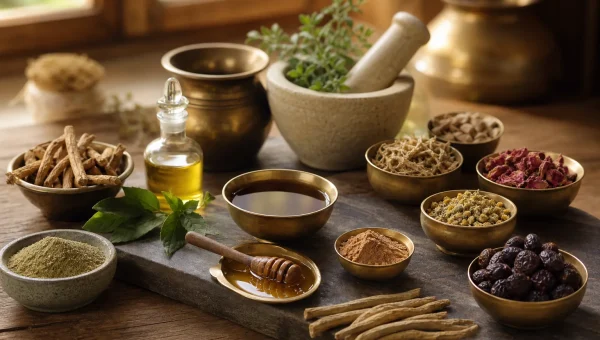
- 2 tablespoons Brahmi powder (Bacopa monnieri) – Tikta-Kashaya-Madhura in Rasa, Shita in Virya, and described as Medhya, Rasayana, Ayushya, and Matiprada
- 1 tablespoon Shankhapushpi powder (Convolvulus pluricaulis) – Katu-Tikta-Kashaya in Rasa, Shita in Virya, and described as Medhya, Rasayana, Balya, and Ayushya
- 1 tablespoon Ashwagandha powder (Ashvagandha) – Tikta-Kashaya in Rasa, Ushna in Virya, Madhura in Vipaka, and described as Balya and Rasayana
- 1 tablespoon Shatavari powder (Shatavari) – Madhura-Tikta in Rasa, Shita in Virya, Madhura in Vipaka, and described as Balya, Medhya, Rasayana, and Pittahara
- 1 tablespoon cardamom powder for aroma and palatability
- Pinch of saffron, optional
Use for: Stir into warm milk, warm almond milk, rice porridge, or a soft sweet preparation after it has cooled from boiling to comfortably warm. Start with a small amount, especially if using Brahmi or Shankhapushpi for the first time.
Therapeutic action: This blend is not meant to be sharp or strongly stimulating. It is bitter, mildly sweetening, and nourishing, suitable for people who tolerate these herbs and need a calmer evening food support rather than a heating digestive masala.
Mastering the Tempering Medium
The cooking medium changes the effect of a spice blend. A pungent Kapha blend in mustard oil is much sharper than the same blend gently bloomed in ghee. A Vata-supporting meal usually needs warmth and unctuousness, while a Kapha-clearing meal usually needs lightness and restraint with oil.
| Tempering Medium | Verified Ayurvedic Profile | Best Use |
|---|---|---|
| Ghee / Goghrita | Madhura Rasa, Shita Virya, Madhura Vipaka, Snigdha and Mridu; Vata-Pitta pacifying and Snehana | Vata and Pitta meals, soft grains, kitchari, milk preparations, and general sattvic cooking |
| Sesame oil / Tila Taila | Madhura Rasa, Ushna Virya, Madhura Vipaka, Snigdha and Guru; Vatahara and Snehana | Vata-pacifying dishes, winter cooking, and meals needing warmth and lubrication |
| Mustard oil / Sarshapa Taila | Tikta-Katu Rasa, Ushna Virya, Katu Vipaka, Tikshna and Laghu; Kaphahara, Lekhana, Deepana, and Vidahi | Kapha-clearing vegetable dishes in small amounts; avoid when burning Pitta signs dominate |
For delicate aromatic seeds such as fennel and coriander, moderate heat is better than aggressive frying. For hing, cumin, mustard, and ajwain, a short tempering can release aroma quickly, but burnt spices become harsh and less suitable for therapeutic cooking.
From Rasa to Practice
The most reliable way to use Rasa in the kitchen is to keep the classical sequence intact: taste first, then quality, potency, post-digestive effect, food medium, dose, and the person in front of you. Sweet taste can nourish or clog depending on Agni. Pungent taste can kindle digestion or aggravate burning. Bitter taste can clear Pitta-Kapha or worsen Vata dryness. There is no universally perfect spice blend; there is only the right blend for the right person, meal, season, and digestive state.
For those applying these principles to broader meal planning, our guide to Ayurvedic food combining provides the next layer of dietary design. For seasonal Pitta-oriented cooking, see our resource on the Ayurvedic anti-inflammatory diet.
These spice blends are educational culinary guidelines, not a substitute for diagnosis or treatment. Individual constitution, pregnancy, lactation, age, digestive strength, disease state, allergies, and medication use can change what is appropriate. People with reflux, ulcers, active burning sensations, bleeding disorders, liver or kidney disease, diabetes medication use, anticoagulant use, or complex medical conditions should consult a qualified Ayurvedic practitioner or healthcare provider before using strong spices or herbal powders therapeutically.
the Tulsi-ginger broth for post-op recovery in the peya recipe article made it for my mother after her hip surgery and she found it genuinely comforting and easy on the stomach.
That’s a lovely thing to share. The Tulsi-ginger combination makes sense therapeutically — both are easy on the gut and the warming quality would help with post-surgical digestion. Glad it helped.
the Brahmi mocktail uses ‘Brahmi extract’ without specifying concentration. should I use 1:10 liquid extract or the powder?
For powder I’ve seen 1/4 tsp treated as roughly equivalent to 5ml of 1:10 extract but that’s a rough conversion and probably varies by brand. Did the recipe not specify at all?
Pitta types might want to dial back or even skip the black pepper, and maybe add a bit of licorice or coriander to offset the heat. The flavor intent of Trikatu is still achievable with a gentler build.
sweet sour salty for vata makes sense, though it may get too heavy if someone hears only add more ghee.
That line about the grandmother saying you season food to make people well stuck with me; it changes how I think about adding hing to dal.
That quote from the post about seasoning food to make people well really stopped me. My own mother used to say something similar when she added mustard seeds and curry leaves to everything. I never thought of it as therapeutic intent until reading this.
Blood work does not really capture doshic imbalance in the way Ayurveda describes it — a Vaidya would look at pulse, tongue, and digestion patterns rather than lab values. The two systems use different diagnostic languages, which is part of why integrating them gets complicated.
Not sure if the content itself is updated regularly, but the rasa framework it explains is classical — this is not a protocol that changes with new research, it comes from the foundational texts. So what is here should hold up regardless of when you are reading it.
That’s a genuinely interesting angle. Ayurveda doesn’t map cleanly onto conventional blood markers, but some practitioners do look at things like CRP or digestion-related indicators as proxies. Did your question come from a specific finding or more general curiosity?
The part about combining bitter and pungent rasas for digestive fire really clicked for me. I had been adding turmeric to everything thinking more is better, but understanding the rasa balance changes how I think about proportions entirely.
What I appreciate here is that the combinations are actually things you can cook with daily, not special preparations requiring separate effort. Hing in dal, cumin in rice water — these fit into a normal kitchen routine without any extra steps.
I never realized asafoetida could reduce gas from lentils until reading the explanation about its tempering effect.
the Trikatu-spiced breakfast bar recipe is clever. portable and genuinely warming without being heavy in the stomach. नमस्ते
the Trikatu-spiced breakfast bar recipe is clever. portable and genuinely warming withour being heavy in the stomach.
The idea of treating the six tastes as levers for therapeutic intent rather than just flavor choices feels like a fresh way to approach spice blending.
the fact that you addressed both classical text references and modern usage gaps is what I needed tbh
The article references a specific classical formula. Is that available in standard pharmacies in India?
my Vaidya in Chennai suggested a slightly different sequence. Regional variation in practice tbh
The grandmother anecdote at the beginning resonated with me. Older generations practiced this instinctively without naming it Ayurveda. Do you think there is a way to map what specific spice combinations they used regionally back to the rasa framework described here?
Doing this. 💯 नमस्ते
I wonder how solid the pharmacological overview is when you try to match each rasa to specific bodily actions described in the Charaka Samhita.
made the Ashwagandha-date energy balls from the recipe section. texture is perfect and the cardamom + nutmeg masks the earthy ashwagandha taste completely.
I’ve been making those too! The cardamom does most of the heavy lifting flavor-wise. Did you adjust the date quantity at all or follow the recipe exactly?
the mocktail recipes look interesting but the ingredient quantities feel off. the Amla-rose syrup recipe produced something far too tart at the given proportions.
I tried the summer Pitta pacifier blend in a vegetable stir fry and noticed the heat didn’t aggravate my digestion as much as usual.
Curious about the sweet rasa in this context — the article suggests using it to balance Vata-aggravating spices, but how do you work that into a savory dish without making it taste off? Is fennel the standard workaround or are there others?
When choosing a tempering oil, does using mustard oil really shift the dosha effect of the same spice blend that much?
Testing the blends against real results in the kitchen seems like the best way to see if the rasa theory holds up for individual constitutions.
How does this compare to the Charaka Samhita recommendations for the same condition?
The Charaka Samhita actually discusses rasa combinations in the context of Ahara vidhi, mostly around the eight factors affecting food potency. The flavor-therapeutic intent angle in this post feels like a practical distillation of that — have you looked at the Charaka Samhita Sutrasthana 26 section on Dravyaguna? Curious if you see the overlap.
Balancing Vata in the dry season with a blend rich in sweet and salty rasas makes sense given how those tastes directly pacify that dosha.
Useful.
is there a version of the breakfast bar recipe without ghee for vegan participants?
This is a perspective I had not come across before — building a tempering based on therapeutic intent rather than just regional habit. Most cooking guides just say add these spices for flavor. The explanation of why hing works for lentils specifically is exactly the kind of detail I was looking for.
the Ayurvedic dip recipes are not explained with adequate preparation details. the fermented version especially needs clearer fermentation conditions.
I wonder how much the season changes which rasa combinations are appropriate. The post focuses on the spice pairings themselves but I would love a follow-up on how you adjust the flavor profile by dosha and by time of year together.
The rasa framework makes sense intellectually but I find it hard to apply without practice. Did anyone else feel like they needed to taste these combinations side by side a few times before the distinctions between astringent and bitter became intuitive?
Seeing rasa described as a therapeutic lever rather than a mere flavor choice helped me reconsider why I reach for certain spices when cooking.
The Medhya support blend with brahmi and shankhapushpi sounds interesting for an evening drink, especially when mixed with warm milk and honey.
For Kapha clearing in spring, the sharp mustard and fenugreek blend seems like it could help with sluggishness and mucus buildup.
The section on pungent spices and their warming effect on Kapha was useful. I had always avoided heavy use of black pepper in cooking for guests because it seemed aggressive, but understanding the therapeutic reasoning makes me more confident about when to include it.
Reading this made me look at my spice cabinet differently. I have been using coriander and cumin together purely out of habit, not realizing the sweet-pungent combination was doing something specific digestively. Makes me want to be more deliberate about what I reach for.
The bit about sour rasa supporting digestion when used in small amounts made me think about tamarind in rasam. My family eats it when anyone is unwell and I always assumed it was just comfort food. Now I think there was real reasoning behind it. 🌿
The Ama deep cleanse blend looks like a practical reset after a heavy meal period, especially with the trikatu base.
The post mentions astringent rasa as often overlooked in modern Indian cooking. That is true in my experience — things like pomegranate seeds or unripe mango in dal have basically disappeared from urban kitchens. Anyone still cooking with those regularly?
Linking bitter herbs to modern findings on alkaloids and flavonoids gives the rasa categories a surprising empirical backing.
I appreciate the warning about avoiding hing and high dose pippali during pregnancy; it’s a detail that’s easy to overlook.
If you’re managing a specific health condition, adjusting the dominant rasas in a blend according to agni state seems like a sensible first step.
Thanks! नमस्ते
What struck me is the idea that the six rasas should ideally appear across a full meal rather than all in a single dish. I had always tried to make each dish balanced on its own. Does the post suggest a particular pairing logic for structuring a complete thali this way?
The hing example is such a good entry point because almost everyone has experienced its effect even without knowing why. That practical grounding before going into the rasa theory makes the whole article much easier to follow than more academic treatments of this topic.
I would be curious whether the rasa profile of a spice changes significantly based on how it is processed — dry roasted versus fried in ghee versus ground fresh. The article touches on this briefly but I feel like the preparation method is as important as the spice itself.
That’s a really valid concern and I’d echo it — if you’re managing a cardiac condition, the interaction details matter more than a general article can cover. Worth taking the specific spice combinations mentioned here to your cardiologist and getting their view before making changes.
The framing around therapeutic intent rather than just taste is what makes this post different from the usual spice guide. Most content just lists which spices are anti-inflammatory. Explaining the underlying rasa logic gives you something to reason from, not just a list to memorize.
My grandmother never named it but she always added a pinch of jaggery to anything heavily tamarind-based. Reading about the sour-sweet rasa balance here I finally understand what she was intuitively correcting for. Wish I had asked her more questions while I had the chance.
I tried adjusting my tempering based on the rasa combinations described here for about a month, focusing on reducing pungent and increasing sweet for a Pitta-prone household. The digestion improvement was noticeable pretty quickly, though getting the ratios right took some trial.
rasa combinations are underrated. people talk herbs, but spice taste balance changes the whole meal.
After reading this I finally understand why certain regional combinations that seemed arbitrary actually make sense therapeutically. The Gujarati habit of adding a little sugar to dal alongside the tempering always puzzled me — now I see it as intentional rasa balancing, not just preference.
the Brahmi mocktail uses ‘Brahmi extract’ without specifying concentrstion. should I use 1:10 liquid extract or the powder?
The section comparing how the same spice shifts in its therapeutic action depending on what it is paired with was genuinely new to me. Cumin as warming on its own versus cooling when combined with coriander — that distinction is not something I had seen explained clearly before.
Dosage really does vary person to person though — even within the same herb, the rasa (taste quality) and how it’s prepared changes the therapeutic load. Your doctor probably adjusted based on your prakriti, which a general article can’t do. They’re not really contradicting each other.
Dosage differences like that usually come down to whether your doctor is working with the whole herb, an extract, or a formulation that includes other ingredients. The article is more about culinary spice ratios than therapeutic doses, so they’re probably talking about different contexts.
Agreed, the seasonal adjustment piece is underrated. I’d add that switching from warming pungent spices in winter to cooling bitter ones in summer is also something most of us do intuitively — this article gives the vocabulary for why.
Since this is about culinary spice combinations rather than a strict herbal protocol, I think the signs would be more subtle — digestive discomfort, feeling overstimulated, or a general sense that the food feels too heating or too heavy for your current state.
Good question actually — I think if someone is consistently bloating after meals even when they’ve adjusted the spice ratios, or if adding more pungent rasa is aggravating rather than settling, those might be signals the combination isn’t suited to them. Curious what others have noticed.
Right, the seasonal angle is something I haven’t seen covered properly before either. It makes sense that the spice ratios would need to shift — heavier pungent and heating spices as you move into Vata season, lighter blends in Pitta season. Would love a follow-up post that actually maps this out by season.
That variation is pretty common — individual prakriti and the specific condition being addressed both shift what’s appropriate. The article is more about general rasa principles in cooking than precise therapeutic dosing, so I wouldn’t take any figures here as clinical guidance. Your doctor’s prescription for your specific situation will always take priority over general articles.
The point about using the six rasas as a diagnostic lens for what a meal is missing is something I want to bring into my actual cooking practice. Most days my meals are heavy on pungent and sour and almost entirely missing astringent. That seems worth correcting deliberately.
Interesting that the post uses the hing-lentil example because that is probably the most widespread application of this principle in everyday Indian cooking, even among people with no formal Ayurvedic knowledge. It grounds a complex framework in something completely ordinary.
Turmeric is in almost every dish I grew up eating but I never thought about it in terms of its rasa or how it interacts with the other spices around it. This post reframed something familiar in a way I did not expect. The bitter rasa section specifically was an eye-opener.
is there a version of the breakfast bae recipe without ghee for vegan participants? tbh
Really glad I found this. The idea that seasoning is medicinal, not just culinary, is something I grew up with but never saw explained this clearly. The hing-in-dal example hit home immediately.
Not sure about specialty sourcing for every spice mentioned, but most of the core ones — hing, ajwain, turmeric, cumin — should be at any Indian grocery store. The harder-to-find ones might need an Ayurveda shop or online.
Most of the spices mentioned — turmeric, cumin, coriander, hing — are standard at Indian grocers. If you’re looking at less common ones like vidanga or ajmoda, a dedicated Ayurveda store or online supplier would be the safer bet.
That’s a fair criticism on the dosage. I’d imagine with spice-based approaches the range varies by body weight, digestive strength, and even season — but the article could do a better job of spelling out what factors determine where you’d land within that range.
Most of the core spices mentioned — like hing, ajwain, turmeric — you’d find at any decent Ayurveda store or even a well-stocked Indian grocery. The more specialized ones might need sourcing online, but nothing here seems like it requires a specialty supplier.
The rasa combinations section got me thinking about how much the spice pairing changes when you shift the intention. Cooking for digestion versus cooking for calming Vata are genuinely different profiles — this post is one of the few places I’ve seen that distinction made explicit.
The therapeutic flavor pairing idea here is something I wish more home cooks understood. My family always cooked with these spice combinations but the reasoning was never articulated — it was just “that’s how you make the dish.” ❤️
Spice combinations are pretty specific to the dish and constitution though, so I’d imagine a multivitamin interaction question would really depend on which spices you’re increasing significantly. Probably worth asking a vaidya rather than assuming a general answer applies here. ❤️
What I found interesting is how the six rasas map onto very distinct taste experiences that you can actually notice while eating. Once you start tasting for tikta or kashaya intentionally, cooking becomes a completely different practice.
From what I’ve read, the Kashayam form tends to be preferred when the digestive fire is already somewhat active and can process the decoction, while Churna is sometimes considered gentler on a weaker agni. But I’m not an expert — has anyone here actually asked a vaidya about this distinction for cooking contexts versus supplementation?
i tried adding more bitter after oily food and it did feel lighter. maybe placebo, but useful placebo then.
Placebo or not, the outcome is what matters. I had the same experience with bitter rasa after heavy meals — adding a small amount of fenugreek to the tempering made a real difference for me. Probably similar mechanism to what the article describes with the rasa balance.
The grandmother anecdote at the start really set the tone well. Kitchen knowledge passed down without formal vocabulary is still real knowledge — it just needed someone to articulate the Ayurvedic framework behind it.
Fair point on the herb names — though I think the flavor-profile framing actually helps here since most of these spices are in any good Indian grocery. Knowing that you want a katu-tikta combination for stimulating Agni makes it easier to improvise with what’s available.
That’s a fair ask — knowing the flavor category (bitter, pungent, astringent) would at least narrow it down to available spices, even if specific products vary by region. Easier to work with than a herb name I might not find locally.
That is a fair point actually. Knowing which spice to use is one thing but finding a reliable source for, say, quality dried ajwain or genuine kalonji is its own challenge. Even if the article covered brand names, availability differs so much by region.
tried all 5 mocktail recipes. the Brahmi-tulsi cooler with coconut water was the crowd favorite at our get-together. tbh
The section on pairing bitter and pungent flavors for Kapha conditions clicked something for me. I’ve been adding more methi to my cooking without really knowing why it felt right — turns out my body was tracking the rasa even if my brain wasn’t.
the Kanji with mustard and bkack carrot is actually delicious. been making it weekly and digestion has been smoother.
Organizing by therapeutic intent rather than dosha alone is actually more practical for daily cooking. Most of us don’t eat by dosha — we cook by what’s in the kitchen — so starting from flavor and working backward to effect makes real sense.
Helpful.
Curious whether the pungent-dominant combinations (like heavy use of black pepper and ginger) are meant to be used in smaller quantities for Pitta, or swapped out entirely for something in the sweet-bitter range instead.
The flavor-as-medicine framing in this post is genuinely more accessible than most Ayurvedic content. I kept finding myself in the kitchen wanting to try the hing and cumin combination described in the tempering section.
is there a version of the breakfast bar recipe withput ghee for vegan participants? 🌿
Late here too, but the rasa pairing logic feels like it scales well to everyday cooking without needing to measure anything. Once you understand which flavors work together therapeutically, you start tasting your food differently.
The point about building a spice combination around a specific intent rather than just a recipe is what I kept coming back to. You can approach the same dal completely differently depending on whether you want it to support digestion or calm the nervous system.
The framing around therapeutic intent is what I appreciated most here. Most spice articles stop at flavor pairing for taste — this one actually explains why certain combinations were developed in the first place.
the mocktail recipes lpok interesting but the ingredient quantities feel off. the Amla-rose syrup recipe produced something far too tart at the given proportions. tbh
The rasa framework here seems to be explaining the underlying principle rather than a single recipe, so I think it applies broadly. What’s interesting is how those flavor categories naturally shift what you’d reach for across different seasons anyway.
The lack of citations is a fair critique, but the rasa classification system itself is well-established in classical texts — Charaka and Sushruta both describe the therapeutic actions by taste in considerable detail. It’s more that the research gap is in modern clinical trials, not in the foundational framework.
Since this is about culinary spice use rather than a formal herbal protocol, I imagine most combinations here would be fine to continue — they’re essentially just food. Though some of the warming, pungent-heavy combinations might feel uncomfortable depending on the person.
My guess from what this article says would be yes, continue — the spice combinations described seem oriented toward general digestive support rather than anything that would need to pause. But I’m not certain; might be worth checking with a practitioner if you have a specific concern.
For me the first sign was digestive — things moving more smoothly and less bloating after meals. After a few weeks I also noticed my appetite felt more regulated, less of that ravenous-then-sluggish cycle. Whether that counts as a constitutional shift I’m not sure, but something was responding.
the therapeutic intent idea is better than random masala mixing. every spice doesnt belong in every dish.
Exactly this. I used to throw whatever whole spices I had into the tadka without thinking twice. Reading about rasa logic made me realise why my coriander-heavy tempering never sat right with certain dishes — it was fighting the therapeutic direction of the meal.
The grandmother anecdote at the top really stayed with me. That idea of seasoning for wellness rather than just flavor — I grew up watching similar things in my mother’s kitchen but never had the framework to understand it. Does the post go deeper into which rasa combinations are suited to which constitution types?
That said, the point about individual variation does apply here — a pungent-heavy blend that works beautifully for a Kapha type could genuinely aggravate a Pitta person. Would be useful if the article addressed how to read those signals and adjust the rasa balance accordingly.
Thanks!
Loved the framing around intentional flavoring. One thing I keep wondering though — does the rasa approach shift in Vata season? Like would you lean more heavily on sweet and sour in autumn compared to how you’d spice food in summer? Would appreciate more on seasonal adjustments.
From what I understand, the spice profile would generally shift toward warming, grounding flavors for post-menopause — less bitter and astringent, more sweet and sour rasa to support stability. But definitely worth asking an actual Vaidya for something that specific.
The connection between rasa combinations and digestion makes so much sense when you think about it from a flavor-as-medicine perspective. I’d be curious whether there’s guidance here on how heavily to lean on pungent rasa for someone with sluggish digestion versus someone who runs hot.
That’s a question I’d leave to a qualified Vaidya rather than expecting the article to cover — it’s quite specific. What this post does well is explain the underlying rasa logic, so even if you take it to a practitioner, you’d have better vocabulary for the conversation.
Honestly the grandmother story in the opening does more to explain the logic of therapeutic seasoning than most academic explanations I’ve read. The hing-in-dal example is so clear and practical. More concrete examples like that throughout would strengthen the piece.
Something I’d genuinely like to know — how do you tell when a rasa combination is working for your digestion? Like beyond just the food tasting balanced, what are the signs your body is actually responding well to a therapeutically designed spice profile? ❤️
Good starting point for understanding the six rasas and their functions. I’d find it more actionable if there were even two or three example meals with the full spice logic explained — showing how different rasas were combined and why. The theory lands; the practical application could go further honestly.
The hing example from the grandmother story is a perfect illustration of the whole concept — a single spice chosen for its effect on the food’s qualities, not just its flavor. Made me think about how many kitchen habits I’ve inherited that probably have similar logic behind them I never thought to question.
please mention quantity. a pinch of hing and a spoon of chilli are very different outcomes.
So true — even just saying ‘add hing’ leaves a lot open. A quarter teaspoon in a dal for two people versus a full teaspoon would produce very different results, and that difference matters if the point is therapeutic rather than just flavour.
Completely agree — the article would be so much more practical with even rough ratios. Knowing that hing is used in a pinch while jeera gets a full teaspoon changes everything about how you replicate the therapeutic intent at home.
Good info.
Growing up my grandmother had the same instinct in the kitchen — every spice went in for a reason she could explain, even if the vocabulary was just ‘this cools the stomach’ or ‘this clears the chest.’ This article finally gave me the Ayurvedic names for what she was doing.
The idea in this article that spices are chosen for therapeutic intent rather than just taste actually maps onto flavor pairings I’ve been experimenting with. The bitter-sweet combinations especially — saffron with dates, or neem with honey — completely changed how I think about seasoning.
Makes sense.
The section on how pungent rasa stimulates Agni made a lot of sense to me practically. Things like black pepper and ginger in a morning meal always did seem to sharpen my appetite — good to understand why that’s actually by design, not coincidence.
That overlap makes sense — a lot of what nutritionists recommend for gut health and inflammation mirrors Ojas-building logic even when the vocabulary is completely different. Did your nutritionist have any view on the specific spice combinations, or was the overlap more in terms of the foods themselves?
Curious about sourcing the better-quality whole spices for this kind of intentional cooking. Is there a meaningful difference between fresh-ground and pre-ground in terms of the therapeutic effect, or is it more about potency than rasa classification? 🙌
Fair point — I think the rasa framework does get taken on faith a lot. Would be useful to see even one or two examples where the post explains what someone actually noticed when they adjusted their spice profile deliberately. Anecdote or practitioner observation, either works honestly.
Agreed on the theory section — the six-rasa breakdown and the explanation of how each affects digestion and tissue quality was well done. The part where it shifts to actually composing a meal felt like it moved too quickly. A sample spice combination for a single dish type would have helped a lot.
Agreed on the practical section feeling thin. I was hoping for more guidance on how to sequence the rasas across a full day’s meals, not just individual dishes. The theory around tikta and katu balancing kapha is well explained, but then it kind of stops short of showing you how to actually build a weekly meal plan around it.
@Suresh the Brahmi mocktail uses ‘Brahmi extract’ without specifying concentration. should I use 1:10 liquid extract or the powder?
Just came across this while looking into Ayurvedic cooking principles. The grandmother opening is a nice way into the topic. Quick question — does the approach described here apply equally to all three main dosha types or are there spice combinations you’d actively avoid for certain constitutions?
Actually a question I’d genuinely like answered — if you’re eating in a more deliberately rasa-balanced way, does that change how heavily you’d need to spice a full Panchakarma diet, or would they work in parallel without issue?
The concept of building a spice profile by therapeutic intent rather than just taste is something I’d assumed was more intuitive and less systematic than this article makes it. Didn’t realize the six rasas were meant to be intentionally combined rather than just included where they fit. 🙌
The article does lean enthusiastic, but I think for a topic like this — where the tradition itself is being explained — some of that framing is unavoidable. What would strengthen it is a clearer note on when a rasa-balanced approach still needs professional guidance rather than DIY adjustment.
Three months of cooking with a deliberate rasa balance is a meaningful stretch of time. The Agni piece is exactly what I’d expect to notice first — digestion becoming more predictable, less heaviness after meals. Was there a particular spice combination that seemed to make the biggest difference for you?
As a Pitta dominant person this article was really useful. The emphasis on cooling bitter and astringent rasas makes sense for us — I’ve been leaning on coriander and fennel more heavily in tempering and it does seem to reduce that overheated feeling after meals. Curious whether the article’s suggestions around pungent spices are meant to be scaled back for Pitta or avoided at lunch entirely.
pitta people need this badly. every indian recipe online starts with chilli like digestion means burning.
is there a version of the breakfast bar recipe without ghee for vegan participants? 🌿
The grandmother-in-the-kitchen framing here is exactly how this knowledge was transmitted for generations — not through citations but through practice. That said, I get why people want research backing. The hing-and-lentils example actually does have some supporting studies on asafoetida’s carminative properties if you search specifically for that rather than broad Ayurveda terms.
What strikes me about this article is how closely the rasa combinations described match what you find in the Charaka Samhita’s Sutrasthana on ahara — the idea that flavor is literally medicine, not just pleasure. The hing in dal example the author gives is almost a direct illustration of the classical texts, even if the author learned it from a grandmother rather than a book.
This piece got me thinking about how much spice combinations in Indian cooking are already doing therapeutic work that we’ve just stopped noticing. The hing-in-dal example is so obvious once you read it — we’ve been eating that all our lives without realizing the digestive logic behind it.
From the way the article reads, it seems to draw mainly from classical understanding filtered through lived kitchen practice — the grandmother story sets that tone pretty clearly. Would be interesting to know if the author has any formal Ayurvedic training or if this is more of a culinary-tradition perspective. Either way the rasa framework explanation is solid.
I tried reworking my tempering spices based on the bitter-pungent balance described here and honestly the digestion after meals has felt noticeably lighter. Still early days, maybe three weeks, but combining mustard seeds with a pinch of turmeric and skipping the excess chili seems to be doing something. 🙏
The section on building flavor profiles by therapeutic intent actually made me reconsider how I cook during fasting periods — even when you’re eating simpler foods, applying the rasa logic (leaning into sweet and astringent, going easy on pungent) seems like it would support rather than disturb the body. Would be great if the author covered this angle in a follow-up.
the Ayurvedic dip recipes are not explained with adequate prrparation details. the fermented version especially needs clearer fermentation conditions.
The idea that you are seasoning to make people well, not just to make food taste good — that reframe alone is worth the whole article. I’ve started paying attention to which rasas are dominant in what I cook at different times of day and it shifts how you think about the whole meal, not just individual spices.
The rasa framework itself doesn’t change — six tastes, same therapeutic logic as it’s always been. What might evolve is how people apply it given modern ingredients and lifestyles. The core of the article, building flavor combinations with therapeutic intent, is timeless enough that it still applies.
That’s a good question actually. I’d imagine someone post-Shodhana would want to be especially careful with very pungent combinations and lean more toward nourishing sweet and sour rasas to rebuild. The article focuses on everyday cooking rather than post-treatment contexts though, so probably worth a separate consultation for that situation.
The article is really about everyday spice use rather than acute treatment protocols, so I wouldn’t expect it to address chelation. The rasa framework it describes is more about building long-term digestive and constitutional balance through daily cooking choices than about addressing specific toxic exposures.
The point about sourcing quality spices resonates with what this article is about — if you’re building therapeutic flavor profiles, the potency of your ingredients matters. Stale or irradiated spices won’t carry the same rasa qualities the article describes. ✨
Reading this made me think about how my grandmother used to add hing and cumin to every dal without explanation. Now I understand the rasa logic behind it — kashaya and katu working together to support digestion. The article spelled out what she just knew intuitively. 🌿
the mocktail recipes look interesting but the ingredient qiantities feel off. the Amla-rose syrup recipe produced something far too tart at the given proportions. tbh
The article builds such a strong case for the theory but I wished it went further on what to adjust if the standard rasa combinations aren’t landing for you. Even a brief note on what signs would suggest you need more bitter versus more astringent, for instance, would make this much more practically useful.
What I found most useful was the framing that rasa is not about flavor preference but about what the body needs at a given time. That shift in perspective — from cooking for taste to cooking for therapeutic intent — is something the article articulates really clearly and it changes how you approach the whole spice cabinet.
cumin coriander fennel is the easiest example for me. cooling enough, but still helps digestion a bit.
Two weeks is quite short for noticing shifts from dietary changes, especially something as subtle as rebalancing rasas in daily cooking. I’d give it at least six to eight weeks of consistent application before drawing conclusions. Also worth checking whether your current dominant dosha is actually what you think it is — that can throw off which combinations are right for you.
Two weeks is quite short if you are making changes through food rather than concentrated supplements. The whole point of the cooking-as-medicine approach seems to be that shifts are gradual. What were you eating alongside — that context might matter as much as the spice choices themselves.
That context would really need a qualified Ayurvedic physician’s input rather than a general article. Post-chemo the body’s agni and tissue layers are in a very specific state that general rasa guidelines may not account for. Worth seeking a one-on-one consultation before trying to apply any food protocol independently ngl.
Definitely seek a practitioner’s guidance for that situation specifically. That said, if it helps at all, the article’s general emphasis on building agni gently through balanced rasa combinations — especially warming but not overly pungent spices — seems like it would align with the kind of nourishing, easy-to-digest approach most Ayurvedic practitioners recommend during recovery.
i liked the six rasa framing but beginners need examples from normal kitchen, not rare herbs.
Will try.
does roasting spices change rasa or mainly potency? i get different effects from raw vs toasted cumin.
Eight weeks with no change would make me look at whether the rasa combinations are actually matched to your current dosha state, not just your baseline prakriti. The article makes the point that therapeutic intent has to be specific — if you’re applying a Vata-pacifying profile when Pitta is actually elevated, you’d expect little result. 🙏
Interesting question from a rasa theory angle — if the spices are being taken as part of food rather than as a supplement, then the digestive process they’d normally support isn’t really happening during a juice fast. The whole point of tempering spices is that they work alongside the food being cooked, so I’d guess the context matters quite a bit honestly.
The article focuses on spices used in actual cooking rather than supplemental forms, so the tablet-versus-churna question is a bit outside its scope. For culinary use, freshly ground whole spices are generally going to carry stronger rasa qualities than any processed form — that’s kind of the whole premise of the piece.
The rasa framework here finally gave me a way to understand why certain spice combinations in my family’s cooking actually worked — not just by taste but by effect. Curious whether the article will cover how to balance pungent and sweet rasas in a single meal without one overpowering the other.
The article treats the six rasas as a tidy unified system, but even within classical texts there is real variation in how spices are categorized. Trikatu, for example, is described differently across Charaka and Sushruta in terms of which rasa dominates. Would have appreciated a note on that complexity.
What struck me about this post is the grandmother story at the start. My own mother used to say something similar while making rasam — she adjusted the pepper quantity depending on who was eating and whether the weather had turned. She had no theoretical framework for it, just observation over decades.
@Anjali can the Trikatu bar recipe be adapted for someone with acid reflux? the ginger and black pepper combination worries me.
Thinking about the hing example in the post — I had a similar experience when I first started cooking dal without it because I thought it was just for flavour. The difference in how heavy the meal felt was noticeable enough that I looked into why, and this post actually explains the rasa logic behind it well.
good reminder that flavor is not just taste, it is therapy when used properly.
Does the approach here change much if you are cooking for a mixed household where one person is Vata-dominant and another is Pitta-dominant? Seems difficult to build a single spice profile that serves both therapeutic intents at once.
The part about bitter rasa being underused in modern cooking really landed. Most people actively avoid bitter flavours now, but in traditional cooking things like methi seeds and neem leaves showed up regularly in small amounts. Where do you even source good dried neem leaves these days?
The post mentions tailoring spice profiles by therapeutic intent but I wonder whether the season matters too — like, does a cooling rasa combination suited to summer need to be reconsidered entirely when the weather shifts? Would be useful to see that layered in.
is there a version of the breakfast bar recipe without ghee for vegan participants? ठीक है
Really appreciated the section on how pungent spices affect Pitta when overused. I have been trying to make sense of why my digestion reacts badly to heavily spiced food even when the spices are supposedly warming and beneficial — the rasa balance point makes that much clearer.
The six-rasa breakdown was genuinely useful. I have always cooked with these spices but thought about them mainly in terms of flavour pairing. Approaching it from a therapeutic angle changes which combinations feel intentional versus accidental.
@Rekha is there a version of the breakfast bar recipe without ghee for vegan participants?
The section on astringent rasa was new to me — I never thought of turmeric in that framing. It makes me rethink how much I rely on it as a default in everything. Maybe using it more selectively would actually make it more effective.
Wondering whether the rasa combinations discussed here shift significantly if you are cooking without ghee — using coconut oil or a neutral oil instead. Some of the fat-soluble spice compounds presumably behave differently depending on the carrier.
The point about sweet rasa being misunderstood as literally sweet-tasting was something I had to read twice. It reframes how I think about rice and milk in traditional meals — they were never just comfort food, they were doing specific work in the overall rasa balance of the meal.
The idea that building a flavor profile by therapeutic intent changes what a cook is actually doing in the kitchen — that resonated. It shifts the goal from ‘does this taste good’ to ‘does this combination serve the person eating it.’ Not a small shift in how you approach a recipe.
The article covers the six rasas well but I felt it moved quickly past the interaction between rasa and virya. Understanding whether a spice is heating or cooling in its post-digestive effect seems just as important as the taste itself when building a therapeutic profile.
Doing this.
This piece on rasa combinations made me rethink something I took for granted — why turmeric and black pepper always appear together in traditional cooking. The bioavailability angle the article hints at is the same reason that pairing has survived thousands of years.
Good timing reading this before Navratri actually — during fasting periods the spice palette narrows quite a bit since many common ones get avoided. Would be interesting to know which rasa combinations still work within those constraints, since digestive support still matters during fasts.
not fully convinced people can self design therapeutic spice blends without knowing prakriti and season.
is there a version of the breakfast bar recipe without ghee for vegan participants? 🙌
@Andrew is there a version of the breakfast bar recipe without ghee for vegan participants?
Curious how the rasa combinations here shift for cooking that needs to support hormonal balance — the post focuses broadly on therapeutic intent but some of those spice choices, like shatavari in food versus supplement form, seem quite specific to certain life stages.
the healing broth for sirgical recovery mentions adding Shatavari. is this appropriate for male patients too or primarily for women?
The spice combination advice here is quite accessible in my view — most of what is discussed can be done with a standard tawa and a good mortar and pestle. Nothing in the rasa-building approach really requires specialist equipment, just attention to what you are using and why.
Curious about the seasonal angle on spice rasa combinations — is the idea that the therapeutic intent of a meal should shift with the season, or is it more about adjusting individual spice quantities while keeping the overall profile stable throughout the year?
The cooking approach described here is interesting because the timeline is built into the meal itself — you are not doing a course, you are changing how you cook every day. So the question of ‘when will I see results’ is probably less relevant than noticing small shifts in digestion and energy week to week.
Curious whether the rasa combinations described here draw primarily from Charaka Samhita or Ashtanga Hridayam — the section on bitter-pungent pairing for digestive intent felt very classical but I couldn’t place the source.
Noted.
The grandmother anecdote is lovely but the article does lean heavily into the “cooking as medicine” framing without much pushback. Would be stronger if it acknowledged that not every kitchen tradition got the rasa ratios right.
The point about sour rasa stimulating agni is well-made, but citing which classical text or at least which Vaidya tradition supports the specific flavor combinations would make this a lot easier to share with skeptical friends.
Loved reading this but building these spice profiles from scratch does take real time. Any chance of a simplified weekday version — maybe just two or three key rasas rather than the full combination?
The therapeutic intent framework here is genuinely useful. I cook dal almost daily and never thought about the hing + jeera tempering as a deliberate Vata-pacifying rasa combination until I read this.
Quick question on the bitter-astringent combinations mentioned — are these meant to be used every meal or only in specific seasonal contexts? The article touches on intent but not on frequency.
the Tulsi-ginger broth for post-op recpvery in the peya recipe article made it for my mother after her hip surgery and she found it genuinely comforting and easy on the stomach.
can you give combos for each intent, like appetite, bloating, heaviness, heat? that would be very practical.
When you talk about the pungent rasa in the tempering, are you working with fresh spices or dried? My experience is the tikta profile shifts a lot depending on that. ✨