
8 Ayurvedic Healing Drinks for Every Season and Ailment
Ayurvedic healing drinks occupy a unique space between food, seasonal regimen, and herbal preparation. Rather than treating beverages as simple hydration, Ayurveda looks at the substance, preparation method, taste, potency, post-digestive effect, and the condition of Agni. Some drinks are light daily infusions, some are nourishing milk preparations, some are churned dairy drinks, and others are concentrated decoctions such as Kashayam or Kwatha.
The following eight drinks represent a practical therapeutic spectrum: digestive teas, seasonal milk tonics, spiced buttermilk, cooling summer sherbets, fermented cumin preparations, herbal decoctions, Amla juice, and warming Kadha. They are best selected according to season, constitution, digestion, strength, and current imbalance, and they should not replace medical care when symptoms are severe, persistent, or unexplained.
1. CCF Tea (Cumin-Coriander-Fennel)
The Ayurvedic digestive reset. CCF Tea is a gentle household infusion made from cumin, coriander, and fennel. In Ayurvedic terms, cumin supports appetite and digestion, coriander supports digestion while also being useful in heat and thirst conditions, and fennel supports downward movement of Vata while remaining comparatively cooling. Together, they create a balanced tea for post-meal heaviness, gas, mild bloating, and digestion that feels irregular during seasonal transitions.
Recipe: Combine 1 teaspoon each of whole cumin seeds, whole coriander seeds, and whole fennel seeds in 4 cups of water. Bring to a boil, reduce the heat, and simmer for 5 to 7 minutes. Strain and sip warm through the day. For a stronger digestive aroma, lightly dry-roast the seeds before simmering.
Best Season: Year-round, especially spring and autumn, when digestion often fluctuates with changing weather.
Dosha Suitability: Generally tridoshic when prepared mildly. It is especially useful for Vata-type gas and variable appetite, and for Pitta-type digestion when coriander and fennel are kept prominent. Kapha types may add a small slice of fresh ginger or a pinch of black pepper.
Ayurvedic Context: The three seeds have distinct but complementary actions. Cumin is described as Dīpana and Pācana, coriander as Dīpana and Tridoṣānuta, and fennel as Anulomana, Dīpana, and Vāta-Pitta balancing. This makes the tea suitable as a light, food-like digestive support rather than a heavy medicinal decoction.
2. Haldi Doodh (Golden Milk)
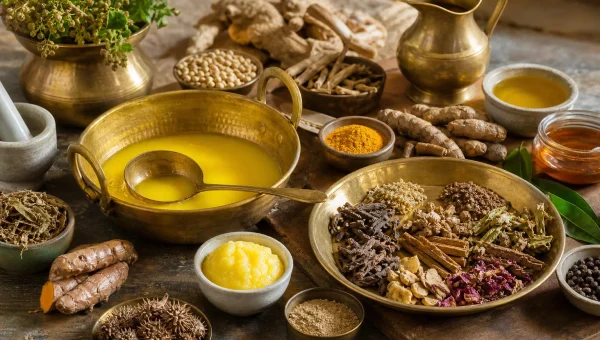
The warming turmeric milk tonic. Haldi Doodh combines turmeric with milk, fat, and gentle spices. Turmeric is pungent and bitter in taste, warming in potency, and traditionally used in Kapha-Pitta conditions involving skin, wounds, metabolic sluggishness, and excess dampness. Milk and ghee soften the dryness and heat of turmeric, making the drink more nourishing and suitable for cold-weather use.
Recipe: Heat 1 cup of milk with 1/4 to 1/2 teaspoon turmeric powder, a small pinch of black pepper, 1/2 teaspoon ghee, a pinch of cardamom, and a small pinch of cinnamon if desired. Simmer gently for 3 to 5 minutes without vigorous boiling. Sweeten only after removing from heat; if using honey, add it after the drink has cooled to a comfortable drinking temperature.
Best Season: Autumn through spring, especially in cold or dry weather and during Vata season. In peak summer, reduce the warming spices or replace cinnamon with fennel or cardamom.
Dosha Suitability: Best suited to Vata and Kapha when prepared with milk and ghee. Pitta types should use smaller amounts of turmeric and pepper, avoid excess cinnamon, and consider cooling milk or coconut milk preparations.
Ayurvedic Context: Turmeric is a classic warming spice, while milk is nourishing and stabilizing. A small pinch of black pepper is useful in modern golden-milk practice because piperine improves curcumin availability, but it should remain modest for people prone to acidity, heat, or burning sensations.
3. Takra (Spiced Buttermilk)
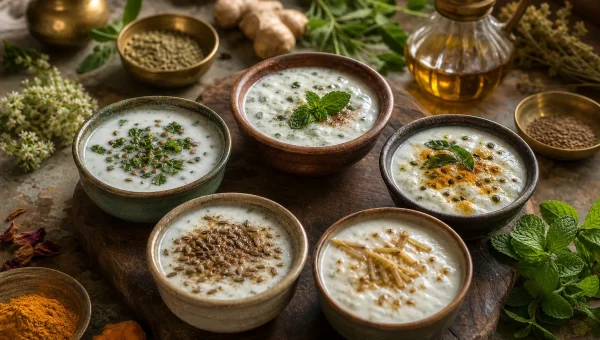
The light digestive buttermilk. Takra is made by churning yogurt with water and seasoning it with digestive spices. It is not the same as heavy, unchurned curd. Proper dilution and churning make it lighter, more digestive, and better suited as a lunch accompaniment. Ayurveda values Takra for supporting appetite, digestion, and bowel regularity when used appropriately.
Recipe: Blend or whisk 1/4 cup fresh yogurt with 3/4 cup room-temperature water until frothy. If butter solids appear, remove them. Add 1/4 teaspoon roasted cumin powder, a pinch of rock salt, a small pinch of fresh ginger, and chopped cilantro. For Pitta types, use fresh mint and reduce ginger. For Kapha types, add a small pinch of dry ginger or black pepper.
Best Season: Suitable year-round when taken at lunch, but especially useful in warm seasons when appetite is present and the body benefits from a lighter dairy preparation. In cold, damp weather, use warming spices and avoid taking it at night.
Dosha Suitability: Tridoshic when properly diluted, churned, and spiced. It is particularly useful for Kapha heaviness and Vata irregularity when digestion is not weak from acute illness. People with active dairy intolerance should avoid it.
Ayurvedic Context: Classical descriptions and later Ayurvedic discussions describe Takra as light, digestive, and useful in conditions where Agni needs support. Its seasoning is not optional; cumin, ginger, salt, and herbs guide the drink toward digestion rather than heaviness.
4. Jīrakādyāriṣṭa / Jeerakarishtam (Cumin Fermented Tonic)
The cumin-based digestive revitalizer. Jeerakarishtam, also known as Jīrakādyāriṣṭa, is a traditional fermented Ayurvedic preparation centered on cumin. Because Arishta preparations are made through fermentation and contain self-generated alcohol in small amounts, the authentic form is best obtained from a licensed Ayurvedic pharmacy and taken under professional guidance, especially in postpartum care.
Recipe for a simple non-fermented home decoction: Dry-roast 2 teaspoons cumin seeds until fragrant and crush them coarsely. Boil with 2 cups water, 1/4 teaspoon dry ginger, 3 crushed black peppercorns, a small piece of jaggery, and 1/4 teaspoon ajwain. Reduce to about 1 cup, strain, and drink warm after meals as a digestive drink. This is a cumin decoction inspired by the digestive profile of the classical preparation, not a substitute for the fermented Arishta.
Best Season: Year-round when digestion is sluggish, but especially useful in winter and early spring when Kapha heaviness and Vata bloating often appear. Postnatal use should be supervised by a qualified Ayurvedic practitioner.
Dosha Suitability: Primarily Vata and Kapha pacifying because of its warming, digestive nature. Pitta types should use smaller amounts, avoid excess black pepper and dry ginger, and prefer the mild home decoction rather than routine fermented use.
Ayurvedic Context: Cumin is described as Dīpana, Pācana, Grāhī, and Kapha-Vata reducing. These qualities explain why cumin-based preparations are traditionally used when appetite is low, gas is present, or food feels slow to digest.
5. Rose Gulkand Sherbet
The Pitta-cooling summer elixir. Gulkand is a sweet preserve made from rose petals and sugar. In Ayurvedic summer practice, rose-based preparations are valued for their cooling, pleasant, and Pitta-soothing nature. When dissolved in cool or room-temperature milk or water, Gulkand Sherbet is used for summer heat, thirst, mild burning sensations, and Pitta-type irritability, especially when diet and weather are already hot.
Recipe: Stir 1 to 2 teaspoons authentic Gulkand into 1 cup room-temperature water or milk. Add 1/4 teaspoon fennel powder and a few drops of food-grade rose water if desired. Soaked sabja seeds may be added in summer for a cooling texture. Avoid making it icy cold, as very cold drinks can weaken digestion.
Best Season: Summer and early autumn, when Pitta naturally accumulates. It fits well within an Ayurvedic summer diet.
Dosha Suitability: Best for Pitta. Vata types may take it with milk rather than plain water. Kapha types and people managing blood sugar should use it sparingly because Gulkand is sweet.
Ayurvedic Context: Rose is traditionally associated with cooling and soothing qualities. The sweetness makes the drink comforting, but also means it should be treated as a seasonal preparation rather than an unlimited daily tonic.
6. Kashayam (Herbal Decoction)
The concentrated herbal decoction. Kashayam, also called Kwatha, is a classical water-based extraction method in which herbs are boiled in water and reduced. This method is stronger than a simple tea, so it should be used with attention to constitution, dose, and duration. The home version below is a general cold-weather digestive and respiratory-supporting decoction.
Recipe: Combine 1/2 teaspoon Guduchi powder, 1/4 teaspoon dry ginger, 1/4 teaspoon turmeric, and 2 crushed black peppercorns in 2 cups water. Boil and reduce to about 1/2 to 1 cup, then strain well. Add honey only after the liquid cools to a comfortable drinking temperature. For throat dryness, a small amount of licorice may be used, but people with hypertension, kidney disease, pregnancy, or medication use should avoid licorice unless advised by a practitioner.
Best Season: Late autumn through early spring, and during damp monsoon periods when Kapha congestion and sluggish digestion are common.
Dosha Suitability: Best for Vata-Kapha patterns involving coldness, heaviness, and sluggishness. Pitta types should reduce dry ginger and black pepper, and may add coriander or mint for a cooler version.
Ayurvedic Context: Guduchi is described as Rasayana, Balya, Dīpana, and Tridoṣa balancing, while ginger, turmeric, and black pepper make the drink warming and penetrating. Because Kashayam is concentrated, it is more medicinal than casual herbal tea and should not be overused.
7. Amla Juice (Indian Gooseberry)
The sour-cooling Rasayana tonic. Amla, or Amalaki, is one of Ayurveda’s most important Rasayana fruits. It is unusual because it is described as having five tastes except salty, with cooling potency and sweet post-digestive effect. These qualities make it especially useful for Pitta while still being broadly balancing when taken in the right amount.
Recipe: Blend 1 to 2 fresh Amla fruits with 1 cup water, strain through a fine mesh, and drink diluted. A classical fresh-juice quantity is small, so begin with 5 to 10 ml fresh juice diluted in water rather than taking large concentrated servings. Add a pinch of roasted cumin or a small amount of honey after dilution if desired. If fresh Amla is unavailable, use a small amount of good-quality Amla powder mixed into warm water.
Best Season: Year-round, with fresh fruits commonly available in the cooler months. It is especially useful in winter as a seasonal fruit and in summer when Pitta heat needs gentle cooling support.
Dosha Suitability: Tridoshic, with special benefit for Pitta. Vata types should avoid taking it ice-cold and may combine it with a little honey or warm water. Kapha types should avoid over-sweetening it.
Ayurvedic Context: Amalaki contains ascorbic acid and tannins and is classically described as Rasayana, Chakshushya, and Tridoṣajit. Its cooling potency makes it different from many sour foods, which are usually heating.
8. Ginger-Tulsi Kadha
The warming respiratory Kadha. Kadha is a concentrated herbal brew used in Indian households for cold-weather respiratory comfort, Kapha heaviness, and Vata-type chills. Ginger and Tulsi form the core of this preparation, while black pepper and cinnamon add warmth and help clear heaviness. It is a seasonal support drink, not a substitute for medical care in high fever, breathing difficulty, persistent cough, or worsening illness.
Recipe: Combine 1 inch grated fresh ginger or 1/4 teaspoon dry ginger, 8 to 10 fresh Tulsi leaves or 1/2 teaspoon dried Tulsi, 4 to 5 black peppercorns, a small piece of cinnamon, and 2 cups water. Simmer for 10 minutes until reduced to about 1 cup. Strain, allow it to cool slightly, then add honey if desired. A few raisins or Munakka may be added for a gentler traditional variation.
Best Season: Late autumn through early spring, and during monsoon periods when respiratory discomfort and dampness are common.
Dosha Suitability: Best for Vata and Kapha. Pitta types should use it only short-term when clearly needed, reduce ginger and pepper, and avoid it during burning sensations, acidity, or high internal heat.
Ayurvedic Context: Tulsi is classically associated with conditions such as cough, breathlessness, low appetite, and hiccup, while ginger and black pepper bring warmth and movement. This makes Kadha most appropriate when coldness, mucus, heaviness, or chills are present.
Comparison Table: All 8 Ayurvedic Healing Drinks
The table below summarizes the practical use, seasonal fit, and main ingredient profile of each drink so that selection can be based on current need rather than habit alone.
| Drink | Primary Use | Best Dosha Fit | Best Season | Prep Time | Key Ingredient |
|---|---|---|---|---|---|
| CCF Tea | Digestion, gas, meal heaviness | Tridoshic, especially Vata-Pitta | Year-round; seasonal transitions | 10 min | Cumin, coriander, fennel |
| Golden Milk | Warming nourishment, cold-weather support | Vata, Kapha | Autumn to spring | 10 min | Turmeric, milk, ghee |
| Takra | Light lunch digestive | Tridoshic when properly spiced | Warm months; year-round at lunch | 5 min | Churned yogurt, cumin |
| Jeerakarishtam / Cumin Decoction | Appetite, bloating, digestive sluggishness | Vata, Kapha | Winter, spring, or as needed | 15 min for home decoction | Cumin, ginger, ajwain |
| Rose Gulkand Sherbet | Summer heat, thirst, Pitta cooling | Pitta | Summer, early autumn | 5 min | Gulkand, fennel |
| Kashayam | Concentrated herbal seasonal support | Vata, Kapha | Autumn to spring; monsoon | 15 min | Guduchi, turmeric, ginger |
| Amla Juice | Rasayana, Pitta cooling, seasonal fruit tonic | Tridoshic, especially Pitta | Year-round; fresh in cooler months | 5 min | Amalaki |
| Ginger-Tulsi Kadha | Cold-weather respiratory comfort | Vata, Kapha | Autumn to spring; monsoon | 15 min | Ginger, Tulsi, black pepper |
General Guidelines for Ayurvedic Drink Preparation
The therapeutic value of Ayurvedic drinks depends not only on ingredients, but also on preparation method, timing, temperature, dose, and the person taking them. A drink that supports one person in winter may be too heating for another person in summer.
- Use the right temperature: Most digestive drinks are best taken warm or at room temperature. Very cold drinks can disturb Agni, especially with meals.
- Prepare fresh when possible: Simple teas and decoctions are best prepared fresh. Concentrated Kashayam should not be treated like casual flavored water.
- Respect timing: CCF Tea can be sipped between meals, Takra is best with or after lunch, cooling rose drinks fit hot afternoons, and Golden Milk is most suitable in the evening or before bed when digestion can handle milk.
- Add honey only after cooling: Ayurvedic tradition avoids heating honey. Stir it in only once the drink is comfortably warm, not hot.
- Adjust spices by dosha: Vata usually benefits from warmth and mild oiliness; Pitta needs moderation with pepper, ginger, cinnamon, and fermented preparations; Kapha benefits from stronger warming spices and less sweetness.
- Use quality ingredients: Whole spices that are freshly crushed or lightly roasted are preferable to stale powders. Choose reputable sources for herbs, especially Guduchi, Amla powder, and fermented Ayurvedic preparations.
- Get individual guidance: People who are pregnant, breastfeeding, elderly, immunocompromised, managing diabetes, hypertension, liver or kidney disease, gallbladder issues, bleeding disorders, or taking regular medication should consult a qualified Ayurvedic practitioner or healthcare provider before using concentrated herbal drinks regularly.
Integrating Healing Drinks into Daily Routine
An effective approach is to select 1 to 3 drinks according to season and present need, then rotate them through the daily routine. Consistency with the right drink is more useful than aggressively taking many preparations at once.
- Morning: Diluted Amla juice in warm or room-temperature water, or Ginger-Tulsi Kadha during cold and damp seasons.
- Mid-morning: CCF Tea sipped warm between breakfast and lunch.
- Lunch: Takra as a light digestive accompaniment when dairy is tolerated.
- Afternoon: Rose Gulkand Sherbet in summer, or a mild CCF Tea during seasonal transitions.
- Evening: Golden Milk during cold seasons when digestion is steady and milk is tolerated.
The key principle is appropriate selection. A daily cup of CCF Tea may be enough for mild digestive irregularity, while Kashayam or Kadha should be reserved for seasons and situations where their stronger warming nature is needed. Ayurvedic drinks work best as part of a balanced lifestyle that includes suitable food, sleep, movement, and seasonal routine.
This article is for educational purposes only. Consult a qualified Ayurvedic practitioner, nutritionist, or healthcare provider before making significant dietary changes or using herbal preparations regularly, especially if you have existing health conditions or take medication.
References
- Hopkinsmedicine (hopkinsmedicine.org)
- Jaims (jaims.in)
- Jacjournal (jacjournal.org)
- Ayurvedic Pharmacopoeia of India
- In vitro influence of spices and spice-active principles on digestive enzymes of rat pancreas and small intestine (2003), PubMed
- Pib (pib.gov.in)
- Influence of piperine on the pharmacokinetics of curcumin in animals and human volunteers (1998), PubMed
- Ijapr (ijapr.in)
- Cumin extract for symptom control in patients with irritable bowel syndrome: a case series (2013), PubMed Central
- En (en.wikipedia.org)
- Wjpr (wjpr.s3.ap-south-1.amazonaws.com)
- Ayurvedic Pharmacopoeia of India
- Tulsi – Ocimum sanctum: A herb for all reasons (2014), PubMed Central
- Easyayurveda (easyayurveda.com)
- NCCIH
- Betterhealth (betterhealth.vic.gov.au)
the spice information here overlaps beautifully with what I learned from my Indian mother-in-law. She always cooked this way intuitively. Now I understand the science behind it.
My nutritionist and my Ayurvedic practitioner have me working together and articles like this help me bridge the two frameworks in my own cooking
Would love to see a version of this for people who travel frequently. Maintaining Ayurvedic eating habits while eating out or at hotels is really challenging.
Good reminder on 8 Ayurvedic Healing Drinks for Every Season. A few more examples would still help.
The professional background you bring to this comment is really valuable. Thank you for reading and contributing
I run a small Ayurvedic cooking class in my city and I share resources with participants. This article is going on the required reading list immediately
I was resistant to giving up raw salads, feels counterintuitive when you’ve been told salads are healthy. But three weeks of warm cooked vegetables and my digestion is so much calmer.
I’m a registered dietitian and while I approach nutrition from a Western evidence-based perspective, I find the Ayurvedic framework fascinating as a complementary lens.
I switched to eating this way about two months ago and my digestion has completely transformed. I used to have bloating every single day. It’s almost gone now.
your experience with the diet changes mirrors mine almost exactly. Week two is when it clicks
The timing guidance for when to take which drinks is what I didn’t expect from this article. I’d been making golden milk at night out of habit, but moving it to the afternoon and switching to a lighter CCF tea before bed has made a noticeable difference to how I sleep. Small change, bigger effect than I anticipated.
Thank you so much for sharing your experience! It’s really encouraging to hear from others on this journey
This has been sitting in my bookmarks for weeks and I finally read it today. Going to implement starting Monday. Thank you for making this so approachable.
The explanation of why to avoid cold water was the first thing I implemented. Such a small change but I genuinely feel it makes a difference in how I digest my meals.
So encouraging to hear! Starting my first week and this is motivating me to stick with it
Started drinking CCF tea after reading this. Two weeks in and my appetite feels more regulated and Im not craving sweets the way I used to after meals.
Good reminder on 8 Ayurvedic Healing Drinks for Every Season. This feels more usable than a long list of herbs.
Good reminder on 8 Ayurvedic Healing Drinks for Every Season. Small daily changes are easier to follow than a perfect plan.
The tulsi and ginger drink for the monsoon season finally resolved my confusion about why I feel sluggish and congested every July despite eating well. I’d been drinking cold smoothies all through rainy season, which apparently is about the worst thing I could do according to this. Two weeks of the warm herbal drinks and the difference is real.
I’m going to share this comment with my skeptical partner. Exactly what I needed to articulate why this works.
The food combining rules here helped me understand why certain meals left me feeling heavy and uncomfortable even when the individual foods were healthy.
Your comment about the dosage issue is so important. Getting it right makes all the difference.
The seasonal eating section is so logical once you read it. Eating what grows locally and seasonally is the original human diet. We just forgot somewhere along the way
Thank you for asking this! I’ve been too shy to ask the same question and I really needed this answered.
I’m a chef and the Pathya Kalpana framework is changing how I think about beverages on my menu. The idea that spice ratios and temperature are doing therapeutic work rather than just adding flavor gives me a completely different lens for drink development. The trikatu-based preparation especially.
I came here to say exactly this and you said it better. Completely agree.
I appreciate that you explained WHY these foods are recommended, not just what they are. Understanding the reasoning helps me make better choices when I’m in situations not covered by the list.
Good reminder on 8 Ayurvedic Healing Drinks for Every Season. The safety notes could be expanded a little.
The CCF tea for digestion is now part of my morning routine and I can tell the difference on days I skip it. What I appreciate about this list is that most of the drinks use ingredients I already keep in the kitchen. No obscure imports required.
This reads well but I wish there was more acknowledgment of the limitations. Not everything traditional is automatically better.
Golden milk as standard morning ritual in my family goes back three generations without us ever calling it by that name. Haldi doodh was what my grandmother made when anyone got sick. Seeing the turmeric-black pepper-ghee interaction explained in pharmacological terms validates what was already obvious from daily lived experience.
three months in, still waiting for the promised results. I’m not giving up yet but I’m managing my expectations now
Useful post on 8 Ayurvedic Healing Drinks for Every Season. The safety notes could be expanded a little.
We appreciate your candid feedback. You’re right that we should distinguish more clearly between traditional knowledge and clinical evidence. We’re working on adding more research citations.
The seasonal drink assignment is the most useful framing in this article. Not one drink for everything but specific preparations for different seasonal requirements. Cooling Amla juice in summer and warming Trikatu in winter is how food as medicine is supposed to work.
I like this site generally but this particular article feels rushed compared to your usual standard. Some sections need more depth.
That’s a very fair point. We always recommend working with a qualified practitioner alongside any self-guided protocol. We’ll add a more prominent disclaimer.
Is there a standardized preparation for the CCF tea? Different sources give different ratios and steeping times. What are the proportions that optimize the digestive effect without making it astringent?
I think the article could be improved by addressing the quality control issues with Ayurvedic herbs. Heavy metal contamination is a real concern with unregulated products
The buttermilk (Takra) entry is the one that deserves more attention. In South Indian culinary tradition, Takra with cumin is a standard digestive accompaniment to heavy meals but few people outside that tradition know its specific probiotic and digestive properties.
Tulsi tea during monsoon season for respiratory and immune support is something my family has always done. I didn’t have the language for why until reading this. The antibacterial and antiviral properties of Tulsi are well-studied and the tea preparation makes them accessible without capsules.
Does roasting the seeds really change the flavor enough to affect digestion?
Ashwagandha milk before bed is the preparation I resisted because I expected it to taste medicinal. First time I made it properly with cardamom and a small amount of honey the flavor was actually pleasant. The preparation details matter for adherence.
For 8 Ayurvedic Healing Drinks for Every Season, consistency seems like the hard part. A few more examples would still help.
Do any of these drinks interact with prescription blood thinners? Turmeric at therapeutic doses has anti-platelet properties and I take warfarin. I want to know which drinks are safe to add and which require a conversation with my cardiologist first.
I tried adding a pinch of black pepper to my turmeric latte and noticed it felt warmer.
The Amla-honey-ginger morning shot as a replacement for commercial vitamin C supplements is where this becomes directly economical. Two Amla plus small amounts of ginger and raw honey costs a fraction of the vitamin C tablet that has worse bioavailability.
The caution about honey and hot water interactions is something many readers will dismiss as traditional concern without scientific basis. The advanced glycation end product formation from heated honey-water combinations actually does have some research support. Good to include it.
Using homemade yogurt makes the texture lighter than store bought buttermilk.
I followed the Triphala water preparation (overnight cold infusion) instead of decoction and noticed more astringency. The preparation method changes the taste profile significantly. Which method is appropriate for someone wanting the general toning effect versus the acute constipation effect?
The avoidance of cold foods during treatment is something my body confirmed independently. Finding a good source was the challenge.
Any issue with taking Ashwagandha milk AND tulsi decoction on the same day?
The classical Sanskrit terms with explanations are helpful for beginners. Took 3 weeks before I noticed anything.
Is the 30 day fermentation really necessary for everyday bloating?
Any recommended books for deeper reading on this topic? Still a work in progress.
Would love to see a version of this article aimed at practitioners. Took 3 weeks before I noticed anything.
My integrative doctor agrees with this approach, which surprised me. The diet changes helped too.
Ginger-lemon-honey hot water simple and effective but the proportions matter.
Turmeric milk without black pepper doesn’t work. Piperine for curcumin absorption is essential.
My vaidya prescribed something nearly identical. Good to see the classical basis. Combined with yoga practice for better results.
I was looking for a plain explanation of 8 Ayurvedic Healing Drinks for Every Season. The main idea is clear even if someone is new to Ayurveda.
I love how the rose water lifts the sweet drink without making it cloying.
The classical Sanskrit terms with explanations are helpful for beginners. The timing of doses matters more than I expected.
Any recommended books for deeper reading on this topic? Finding a good source was the challenge.
The dosage section here is more specific than most sources I’ve seen. Still a work in progress.
The recovery experience described in the comments here matches mine closely. Consistency seems to be the key.
The advice around 8 Ayurvedic Healing Drinks for Every Season is specific enough to be useful. A few more examples would still help.
Is this safe with antacids? The timing of doses matters more than I expected.
A quick decoction of ginger and turmeric works well as a morning wake up.
The mechanism explanation is clearer than the PubMed abstract I read. Took 3 weeks before I noticed anything.
Would appreciate a follow-up article specifically on the dosage for elderly patients. Will update in a few months.
The avoidance of cold foods during treatment is something my body confirmed independently. Consistency seems to be the key.
My practitioner suggested something similar last year. The results were gradual but real. My practitioner is monitoring.
Been researching this for my father. The practical tips are what he can actually follow. Combining with dietary changes.
Can the dried powder give the same vitamin C boost as fresh fruit?
Bookmarking this. Need to discuss it with my doctor first. My practitioner is monitoring.
My integrative doctor agrees with this approach, which surprised me. Combining with dietary changes.
Coriander seed cold infusion for Pitta heat in summer. Light, refreshing, calming.
Late to this post but it answered a question I’ve had for months. The timing of doses matters more than I expected.
Three months in and the improvement is steady if slow. Started with half the dose initially.
During a chilly evening, sipping this brew eased my throat scratchiness.
I’ve tried multiple approaches before landing on what the article recommends. Still a work in progress.
Started this last January and will report back after 3 months. The quality of the herb matters a lot.
Does anyone know if this applies for a Vata-Pitta dual prakriti? Took 3 weeks before I noticed anything.
My vaidya prescribed something nearly identical. Good to see the classical basis. The timing of doses matters more than I expected.
Would love to see a version of this article aimed at practitioners. Digestive improvement came before other benefits.
My practitioner suggested something similar last year. The results were gradual but real. Combined with yoga practice for better results.
Three months in and the improvement is steady if slow. Finding a good source was the challenge.
The integration with modern physiology is what makes this article stand out. The quality of the herb matters a lot.
Does anyone know if this applies for a Vata-Pitta dual prakriti? Consistency seems to be the key.
The diet changes listed here are harder to follow than the herbs but more impactful. Still a work in progress.
The Kapha-reducing spiced water (Ushnodaka) with cumin and ajwain reduces bloating in an hour.
Would appreciate a follow-up article specifically on the dosage for elderly patients. Combined with yoga practice for better results.
Would appreciate a follow-up article specifically on the dosage for elderly patients. My sleep improved first, then energy.
The 8 Ayurvedic Healing Drinks for Every Season angle is useful here. This would be easier to follow with a one-week sample plan.
I’ve tried multiple approaches before landing on what the article recommends. Consistency seems to be the key.
My integrative doctor agrees with this approach, which surprised me. My practitioner is monitoring.
My practitioner suggested something similar last year. The results were gradual but real. Will update in a few months.
The avoidance of cold foods during treatment is something my body confirmed independently. Results are slow but steady.
The herb quality issue is real, I’ve noticed significant variation across brands. Digestive improvement came before other benefits.
The safety profile section is the most important part and it’s well done. Finding a good source was the challenge.
Anyone else tried combining this with Trikatu? Started with half the dose initially.
Late to this post but it answered a question I’ve had for months. The quality of the herb matters a lot.
Shared this with my mother who has been dealing with this for 5 years. The diet changes helped too.
Reading this on 2026-09-06 has anything changed about the safety profile?
Good reminder on 8 Ayurvedic Healing Drinks for Every Season. I would still ask a practitioner before changing medicines.
Finding a quality herb source is harder than following the protocol itself. Combined with yoga practice for better results.