The elite marathon runner came to the consultation not for his training plan, nutrition, or injuries. He came because he could not sleep. After late training sessions, his body felt exhausted while his mind and nervous system remained alert. He had tried melatonin, magnesium, basic sleep hygiene, and ashwagandha, which helped somewhat but did not solve the pattern. The Ayurvedic approach to sleep in athletes goes beyond any single herb. It begins with Nidra (sleep) as one of the three supports of life, alongside food and regulated conservation of vital energy, and then matches herbs, routine, diet, and recovery practices to the athlete’s actual sleep pattern.
Why Athletes Sleep Differently: The Ayurvedic Explanation
Ayurveda describes disturbed sleep under patterns such as Anidra or Nidranasha. In athletes, the common pattern is often not ordinary sleeplessness from poor habits alone; it is a Vata-Pitta pattern created by repeated strain, late stimulation, heat, competition pressure, travel, and recovery debt. Vata contributes movement, lightness, roughness, dryness, and restlessness, while Pitta contributes heat, intensity, ambition, and mental sharpness that can remain active after training ends.
High-volume endurance work, repeated heavy lifting, late-evening conditioning, and competition blocks can increase the same qualities Ayurveda associates with aggravated Vata: excessive movement, irregularity, lightness, and depletion. When Pitta is also involved, the athlete may feel hot, mentally analytical, hungry at the wrong time, or unable to stop reviewing performance details. The sleep strategy is therefore not only “take something sedating.” It is to rebuild regularity, cool excess heat, provide nourishment, reduce late stimulation, and use Medhya and Nidrājanana supports where appropriate.
Why Ashwagandha Is Useful but Not Always Enough
Ashwagandha (Withania somnifera) is a valuable foundation herb for many athletes because classical Ayurveda describes it as Rasayana, Balya, Vatakaphapaha, and Vajikarana. Human sleep trials and pooled clinical data also support its role in sleep quality, sleep onset, total sleep time, and sleep efficiency, especially when used consistently for several weeks at studied doses.
Its strength is as a restorative and adaptogenic foundation, not as the only answer for every training-night insomnia pattern. An athlete whose main issue is chronic stress, recovery debt, low resilience, and Vata depletion may do well with ashwagandha. An athlete who lies awake specifically after late hard training may need additional cooling, grounding, and sleep-onset support from herbs such as Jatamansi, Tagara, or Brahmi, together with a stricter evening downshift routine. Ashwagandha dosage guide
Four Ayurvedic Supports Beyond Ashwagandha
These herbs are not interchangeable sleep pills. Each has a different Ayurvedic profile and should be selected according to the athlete’s pattern: restless Vata, hot and analytical Pitta, difficulty falling asleep, frequent waking, or severe hyperarousal that requires clinical care.
1. Jatamansi (Nardostachys jatamansi)
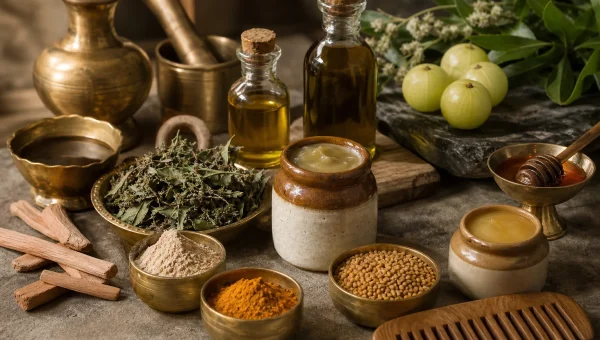
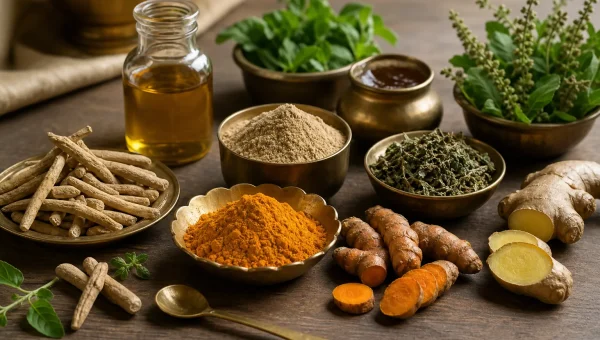
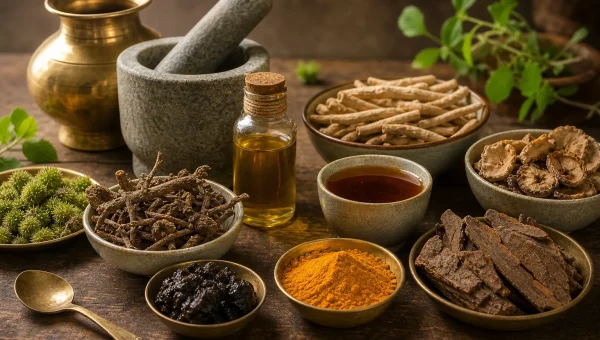
Jatamansi is one of the most directly relevant Ayurvedic sleep herbs for a Vata-Pitta athlete. The Ayurvedic Pharmacopoeia of India describes Jatamansi rhizome as Medhya, Tridoshanut, Nidrājanana, and useful in Anidra and Manasaroga. Its classical profile is bitter and astringent in taste, light in quality, cooling in potency, and especially suited to a hot, restless, mentally strained sleep pattern.
In a comparative clinical study of primary insomnia, Jatamansi improved sleep initiation, sleep duration, disturbed sleep, and daytime functioning. Pharmacological work on Jatamansi rhizome also describes central nervous system depressant activity in animal models without observed impairment of gross behavior or motor coordination in that study. For athletes, this makes Jatamansi a useful practitioner-guided option when the problem is not only falling asleep but also nervous system recovery after a high-load phase.
Typical adult use: classical powder dose is commonly given around 2 to 3 g, often in warm milk or another suitable vehicle, but athletes should individualize dose and timing with a qualified practitioner, especially when combining it with other calming herbs or medications.
2. Tagara (Valeriana wallichii)
Tagara, Indian valerian, is the Ayurvedic valerian species listed in the Ayurvedic Pharmacopoeia of India. It is described as Tridoshahara and Manasadoshahara, with pungent, bitter, and astringent taste, light and unctuous qualities, and warming potency. For athletes, Tagara is most relevant when the main problem is sleep onset: the body is tired, but the system remains activated after evening effort.
In the comparative clinical study that evaluated Tagara and Jatamansi for primary insomnia, Tagara produced stronger improvement than Jatamansi in sleep initiation and sleep duration. This supports its traditional use as a targeted bedtime herb for acute restlessness, though its warming potency means it should be used carefully in athletes with strong Pitta signs such as heat, acidity, irritability, or night sweating.
Typical adult use: the Ayurvedic Pharmacopoeia lists a powder dose of 1 to 3 g. It should not be combined casually with alcohol, sedative medication, or other sleep-inducing products without professional guidance.
3. Brahmi (Bacopa monnieri)
Brahmi is best known as a Medhya Rasayana, but that is exactly why it belongs in an athletic sleep protocol. Many athletes do not simply feel “awake”; they replay technique, pacing, body metrics, selection pressure, or competition outcomes. The Ayurvedic Pharmacopoeia describes Brahmi as cooling, Medhya, Rasayana, and Vatahara, with use in mental and nervous system patterns.
Brahmi is not best understood as a heavy sedative. It is better used as a daily support for the athlete whose mind stays active at night. It pairs well with a fixed evening routine, screen reduction, breathing practice, and a light nourishing bedtime drink when appropriate. Brahmi complete guide
Typical adult use: the classical powder dose is commonly 1 to 3 g; standardized extracts are used differently and should be chosen according to product strength and practitioner advice.
4. Sarpagandha (Rauvolfia serpentina)
Sarpagandha is not a general wellness supplement for athletes. It contains reserpine and related alkaloids and has a strong history of use in blood-pressure and sedative contexts. Because of its potency, possible effects on blood pressure, mood, alertness, and medication interactions, it should be treated as a clinician-only herb.
For athletes with severe insomnia, marked sympathetic overactivation, hypertension, panic-like arousal, or suspected overtraining, Sarpagandha should not be self-prescribed. That situation calls for assessment by a qualified Ayurvedic physician and a healthcare provider who can evaluate sleep apnea, overtraining syndrome, medication use, mood disorders, stimulant intake, and cardiovascular risk.
Athlete Sleep Herb Comparison Table
The table below is for educational pattern-matching, not self-prescription. The safest and most effective choice depends on constitution, training load, digestion, medications, recovery status, and whether the sleep problem is acute, chronic, or linked to an underlying medical condition.
| Herb | Latin Name | Ayurvedic Role | Best Athlete Pattern | Typical Use Note |
|---|---|---|---|---|
| Ashwagandha | Withania somnifera | Rasayana, Balya, Vata-supportive recovery herb | Chronic recovery debt, stress load, low resilience | Often used daily with meals; clinical sleep trials commonly used standardized extracts |
| Jatamansi | Nardostachys jatamansi | Medhya, Nidrājanana, cooling Vata-Pitta support | Restless sleep, mental heat, poor sleep depth after heavy blocks | Classical powder dose commonly 2 to 3 g under guidance |
| Tagara | Valeriana wallichii | Manasadoshahara, Vata-calming sleep-onset support | Difficulty falling asleep after evening training | Classical powder dose commonly 1 to 3 g; avoid with alcohol or sedatives unless supervised |
| Brahmi | Bacopa monnieri | Medhya Rasayana, cooling support for mental overactivity | Performance analysis, mental replay, cognitive overdrive | Best used as a steady daily support rather than an emergency sedative |
| Sarpagandha | Rauvolfia serpentina | Potent sedative and blood-pressure-active herb | Severe hyperarousal requiring clinical evaluation | Clinician-only; no self-dose |
The Ayurvedic Sleep Stack for Athletes
A practical Ayurvedic sleep stack should be tiered. Daily foundations build regularity and recovery capacity, while stronger bedtime supports are reserved for high-intensity nights or clinician-supervised care. This reduces the common mistake of using stronger sedative herbs while leaving the training schedule, caffeine timing, screens, digestion, and Vata-aggravating routine unchanged.
Daily Foundation (Every Day)
The daily foundation is designed to make sleep predictable before stronger herbs are needed. For athletes, the most important baseline is a regular sleep window with enough time in bed to support training adaptation.
- Fixed sleep and wake times: keep bedtime and wake time consistent as much as training and competition allow.
- Sleep opportunity: most adults need 7 to 9 hours; athletes in heavy training blocks often need more sleep opportunity to recover well.
- Morning anchoring: get morning light, eat at regular times, and avoid beginning the day in a rushed Vata state.
- Ashwagandha foundation: use only if appropriate for your constitution, digestion, medications, and goals; many athletes take it with food rather than as a late-night sedative.
- Brahmi for mental overactivity: consider Brahmi earlier in the day or with dinner when the main problem is mental replay rather than physical restlessness.
- Foot and scalp oiling: a short, warm sesame-oil massage to the feet and scalp in the evening is a simple Vata-pacifying practice. Abhyanga for recovery and sleep
Post-Training Night Protocol (High-Intensity Days)
This protocol is most useful after late lifting, intervals, tempo runs, sparring, long endurance sessions, or competition days when the body is tired but alert. The goal is to lower stimulation, cool excess heat, nourish Vata, and choose one targeted herb rather than stacking several strong products at once.
- Training cutoff: when possible, finish high-strain exercise at least 4 hours before the intended sleep time.
- Screen cutoff: keep the final 60 minutes quiet, dim, and low-input; this is part of the treatment, not a decorative add-on.
- Warm bedtime drink: use warm milk or a suitable non-dairy alternative with cardamom and a small amount of ghee if digestion allows.
- Jatamansi option: for hot, restless, mentally strained sleep, a practitioner may use Jatamansi powder in the bedtime vehicle.
- Tagara option: for difficulty falling asleep after hard evening effort, a practitioner may choose Tagara, especially when there is no alcohol, sedative medication, or next-morning driving risk.
- Nadi Shodhana: practice alternate-nostril breathing slowly for 5 minutes before bed to support the shift away from training-mode arousal.
- Scalp massage: use a small amount of warm Brahmi oil or Bhringaraj oil for slow scalp massage. This is a gentler home practice, not a substitute for clinical Shirodhara. Shirodhara therapy guide
Heavy Training Block Add-Ons
During competition season or a demanding training block, the sleep plan should become more conservative, not more stimulating. Ayurveda would emphasize Rasayana, oiling, regular meals, and protected rest days rather than pushing more intensity into an already depleted system.
- Add recovery time: extend sleep opportunity by 30 to 60 minutes when training load rises.
- Rest-day Abhyanga: full-body oil massage on a rest day can be used as a Vata-pacifying recovery practice, ideally followed by warmth and quiet rather than errands and stimulation.
- Nourishing evening meal: choose warm, easy-to-digest foods such as rice, mung dal, soups, stews, or milk-based preparations if tolerated.
- Rasayana support: formulas such as Chyawanprash may be considered when digestion is strong and sugar intake is appropriate, but they should be chosen individually rather than treated as universal bedtime nutrition. Chyawanprash complete guide
Sleep Hygiene Practices in the Ayurvedic Framework
Ayurvedic Dinacharya and modern sleep hygiene overlap strongly: both favor rhythm, dim evenings, light digestion at night, stimulant control, and a repeatable pre-sleep routine. For athletes, these basics matter because even a good herb works poorly against late caffeine, late screens, heavy food, and training too close to bed.
- Keep a fixed rhythm: sleep and wake at consistent times whenever possible, including rest days.
- Avoid heavy late meals: keep the evening meal warm, digestible, and earlier; avoid lying down immediately after a large meal.
- Use warm milk selectively: warm milk with cardamom, turmeric, or ghee can be useful when digestion tolerates dairy and the athlete needs nourishment rather than more stimulation.
- Choose left-side rest when reflux-prone: athletes with nighttime reflux may benefit from left-side sleeping or left-side rest after meals.
- Practice Nadi Shodhana: alternate-nostril breathing is a simple Vata-pacifying pre-sleep practice that supports autonomic settling.
- Cut caffeine early: avoid caffeine within at least 6 hours of bedtime; sensitive athletes often need an earlier cutoff.
Dietary Practices That Support Athletic Sleep
Food should match the athlete’s training load and digestive capacity. The Ayurvedic aim is to avoid both depletion and heaviness: enough nourishment to recover, but not so much late-night food that digestion competes with sleep.
- Warm turmeric milk: useful when dairy is tolerated and the athlete needs a calming, nourishing bedtime drink; keep it light and not overly sweet.
- Dates and almonds: small portions can be grounding and nourishing, but large servings near bedtime may worsen reflux or blood-sugar swings in sensitive people.
- Tart cherry: not a classical Ayurvedic ingredient, but it can be considered as a food-based sleep support for athletes who tolerate sour fruit preparations well.
- Avoid late stimulants: caffeine, alcohol, very spicy food, and heavy fried meals can all work against the Kapha-Vata settling needed for deep sleep.
Safety Note
Important safety information: Consult a qualified Ayurvedic practitioner and healthcare provider before using sleep herbs, especially if you use sedatives, antidepressants, blood-pressure medication, alcohol, performance supplements, or prescription sleep aids. Sarpagandha (Rauvolfia serpentina) is clinician-only because of its reserpine content and possible effects on blood pressure, mood, alertness, and drug interactions. Tagara and other sedating herbs should not be combined casually with alcohol or sedative drugs. Persistent insomnia, loud snoring, pauses in breathing, chest symptoms, severe anxiety, depression, unexplained fatigue, or declining performance despite rest should be medically evaluated rather than managed only with herbs.
Four-Week Tracking Tip
For the next 4 weeks of training, test only one bedtime change on your highest-training-volume days. A simple option is warm milk with cardamom and a practitioner-approved Jatamansi dose 45 to 60 minutes before bed. Track sleep-onset time, number of awakenings, perceived sleep quality, morning resting heart rate or HRV if you use a wearable, and next-day training readiness. This keeps the protocol practical: the best Ayurvedic sleep plan for an athlete is the one that improves recovery without dullness, digestive heaviness, or dependence on stronger sedatives.
References
- Charaka Samhita — Nidra
- Bjsm (bjsm.bmj.com)
- The Sleep and Recovery Practices of Athletes (2021), PubMed Central
- Nature (nature.com)
- Charaka Samhita — Vata dosha
- Ayurvedic Pharmacopoeia of India
- Effect of Ashwagandha (Withania somnifera) extract on sleep: A systematic review and meta-analysis (2021), PubMed
- Clinical evaluation of the pharmacological impact of ashwagandha root extract on sleep in healthy volunteers and insomnia patients: A double-blind, randomized, parallel-group, placebo-controlled study (2021), PubMed
- Central nervous system depressant activity of Jatamansi (Nardostachys jatamansi DC.) rhizome (2020), PubMed Central
- A comparative clinical study on the effect of Tagara (Valeriana wallichii DC.) and Jatamansi (Nardostachys jatamansi DC.) in the management of Anidra (primary insomnia) (2015), PubMed Central
- Ayurvedic Pharmacopoeia of India
- Neuropharmacological review of the nootropic herb Bacopa monnieri (2013), PubMed Central
- Molecular and Functional Characterization of Bacopa monniera: A Retrospective Review (2015), PubMed Central
- Rauwolfia in the Treatment of Hypertension (2015), PubMed Central
- MedlinePlus
- NCCIH
- Influence of alternate nostril breathing on heart rate variability in non-practitioners of yogic breathing (2012), PubMed Central
- LWW Journals
- Nhlbi (nhlbi.nih.gov)
- Caffeine effects on sleep taken 0, 3, or 6 hours before going to bed (2013), PubMed
- Left lateral decubitus sleeping position is associated with improved gastroesophageal reflux disease symptoms: A systematic review and meta-analysis (2023), PubMed Central
- Mdpi (mdpi.com)
- Exploring the Role of Dairy Products In Sleep Quality: From Population Studies to Mechanistic Evaluations (2023), PubMed Central
The lying awake after evening training with exhausted body and racing nervous system is exactly my experience as a competitive cyclist. Melatonin helped for the first month and then nothing. The Vata-aggravation-from-evening-training explanation is the framework I needed.
I’m a masters swimmer and the post-training wired feeling is constant. Brahmi at night and adjusting my evening nutrition to include more warming, grounding food has made more difference than any sleep hygiene protocol I’ve tried.
The training time adjustment advice is the one I find most practically difficult. I train in the evening because that’s when I can train around work. The Ayurvedic recommendation to move training earlier doesn’t account for real schedule constraints.
The distinction between Vata derangement from exercise and simply poor sleep hygiene is something sports medicine doesn’t have language for. My sleep specialist told me I had hyperarousal before sleep which is a physiological description that maps well to what Ayurveda calls unanchored Vata.
found this post helpful. will try the suggested approach. (ref 1848-59)
What’s the Ayurvedic view on the timing of protein intake around training and how it affects post-exercise sleep? I currently take protein within 30 minutes of training which is around 9pm. I wonder if that’s relevant to my sleep quality.
🙌 The Vata aggravation from intense training is something no sports medicine doc I’ve seen has language for. this framework at least explains what I experience
Tried Tagara and Ashwagandha together at night for three months during a heavy training block. Sleep quality as measured on my tracker improved meaningfully. Deep sleep increased. Whether that’s the herbs, the dietary changes I made simultaneously, or placebo I can’t say but the numbers changed.
The post-training nervous system activation is exactly the problem I have as an amateur cyclist. Even a moderate evening ride leaves me wide awake until midnight. I’ve tried the standard ashwagandha and it takes the edge off but doesn’t resolve the underlying hyperarousal. The Jatamansi suggestion in this article is something I haven’t tried — is it typically taken as a standalone churna or combined with something like Brahmi?
Is there specific guidance for ultra-endurance athletes whose Vata from training is much more extreme than what recreational athletes experience? The standard protocols might need adjustment for someone doing 20+ hours of training per week.
The warm milk tip with jatamansi and cardamom sounds easy to try on heavy training nights.
The cherry juice reference in the title is funny because I’ve tried cherry juice and it does work mildly. The Ayurvedic approach going beyond that implies it’s a whole system issue not a single antioxidant deficiency. That framing is more coherent.
What Ashwagandha form is best for sleep specifically in athletes? KSM-66 vs Sensoril makes a difference based on my reading
tagara plus ashwagandha combination at bedtime for 6 weeks during my peak training block. sleep tracker showed deep sleep up by about 18 percent ठीक है
my HRV was consistently 12-15 points lower on heavy training days regardless of sleep duration. after 8 weeks on the herbal protocol the HRV drop is more like 5-7 points on the same training load 🙌
the Vata aggravation from intense training is something no sports medicine doc I’ve seen has language for. this framework at least explains what I experience 🙏
the protein timing point is the one my coach and Ayurvedic practitioner disagree on. conventional says within 30 min post-training. Ayurveda says wait for agni to settle. I compromise at 60 min नमस्ते
🌿 the protein timing point is the one my coach and Ayurvedic practitioner disagree on. conventional says within 30 min post-training. Ayurveda says wait for agni to settle. I compromise at 60 min
Sleep deprivation in athletes reduces muscle protein synthesis, impairs glycogen restoration, and increases injury risk. It’s actually a bigger performance limiter than most supplementation. An Ayurvedic approach that genuinely improves sleep quality for athletes addresses performance at a fundamental level.
My HRV was consistently 12-15 points lower on heavy training days regardless of sleep duration. after 8 weeks on the herbal protocol the HRV drop is more like 5-7 points on the same training load
The protein timing point is the one my coach and Ayurvedic practitioner disagree on. conventional says within 30 min post-training. Ayurveda says wait for agni to settle. I compromise at 60 min
I train twice a day and the post-evening-session wired feeling is constant. brahmi at 10pm changed this more than any sleep protocol I tried
cherry juice is the gateway drug that brought most athletes I know toward thinking about plant-based recovery. this goes several steps further
💯 My HRV was consistently 12-15 points lower on heavy training days regardless of sleep duration. after 8 weeks on the herbal protocol the HRV drop is more like 5-7 points on the same training load
apologies for going off-topic, anyone know the Ayurvedic approach to managing migraines?
The Vata aggravation from intense training is something no sports medicine doc I’ve seen has language for. this framework at least explains what I experience
tagara plus ashwagandha combination at bedtime for 6 weeks during my peak training block. sleep tracker showed deep sleep up by about 18 percent
I’ve been using brahmi in the afternoon and notice less mental replay before bed.
I came for Sleep Optimization for Athletes and this answered the main question. A few more examples would still help.
found this post helpful. will try the suggested approach. (ref 1848-11)
Good reminder on Sleep Optimization for Athletes. Good starting point for a cautious reader.
the Vata aggravation from intense training is something no sports medicine doc ive seen has language for. this framework at least explains what I experience
my HRV was consistently 12-15 points lower on heavy training days regardless of sleep duration. after 8 weeks on the herbal protocol the HRV drop is more like 5-7 points on the same training load ठीक है
my HRV was consistently 12-15 points lower on heavy training days regardless of sleep duration. after 8 weeks on the herbal protocol the HRV drop is more like 5-7 points on the same training load 🌿
🙏 the protein timing point is the one my coach and Ayurvedic practitioner disagree on. conventional says within 30 min post-training. Ayurveda says wait for agni to settle. I compromise at 60 min
💯 the Vata aggravation from intense training is something no sports medicine doc I’ve seen has language for. this framework at least explains what I experience
🙏 my HRV was consistently 12-15 points lower on heavy training days regardless of sleep duration. after 8 weeks on the herbal protocol the HRV drop is more like 5-7 points on the same training load
Not related to this post but does anyone know a good practitioner in Hyderabad?
my HRV was consistently 12-15 points lower on heavy training days regardless of sleep duration. after 8 weeks on the herbal protocol the HRV drop is more like 5-7 points on the same training load ✨ नमस्ते
🙌 The protein timing point is the one my coach and Ayurvedic practitioner disagree on. conventional says within 30 min post-training. Ayurveda says wait for agni to settle. I compromise at 60 min
✨ the Vata aggravation from intense training is something no sports medicine doc I’ve seen has language for. this framework at least explains what I experience
the protein timing point is the one my coach and Ayurvedic practitioner disagree on. conventional says within 30 min post-training. Ayurveda says wait for agni to settle. I compromise at 60 min 💯
My HRV was consistently 12-15 points lower on heavy training days regardless of sleep duration. after 8 weeks on the herbal protocol the HRV drop is more like 5-7 points on the same training load नमस्ते
My HRV was consistently 12-15 points lower on heavy training days regardless of sleep duration. after 8 weeks on the herbal protocol the HRV drop is more like 5-7 points on the same training load 🙌 ठीक है
found this post helpful. will try the suggested approach. (ref 1848-27)
found this post helpful. will try the suggested approach. (ref 1848-26)
the Vata aggravation from intense training is something no sports medicine doc I’ve seen has language for. this framework at least explains what I experience ✨
my HRV was consistently 12-15 points lower on heavy training days regardless of sleep duration. after 8 weeks on the herbal protocol the HRV drop is more like 5-7 points on the same training load 🙏
found this post helpful. will try the suggested approach. (ref 1848-65)
found this post helpful. will try the suggested approach. (ref 1848-29)
✨ the protein timing point is the one my coach and Ayurvedic practitioner disagree on. conventional says within 30 min post-training. Ayurveda says wait for agni to settle. I compromise at 60 min
The Vata aggravation from intense training is something no sports medicine doc I’ve seen has language for. this framework at least explains what I experience नमस्ते
The protein timing point is the one my coach and Ayurvedic practitioner disagree on. conventional says within 30 min post-training. Ayurveda says wait for agni to settle. I compromise at 60 min ✨
🌿 My HRV was consistently 12-15 points lower on heavy training days regardless of sleep duration. after 8 weeks on the herbal protocol the HRV drop is more like 5-7 points on the same training load
🙌 my HRV was consistently 12-15 points lower on heavy training days regardless of sleep duration. after 8 weeks on the herbal protocol the HRV drop is more like 5-7 points on the same training load
The Vata aggravation from intense training is something no sports medicine doc I’ve seen has language for. this framework at least explains what I experience ठीक है
Has anyone looked into whether tagara works better than jatamansi for falling asleep after evening runs?
found this post helpful. will try the suggested approach. (ref 1848-38)
Sorry off-topic but has anyone here used Ayurveda for hair loss?
My HRV was consistently 12-15 points lower on heavy training days regardless of sleep duration. after 8 weeks on the herbal protocol the HRV drop is more like 5-7 points on the same training load ✨
A quick abhyanga on feet and scalp before shower really shifts my evening state.
found this post helpful. will try the suggested approach. (ref 1848-43)
my HRV was consistently 12-15 points lower on heavy training days regardless of sleep duration. after 8 weeks on the herbal protocol the HRV drop is more like 5-7 points on the same training load 💯
found this post helpful. will try the suggested approach. (ref 1848-45)
found this post helpful. will try the suggested approach. (ref 1848-46)
the Vata aggravation from intense training is something no sports medicine doc I’ve seen has language for. this framework at least explains what I experience धन्यवाद
@David found this post helpful. will try the suggested approach. (ref 1848-64)
found this post helpful. will try the suggested approach. (ref 1848-49)
Wondering if the shirodhara self massage step is worth adding without a clinic visit.
❤️ My HRV was consistently 12-15 points lower on heavy training days regardless of sleep duration. after 8 weeks on the herbal protocol the HRV drop is more like 5-7 points on the same training load
Sharing this.
the protein timing point is the one my coach and Ayurvedic practitioner disagree on. conventional says within 30 min post-training. Ayurveda says wait for agni to settle. I compromise at 60 min धन्यवाद
found this post helpful. will try the suggested approach. (ref 1848-54)
🙏 the Vata aggravation from intense training is something no sports medicine doc I’ve seen has language for. this framework at least explains what I experience
💯 the Vata aggravation from intense training is something no sports medicine doc ive seen has language for. this framework at least explains what I experience
The protein timing point is the one my coach and Ayurvedic practitioner disagree on. conventional says within 30 min post-training. Ayurveda says wait for agni to settle. I compromise at 60 min ठीक है
found this post helpful. will try the suggested approach. (ref 1848-58)
found this post helpful. will try the suggested approach. (ref 1848-60)
found this post helpful. will try the suggested approach. (ref 1848-61)
found this post helpful. will try the suggested approach. (ref 1848-62)
found this post helpful. will try the suggested approach. (ref 1848-63)
the Vata aggravation from intense training is something no sports medicine doc I’ve seen has language for. this framework at least explains what I experience 💯
found this post helpful. will try the suggested approach. (ref 1848-67)
✨ My HRV was consistently 12-15 points lower on heavy training days regardless of sleep duration. after 8 weeks on the herbal protocol the HRV drop is more like 5-7 points on the same training load
the protein timing point is the one my coach and Ayurvedic practitioner disagree on. conventional says within 30 min post-training. Ayurveda says wait for agni to settle. I compromise at 60 min 🙌
the Vata aggravation from intense training is something no sports medicine doc I’ve seen has language for. this framework at least explains what I experience ❤️
Thank you.
❤️ The Vata aggravation from intense training is something no sports medicine doc I’ve seen has language for. this framework at least explains what I experience
found this post helpful. will try the suggested approach. (ref 1848-73)
found this post helpful. will try the suggested approach. (ref 1848-74)
found this post helpful. will try the suggested approach. (ref 1848-75)
found this post helpful. will try the suggested approach. (ref 1848-76)
Same here!
found this post helpful. will try the suggested approach. (ref 1848-78)
found this post helpful. will try the suggested approach. (ref 1848-79)
found this post helpful. will try the suggested approach. (ref 1848-80)
found this post helpful. will try the suggested approach. (ref 1848-81)
my HRV was consistently 12-15 points lower on heavy training days regardless of sleep duration. after 8 weeks on the herbal protocol the HRV drop is more like 5-7 points on the same training load ❤️
found this post helpful. will try the suggested approach. (ref 1848-83)