
Sleep disturbance is often treated as a single complaint, but Ayurveda asks a more useful question first: why is sleep disturbed? The same symptom—lying awake, waking at night, sleeping too much, or waking unrefreshed—can arise from different patterns of dosha, agni, tissue depletion, mental strain, or lifestyle timing. In that sense, Ayurvedic sleep care is not merely “something calming before bed”; it is a cause-based approach in which the pattern determines the protocol.
“Nidrāyattaṃ sukhaṃ duḥkhaṃ puṣṭiḥ kārśyaṃ balābalam.” Sleep influences happiness and sorrow, nourishment and wasting, strength and weakness. Charaka Samhita, Sutra Sthana 21.36
Charaka places sleep among the foundations of health and describes natural sleep at night as the most wholesome form of sleep. The text also warns that untimely, excessive, or insufficient sleep can disturb the body and mind. This gives Nidra a central position in Ayurvedic prevention and clinical care.
The Ayurvedic Classification of Sleep Disturbance
In classical language, sleeplessness is discussed as Anidra or Nidranasha, while excessive sleep and heavy, unrefreshing sleep are understood through the influence of Kapha, tamas, poor agni, and inappropriate daytime sleep. Charaka lists fear, anxiety, anger, overwork, fasting, uncomfortable bedding, old age, Vata constitution, Vata disorders, and Vata aggravation among the causes of sleeplessness. This is why the Ayurvedic assessment of sleep must include the quality of the mind, digestion, body strength, daily routine, season, food timing, and doshic presentation.
Vata-Type Nidranasha: The Racing Mind
Vata-type sleep disturbance is marked by difficulty falling asleep, mental restlessness, worry, light sleep, sensitivity to sound, irregular sleep timing, and waking in the later part of the night or toward early morning. The person often feels depleted rather than heavy: dryness, coldness, variable appetite, constipation tendency, tremulousness, palpitations, or nervous exhaustion may accompany the sleep complaint. The treatment principle is grounding, warming, unctuous, stabilizing, and nourishing.
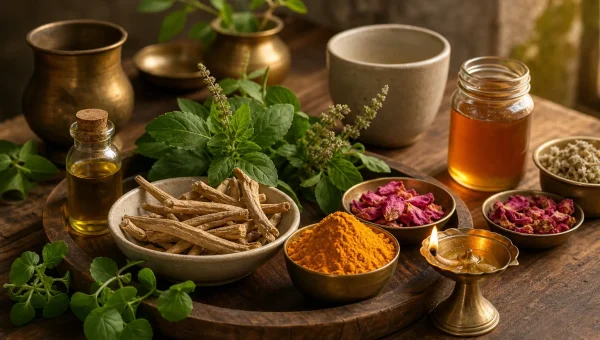
For this pattern, Ayurveda emphasizes snehana and brimhana: oil application, gentle routine, warm food, regular sleep timing, and restorative herbs selected by a qualified practitioner. Ashwagandha may be considered when Vata depletion, stress load, weakness, or nervous exhaustion is present. Jatamansi is traditionally used for disturbed sleep and mental agitation, but it should be used carefully because correct identity, dose, conservation status, and patient suitability matter.
Pitta-Type Nidranasha: The Hot, Irritable Waking
Pitta-type sleep disturbance commonly appears as falling asleep at first but waking around the late-night Pitta period with alertness, heat, acidity, irritability, sharp thinking, or rumination. The person may feel too warm in bed, wake with thirst, experience reflux or sour belching, or return repeatedly to work-related analysis and unresolved conflict. The treatment principle is cooling, soothing, non-stimulating, and Pitta-pacifying.
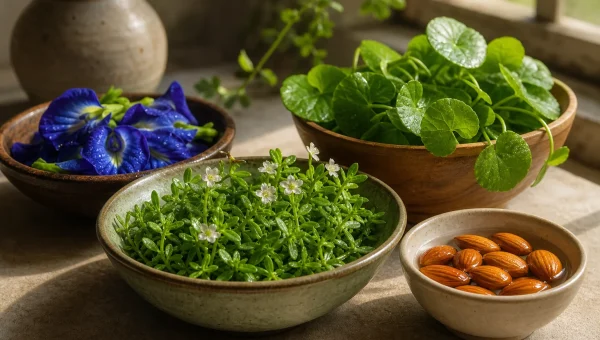
For this pattern, the evening should reduce heat and intensity: lighter dinner, earlier eating, less spice at night, reduced screen and work stimulation, and cooling mind practices. Brahmi may be used when mental overactivity is prominent. Shatavari may be considered in suitable Pitta-Vata depletion or perimenopausal patterns. Amalaki is traditionally valued as a Rasayana with special usefulness in Pitta presentations such as burning and acidity. These herbs should not be treated as generic sedatives; they must match the person’s constitution, digestion, medications, and health status.
Kapha-Type Sleep Disorder: Heavy, Unrefreshing Sleep
Kapha-type sleep disturbance is often the opposite of classic insomnia. The person sleeps too long, struggles to wake, feels heavy in the morning, remains dull during the day, or wakes unrefreshed despite long hours in bed. This pattern is associated in Ayurvedic reasoning with excess heaviness, sluggish agni, tamas, daytime sleeping when unsuitable, heavy dinners, lack of movement, and Kapha accumulation. The treatment principle is lightening, warming, stimulating, and channel-clearing.
For this pattern, care focuses on morning activation: getting up early, exposure to daylight, brisk movement, avoiding daytime sleep unless specifically indicated, eating a light supper, and reducing heavy, sweet, oily, cold, dairy-rich, and wheat-heavy foods at night. Trikatu, the classical pungent combination of dry ginger, black pepper, and long pepper, may be used by practitioners when agni is sluggish and Kapha is dominant, but it is not appropriate for strong acidity, active gastritis, high Pitta, pregnancy, or sensitive patients without supervision.
Doshic-Specific Treatment Protocols
The practical Ayurvedic protocol for sleep begins with pattern recognition. The same habit can help one patient and worsen another: a rich night drink may steady a depleted Vata patient, aggravate Kapha heaviness in another, and provoke acidity in a Pitta patient if poorly timed or poorly chosen.
Vata Nidranasha Treatment
The Vata sleep protocol aims to reduce irregularity, dryness, and nervous excitation. The key measures are a fixed bedtime, warm cooked evening food, a quiet wind-down period, gentle breathing, oil application, and avoidance of fasting, late travel, stimulating media, and unfinished work close to sleep.
Herbal direction: Ashwagandha may be useful in selected Vata-depleted sleep patterns, especially when stress, fatigue, weakness, or nervous depletion is present. Jatamansi may be considered for mental agitation and difficulty settling. These should be chosen by a practitioner, especially if the person is taking sedatives, antidepressants, thyroid medication, liver-affecting drugs, or has pregnancy, lactation, autoimmune illness, liver disease, or complex psychiatric symptoms.
External protocol: Abhyanga, gentle oil massage, and pada abhyanga before sleep are among the most practical Vata-pacifying measures. Warm sesame oil is commonly used for Vata, applied especially to the feet, scalp, or body according to tolerance. Shirodhara may be considered in clinic settings for selected cases of insomnia, stress, and nervous-system overactivity, but it should be performed by trained practitioners after assessment.
Pitta Nidranasha Treatment
The Pitta sleep protocol aims to reduce heat, sharpness, and mental intensity before bed. The key measures are early dinner, avoiding spicy and fried foods at night, stopping work analysis before bedtime, keeping the bedroom cool, reducing evening light exposure, and using calming rather than goal-oriented evening practices.
Herbal direction: Brahmi may be chosen when the dominant issue is overthinking and mental heat. Shatavari may be useful in suitable Pitta-Vata depletion and female reproductive or menopausal contexts. Amalaki may support Pitta-pacifying digestive care when acidity, burning, or heat are part of the presentation. The exact anupana, timing, and dose depend on the patient’s agni and condition.
External protocol: Cooling head oil, gentle scalp application, moonlit or low-light evening walks, quiet mantra, and non-heating pranayama are preferred over vigorous late exercise. If Shirodhara is used for Pitta patterns, the medium and temperature should be selected carefully so that the therapy cools and settles rather than overheats or overstimulates.
Kapha Sleep Disorder Treatment
The Kapha sleep protocol aims to reduce heaviness and improve morning clarity. The key measures are early rising, daytime movement, morning sunlight, avoidance of daytime sleeping when unsuitable, a light dinner, and reduction of late-night sweets, dairy, heavy grains, and oily foods.
Herbal direction: Trikatu may be used in suitable Kapha-agni patterns to support digestion and reduce heaviness, but it is heating and must be avoided or modified in Pitta-dominant acidity, ulcers, bleeding tendency, pregnancy, or sensitive constitutions. Brahmi may be used when dullness is mixed with mental fatigue, but in strong Kapha it is usually paired with lighter diet and activity rather than used alone.
External protocol: Dry rubbing, powder massage, brisk walking, sun exposure, and morning exercise are more appropriate than heavy oiling at night. The evening should be simple and light; the energizing work is done in the morning, not just before bed.
Racing thoughts
Light, irregular sleep
Anxiety, dryness, coldness
Direction: warmth, oil, routine, nourishment
Irritable or sharp thoughts
Acidity or thirst at night
Difficulty returning to sleep
Direction: cooling, early dinner, mental quiet
Unrefreshed on waking
Morning grogginess
Daytime heaviness
Direction: light diet, movement, morning sun
| Sleep Pattern | Common Presentation | Ayurvedic Direction | Key Lifestyle Lever |
|---|---|---|---|
| Vata Nidranasha | Cannot fall asleep, racing thoughts, light sleep | Warm, oily, steady, nourishing | Fixed bedtime, foot oil massage, warm supper |
| Pitta Nidranasha | Wakes hot, alert, irritable, acidic, or mentally sharp | Cooling, calming, Pitta-pacifying | Dinner early, reduce spice and late-night work |
| Kapha Sleep Disorder | Excess sleep, heaviness, dullness, unrefreshing rest | Lightening, warming, stimulating | Early rising, morning movement, light supper |
Sleep Hygiene as Ratricharya
Ayurvedic night routine, or Ratricharya, overlaps with many practical sleep-hygiene measures: regular sleep timing, quieting the senses, a comfortable sleep space, avoiding heavy late meals, reducing bright light and stimulating work before bed, and using calming evening practices. Ayurveda adds an important refinement: the routine is adjusted by dosha.
A Vata patient needs warmth, oil, predictability, and reassurance. A Pitta patient needs cooling, disengagement from achievement, and earlier digestion. A Kapha patient needs lightness at night and activation in the morning. This is the central Ayurvedic insight: sleep treatment becomes more effective when the physician treats the pattern behind the sleep problem, not merely the number of hours slept.
Nothing in this article diagnoses or treats a medical condition. Persistent insomnia, excessive daytime sleepiness, loud snoring, pauses in breathing during sleep, severe anxiety, depression, medication-related sleep disturbance, pregnancy-related sleep issues, or chronic fatigue should be evaluated by a qualified healthcare provider. Consult a qualified Ayurvedic practitioner or physician before starting herbs, supplements, detoxification procedures, Shirodhara, or therapeutic protocols, especially if pregnant, breastfeeding, elderly, taking medication, or managing a medical condition.
References
- Charaka Samhita — Ashtauninditiya Adhyaya
- Ayurvedic doshas as predictors of sleep quality (2015), PubMed Central
- Healthline (healthline.com)
- Clinical evaluation of the pharmacological impact of ashwagandha root extract on sleep in healthy volunteers and insomnia patients: A double-blind, randomized, parallel-group, placebo-controlled study (2021), PubMed
- Effect of Ashwagandha (Withania somnifera) extract on sleep: A systematic review and meta-analysis (2021), PubMed
- NCCIH
- Central nervous system depressant activity of Jatamansi (Nardostachys jatamansi DC.) rhizome (2020), PubMed
- A comparative clinical study on the effect of Tagara (Valeriana wallichii DC.) and Jatamansi (Nardostachys jatamansi DC.) in the management of Anidra (primary insomnia) (2015), PubMed
- Ayurvedic therapy (shirodhara) for insomnia: a case series (2014), PubMed
- Shirodhara: A psycho-physiological profile in healthy volunteers (2013), PubMed Central
- Chemical analysis reveals the botanical origin of shatavari products and confirms the absence of alkaloid asparagamine A in Asparagus racemosus (2013), PubMed
- Efficacy and Safety of Shatavari Root Extract for the Management of Menopausal Symptoms: A Double-Blind, Multicenter, Randomized Controlled Trial (2024), PubMed
- Clinical efficacy of Amalaki Rasayana in the management of Pandu (Iron deficiency anemia) (2015), PubMed Central
- An Ayurvedic formulation ‘Trikatu’ and its constituents (1992), PubMed
- Nhlbi (nhlbi.nih.gov)
- CDC
- MedlinePlus
- NCCIH


I have had insomnia for 6 years and every treatment I tried, including CBT-I, was designed for one type. My pattern alternates between Vata-type anxiety wake-up at 3am and Kapha-type inability to feel refreshed after sleep. The article’s point that what works for one doshic cause actively worsens another is exactly why the standard approaches have only partially helped.
I followed the Kapha-type insomnia protocol, the stimulating morning herbs and lighter evening diet, and my sleep quality improved in about 2 weeks. I had been treating my difficulty waking as a sleep problem when it was actually a morning Kapha heaviness problem. The Ayurvedic classification pointed me in exactly the right direction.
Started the sleep protocol my Ayurvedic doctor recommended last summer and my energy has been noticeably more consistent. This explains the mechanism.
The safest part of the Sleep Disorder Classification advice is keeping it simple. The safety notes could be expanded a little.
I had been taking Ashwagandha for Vata-type sleep since a practitioner recommended it and it was working. Then I went through a high-stress period and added more ashwagandha thinking more was better. The sleep actually worsened because the extra ashwagandha was activating rather than calming my pattern. The dose matters.
This matches my clinical experience. I’ve recommended sleep to patients with similar presentations and the response rate is consistent with what the article describes.
The safest part of the Sleep Disorder Classification advice is keeping it simple. The examples make the advice less abstract.
The safest part of the Sleep Disorder Classification advice is keeping it simple. I would like to know how long to try it before judging results.
The breakdown of Vata type nidranasha really clicked for me, especially the link between early morning waking and cortisol spikes.
I tried the Pitta-type protocol for my planning insomnia: cooling Brahmi milk, dimming lights at 9pm, cold water foot bath. The planning thoughts continued for the first week. By week 2 the intensity of the nighttime planning decreased. By week 4 I was reliably falling asleep within 20 minutes rather than the 60-90 minutes I had been experiencing.
what about mixed-type insomnia where two or three doshic patterns are present? I have Vata-type 3am wake-up AND Pitta-type difficulty falling asleep. The article describes these as separate types requiring different treatments but I need both interventions simultaneously.
I wonder if the Shirodhara protocol could be adapted for home use without special equipment.
The epidemic framing at the start of the article is accurate. Insomnia treatment in conventional medicine really has been frustratingly one-dimensional for decades. The Ayurvedic cause-specific approach is clinically more logical than the one-protocol-fits-all approach that has produced a benzodiazepine dependence epidemic.
The Pitta section made me reconsider my late night meals eating dinner by 7 pm seems like a simple tweak.
It’s interesting how Kapha type sleep issues are framed as a quality problem rather than just too much sleep.
Has anyone tried combining Ashwagandha with foot oil massage and noticed a difference in sleep onset?
The Charaka quote at the beginning feels surprisingly modern when you read today’s sleep deprivation stats.
I’m curious about the evidence for Jatamansi the 2012 study cited looks promising but I’d like to see more trials.
The treatment principle of grounding warming nourishing for Vata type makes sense when you think about cold extremities and dry skin.
For Pitta driven night waking the suggestion to avoid spicy food after dinner is something I could actually try.
Kapha type treatment focusing on morning light and exercise feels like a natural way to combat daytime grogginess.
I appreciate that the article doesn’t present Ayurveda as a magic cure but as a personalized framework.
following this from UK, hard to find some of these herbs here
the basic concepts here match what I learned in my yoga teacher training
does the approach differ for someone with multiple doshas elevated at once?
The ratricharya parallels with NIH sleep hygiene guidelines show how ancient advice lines up with modern research.
does anyone know if these herbs are safe while on blood thinners? would really appreciate a response
💯 would prefer more citations in the text itself
same question as above, any substitute for herbs not available outside India? ✨
the REM stage and vata connection is interesting. haven’t seen that framed this way in Western sleep research
Reading this later and the Sleep Disorder Classification advice still feels relevant. Would be useful to see a short checklist next.
It would be helpful to see a printable checklist that matches each dosha type to its herbs diet and routine.
good information but the references section would make this much more credible
the seasonal rotation idea is something I had never considered before ठीक है
sharing with my mom
just found this via Google search, is the protocol here still the current recommendation?
reading this in 2027, has anything changed about the dosage recommendations since this was published?
the slow burn on sleep issues means you wont see results for 4 to 6 weeks. people give up too early
the vata-type insomnia description is exactly my pattern. racing thoughts after midnight, early waking. brahmi worked more than ashwagandha for me ❤️
useful info but hard to find a practitioner who does this type of treatment outside major cities
tried this for 30 days, mixed results. maybe my constitution assessment is wrong
tagara is not easy to find in standard stores. the article should mention online sources or alternatives
started this protocol 2 weeks ago. nothing notable yet but will report back in a month
❤️ the translation of Sanskrit terms throughout helps a lot for those of us learning this system
I tried something similar on my own without guidance and had side effects. really recommend consulting a vaidya first
🙏 Very helpful, thank you
The Sleep Disorder Classification section feels grounded enough to try carefully. I appreciate that it does not oversell the result.
any research on brahmi + tagara combination for sleep? you mention them separately but not together
My nutritionist sent me this link 🌿
Good read
नमस्ते, this is exactly what I was looking for 🙏
been doing this for 6 months, amazing difference in energy levels
Thanks!
this is the most detailed breakdown of the topic I’ve found. saving for reference
will try and report back. fingers crossed
tried ashwagandha milk before bed and it helped the first week but then stopped working. tolerance? or coincidence? 🙌
not sure if its the herbs or the diet changes that made the difference
jatiphal in warm milk genuinely knocked me out the first time. used it twice and then it stopped working
my vaidya in Pune recommended exactly this. nice to see it confirmed here
late to this but wanted to ask if anyone has combined these approaches with conventional treatment
धन्यवाद for the detailed protocol
Will try 🙌
useful