
Many men first notice benign prostatic hyperplasia (BPH) through practical, exhausting symptoms: waking repeatedly at night to urinate, waiting for the stream to start, passing urine weakly, feeling that the bladder has not fully emptied, or dribbling afterward. Conventional urology remains essential because BPH can progress to urinary retention, infection, bladder stones, kidney strain, or the need for a procedure. The useful role of Ayurveda is not to replace that monitoring, but to add a practitioner-guided layer that supports Apana Vata, Mutravaha Srotas, pelvic circulation, diet, and urinary comfort.
This is the middle ground where an integrative approach can be meaningful. Alpha-blockers such as tamsulosin can improve urinary flow, but some men experience dizziness, light-headedness, or ejaculatory changes. Ayurvedic care, used alongside urological assessment, aims for a steadier pattern: fewer night awakenings, less straining, better bladder habits, and a lower tendency toward Vata-Kapha obstruction.
BPH in the Ayurvedic Framework: Mutrakrichra, Mutraghata, and Vatasthila
In modern terms, BPH is a non-cancerous enlargement of the prostate that can narrow the urethral passage and produce lower urinary tract symptoms. In Ayurvedic language, the symptom pattern overlaps mainly with Mutrakrichra, where urination is difficult or uncomfortable, and Mutraghata, where the central issue is obstruction, incomplete passage, or retention of urine.
Mutrakrichra is useful when the presentation is dominated by difficulty, straining, burning, frequency, or discomfort while passing urine. For BPH, this corresponds especially to hesitancy, weak stream, dribbling, and the repeated urge to pass urine without satisfying emptying.
Mutraghata becomes more relevant when obstruction is prominent: incomplete emptying, raised post-void residual, reduced flow, or retention risk. In practice, this is the point at which urological monitoring becomes especially important, because bladder and kidney complications must not be missed.
Vatasthila is often used in Ayurvedic discussions of prostate-like obstruction. It is described as a hard swelling in the pelvic region that obstructs the passage of urine, stool, and flatus. This does not mean that classical texts described the prostate in modern anatomical language; it means the functional picture of a pelvic obstructive mass closely resembles the obstructive pattern seen in BPH.
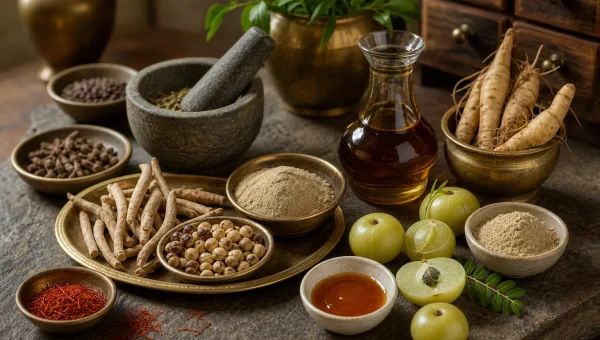
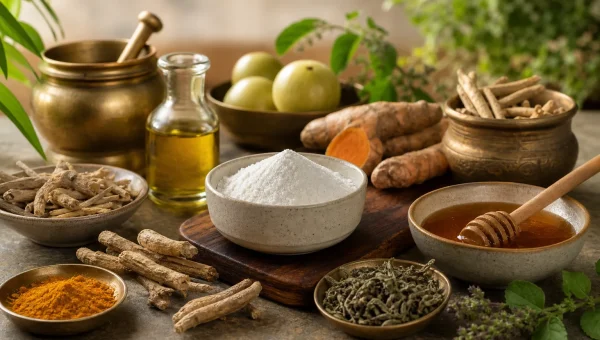
Charaka Samhita Chikitsa Sthana 26 discusses disorders related to the vital organ Basti and includes urinary conditions such as Mutrakrichra and urinary calculi. Classical and pharmacopoeial sources repeatedly place herbs such as Gokshura, Varuna, and Punarnava in urinary indications, which is why these herbs remain central to Ayurvedic prostate-support protocols.
Core Herbs and Formulations for Ayurvedic BPH Support
The following herbs should be understood as supportive tools, not as substitutes for PSA monitoring, urine-flow assessment, post-void residual measurement, imaging, or a urologist’s advice. The strongest Ayurvedic logic is to reduce Vata obstruction in the pelvic outlet, clear Kapha-type heaviness, support Mutravaha Srotas, and protect sleep and bladder function.
Gokshura (Tribulus terrestris)
Gokshura is one of Ayurveda’s most important urinary herbs. The Ayurvedic Pharmacopoeia of India identifies Gokshura fruit as Tribulus terrestris and lists Madhura rasa, Guru-Snigdha guna, Shita virya, and Madhura vipaka, with actions including Mutrala, Vatanut, Vrishya, and Basti-shodhana. Its therapeutic uses include Mutrakricchra and Ashmari, making it highly relevant when BPH presents with difficult urination, weak stream, and urinary discomfort.
In practical use, Gokshura is commonly given as powder, decoction, or as part of compound formulas such as Gokshuradi Guggulu. It is especially appropriate where Vata irritation is combined with dryness, pelvic strain, and urinary difficulty rather than acute infection or severe retention.
Varuna (Crataeva nurvala)
Varuna is a key bark medicine for obstructive urinary patterns. The Ayurvedic Pharmacopoeia of India identifies Varuna as the dried stem bark of Crataeva nurvala and lists Tikta-Kashaya rasa, Laghu-Ruksha guna, Ushna virya, Katu vipaka, and actions including Bhedi, Dipana, and Vata-shleshmahara. Its listed therapeutic uses include Ashmari, Gulma, Mutrakricchra, and Vidradhi.
For BPH, Varuna fits the Vata-Kapha obstruction picture: heaviness, sluggish flow, pelvic congestion, and difficulty emptying. It is most often used as a decoction or within formulas, and it should be supervised in men already taking urological medicines, antihypertensives, diuretics, or multiple supplements.
Punarnava (Boerhaavia diffusa)
Punarnava is the classic herb for edema, fluid accumulation, and urinary support. The Ayurvedic Pharmacopoeia of India identifies Rakta Punarnava as Boerhaavia diffusa and lists Madhura-Tikta-Kashaya rasa, Ruksha guna, Ushna virya, Madhura vipaka, and actions including Anulomana, Shothahara, Mutrala, and Vata-shleshmahara.
In a prostate-support plan, Punarnava is most useful when the man has swelling tendency, heaviness, sluggish metabolism, or fluid retention along with urinary frequency. It is not a forceful “water pill” to be used casually; men with kidney disease, heart disease, blood-pressure treatment, or diuretic prescriptions should use it only with professional guidance.
Gokshuradi Guggulu and Kanchanara Guggulu
Gokshuradi Guggulu brings Gokshura together with purified Guggulu, Trikatu, Triphala, and Musta in a classical guggulu-based format. This makes it more suitable when urinary difficulty is associated with Kapha heaviness, sluggish digestion, and chronicity. Kanchanara Guggulu is not a prostate-only formula, but its classical formulation includes Kanchanara, Triphala, Trikatu, Varuna, aromatic digestives, and purified Guggulu, so Ayurvedic physicians may consider it when glandular enlargement, Kapha accumulation, and obstruction are part of the assessment.
These formulas should not be selected only by reading a label. Guggulu-based medicines are heating, scraping, and metabolically active; they may not suit men with strong Pitta symptoms, active gastritis, anticoagulant use, liver concerns, or complex medication schedules unless supervised.
Chandraprabha Vati
Chandraprabha Vati is a classical herbo-mineral formulation widely used in genito-urinary and metabolic practice. The version accepted in the Ayurvedic Formulary tradition is a multi-ingredient preparation with Shilajit and Guggulu as prominent components. It is traditionally used across Mutravaha and Prameha-type conditions, but it should not be treated as a universal prostate tablet.
Because Chandraprabha Vati may contain mineral and herbo-mineral components depending on the manufacturer and textual version, quality control is critical. Use only from reputable manufacturers, preferably with batch testing, and only under the direction of a qualified Ayurvedic physician when the man is already taking prostate, diabetes, blood-pressure, kidney, or heart medicines.
Shilajit
Shilajit is better understood as a Rasayana-type support in older men rather than as a primary prostate herb. In BPH care it may be considered when there is fatigue, tissue depletion, low vitality, or a broader Dhatu-kshaya picture, but it should not replace Gokshura, Varuna, Punarnava, or a proper urinary assessment.
Raw or poorly purified Shilajit is not appropriate for self-use. Heavy metal contamination is a recognized safety concern, so any Shilajit used therapeutically should be purified, tested, and prescribed with attention to kidney status, medications, and overall constitution.
A Practitioner-Guided 12-Week BPH Support Framework
A realistic Ayurvedic trial for mild to moderate BPH should be structured, monitored, and simple enough to evaluate. The aim is not to stack every urinary herb at once, but to choose the smallest appropriate combination, track symptoms, and review objective measures with a urologist when indicated.
| Herb or Formula | Traditional Form | Common Practitioner Use | Main Ayurvedic Rationale |
|---|---|---|---|
| Gokshura | Powder or decoction | Often used in the pharmacopoeial range of 3-6 g powder or 20-30 g crude drug for decoction, adjusted by the physician | Mutrala, Basti support, Vata-pacifying urinary comfort |
| Varuna | Bark decoction | Often prepared from 20-30 g crude bark for decoction under supervision | Vata-Kapha obstruction, Mutrakricchra, Ashmari-type urinary difficulty |
| Punarnava | Whole plant or root decoction; classical formulas | Often used when swelling, heaviness, or fluid retention tendency is present | Shothahara, Mutrala, Anulomana, Vata-Kapha support |
| Gokshuradi Guggulu | Classical tablet or vati | Physician-directed use when urinary difficulty is chronic and Kapha-Vata features are present | Gokshura-based urinary support with Guggulu-led channel clearing |
| Kanchanara Guggulu | Classical tablet or vati | Considered when glandular enlargement, Kapha accumulation, and obstruction are prominent | Kanchanara-Varuna-Guggulu support for Granthi-like and Kapha-Vata patterns |
| Chandraprabha Vati | Classical herbo-mineral formulation | Used only when constitution, medicines, kidney status, and product quality are reviewed | Broader Mutravaha and metabolic support |
Important interaction note: do not combine multiple urinary formulas, Shilajit, diuretics, blood-pressure medicines, alpha-blockers, 5-alpha-reductase inhibitors, diabetes medicines, or anticoagulants without professional review. Monitor dizziness, blood pressure, urinary retention, swelling, burning, fever, blood in urine, and changes in urine flow.
Dietary Protocol for BPH
Diet matters because BPH symptoms are influenced by inflammation, body weight, metabolic health, bladder irritation, sleep quality, and evening fluid load. In Ayurvedic terms, the diet should reduce Kapha heaviness without aggravating Vata dryness or Pitta irritation in the urinary tract.
Foods and habits to emphasize:
- Pumpkin seeds: A practical daily food for prostate support. Use a modest handful, preferably unsalted, and avoid turning it into a heavy oily snack.
- Legumes and plant proteins: Mung dal, lentils, beans, and other plant proteins are preferable to a meat-heavy pattern for men with BPH tendency.
- Cooked vegetables and light grains: Warm, cooked, easy-to-digest meals support Apana Vata better than cold, dry, irregular eating.
- Pomegranate as food: Dadima is a useful fruit in Ayurveda and can be included as a food when it suits digestion and blood sugar status.
- Warm daytime hydration: Drink adequately earlier in the day so that evening fluid restriction does not become dehydration.
Foods and habits to reduce:
- Alcohol, especially in the evening, because it can increase urine production and worsen nocturia.
- Caffeine late in the day, including strong tea, coffee, cola, and energy drinks.
- Large fluid intake in the final one to two hours before sleep.
- Frequent red or processed meat, especially in a sedentary lifestyle.
- Very spicy dinners, deep-fried foods, and heavy late meals that irritate Pitta and burden Kapha.
- Excess dairy, sweets, and cold foods when there is Kapha heaviness, sluggish digestion, or weight gain.
Lifestyle Adjustments That Move the Needle
BPH care improves when the pelvis is no longer treated as a blocked, sedentary zone. Ayurveda places urination under Apana Vata, and Apana Vata is strongly affected by sitting, constipation, suppressed urges, poor sleep, stress, and irregular meals.
- Walk daily: Brisk walking is simple, Vata-regulating, and easier to sustain than aggressive exercise. A steady walking habit is preferable to occasional intense workouts followed by long sedentary days.
- Break long sitting: Stand, walk, stretch, or do gentle hip movement every 45-60 minutes. This supports pelvic circulation and reduces the stagnation that aggravates Apana Vata.
- Practice Ashwini Mudra gently: Gentle pelvic floor contractions can help men become aware of the urinary sphincter and post-void dribbling pattern. Do not over-contract or strain.
- Use Mula Bandha carefully: Root-lock practice should be mild and coordinated with relaxed breathing. Men with pelvic pain, prostatitis-like symptoms, or tight pelvic floor patterns should learn from a qualified yoga therapist.
- Try a warm sitz bath: Sitting in comfortably warm water for 10-15 minutes can soothe pelvic tension. Avoid excessive heat, especially in diabetes, neuropathy, dizziness, or reduced skin sensation.
- Correct constipation: Hard stool increases pelvic pressure and worsens Apana Vata obstruction. Warm food, regular meals, adequate fiber, and appropriate oiling of the diet are often more useful than harsh laxatives.
Managing the Nocturnal Frequency Problem
Nocturia is often the symptom that breaks quality of life. The goal is not to drink too little, but to shift fluids earlier, reduce bladder irritants, calm the evening routine, and empty the bladder more effectively before sleep.
- Take most fluids earlier in the day, and reduce large drinks one to two hours before bedtime unless a physician has advised otherwise.
- Avoid alcohol and caffeine in the evening.
- Use double voiding: urinate, wait quietly for a short time, then try once more before bed without straining.
- If ankles swell by evening, ask a clinician whether leg elevation, compression stockings, or medication timing is appropriate.
- Keep the evening meal lighter and earlier, with less salt and spice.
- Do not self-use castor oil, medicated nasya, or strong laxative measures for nocturia unless they are prescribed for your specific constitution and condition.
When Ayurveda Helps and When It Cannot
Ayurveda is most appropriate for mild to moderate symptoms, early obstruction, poor bladder habits, sleep disruption, Kapha-Vata pelvic heaviness, and men who are already under medical monitoring. It can also be useful as adjunct care when a urologist has prescribed medicine and the goal is better lifestyle control, digestion, bowel regularity, sleep, and urinary comfort.
Ayurveda should not delay urgent or necessary urological treatment. Red-flag situations include inability to urinate, fever with urinary symptoms, blood in urine, recurrent urinary tract infections, recurrent bladder stones, kidney impairment, hydronephrosis, severe post-void residual, rapidly worsening symptoms, or a urologist’s recommendation for a procedure based on objective findings.
A good outcome is practical rather than dramatic: fewer night trips, less urgency, easier starting, reduced straining, better bowel movement, and better sleep while the prostate continues to be monitored. For many men, that is a meaningful improvement even when the enlargement itself still requires long-term observation.
Disclaimer: BPH management requires professional medical monitoring, including appropriate prostate assessment, PSA discussion, urine testing, post-void residual assessment, and urological review when indicated. This article describes complementary Ayurvedic approaches and is not a substitute for diagnosis, prescription medicine, emergency care, or surgery. Always inform your urologist and qualified Ayurvedic practitioner about all herbs, supplements, and medicines you use.
Nothing in this article diagnoses or treats a medical condition. Use it as educational information and consult a qualified Ayurvedic practitioner or physician before starting herbs, supplements, detoxes, or therapeutic protocols, especially if managing a condition or taking medication.
References
- NIDDK
- Urologyhealth (urologyhealth.org)
- NHS
- Auanet (auanet.org)
- Charaka Samhita — Trimarmiya Chikitsa
- Gokshuradi Vati and Dhanyaka-Gokshura Ghrita Matra Basti in the management of Benign Prostatic Hyperplasia (2012), PubMed
- Jaims (jaims.in)
- Ayurvedic Pharmacopoeia of India
- Natural Ingredient Resource Center
- Efficacy of Kanchanara Guggulu and Matra Basti of Dhanyaka Gokshura Ghrita in Mootraghata (benign prostatic hyperplasia) (2015), PubMed
- Comparison of Murraya koenigii- and Tribulus terrestris-based oral formulation versus tamsulosin in the treatment of benign prostatic hyperplasia in men aged >50 years: a double-blind, double-dummy, randomized controlled trial (2011), PubMed
- Acspublisher (acspublisher.com)
- Hazardous or Advantageous: Uncovering the Roles of Heavy Metals and Humic Substances in Shilajit (Phyto-mineral) with Emphasis on Heavy Metals Toxicity and Their Detoxification Mechanisms (2024), PubMed
- Operation Supplement Safety
- Pumpkin seed oil (Cucurbita pepo) versus tamsulosin for benign prostatic hyperplasia symptom relief: a single-blind randomized clinical trial (2021), PubMed
- Effects of pumpkin seed in men with lower urinary tract symptoms due to benign prostatic hyperplasia in the one-year, randomized, placebo-controlled GRANU study (2015), PubMed
- Relationship between Dietary Patterns with Benign Prostatic Hyperplasia and Erectile Dysfunction: A Collaborative Review (2021), PubMed Central
- Mayoclinic (mayoclinic.org)
- A Prospective Study of Physical Activity, Sedentary Behavior, and Incidence and Progression of Lower Urinary Tract Symptoms (2020), PubMed
- Physical activity, benign prostatic hyperplasia, and lower urinary tract symptoms (2008), PubMed
- NCBI
- MedlinePlus
- Ayush (ayush.delhi.gov.in)
my urologist is monitoring my PSA and I’ve added Gokshura + Varuna as per a protocol similar to this. slow progress but urine flow has improved over 3 months.
I remember my dad waking up four times each night to go to the bathroom and how worried we all felt.
The description of his prostate being the size of a small orange really helped me picture the issue.
He tried tamsulosin and noticed less urgency but also had retrograde ejaculation and felt dizzy when standing fast.
no mention of PSA monitoring while on Ayurvedic treatment. herbal therapy could potentially mask PSA changes from prostate cancer.
I appreciate the author’s balanced view that conventional medicine saves lives while also seeing where it falls short for BPH.
the dosha analysis lists Kapha as the primary factor. my symptoms are urgency-dominant which feels more Vata. does the protocol change?
That’s worth asking the author directly. From what I understand, urgency with incomplete emptying can lean Vata-Kapha mixed, so the protocol might weight Vata-pacifying herbs like Ashwagandha more heavily alongside the Kapha-clearing ones. Has anyone here had a practitioner adjust the formula for that presentation?
the Mutrakrichra classification finally explains my symptoms better than just ‘BPH’. the Vata-Kapha presentation I have matches the treatment approach described here.
@Laura chandraprabha Vati plus dietary changes from this article nocturia dropped from 4 times a night to 2 times within 6 weeks.
That’s a solid result in six weeks. Did you stick to the dietary restrictions from the article too, like reducing cold foods and dairy? My father is at the same baseline of four times a night and I’m trying to gauge realistic expectations before suggesting this to him.
Learning about Mutrakrichra and Mutraghata gave me a new way to think about his symptoms beyond just the prostate size.
the herbs listed have mostly small observational studies. for a condition that can cause kidney damage if undertreated, the evidence bar should be higher.
the article mentions surgical threshold at what prostate volume (in cc) does Ayurveda typically refer to urology for TURP?
The part about Gokshura improving flow without affecting PSA or sexual function caught my attention.
Varuna’s possible effect on DHT levels sounds interesting especially for someone wary of finasteride side effects.
Adding pumpkin seeds and sesame to his diet seemed like a simple step we could actually try together.
The suggestion to walk forty five minutes daily and do Ashwini Mudra twice a day feels doable for someone with a desk job.
I liked the nocturia tips like limiting fluids after six in the evening and trying a warm sesame oil rub before bed.
any specific Ayurvedic herb with evidence on reducing PSA levels? the article focuses on symptoms but not PSA trajectory.
Seeing his IPSS drop from seventeen to nine over fourteen months shows that a combined approach can make real difference without promising a cure.
is Varuna (Crataeva nurvala) available as a standardized extract or only as raw bark decoction? I cant find the bark.
does the Gokshura protocol here interact with Tamsulosin (alpha-blocker)? im on 0.4mg daily and want to add the Ayurvedic orotocol.
my urologist is monitoring my PSA and Ive added Gokshura + Varuna as per a protocol similar to this. slow progress but urine flow has improved over 3 months.
@Karen the dosha analysis lists Kapha as the primary factor. my symptoms are urgency-dominant which feels more Vata. does the protocol change?
BPH with urinary retention can become acute and dangerous. the article needs a much clearer surgical referral threshold. this is a safety issue.
does the Gokshura protocol here interact with Tamsulosin (alpha-blocker)? I’m on 0.4mg daily and want to add the Ayurvedic protocol.
Good one.
My father’s urologist mentioned a similar trajectory to the one described here. What I found most useful in this article was the explanation of Mutrakrichra as a category that includes obstruction AND irritation. Those feel like very different problems but apparently the Kapha-Vata framing covers both.
this was decent, but night urination should come with clearer limits
Useful info.
Agreed, useful summary. I’d add that the lifestyle piece around fluid timing was something my father’s urologist never mentioned. Cutting liquids two hours before bed made a noticeable difference even before starting any herbs.
My father went through almost the same story as the one in this article. The tamsulosin side effects were what pushed him to look elsewhere. He’s been on Gokshura for about four months now and his flow is measurably better by the stream test at his last check-up.
Doing this.
@Christopher does the Gokshura protocol here interact with Tamsulosin (alpha-blocker)? I’m on 0.4mg daily and want to add the Ayurvedic protocol.
bph with urinary retention can become acure and dangerous. the article needs a much clearer surgical referral threshold. this is a safety issue.
Will try!
the article mentions surgical threshold at what prostate volume (in cc) does Ayurveda typically refer to urology for TURP? ठीक है