
People often use a planned interval between fertility-treatment cycles to improve sleep, nutrition, medication adherence, and emotional recovery. Ayurveda may contribute a structured routine and an individualized traditional assessment, but a spontaneous conception after such care cannot prove that herbs or Panchakarma caused the pregnancy. Claims that an Ayurvedic programme produces an “unusually receptive endometrium,” improves embryo quality, or raises IVF success require controlled clinical evidence and should not be presented as established fact.
For that reason, preconception Ayurveda is best framed as supportive care coordinated with a reproductive endocrinologist. It should not replace investigation of ovulation, ovarian reserve, tubal patency, uterine factors, semen parameters, thyroid disease, diabetes, endometriosis, genetic factors, or other recognized causes of infertility. A three-month planning period can be convenient, but it is not a classical minimum and does not exactly “match” the whole process of human folliculogenesis, which develops across multiple stages over many months.
Artava in Classical Ayurveda
Artava is used in Ayurvedic literature in more than one reproductive sense. In discussions of menstruation, it commonly denotes the visible monthly menstrual discharge and is described as an upadhatu, or subsidiary tissue product, associated with rasa dhatu. In reproductive passages the term may also carry a broader female generative meaning. It should not, however, be translated as a single modern structure such as the endometrium, ovum, ovarian reserve, or “reproductive tissue at the deepest cellular level.” Those are modern biomedical categories with their own tests and definitions.
Classical descriptions assess menstrual health through timing, quantity, colour, smell, consistency, pain, and associated symptoms. Charaka and Sushruta describe normal and abnormal features of menstrual blood, while Sushruta classifies several forms of artava dushti. These observations can inform an Ayurvedic history, but they are not validated substitutes for pregnancy testing, pelvic examination, ultrasound, hormone tests, hysteroscopy, or other investigations selected by a fertility specialist.
Ayurveda also describes seven principal dhatus: rasa, rakta, mamsa, meda, asthi, majja, and shukra. Traditional commentators explain tissue nourishment through successive transformation and through circulation of nutritive fractions. It is inaccurate to insert female artava simply as the seventh dhatu in place of shukra or to equate the sequence with modern plasma, nerves, marrow, follicles, and oocytes on a one-to-one basis.
Assessing Menstrual Patterns Without Overdiagnosis
A qualified Ayurvedic physician may record patterns that resemble the classical categories, while also checking whether the person needs conventional medical assessment. The following descriptions are traditional pattern language, not self-diagnoses and not proof of “toxins”:
- Vata-associated features: dark red or blackish, thin or frothy discharge with marked pain or delayed flow.
- Pitta-associated features: unusually hot discharge, burning, and yellowish, bluish, or dark discolouration.
- Kapha-associated features: pale or yellowish, thick, slimy, or mucus-like discharge with heaviness.
- Kshina artava: delayed, scanty menstruation accompanied by pain.
- Granthibhuta artava: a prominently clotted appearance, classically associated with combined kapha and vata features.
Heavy bleeding, bleeding between periods, severe or one-sided pelvic pain, fainting, fever, foul discharge, a positive pregnancy test with pain or bleeding, or absence of menstruation requires timely medical evaluation. Brown spotting, clots, cramps, bloating, anxiety, or insomnia alone cannot reliably identify a dosha pattern, infertility cause, endometrial problem, or ama.
A Safer Three-Month Preconception Framework
A three-month framework may be useful for organization, provided it remains flexible and does not promise conception. The emphasis should be on assessment, sustainable habits, correction of documented deficiencies, and careful coordination of every herb and procedure with the fertility clinic.
Month One: Review, Stabilize, and Simplify
Begin with a joint review of diagnoses, previous cycle records, prescriptions, over-the-counter products, herbal medicines, and supplements. Prepregnancy guidance specifically recommends reviewing herbal products because patients may not regard them as medicines even though they can affect reproduction, pregnancy, anaesthesia, liver function, thyroid function, glucose, blood pressure, or drug metabolism.
Ayurvedic concepts such as agni, appetite, bowel regularity, sleep, and tolerance of foods may be assessed without automatically prescribing a “detox.” Regular freshly prepared meals, adequate protein and energy, hydration, gentle activity, and a consistent sleep schedule are more defensible foundations than severe restriction. There is no universal requirement to eliminate dairy, raw vegetables, fruit, or all cold foods; choices should reflect nutritional needs, digestive tolerance, culture, and medical conditions.
Triphala, Trikatu, and Guduchi should not be presented as a standard first-month fertility stack. The Ayurvedic Pharmacopoeia identifies these drugs and gives traditional properties and adult dose ranges, but a pharmacopoeial monograph is not proof that a product improves oocyte quality, endometrial receptivity, implantation, or live-birth rate. Guduchi also has published reports of herb-induced liver injury, so recommending it to “support the liver” or for elevated liver enzymes is especially inappropriate without medical review.
Month Two: Individualized Nourishment
If digestion and intake are stable, the second month can emphasize adequate nourishment rather than indiscriminate supplementation. A clinician may assess iron, vitamin B12, vitamin D, thyroid status, glucose control, or other factors according to the patient’s history. Standard preconception care includes folic acid: women trying to conceive are generally advised to take 400 micrograms daily, with higher doses reserved for specific medical indications under clinician guidance.
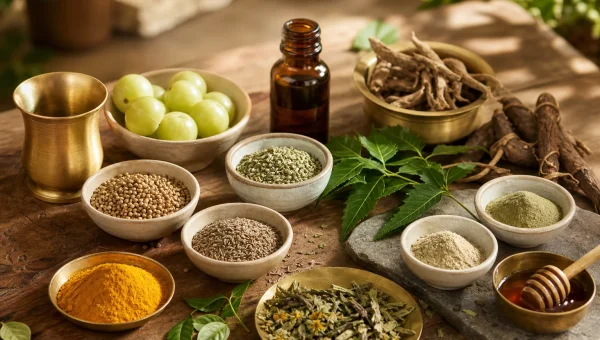
Shatavari is correctly identified in the Ayurvedic Pharmacopoeia as the root of Asparagus racemosus. Its listed Ayurvedic profile is madhura and tikta in rasa, guru and snigdha in guna, shita in virya, and madhura in vipaka; listed actions include rasayana and vrishya. The same monograph does not establish that Shatavari improves IVF outcomes, and traditional descriptors such as vrishya should not be converted into guaranteed ovulation, “phytoestrogenic correction,” or uterine-lining growth.
Ashwagandha should also not be routinely combined with Shatavari for every fertility patient. Evidence for improving female fertility or IVF live birth remains insufficient, and the U.S. National Center for Complementary and Integrative Health advises avoiding ashwagandha during pregnancy. It may interact with thyroid medicine, immunosuppressants, sedatives, anticonvulsants, and medicines for diabetes or hypertension. Because conception may occur unexpectedly, the stop date must be decided with the treating clinicians rather than using an invented universal “two weeks before retrieval” rule.
Amalaki, Manjistha, fennel, medicated ghee, and Vidari may have traditional uses, but they are not automatically compatible with every constitution, diagnosis, medication, or IVF protocol. Terms such as “blood purifier,” “hormone detoxifier,” “uterine tonic,” and “antioxidant protection for oocytes” should not be treated as clinical outcomes unless a specific preparation and outcome have been tested in reliable human studies.
Month Three: Consistency and Procedure Planning
The classical concept of ojas expresses vitality and the excellence of well-supported tissues. It is a meaningful Ayurvedic idea, but it is not a measurable biological substrate of immunity or implantation. The final month should therefore focus on stable meals, sleep, manageable exercise, stress support, and a clear calendar for stimulation, monitoring, retrieval, transfer, or attempts at natural conception.
Gentle self-massage may be used for relaxation when comfortable, but massage has not been shown to improve fertility or implantation. Avoid forceful abdominal or pelvic massage during ovarian stimulation, after retrieval, after transfer, or once pregnancy is possible unless the fertility team approves it. Abhyanga should never delay assessment of pain, bleeding, ovarian hyperstimulation symptoms, or other complications.
Where Panchakarma Fits
Panchakarma is not a generic fertility cleanse. Vamana, Virechana, Basti, and Uttara Basti are intensive medical procedures with different indications and contraindications. Virechana should not be recommended merely because a woman has heavy periods, skin inflammation, “excess heat,” elevated liver enzymes, or exposure to IVF hormones. Elevated liver enzymes require biomedical evaluation, and purgation can cause dehydration, electrolyte disturbance, medication-timing problems, or interruption of fertility care.
Published Ayurvedic infertility literature includes case reports, small studies, heterogeneous protocols, and exploratory trials. A 2025 registered study was still described as preliminary and hypothesis-generating and did not assess pregnancy or live birth as primary outcomes. This evidence is not strong enough to claim that Panchakarma improves embryo quality, endometrial receptivity, AMH, implantation, or live-birth rates. Any procedure should be performed only by a qualified Ayurvedic physician in communication with the fertility clinic and scheduled away from stimulation, retrieval, transfer, and possible early pregnancy.
Preconception Care Summary
The following table replaces fixed herbal dosing with actions that can be safely individualized. The reproductive endocrinologist remains responsible for fertility treatment, while the Ayurvedic physician may support diet, routine, and traditional assessment within those boundaries.
| Phase | Primary Aim | Reasonable Actions | Avoid |
|---|---|---|---|
| Month 1 | Medical and Ayurvedic assessment | Review records, medicines, supplements, nutrition, sleep, bowel pattern, and red flags | Automatic detox, fasting, unsupervised Triphala, Trikatu, Guduchi, or purgation |
| Month 2 | Correct deficiencies and stabilize nourishment | Balanced meals, adequate protein, clinician-directed folic acid and treatment of documented deficiencies | Large multi-herb stacks or claims of improved egg, embryo, or lining quality |
| Month 3 | Coordinate with the conception or IVF plan | Confirm stop dates, maintain routine, and prepare medication and monitoring schedules | New supplements, deep abdominal massage, Panchakarma near procedures, or self-directed dose changes |
Dietary Foundations
Ayurvedic meal planning may favour freshness, digestibility, regular timing, and foods suited to the individual. Khichdi can be a useful meal, but replacing a meal every day is not universally suitable, especially when energy, protein, iron, or blood-glucose needs are not met. Ghee, milk, sesame, nuts, lentils, leafy vegetables, fruit, pomegranate, saffron, and jaggery can be foods within a varied diet; none has been proven to purify artava or improve IVF success when prescribed as a universal fertility food.
Modern fertility guidance finds insufficient evidence that one specific diet or macronutrient pattern improves natural fertility, although a healthy diet supports general health. Avoid smoking and recreational drugs, limit alcohol, discuss caffeine with the fertility team, and use food-safety precautions once pregnancy is possible. People with diabetes, thyroid disease, coeliac disease, kidney disease, anaemia, eating disorders, or restricted diets may need individualized nutrition care.
Safety and Clinical Coordination
This information is complementary education, not a fertility prescription. Tell the reproductive endocrinologist about every powder, tablet, tea, oil, ghee, and procedure. Consult a qualified Ayurvedic physician and the fertility team before starting or stopping herbs, especially with IVF medicines, thyroid or diabetes treatment, autoimmune disease, liver disease, anticoagulants, or a possible pregnancy. Do not undertake Virechana, Vamana, Basti, or Uttara Basti without appropriate clinical supervision.
Actionable Tip
Start with a one-page preconception review rather than a detox: list all diagnoses, cycle dates, medicines, supplements, allergies, laboratory abnormalities, and the fertility clinic’s next planned step. Add a regular balanced breakfast, a consistent bedtime, and the clinician-recommended folic acid dose. Take that list to both practitioners so any Ayurvedic support is individualized, documented, and compatible with the medical fertility plan.
References
- Charaka Samhita — Artava
- Charaka Samhita — Rasa dhatu
- Charaka Samhita — Sroto Vimana
- Charaka Samhita — Menstrual disorders
- Glowm (glowm.com)
- ASRM
- Ayurvedic Pharmacopoeia of India
- Ayurvedic Pharmacopoeia of India
- Ayurvedic Pharmacopoeia of India
- NCBI
- World Health Organization
- ASRM
- NCCIH
- Fertility Massage: an Unethical Practice? (2018), PubMed Central
- Ovarian torsion in infertility management – Missing the diagnosis means losing the ovary: A high price to pay (2011), PubMed Central
- Frontiersin (frontiersin.org)
I did a 90-day Ayurvedic prep before my third IVF attempt after two failures. Endometrial lining was 9.2mm on retrieval day compared to 6.8 and 7.1 in prior cycles. That’s not proof but something changed.
Can we be clear that IVF success rates have enough confounding factors that attributing improvements to a preparatory protocol is very difficult? I don’t want women to feel they failed at the detox if a cycle doesn’t work.
My reproductive endocrinologist was skeptical but also not opposed. She reviewed the herb list and had no objections except Shatavari given my hormone-sensitive history. The communication between systems is what matters.
I appreciate the reminder that Ayurvedic routines should complement, not replace, standard fertility testing like hormone panels and ultrasounds.
I was skeptical when my vaidya first suggested detox but six weeks in and I can tell something has shifted. Not placebo either, my blood work confirmed it.
My doctor in Bangalore suggested something similar but used different herbs. Is there regional variation in how Ayurvedic practitioners approach this condition?
The article’s explanation of artava as more than just the endometrial lining helped me understand why translating it directly to modern terms can be misleading.
What specific herbs in the protocol have evidence for endometrial receptivity improvement? The article is descriptive but I’d like the mechanism spelled out for each component.
It’s useful to see a month by month outline that focuses on nutrition and sleep before jumping into any herbal protocol.
I wonder if the clinic would allow a gentle abhyanga massage during the luteal phase, given the cautions about deep abdominal work.
I started the artava shodhana protocol 6 weeks before my natural conception attempt. Conceived on the first try after 14 months of unexplained infertility. I know that’s the most anecdotal data possible but I want to put it here.
Seeing the note about Guduchi and possible liver injury makes me think twice before adding it to my supplement list without my doctor’s input.
Is the 90-day window essential or does starting 30-60 days before still offer meaningful benefit? I’m already in my IVF cycle prep window and a full 90 days isn’t available.
The three month window feels practical for organizing appointments, even though the text clarifies it isn’t a strict Ayurvedic rule.
I liked the table that separates what to avoid in month one, like unsupervised Triphala, from what’s encouraged, such as reviewing current meds.
The research cited here is from the 2015-2020 period. Is there more recent work that confirms or updates these findings?
The section on shatavari clarified that traditional labels like vrishya don’t guarantee better egg quality, which keeps expectations realistic.
Reading this after finding it on Google, is this dosage still recommended?
Useful post
tried this for 6 weeks and saw no difference, maybe im applying it wrong नमस्ते
is virechana safe to do within 3 months of an ivf cycle or does it need longer lead time?
Late to this but wanted to ask, do these recommendations still hold in 2027?
Tried the morning routine from this article and noticed a difference by day 5.
quick question: does the dosage change if someone is also on other medication?
just found this post, the section 3 protocol seems intensive for a beginner, any lighter version?
How long before seeing results? the article mentions 4 to 6 weeks but is that for everyone. 💯
some of these claims are very strong for what is essentially anecdote-level evidence
where can you source the herbs in india outside of major cities? im in a tier-2 town 🙏
my vaidya recommended something similar last month, good to see the reasoning explained
It’s reassuring that the authors stress informing the reproductive endocrinologist about every herb, oil, or ghee you plan to use.
Tried the morning routine for 2 months, gave up the timing is impossible with kids and a job.
can the herbal protocol here be used during the ivf stimulation phase or only before?
Where can you source the herbs in India outside of major cities? I’m in a tier-2 town.
starting this next week, will report back in about a month ✨
this works in theory but practically very hard to source authentic herbs
The specific morning timing recommendation is practical, most articles skip that detail.
tried the morning routine from this article and noticed a difference by day 5
Would this protocol work if I travel frequently and can’t maintain a fixed routine. धन्यवाद
Where are the actual clinical trials? I need RCT data before trying anything.
just started exploring ayurveda after years of allopathy, still a lot to absorb
@Rohan followed the dosage table for 10 days and my sleep improved, will continue 🙏 नमस्ते
I found the discussion of kshina artava and granthibhuta artava helpful for recognizing patterns that deserve a medical check up.
would this protocol work if i travel frequently and cant maintain a fixed routine 🌿
The Shodhan protocol before our second IVF cycle was recommended by our RE after I shared research on this, grateful for the framing.
late to this but wanted to ask, do these recommendations still hold in 2027? 🙏
Three years trying to conceive and nobody mentioned anything about the internal environment being a factor. I wish I had come across this before my second IVF cycle. The endometrial lining issue you describe mirrors my own reports exactly. How early before a retrieval cycle would you typically begin a preconception detox protocol?
the 90-day preconception protocol timeline aligns with the egg maturation cycle, the logic is sound
is this suitable for pitta dominant people or mainly vata?
the sourcing section was a surprise, didnt know the extract grade mattered this much
the article mentions avoiding vata-increasing activities before conception does this include exercise?
my constitution is vata-pitta, the article seems focused on one or the other
The part about adjusting based on prakriti was exactly what I needed.
The warning against using Panchakarma as a generic cleanse aligns with what my fertility nurse told me about timing procedures away from stimulation cycles.
The Preconception Detox for Women explanation is clearer than most short posts. I would still ask a practitioner before changing medicines.
I tried this before my fourth IVF. Not just the herbs but the full dietary and lifestyle protocol. The cycle still failed but my clinic said the embryo quality was better than prior cycles. Something in the prep environment changed.
Reading about agni and bowel regularity made me consider tracking my digestion alongside my basal temperature chart.
Starting this next week, will report back in about a month.
The suggestion to start with a one page preconception review seems like a simple first step before buying any specialty herbs.
bookmarked this to share with my mother who has been struggling with the same issue
My functional medicine doctor mentioned something similar, helpful to have the Ayurvedic framing too.
The Preconception Detox for Women explanation is clearer than most short posts. I would like to know how long to try it before judging results.
how long before seeing results? the article mentions 4 to 6 weeks but is that for everyone
The Pitta protocol here caused a lot of heat and skin irritation for me.
I liked the practical side of Preconception Detox for Women. The practical details matter more than people think.
Does the detox protocol affect male factor? Is there a parallel protocol for the male partner? Sperm quality is 50% of the equation and I haven’t seen that addressed in any of these fertility prep discussions.
where are the actual clinical trials? i need rct data before trying anything
packaging this as science when most of it is tradition makes me skeptical
The dosage here seems higher than what my Ayurvedic doctor recommended.
Tried this for 6 weeks and saw no difference, maybe I’m applying it wrong. ❤️
I liked the practical side of Preconception Detox for Women. The article avoids making it sound like a quick fix.
where can you source the herbs in india outside of major cities? im in a tier-2 town
my constitution is vata-pitta, the article seems focused on one or the other 🌿
bookmarked this to shr wth my mother who has been struggling with the same issue
been following this for 3 weeks and my energy levels are much better, the protocol described here really clicked for me
I liked the practical side of Preconception Detox for Women. This would be easier to follow with a one-week sample plan.
The Artava purification approach helped me understand why my first cycle failed from an Ayurvedic perspective, gave me actionable next steps.
Appreciate that this goes into contraindications, most blog posts skip that part.
The part about adjusting based on prakriti was exactly what I needed. ✨
i’d want my reproductive endocrinologist to review any herbal protocol before starting ivf, this article should recommend that more strongly
starting this next week, will report back in about a month
Thanks!
followed the dosage table for 10 days and my sleep improved, will continue 🙏 💯
would this protocol work if i travel frequently and cant maintain a fixed routine
appreciate that this goes into contraindications, most blog posts skip that part
teh specific morning timing recommendation is practical, most articles skip that detail
the artava purification approach helped me understand why my first cycle failed from an ayurvedic perspective, gave me actionable next steps धन्यवाद
the pitta protocol here caused a lot of heat and skin irritation for me
teh article mentions avoiding vata-increasing activities before conception does this include exercise?
tried this for 6 weeks and saw no difference, maybe i’m applying it wrong
The 90-day preconception protocol timeline aligns with the egg maturation cycle, the logic is sound.
Would this protocol work if I travel frequently and can’t maintain a fixed routine.
just started exploring ayurveda after years of allopathy, still a lot to absorb ठीक है
Some of these claims are very strong for what is essentially anecdote-level evidence.
Reading this after finding it on Google, is this dosage still recommended? ❤️
tried the morning routine for 2 months, gave up the timing is impossible with kids and a job