
We learn about skincare routines and hair oil rituals from our mothers and grandmothers. We grow up watching them grind turmeric for face packs and warm oil for scalp massages. But breast care often remains wrapped in silence, discomfort, or the assumption that breasts only need attention during pregnancy, breastfeeding, or a medical scare.
Ayurveda gives this subject a more complete language. In the classical view, stanya refers to breast milk and is closely connected with rasa dhatu, the first nutritive tissue formed after digestion. For everyday breast care, this means paying attention to nourishment, fluid movement, skin comfort, hormonal rhythm, and the body’s subtle signals instead of treating the breast area as separate from overall health.
This is not about aesthetics. It is about bringing the same steadiness to breast awareness that many people already bring to cleansing the face, oiling the hair, or observing digestion, sleep, and menstrual rhythm.
Understanding Breast Tissue Through Ayurveda
Modern anatomy describes the breast as a combination of glandular tissue, fibrous connective tissue, and fatty tissue; the breast itself does not contain muscle. Ayurveda reads the softness, density, moisture, and cyclical fullness of this region mainly through the lens of Kapha, while pain, heat, dryness, and irregularity are understood through the changing influence of Vata and Pitta.
The breast also has important lymphatic drainage, especially toward the axillary lymph nodes in the armpit. Unlike blood circulation, lymph movement is helped by breathing, muscle activity, gentle pressure, posture, and regular movement. This is why breast care in Ayurveda is best understood as a combination of nourishment, movement, touch, and attentive self-observation.
The Three Doshas and Breast Comfort
Breast symptoms should never be forced into a single pattern, but the three doshas provide a useful way to understand day-to-day tendencies and choose gentle supportive practices.
- Kapha pattern: heaviness, fullness, dull aching, water retention, sluggishness, or a congested feeling before menstruation. Supportive care emphasizes warmth, movement, light cooked meals, gentle dry friction, and avoiding excess cold or heavy foods when symptoms are present.
- Pitta pattern: heat, burning, redness, tenderness with irritability, or sensitivity that feels inflamed. Supportive care emphasizes cooling routines, avoiding harsh friction, reducing overheating, and seeking medical care promptly for unexplained redness, skin texture changes, or persistent localized pain.
- Vata pattern: shifting pain, prickling sensations, dryness of the surrounding skin, nervous tension, or discomfort that worsens with stress, poor sleep, travel, or irregular meals. Supportive care emphasizes warm oil, calm breathing, regular meals, rest, and gentle upper-body movement.
Ayurvedic Breast Massage (Stana Abhyanga)
Breast massage is best approached as a gentle adaptation of abhyanga, the Ayurvedic practice of oil massage. The purpose is not deep pressure or aggressive manipulation; it is to soften the tissues, calm Vata, support comfortable movement of fluids, and help you become familiar with your normal breast texture.
Do not massage over a new lump, unexplained swelling, nipple discharge, broken skin, rash, infection, severe pain, or any area that feels hot, red, or acutely inflamed. These changes should be assessed by a qualified healthcare provider.
Choosing Your Oil or Practice
The best choice depends on the dominant pattern: dryness and sensitivity need a different approach than heat, inflammation, or heaviness.
| Concern | Suggested Approach | Ayurvedic Support | Best Use |
|---|---|---|---|
| General maintenance, dryness, or Vata-type tenderness | Warm sesame oil, used sparingly | Shatavari-infused sesame oil may be used when suitable | For gentle nourishment, skin softness, and calming touch |
| Heat, redness, burning, rash, or sharp localized tenderness | Avoid massage on the affected area | Use cooling care only under guidance if symptoms are mild and clearly cyclical | Medical evaluation is important for unexplained heat, redness, or skin change |
| Kapha-type heaviness or dull fullness | Gentle dry towel or silk-glove strokes before bathing, followed by a small amount of warm oil if comfortable | Kanchanara, Punarnava, or Guggulu-based formulations should be used only with practitioner guidance | For non-acute heaviness where no new lump or warning sign is present |
Simple Shatavari-Infused Breast Oil
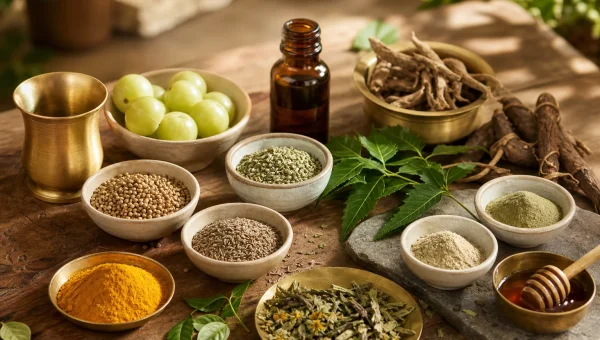
If Shatavari is suitable for you, a small-batch infused oil can be prepared for external use. Keep the preparation clean, use low heat, and discard it if the smell, color, or texture changes.
- Place 100 ml of cold-pressed sesame oil in a clean, dry, heavy-bottomed pan or double boiler.
- Add 1 teaspoon of finely powdered Shatavari root.
- Warm on the lowest heat for 20 to 30 minutes, keeping the oil warm but never smoking.
- Turn off the heat and allow the oil to cool fully.
- Strain through clean muslin into a dry, dark glass bottle.
- Label the date and store in a cool, dark place. Make a small quantity and use it within a few weeks.
Before applying any herbal oil to the breast area, patch test it on the inner arm for 24 hours. Avoid Shatavari preparations if you are allergic to asparagus or have been advised to avoid estrogenic or hormone-active herbs.
The Massage Technique
Use light, respectful pressure. The hand should glide over the tissue; the tissue should not be pinched, squeezed, or forced.
- Warm the oil: Rub 1 teaspoon of oil between your palms until it feels comfortably warm.
- Start around the chest: Apply oil to the upper chest, side ribs, and the area below the collarbone before moving to the breast itself.
- Use circular strokes: With the flat pads of the fingers, make slow circles around the breast, moving from the outer area inward. Keep the pressure soft and steady.
- Sweep gently upward and outward: Glide from the lower breast toward the collarbone and from the outer breast toward the armpit without pressing deeply.
- Soften the armpit area: With very gentle touch, make a few small circles near the front of the armpit where breast lymph commonly drains.
- Pause and breathe: Rest the palms lightly over the chest and take three slow breaths. This completes the practice without overstimulating the tissue.
This can be done once or twice weekly after a warm shower or before bed. During the premenstrual week, keep the touch especially gentle because breast tissue may naturally feel fuller or more sensitive.
Herbal Support for Breast Health
Ayurvedic herbs can support constitutional balance, digestion, tissue nourishment, and swelling patterns, but they should not be used to self-treat breast lumps, discharge, skin changes, or persistent pain. Internal herbs are best chosen by a qualified Ayurvedic practitioner who can consider constitution, menstrual history, medicines, pregnancy status, breastfeeding, and medical diagnoses.
Shatavari: Rasa-Nourishing Support
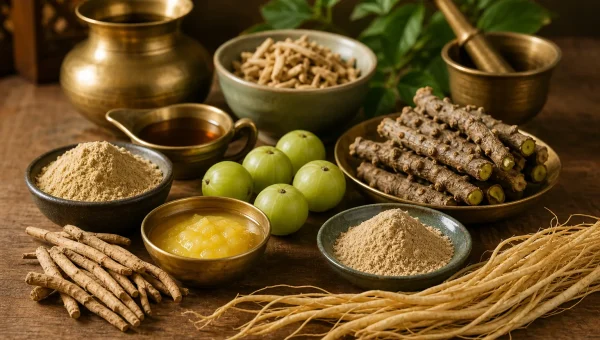
Shatavari (Asparagus racemosus) is one of Ayurveda’s primary herbs for women’s reproductive nourishment. The Ayurvedic Pharmacopoeia of India describes it as sweet and bitter in taste, heavy and unctuous in quality, cooling in potency, sweet in post-digestive effect, and traditionally used as rasayana, balya, vatahara, kaphavataghna, and stanyakara.
For breast care, Shatavari is most appropriate when the concern is dryness, depletion, Vata aggravation, postpartum nourishment, or general reproductive tissue support. It is not a substitute for breast screening or medical evaluation. The classical dose range for the root powder is generally given as 3 to 6 grams, but individual use should be guided by a practitioner.
Kanchanara Guggulu: For Glandular Kapha Patterns
Kanchanara (Bauhinia variegata) is classically used in conditions involving glandular swelling patterns such as apaci and gandamala. Kanchanara Guggulu is a classical formulation that combines Kanchanara with Guggulu and supporting herbs such as Triphala and Trikatu.
This formulation is traditionally chosen for Kapha-type glandular congestion, but it is strong and should not be taken casually for breast lumps. Guggulu-containing formulas may interact with medications and are not suitable for everyone, especially during pregnancy, breastfeeding, thyroid treatment, anticoagulant use, hormone-sensitive conditions, or cancer treatment unless supervised by a qualified clinician.
Punarnava and Manjistha: For Swelling and Rakta-Pitta Patterns
Punarnava (Boerhavia diffusa) is described in the Ayurvedic Pharmacopoeia as shothahara and mutrala, making it relevant in traditional swelling and fluid-retention patterns. Manjistha (Rubia cordifolia) is described with actions that include kaphapittashamaka and shothaghna, making it more relevant when heat, skin, or Rakta-Pitta patterns are involved.
These herbs should be used thoughtfully rather than as generic “detox” remedies. Any swelling, redness, skin thickening, new lump, or persistent one-sided pain in the breast needs medical evaluation before herbal treatment is considered.
Dietary Practices That Support Breast Comfort
Ayurveda places breast comfort within the wider health of rasa dhatu, digestion, hydration, and menstrual rhythm. Food choices do not replace screening or treatment, but they can support steadier digestion and reduce patterns of heaviness, heat, or sensitivity.
- Favor warm, cooked meals. Soups, stews, warm grains, cooked vegetables, and lightly spiced foods are easier to digest for many people and are especially helpful when Vata-type tenderness or premenstrual sensitivity is present.
- Reduce excess cold and heavy foods when breasts feel full or heavy. Ice cream, chilled yogurt, heavy sweets, and very cold drinks can aggravate a Kapha-type feeling of stagnation in some people. If you take milk, warm it and use digestive spices such as cardamom.
- Keep meals regular. Skipping meals, eating very late, or alternating restriction with heavy meals can disturb Vata and digestion, which may worsen cyclical discomfort.
- Use turmeric as a culinary spice. Turmeric can be included in everyday cooking in modest amounts. Avoid high-dose turmeric supplements if you are pregnant, on blood-thinning medication, scheduled for surgery, or under medical treatment unless cleared by a clinician.
- Track caffeine during the premenstrual week. Some people find that reducing coffee, strong tea, cola, or energy drinks helps breast tenderness. If it makes no difference, there is no need to force the restriction.
- Stay hydrated with warm or room-temperature fluids. Sipping warm water or mild herbal teas supports digestion and is often better tolerated than large amounts of iced drinks.
Lifestyle Practices That Make a Difference
Breast care is not only about herbs and oils. Clothing, posture, upper-body movement, sleep, stress, and menstrual tracking all shape how the breast area feels from month to month.
Wear Support Without Compression
A well-fitted bra can reduce breast discomfort, especially during exercise or premenstrual sensitivity. A bra that is too tight, leaves deep marks, digs into the ribs, or compresses the armpit area can increase discomfort. Choose support that feels stable but not restrictive, and change out of tight clothing when you return home.
Sleeping without a bra is fine for many people, while some prefer a soft sleep bra during very tender days. The guiding principle is comfort, not force: support should reduce strain without creating pressure.
Dry Brushing Before Shower (Garshana)
Garshana is a dry friction practice traditionally used to counter Kapha heaviness. For breast care, it should be very gentle and focused more on the chest wall, upper ribs, collarbone area, shoulders, and arms than on the breast tissue itself.
Use a soft towel, silk glove, or very soft natural brush. Stroke lightly toward the collarbone and armpit for about one minute before bathing. Avoid the nipple, broken skin, rashes, painful areas, and any place that feels hot or inflamed. Follow with a warm shower and a small amount of oil if the skin feels dry.
Move Your Arms and Breathe
The lymphatic channels associated with the breast pass through the chest, shoulder, and armpit region, so upper-body movement matters. Arm circles, shoulder rolls, gentle chest opening, walking with natural arm swing, sun salutations, and slow diaphragmatic breathing can all support comfortable fluid movement.
If you sit for long hours, take short movement breaks. Even two minutes of shoulder rolls, wall stretches, or arms-overhead breathing can change how the chest and upper back feel by the end of the day.
A Monthly Self-Check with Ayurvedic Awareness
Breast awareness means knowing what is normal for your body. For menstruating women, the most comfortable time to check is usually the week after the period ends, when cyclical swelling and tenderness have settled. If you do not menstruate, choose the same date each month.
During your self-check, notice more than lumps. Observe the whole pattern of the tissue and skin with calm attention.
- New lumps or thickened areas in the breast or underarm
- Skin dimpling, puckering, thickening, scaling, or an orange-peel texture
- New nipple inversion, nipple pain, or nipple discharge
- Persistent pain in one specific spot
- Changes in breast size, shape, color, warmth, or visible swelling
- Changes that persist beyond your usual menstrual pattern
Regular oil massage can make this awareness more natural because you learn the ordinary texture and rhythm of your own body. That familiarity is useful, but it does not replace medical screening or diagnostic care.
When to See a Doctor
Ayurvedic self-care supports daily comfort, but breast changes deserve careful medical attention. See a qualified healthcare provider promptly if you notice any of the following signs.
- A new lump in the breast or underarm
- A lump that feels hard, fixed, irregular, or different from surrounding tissue
- Nipple discharge, especially if bloody, clear, spontaneous, or from one side only
- Skin dimpling, puckering, thickening, redness, scaling, or orange-peel texture
- New nipple inversion or persistent nipple pain
- Swelling, warmth, burning, or heaviness that does not match your usual cycle
- Persistent one-sided breast pain
- A visible change in breast size or shape
Use Ayurvedic care for daily nourishment, rhythm, and awareness. Use medical screening and diagnosis for unexplained changes, persistent symptoms, and prevention.
Working With Ayurveda and Medical Care
Ayurveda and modern medicine work best together when each is used appropriately. Warm oil, mindful touch, diet, movement, and herbs can support comfort and self-connection, while clinical breast exams, imaging, and medical evaluation are essential for diagnosis and early detection.
Disclaimer: This article is for educational purposes only and is not a substitute for professional medical advice, diagnosis, or treatment. Breast lumps, persistent pain, nipple discharge, skin changes, redness, swelling, or unusual breast symptoms should be evaluated by a qualified healthcare provider. Consult a qualified Ayurvedic practitioner or healthcare professional before using herbs or supplements, especially if you are pregnant, breastfeeding, taking medication, using hormonal therapy, have a hormone-sensitive condition, or are under treatment for breast disease or cancer.
Breast care does not need to feel frightening or clinical. It can begin with a softer bra, a few shoulder circles, a warm shower, a small amount of oil, and the quiet habit of noticing your own body without shame. Start with one practice and observe it for a month. Awareness itself is already a meaningful form of care.
References
- Charaka Samhita — Stanya
- Breast milk as an etiological factor in infantile disorders – An observational study (2021), PubMed Central
- Training (training.seer.cancer.gov)
- CDC
- NCBI
- Breastcancer (breastcancer.org)
- My (my.clevelandclinic.org)
- Mayoclinic (mayoclinic.org)
- CDC
- Cancer (cancer.gov)
- Natural Ingredient Resource Center
- Ayurvedic Pharmacopoeia of India
- Ayurvedic Pharmacopoeia of India
- Ijapr (ijapr.in)
- Mayoclinic (mayoclinic.org)
- Mayoclinic (mayoclinic.org)
- Health (health.clevelandclinic.org)
- Rxlist (rxlist.com)
- Webmd (webmd.com)
- Blog (blog.theayurvedaexperience.com)

morning tea + this article = perfect start to the day
The silence around breast care as a category separate from medical examination or aesthetics is exactly the gap this article fills. My mother never talked about this and neither did anyone else. The Stanya Dhatu framing makes breast tissue part of the whole body health conversation.
The self-massage technique for lymphatic drainage is something my breast cancer specialist mentioned as post-treatment supportive care. Finding it framed within an Ayurvedic tradition of routine preventive care is a different context that makes it feel empowering rather than reactive.
Useful post on Breast Health. I would like to know how long to try it before judging results.
Useful post on Breast Health. Good starting point for a cautious reader.
For Breast Health, consistency seems like the hard part. A few more examples would still help.
The explanation of rasa dhatu as the foundation for breast tissue made me rethink how I view everyday self-care.
The monthly self-assessment guidance alongside the therapeutic care is the responsible integration with conventional screening. Regular self-knowledge of your tissue creates the baseline against which changes become identifiable earlier.
The hormonal breast tenderness protocol is the section most directly applicable to what I deal with cyclically. The Shatavari-based preparation and the specific timing relative to the cycle is more targeted than anything my gynecologist has recommended.
I wonder if warming sesame oil with Shatavari really makes a difference compared to plain oil.
My wife is postpartum and the nursing support section is exactly what she needed. The Shatavari and warm sesame massage protocol for establishing supply is something her lactation consultant hadn’t heard of but didn’t object to trying.
The Kasturi Manjal versus commercial turmeric distinction for the breast massage oil is important. Wild turmeric has different curcuminoid ratios than commercial turmeric and traditional preparations were specific about this. Quality sourcing matters here.
The lymphatic drainage part clarified why I often feel heaviness before my period.
The framing of this as routine care rather than emergency management is the cultural reframe needed. Breast tissue deserves the same preventive attention as skin and hair and scalp. The absence of that conversation is a gap in women’s preventive health.
Do you think dry brushing the chest area could replace a regular breast massage for busy days?
I’d want to be careful about the lymphatic drainage massage section. Done incorrectly, manual lymph movement in the breast area can be counterproductive. Clearer guidance on technique would be helpful alongside a recommendation to learn from a qualified therapist first.
I appreciated the tip about removing the bra as soon as I get home; it feels like a small but meaningful change.
For Breast Health, consistency seems like the hard part. I appreciate that it does not oversell the result.
The section on Kapha imbalance resonated with my experience of fluid retention after eating too much dairy.
Has anyone tried making the Shatavari-infused oil at home and noticed a change in skin texture?
I found the suggestion to chew fennel seeds after meals simple enough to try tomorrow.
The warning about tight bras restricting lymph flow makes sense given how uncomfortable underwire feels after a long day.
It would be helpful to see a short video demonstrating the circular and upward stroke techniques described.
I’m skeptical about mustard oil for congestion; does it leave a strong scent on the skin?
The article’s emphasis on noticing skin temperature differences during self-exams is a detail I hadn’t considered before.
Including turmeric in daily cooking seems like an easy way to support breast health without major diet changes.
I liked the reminder that breast care can be as routine as washing your face, rather than something only addressed during crises.