
Affordable Ayurveda is less about rejecting supplements and more about choosing the simplest effective form. Many everyday Ayurvedic dravyas are ordinary kitchen spices: they can be used in food, tea, churna, or simple decoctions without paying capsule prices. A kitchen-first approach is most useful for daily digestion, meal compatibility, and gentle support; capsules and extracts are more appropriate when a qualified practitioner wants a standardized dose, a resin preparation, or a plant that is not practical as food.
The Budget Kitchen Pharmacy: 10 Everyday Herbs Worth Knowing
The most useful low-cost Ayurvedic home routine starts with correct identification and correct preparation. The herbs below are not “weaker” simply because they are in the kitchen; they are best understood as food-level supports whose value comes from regular, appropriate use, not from megadosing.
| Ayurvedic / Kitchen Name | Botanical Identity | Kitchen Form | Best Budget Use | Preparation Principle |
|---|---|---|---|---|
| Haridra / turmeric | Curcuma longa | Turmeric powder or fresh rhizome | Daily culinary support before considering curcumin capsules | Cook with ghee or oil; combine with a small pinch of black pepper when tolerated |
| Ardraka / fresh ginger and Sunthi / dry ginger | Zingiber officinale | Fresh ginger, dry ginger powder | Pre-meal digestive support, nausea support, warming winter use | Use fresh ginger for tea and cooking; use dry ginger in smaller amounts because it is more concentrated |
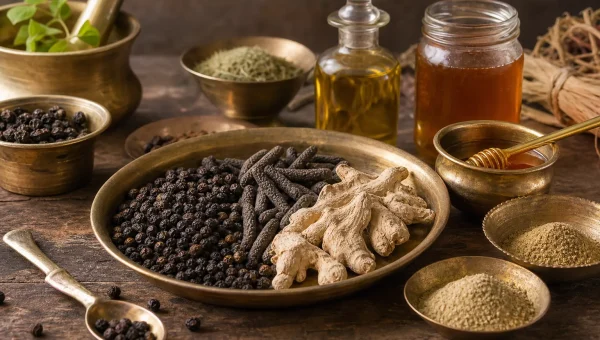
| Maricha / black pepper | Piper nigrum | Whole peppercorns or fresh-ground pepper | Digestive spice and absorption companion for turmeric | Use a pinch, not spoonfuls; freshly ground pepper is preferable |
| Yavani / ajwain | Trachyspermum ammi | Carom seeds | Occasional mild gas, heaviness, and legume-related bloating | Boil as ajwain water or add to dal, beans, and fried snacks |
| Jiraka / cumin | Cuminum cyminum | Cumin seeds or powder | Everyday digestive spice and CCF tea ingredient | Toast or temper in ghee/oil; simmer as tea with coriander and fennel |
| Ela / cardamom | Elettaria cardamomum | Green cardamom pods | Post-meal freshness, warm milk, and sweet digestive preparations | Crush pods just before use to preserve aroma |
| Methi / fenugreek | Trigonella foenum-graecum | Seeds, sprouts, or powder | Food-level metabolic and digestive support | Soak or sprout seeds to soften texture and reduce bitterness |
| Lavanga / clove | Syzygium aromaticum | Whole cloves | Culinary warming spice and occasional mouth-freshening use | Use whole cloves sparingly; do not misuse concentrated clove oil |
| Dhanyaka / coriander | Coriandrum sativum | Coriander seeds | Gentle digestive tea, summer-friendly spice, CCF tea ingredient | Crush lightly and simmer; combine with cumin and fennel |
| Mishreya / Madhurika / fennel | Foeniculum vulgare | Fennel seeds | After-meal carminative, breath freshener, CCF tea ingredient | Chew a small pinch after meals or simmer as tea |
Turmeric: Useful, Cheap, and Often Overcomplicated
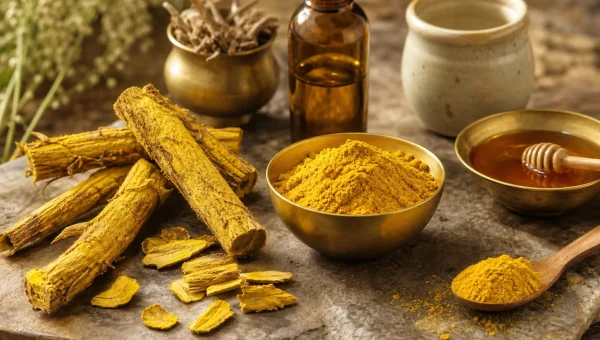
Turmeric is one of the clearest examples of a kitchen herb that should not be confused with its extracted supplement form. Turmeric powder contains curcuminoids in modest amounts, while curcumin capsules may contain concentrated extracts. For daily household use, the practical Ayurvedic approach is to make turmeric part of warm, cooked, fat-containing food rather than swallowing dry powder by itself.
Budget turmeric method:
- Add 1/4 to 1/2 teaspoon turmeric powder to cooked food that contains ghee, sesame oil, coconut oil, or another dietary fat.
- Add a small pinch of freshly ground black pepper when it suits your digestion.
- For golden milk, simmer turmeric in milk or a milk alternative, add a little ghee if the drink is very low-fat, and use only a small pinch of pepper.
- Do not assume a kitchen turmeric drink is identical to a high-dose standardized curcumin extract; they are different forms with different strengths.
This makes turmeric a good daily culinary herb, not a reason to self-prescribe large curcumin doses. People with reflux, gallbladder disease, bleeding disorders, medication use, pregnancy, or liver concerns should use therapeutic turmeric or curcumin only with professional guidance.
Our complete guide on turmeric and curcumin benefits covers preparation methods in more detail.
Ginger: Fresh and Dry Forms Are Not Interchangeable
Ayurveda treats fresh ginger and dry ginger as related but distinct forms. Fresh ginger is bright, juicy, and useful in cooking, tea, and pre-meal preparations. Dry ginger is more concentrated, more heating in practical use, and better suited to small quantities in winter, kapha-heavy meals, and warm digestive formulas.
Fresh ginger use: Grate a small piece of fresh ginger into hot water, soup, dal, or vegetable preparations. It is especially practical before or with heavier meals when appetite and digestion feel dull.
Dry ginger use: Use a pinch to 1/4 teaspoon in warm water, tea, or spice blends. Dry ginger is stronger than fresh ginger by volume, so small amounts are enough for most home use.
Drying and heating ginger changes its phytochemical profile, including conversion of gingerols toward shogaols. This supports the traditional habit of choosing fresh ginger and dry ginger differently instead of treating them as the same spice.
CCF Tea: Cumin, Coriander, and Fennel for Daily Digestion
Cumin-coriander-fennel tea is one of the most affordable Ayurvedic drinks for everyday digestive comfort. Each seed is a common kitchen spice, and together they make a gentle warm infusion that suits many people after meals, during travel, or during periods of mild bloating and heaviness.
Preparation: Add 1/4 teaspoon each of cumin seed, coriander seed, and fennel seed to 2 cups of water. Simmer for 8–10 minutes, strain, and sip warm. For a stronger taste, lightly crush the seeds before simmering.
This tea is best used as a daily digestive support, not as a cure for persistent abdominal pain, reflux, unexplained weight loss, blood in stool, fever, or chronic digestive disease. Those symptoms need medical evaluation.
Methi: Fenugreek Seeds as a Low-Cost Metabolic Food
Fenugreek seeds are bitter, fibrous, and inexpensive. In Ayurveda they fit especially well where meals are heavy, kapha is prominent, and the person tolerates warming, bitter foods. As a household practice, soaked or sprouted methi is more sensible than swallowing large amounts of dry powder.
Simple preparation: Soak 1–2 teaspoons of fenugreek seeds overnight in water. In the morning, chew the softened seeds with breakfast or add them to cooked food. Another option is to sprout the seeds for 1–2 days and use a small amount in salads, dal, or vegetable dishes.
People using medication for diabetes should monitor blood sugar and speak with a healthcare provider before taking fenugreek regularly in therapeutic amounts. Pregnant people should avoid fenugreek above ordinary food quantities.
Our complete post on Ayurvedic diabetes management places fenugreek and other kitchen herbs in clinical context.
Ajwain: A Small Seed for Heavy Meals and Mild Gas
Ajwain, classically identified as Yavani, is one of the most practical kitchen herbs for occasional mild gas, abdominal heaviness, and legume-related discomfort. Its strong aroma comes from volatile compounds, especially thymol-rich fractions, so a small quantity is usually enough.
Ajwain water: Boil 1/2 to 1 teaspoon ajwain seeds in 2 cups of water for about 5 minutes. Strain and sip warm. A small pinch of rock salt may be added for taste if salt restriction is not required.
Preventive cooking use: Add a small pinch to dal, chickpeas, kidney beans, pakora batter, paratha filling, or other heavy preparations. This does not remove every gas-producing carbohydrate from legumes, but it is a traditional way to make heavy foods feel lighter and more aromatic.
Budget Triphala: Powder Before Capsules
Triphala is not a typical kitchen spice, but it is a classic example of a formula where powder is often the most economical form. The name means “three fruits,” and the formula is generally made from Amalaki, Bibhitaki, and Haritaki. Capsules are convenient, but bulk powder avoids paying extra for encapsulation.
Choose Triphala powder from a reputable supplier, check freshness and aroma, and follow the label or practitioner’s dose rather than assuming more is better. It is commonly taken with warm water, often at night, but people with diarrhea, pregnancy, medication use, or chronic disease should seek professional guidance before regular use.
Our complete Triphala guide covers quality selection and practical use.
Where Supplements Are Actually Worth the Money
A budget approach does not mean every herb should be forced into kitchen form. Some Ayurvedic herbs are not common foods, some are resins, and some are used in modern practice as standardized extracts for consistency. These are the places where spending carefully can make more sense than trying to improvise with spices.
| Herb or Formula | Why Kitchen Form Is Limited | Budget-Sensible Approach |
|---|---|---|
| Ashwagandha (Withania somnifera) | It is a medicinal root, not a normal culinary spice. | Use practitioner-guided root powder or a reputable extract when indicated. |
| Brahmi / Bacopa (Bacopa monnieri) | It is not a common food herb, and extract standardization may matter for specific protocols. | Choose either reputable powder or standardized bacoside extract according to the purpose. |
| Triphala | The three fruits are usually taken as powder or tablets rather than eaten as ordinary fruit. | Bulk powder is usually the simplest budget form. |
| Shallaki / Boswellia (Boswellia serrata) | It is a resin, not a kitchen spice, and extracts vary in boswellic acid content. | Use a reputable standardized extract when advised. |
| Guggulu (Commiphora resin) | It is a resin requiring proper processing and medical judgment. | Do not self-prescribe; use only under qualified supervision, especially for lipid, thyroid, reproductive, or medication-related concerns. |
For guidance on assessing supplement quality, our post on Ayurvedic immunity boosters covers quality markers for common formulations.
How to Spend Less Without Buying Bad Herbs
The cheapest herb is not a bargain if it is stale, adulterated, contaminated, or poorly stored. Buy whole seeds when possible, grind small amounts at home, store powders away from heat and light, and avoid products that make disease-cure claims. For medicinal powders, resins, bhasma-containing products, or imported formulas, choose brands that provide quality testing and avoid self-prescribing products that contain metals or mineral ingredients.
Freshness is easy to notice in the kitchen: cumin, fennel, ajwain, cardamom, and clove should have a clear aroma when crushed. Turmeric should be bright and clean-smelling, not musty. Ginger powder should smell warm and sharp. If a powder smells flat, damp, moldy, or dusty, replace it rather than increasing the dose.
Safety: Kitchen Does Not Always Mean Risk-Free
Kitchen herbs are generally gentler at culinary amounts, but therapeutic use is different. Fenugreek can affect blood sugar and is not appropriate above food amounts in pregnancy. Ginger can cause heartburn or digestive irritation in some people and should be discussed with a clinician when medicines are involved. Turmeric and curcumin can cause digestive side effects and may be unsuitable in some gallbladder, bleeding, medication, pregnancy, or liver-related situations. Clove oil is concentrated and can irritate or damage oral tissues if misused; whole cloves in food are not the same as applying essential oil.
Nothing in this article diagnoses, treats, or cures a medical condition. Use this as educational information and consult a qualified Ayurvedic practitioner or healthcare provider before starting herbs, supplements, detoxes, or therapeutic protocols, especially if pregnant, breastfeeding, preparing for surgery, managing a condition, or taking medication.
Actionable Budget Swap
Choose one non-prescribed digestive supplement or “detox tea” you currently buy and replace it for 30 days with a kitchen preparation: CCF tea after meals for general bloating, ajwain water for occasional mild gas, or ginger tea before heavy meals. Do not stop prescribed medication. Track cost, taste, tolerance, and how often you actually need support. The goal is not to take more herbs; it is to use the simplest appropriate herb in the right form.
References
- Ayurvedic Pharmacopoeia of India
- Ia800501 (ia800501.us.archive.org)
- Lpi (lpi.oregonstate.edu)
- Influence of piperine on the pharmacokinetics of curcumin in animals and human volunteers (1998), PubMed
- NCCIH
- Benthamscience (benthamscience.com)
- Heat-induced conversion of gingerols to shogaols in ginger as affected by heat type (dry or moist heat), sample type (fresh or dried), temperature and time (2018), PubMed Central
- Bioactive Compounds and Bioactivities of Ginger (Zingiber officinale Roscoe) (2019), PubMed Central
- NCCIH
- Cuminum cyminum and Carum carvi: An update (2011), PubMed Central
- Coriandrum sativum L.: A Review on Ethnopharmacology, Phytochemistry, and Cardiovascular Benefits (2021), PubMed Central
- Foeniculum vulgare Mill: a review of its botany, phytochemistry, pharmacology, contemporary application, and toxicology (2014), PubMed Central
- Ayurvedic Pharmacopoeia of India
- Dravyaguna notes
- Trachyspermum ammi (2012), PubMed Central
- Medicalnewstoday (medicalnewstoday.com)
- Ayurvedic Pharmacopoeia of India
- Effect of fenugreek (Trigonella foenum-graecum L.) intake on glycemia: a meta-analysis of clinical trials (2014), PubMed Central
- Role of Fenugreek in the prevention of type 2 diabetes mellitus in prediabetes (2015), PubMed Central
- NCCIH
- Therapeutic Uses of Triphala in Ayurvedic Medicine (2017), PubMed Central
- Webprod (webprod.hc-sc.gc.ca)
- Effects of a standardized Bacopa monnieri extract on cognitive performance, anxiety, and depression in the elderly: a randomized, double-blind, placebo-controlled trial (2008), PubMed Central
- Effectiveness of Boswellia and Boswellia extract for osteoarthritis patients: a systematic review and meta-analysis (2020), PubMed Central
- NCBI
- NCCIH
- FDA

The safest part of the Affordable Ayurveda on a Budget advice is keeping it simple. The practical details matter more than people think.
The curcumin extraction comparison is the most practically useful piece. $45 capsule versus $4 turmeric powder with the same mechanism if used correctly. I’d want to know more about the ‘used correctly’ part specifically. What form and with what co-ingestion?
The supplement industry’s business model depends on people not knowing that the same compounds are available cheaper and often more bioavailable from kitchen sources. Articles like this are genuinely subversive of a market that profits from complexity.
For people who genuinely can’t use cooking-based delivery because of their dietary patterns or lifestyle, the capsule option is still valid. I understand the cost argument but access to traditional food preparation methods and consistent cooking at home is also not universal.
The tulsi plant on a windowsill is adaptogen, antimicrobial, and digestive support all in one and it costs nothing after the initial plant. I have been surprised by how many of my patients spend significant money on adaptogen supplements while walking past tulsi plants they could harvest.
Bought the turmeric supplement from a reputable supplier, followed the protocol for 2 months. Nothing. I want to believe but my experience doesn’t match what’s described here.
I tried making the golden paste with turmeric black pepper and ghee as described and noticed I felt more comfortable after a few days
Is there a quality threshold for kitchen turmeric that matters? I buy bulk organic from a local market but I don’t know how to assess whether it’s high enough in curcuminoids to be doing anything meaningful.
The ‘used correctly’ qualifier is doing a lot of work in this comparison. Turmeric in warm milk with fat and a pinch of black pepper delivers curcumin very differently than turmeric dumped into a cold smoothie. Most people doing the budget version aren’t getting the bioavailability the comparison claims.
Starting an experiment based on this article, replacing my evening adaptogen supplements with kitchen preparations for 60 days to track the difference. Will report back.
The CCF tea recipe sounds easy I will try it with my morning routine
I always kept ajwain for gas but never thought to boil it for five minutes as a drink
The safest part of the Affordable Ayurveda on a Budget advice is keeping it simple. The safety notes could be expanded a little.
Is the soaked fenugreek method really that cheap a tablespoon seems like a lot
I have one concern: some of the ‘budget’ kitchen herbs still carry interaction risks that the more expensive standardized extracts address through dosing precision. Saying kitchen spices are equivalent to supplements without addressing dose variability is incomplete advice.
I wonder if dried ginger powder works the same as fresh for nausea
The article made me check my spice rack I have most of these herbs already
The methi seeds for blood sugar support instead of standardized berberine extract is a good example. Same mechanism, dramatically different cost. But you have to know the preparation and the amount that matches the studied dose.
I appreciate the cost comparison it shows how much we spend on supplements unnecessarily
Do you need to use ghee specifically or can any oil work for turmeric absorption
The most democratizing thing about this article is the implicit message that Ayurvedic health support should not require a supplement budget. That access has been gated by marketing and that gate can be removed with knowledge.
I have been using black pepper with turmeric in my curries but never measured the amounts
The tip about using ajwain water instead of antacids is something I will test
I like that the article distinguishes fresh vs dried ginger and gives clear uses
The budget triphala suggestion is helpful I buy the powder in bulk
Good reminder on Affordable Ayurveda on a Budget. This is the kind of detail readers can test slowly.
I am skeptical about the claim that kitchen herbs can replace standardized extracts without proper preparation
Good reminder on Affordable Ayurveda on a Budget. Would be useful to see a short checklist next.
Good reminder on Affordable Ayurveda on a Budget. I would still ask a practitioner before changing medicines.
After reading I plan to start a small herb garden to have fresh turmeric and ginger
Good reminder on Affordable Ayurveda on a Budget. The article avoids making it sound like a quick fix.
Good reminder on Affordable Ayurveda on a Budget. I appreciate that it does not oversell the result.
Good reminder on Affordable Ayurveda on a Budget. The timing advice is the part I would start with.
Good reminder on Affordable Ayurveda on a Budget. This would be easier to follow with a one-week sample plan.
Good reminder on Affordable Ayurveda on a Budget. The safety notes could be expanded a little.
Good reminder on Affordable Ayurveda on a Budget. The main idea is clear even if someone is new to Ayurveda.
I came for Affordable Ayurveda on a Budget and this answered the main question. Would be useful to see a short checklist next.
Good reminder on Affordable Ayurveda on a Budget. This feels more usable than a long list of herbs.
Good reminder on Affordable Ayurveda on a Budget. The examples make the advice less abstract.
I came for Affordable Ayurveda on a Budget and this answered the main question. Small daily changes are easier to follow than a perfect plan.
Good reminder on Affordable Ayurveda on a Budget. I would like to know how long to try it before judging results.
Good reminder on Affordable Ayurveda on a Budget. Good starting point for a cautious reader.
I came for Affordable Ayurveda on a Budget and this answered the main question. A few more examples would still help.
I came for Affordable Ayurveda on a Budget and this answered the main question. The practical details matter more than people think.
I came for Affordable Ayurveda on a Budget and this answered the main question. This is the kind of detail readers can test slowly.
I came for Affordable Ayurveda on a Budget and this answered the main question. I would still ask a practitioner before changing medicines.
I came for Affordable Ayurveda on a Budget and this answered the main question. The article avoids making it sound like a quick fix.
I came for Affordable Ayurveda on a Budget and this answered the main question. I appreciate that it does not oversell the result.
I came for Affordable Ayurveda on a Budget and this answered the main question. Good starting point for a cautious reader.
I came for Affordable Ayurveda on a Budget and this answered the main question. The timing advice is the part I would start with.
I came for Affordable Ayurveda on a Budget and this answered the main question. The main idea is clear even if someone is new to Ayurveda.
The part about Affordable Ayurveda on a Budget feels realistic. A few more examples would still help.
I came for Affordable Ayurveda on a Budget and this answered the main question. This would be easier to follow with a one-week sample plan.
I came for Affordable Ayurveda on a Budget and this answered the main question. The safety notes could be expanded a little.
I came for Affordable Ayurveda on a Budget and this answered the main question. This feels more usable than a long list of herbs.
I came for Affordable Ayurveda on a Budget and this answered the main question. The examples make the advice less abstract.
I came for Affordable Ayurveda on a Budget and this answered the main question. I would like to know how long to try it before judging results.