Ayurvedic Golf Injury Recovery: Lumbar, Elbow and Wrist Support Protocols
Ayurvedic golf injury recovery is best understood as supportive care for a sport built on repeated rotation, gripping, impact, and one-sided movement patterns. Modern sports medicine remains essential for diagnosis, imaging, rehabilitation, bracing, medication decisions, and return-to-play planning. Ayurveda adds a complementary lens: repeated strain, dryness, stiffness, and pain are approached as Vata aggravation localized in vulnerable tissues such as the lumbar region, elbow tendons, and wrist structures.
The three areas that most often need attention in golfers are the lower back, the medial elbow, and the wrist-hand complex. In Ayurvedic language, these areas are managed with principles of snehana, swedana, marma-based touch, rest from aggravating motion, and carefully selected herbs or oils when suitable for the person. The practical goal is not to “play through pain,” but to reduce cumulative irritation, protect Snayu-like structures such as tendons and ligaments, and support a safer return to swing mechanics under qualified guidance.
The Lumbar Problem: Vata in the Kati Region
The golf swing can place high compressive and shear forces on the lumbar spine, especially during the downswing and follow-through. Modern biomechanical modeling has estimated peak L4-L5 compression above six times body weight, with earlier work reporting even higher values. When hip mobility, trunk control, warm-up quality, and recovery are poor, the lumbar area may receive more repetitive load than it can tolerate.
From an Ayurvedic clinical perspective, this is treated as Vata aggravation localized in the kati, or lower back region. The familiar presentation is stiffness, aching, guarded movement, pain after repeated rotation, and discomfort that worsens with overuse or prolonged sitting. In classical Vata management, oleation and fomentation are central tools when the presentation is dominated by dryness, stiffness, and pain rather than acute heat, redness, fever, or recent traumatic swelling.
Kati Basti as practitioner care: Kati Basti is a localized oil-retention therapy in which warm medicated oil is held over the lower back inside a dough reservoir. It is commonly used in Ayurveda clinics for lower-back pain patterns and is best selected by a qualified Ayurvedic physician after assessing whether the condition is Vata-dominant, inflammatory, traumatic, neurological, or disc-related. The oil, temperature, duration, and number of sittings should be individualized.
Home support between clinical sessions: A gentle home version is not the same as Kati Basti, but it can support the same Vata-calming intention. Warm a small amount of sesame oil or a practitioner-recommended medicated oil such as Mahanarayana Taila, apply it lightly over the lower back, rest for 15-20 minutes, and follow with mild warmth if it feels comfortable. Avoid deep pressure, forceful massage, or heat over new injury, sharp radiating pain, numbness, fever, or visible inflammation.
Golfer’s Elbow: Kurpara Marma and Medial Epicondyle Care
Golfer’s elbow, or medial epicondylitis, is a tendinopathy involving the common flexor-pronator origin near the medial epicondyle. It is associated with repetitive wrist flexion, forearm pronation, gripping, and valgus stress. Because these tendons are used in ordinary daily actions, the condition can linger when the player keeps practicing, lifting, gripping, or swinging before the tissue has recovered.
In Ayurveda, this pattern can be viewed through the Snayu and Sandhi aspects of Vata aggravation around the elbow. Kurpara Marma corresponds to the elbow joint region. Marma work here should be gentle and should never replace tendon loading guidance from a physiotherapist. The safest approach is soft oil application, mild pressure around the painful region without pressing directly into sharp tendon pain, and temporary reduction of the movements that reproduce symptoms.
| Intervention | Method | Use | Important Caution |
|---|---|---|---|
| Kurpara Marma support | Gentle circular pressure around the elbow region after light oiling | For stiffness and guarded movement | Do not press into sharp, electric, or nerve-like pain |
| Warm oil application | Sesame oil or suitable medicated oil applied for 15-20 minutes | For Vata-type aching, dryness, and stiffness | Avoid heat and oil over acute swelling, redness, or fresh injury |
| Therapeutic exercise | Stretching and strengthening prescribed by a physiotherapist | Core return-to-play care for tendon load tolerance | Do not resume full swings just because pain is temporarily lower |
| Shallaki support | Oral Boswellia serrata only if appropriate and supervised | Joint comfort support where suitable | Not a proven tendon-repair treatment or substitute for rehabilitation |
| Agnikarma | Practitioner-only controlled thermal procedure | Selected chronic pain cases under Ayurvedic medical care | Never attempt at home; avoid in unsuitable skin, nerve, vascular, or acute inflammatory conditions |
Agnikarma deserves careful framing. It is a classical parasurgical Ayurvedic procedure using controlled heat, and modern Ayurvedic clinical literature includes its use for musculoskeletal pain conditions such as epicondylitis and osteoarthritis. It should be performed only by a qualified Ayurvedic physician who can assess indications, contraindications, hygiene, skin status, and follow-up care.
Wrist Complex: Manibandha Marma and Overuse Patterns
Golf-related wrist pain may involve tendons, ligaments, fibrocartilage, nerves, or small bones. Commonly discussed patterns include De Quervain’s tenosynovitis on the thumb side, intersection syndrome, extensor carpi ulnaris irritation on the ulnar side, flexor tendon overload, triangular fibrocartilage complex irritation, and hook of hamate injury. Persistent ulnar-sided wrist pain, clicking, grip weakness, numbness, or pain after striking the ground needs medical assessment rather than home treatment alone.
Manibandha Marma corresponds to the wrist joint region, while Kshipra Marma in the hand lies in the web space between the thumb and index finger. For a golfer with mild post-round stiffness, apply a small amount of warm oil to the wrist and hand, then use slow circular touch around the wrist crease and gentle pressure in the thumb-index web space for comfort. Keep the pressure light, and stop if symptoms travel into the fingers, worsen, or feel nerve-like.
For chronic stiffness without acute heat or swelling, a mild Upanaha-style warm poultice may be chosen by a practitioner. A home version should be conservative: a warm herbal paste or cloth wrap should feel comfortably warm, never hot, and should be removed promptly if burning, itching, increased swelling, rash, or throbbing occurs. Avoid overnight paste applications unless directly prescribed, and do not apply turmeric or medicated pastes to broken or irritated skin.
Post-Round Recovery Protocol: A 30-Minute Ayurvedic Reset
Post-round care should begin with the same principle used in both sports medicine and Ayurveda: do not let repeated strain accumulate unnoticed. After a round, check the lower back, elbows, wrists, grip strength, and next-morning stiffness. Mild care is reasonable for ordinary fatigue; sharp pain, swelling, weakness, numbness, night pain, or loss of range of motion calls for professional evaluation.
- Minutes 1-5: Hydrate with warm water. If it suits your digestion, use a light cumin-coriander-fennel infusion rather than iced drinks immediately after play.
- Minutes 5-15: Apply a small amount of warm sesame oil or practitioner-recommended medicated oil to the lower back, elbow region, forearms, wrists, and hands. Use broad palm contact rather than hard fingertip digging.
- Minutes 15-25: Perform gentle marma-based touch: Manibandha for the wrist region, Kurpara for the elbow region, and soft palm contact over the kati region. Keep pressure mild and steady.
- Minutes 25-30: Take a warm shower or wipe off excess oil. Follow with easy mobility, not aggressive stretching, and note any pain that persists into the next day.
Internal Herbal Support During the Golf Season
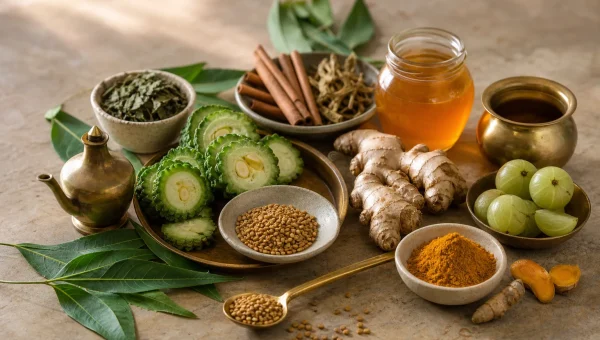
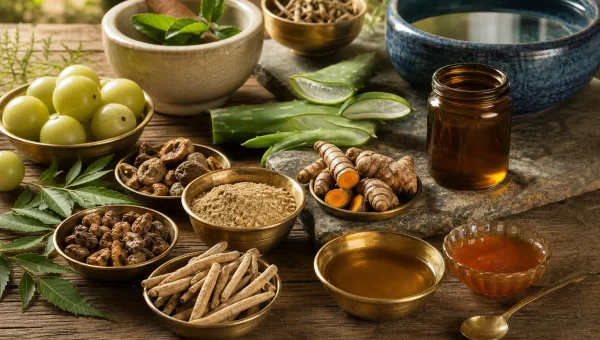
A season-long herbal stack should not be self-prescribed. The better Ayurvedic approach is to match herbs to the golfer’s constitution, digestion, medication profile, sleep, bowel pattern, age, injury type, and level of inflammation. The following options are common supportive considerations, but they should be used under guidance rather than treated as universal prescriptions.
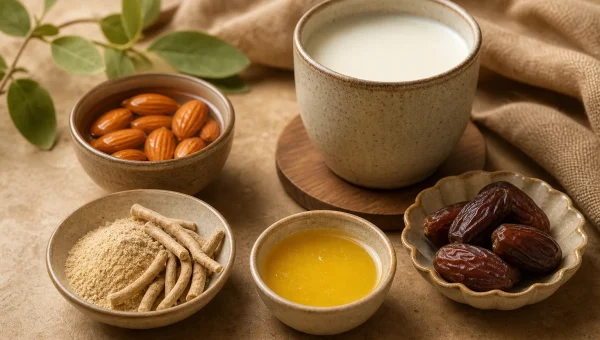
- Ashwagandha: Traditionally used as a strengthening and Vata-supportive herb. Modern safety guidance supports only short-term use for many people, and it should be avoided in pregnancy, breastfeeding, some liver, thyroid, autoimmune, surgical, prostate, and medication-related contexts unless a clinician approves.
- Shallaki: Boswellia serrata is used in Ayurveda and modern supplement practice for joint comfort. It is better framed as joint-support care, especially in osteoarthritis-type pain and stiffness, not as a direct cure for tendon degeneration or ligament injury.
- Haridra: Turmeric may be used in food or as simple turmeric milk if tolerated. High-dose turmeric or curcumin supplements, especially enhanced-bioavailability products, require caution because of digestive side effects, pregnancy concerns, possible liver injury reports, and medication interactions.
- Triphala: Traditionally used to support elimination and bowel regularity. It is most appropriate when constipation or irregular bowel habits are part of the picture, and it should be reduced or avoided if it causes loose stools, cramping, dehydration, or weakness.
The practical Ayurvedic rule for golfers is simple: oil and warmth are useful when the pattern is Vata-like stiffness, dryness, aching, and fatigue; cooling, rest, and medical assessment are more appropriate when there is acute swelling, redness, trauma, burning pain, or suspected structural injury. Internal herbs are secondary to correct diagnosis, swing-load management, sleep, strength work, mobility, and recovery time.
The Amavata protocol is useful supplementary reading for understanding how Ayurveda thinks about Ama, stiffness, and joint discomfort. The Kati Marma lower back article can be used alongside this guide for a gentler understanding of lower-back marma care, provided pain is not acute, radiating, or medically unexplained.
Medical Disclaimer: This content is for informational purposes only and does not replace professional sports medicine evaluation, physiotherapy, imaging, or medical treatment. Persistent elbow, wrist, or back pain in golfers may involve tendon tears, disc pathology, nerve compression, stress fracture, TFCC injury, or hook of hamate fracture. Consult a qualified healthcare provider and a qualified Ayurvedic practitioner before beginning herbs, supplements, detoxes, Agnikarma, Kati Basti, or therapeutic protocols, especially if pregnant, managing a medical condition, or taking medication.
References
- Golf injuries: a review of the literature (2006), PubMed
- Low back pain and golf: A review of biomechanical risk factors (2020), PubMed Central
- Lumbar spinal loads and muscle activity during a golf swing (2012), PubMed
- NCBI
- Orthoinfo (orthoinfo.aaos.org)
- Openorthopaedicsjournal (openorthopaedicsjournal.com)
- Clinics in diagnostic imaging (156). Golf-induced hamate hook fracture (2014), PubMed Central
- Isolated hook of hamate fracture in sports that require a strong grip comprehensive literature review (2018), PubMed Central
- Charaka Samhita — Vatavyadhi Chikitsa
- Ayurvaid (ayurvaid.com)
- Evaluation of effect of poultice (Upanaha Sweda) in low back pain (Katigraha): A randomized comparative clinical trial (2019), PubMed Central
- Easyayurveda (easyayurveda.com)
- Wjpr (wjpr.s3.ap-south-1.amazonaws.com)
- Comparing the efficacy of Agnikarma with therapeutic ultrasound in the management of tennis elbow – A randomised controlled preliminary study (2024), PubMed
- Role of Agnikarma in Sandhigata Vata (osteoarthritis of knee joint) (2015), PubMed Central
- Efficacy and tolerability of Boswellia serrata extract in treatment of osteoarthritis of knee–a randomized double blind placebo controlled trial (2003), PubMed
- NCCIH
- Effectiveness of Boswellia and Boswellia extract for osteoarthritis patients: a systematic review and meta-analysis (2020), PubMed Central
- NCCIH
- NCCIH
- Therapeutic Uses of Triphala in Ayurvedic Medicine (2017), PubMed Central