
Diabetic eye disease needs regular ophthalmologic care, careful diabetes management, and timely modern treatment when indicated. Ayurveda can play a complementary role, not as a substitute for eye examinations, laser treatment, injections, surgery, insulin, metformin, or other prescribed care, but as a supportive framework for steadier glucose control, Pitta-Rakta balance, diet, lifestyle, and safe ocular comfort practices.
The most realistic aim is support: protecting remaining retinal function, reducing avoidable strain, improving consistency in metabolic habits, and helping the patient work with both an ophthalmologist and a qualified Ayurvedic practitioner. Any herbs that affect glucose should be added only with blood-sugar monitoring, because they may change the effect of diabetes medication.
Why Diabetic Eyes Need Ayurvedic Eye Care: The Pitta-Rakta Connection
In Ayurveda, diabetes-like presentations are discussed under Prameha, with Madhumeha often used in practice when the clinical picture resembles diabetes mellitus. Classical management of Prameha emphasizes diet, activity, body constitution, digestive-metabolic correction, and medicines chosen by the physician. Eye involvement is understood through the lens of Netra, Alochaka Pitta, Rakta Dhatu, and the fine channels that nourish delicate ocular tissues.
Ayurvedic physiology connects visual perception with Alochaka Pitta, traditionally seated in the organ of sight. Sushruta’s ophthalmic sections also treat eye disease as a major specialty, classifying eye disorders by structures and doshic involvement. In a diabetic patient, this gives a useful clinical lens: chronic metabolic disturbance can aggravate Pitta and Rakta, while modern ophthalmology describes diabetic retinopathy as damage to the small retinal blood vessels from long-term high blood glucose, often worsened by high blood pressure, high cholesterol, and smoking.
Blood Sugar Management: The Foundation
Ayurvedic eye care for a diabetic patient begins with glucose stability. Long-term UKPDS data associated each 1% lower HbA1c with a 37% lower risk of microvascular complications, the category that includes retinal complications. This does not mean herbs replace diabetes treatment; it means that any safe, well-supervised support for glucose, diet, sleep, activity, and inflammation may indirectly support eye protection.
Key Blood Sugar Herbs
The following herbs are used in Ayurvedic and integrative diabetes care, but they should be individualized. People taking insulin, sulfonylureas, or multiple glucose-lowering medicines should monitor glucose closely and inform their endocrinologist before adding them.
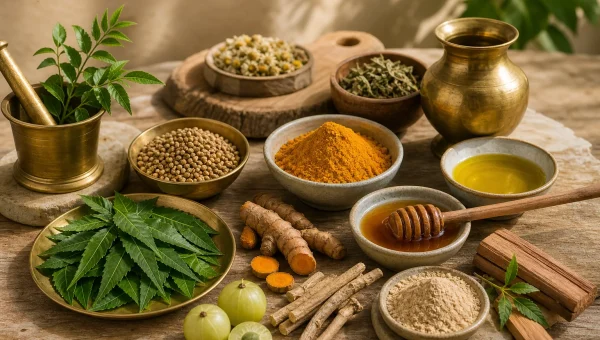
- Gudmar / Meshashringi (Gymnema sylvestre): Traditionally used for Prameha-like metabolic disorders and widely used in diabetes-support formulas. Modern reviews describe possible glucose-lowering activity, so it should be treated as an active herb rather than a harmless tonic.
- Methi (Trigonella foenum-graecum, fenugreek): Fenugreek seed is useful as a food-based adjunct. Its fiber-rich seed may be taken as part of a practitioner-guided diet plan, especially when the patient tolerates it digestively.
- Vijaysar / Asana (Pterocarpus marsupium): The heartwood is a traditional Prameha herb. It is best used under supervision, particularly when the patient is already on prescription glucose-lowering medicines.
- Haridra (Curcuma longa, turmeric): Turmeric is a classical kitchen medicine for Pitta-Kapha metabolic patterns. Curcumin has preclinical diabetic-retina interest, but therapeutic extracts, especially those combined with absorption enhancers, should be used cautiously with medication.
- Amalaki (Phyllanthus emblica): Amalaki is a Pitta-pacifying, Rasayana food-herb and a component of Triphala. It is often suitable as food or powder in diabetes-support diets, provided the total diet remains glucose-conscious.
Eye-Specific Ayurvedic Protocols
Local eye care must be handled more carefully than ordinary skin or digestive remedies. Anything placed directly into the open eye should be sterile and appropriate for ophthalmic use. For home care, closed-eye applications are safer than homemade open-eye washes, and any active infection, ulcer, injury, recent surgery, severe redness, pain, or sudden visual change requires medical evaluation first.
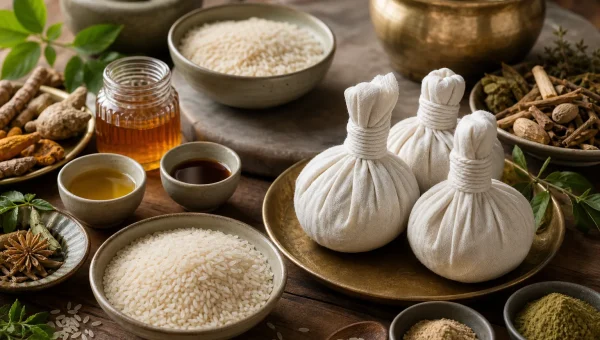
Triphala Closed-Eye Compress
Triphala is the classical three-fruit combination of Amalaki, Haritaki, and Bibhitaki. It is traditionally valued in Ayurveda as a Rasayana and eye-supportive formulation. For diabetic patients, the safest home version is a closed-eye compress rather than putting homemade Triphala liquid into the open eye.
Method:
- Prepare a mild Triphala infusion with clean water and let it cool fully.
- Filter it very carefully so no powder or particles remain.
- Soak clean cotton pads or sterile gauze in the filtered liquid.
- Place over closed eyelids for 5-10 minutes.
- Discard the liquid after use; do not store it for repeated applications.
Safety note: Do not pour homemade Triphala water into the open eye. Non-sterile liquids and fine particles can irritate or injure the eye. If a practitioner recommends an ophthalmic preparation, it should be sterile and suitable for direct ocular use.
Saptamrita Lauha
Saptamrita Lauha is a traditional herbo-mineral formulation used by Ayurvedic practitioners in eye-related conditions and related systemic patterns. It commonly contains Triphala, Yashtimadhu (Glycyrrhiza glabra), and Lauha Bhasma. Because it is a herbo-mineral medicine and contains an iron preparation, it should not be self-prescribed.
For a diabetic patient with eye disease, Saptamrita Lauha may be considered only after assessing digestion, anemia status, medications, liver and kidney considerations, and the patient’s full Ayurvedic diagnosis. It should be avoided unless prescribed by a qualified practitioner using a quality-controlled product.
Triphala Ghrita Netra Tarpana
Netra Tarpana is a traditional Ayurvedic eye procedure in which medicated ghee is retained around the eyes within a dough boundary. Triphala Ghrita is listed among Ayurvedic ghrita preparations with traditional eye indications such as Timira and Netraroga.
This is not a home procedure for diabetic retinopathy. It should be performed only by a trained practitioner after checking for contraindications such as eye infection, corneal injury, severe inflammation, recent surgery, uncontrolled diabetes, or any urgent ophthalmic condition. Its role is supportive and comfort-oriented, not a replacement for retinal imaging or ophthalmologic treatment.
Dietary Modifications: Where Diabetes and Eye Health Intersect
The dietary sweet spot for diabetic eye support is Pitta-pacifying, glucose-conscious, and rich in protective plant nutrients. Meals should be steady, moderate, and built around vegetables, legumes, appropriate whole grains, protein, and healthy fats, while avoiding sharp glucose swings.
- Bitter vegetables: Karela, methi leaves, tender neem preparations when appropriate, and other bitter greens can be useful in Kapha-Pitta metabolic patterns.
- Leafy greens: Spinach, amaranth, coriander, and drumstick leaves provide carotenoids and micronutrients. Lutein and zeaxanthin are concentrated in the macula and are strongly associated with retinal nutrition.
- Amalaki and Triphala foods: Amalaki can be used as fresh fruit, powder, or in practitioner-guided formulas. Triphala is better used internally or as a closed-eye external support unless a sterile ophthalmic preparation is prescribed.
- Moderate healthy fats: Small amounts of ghee or other suitable fats may be used when digestion, lipid profile, weight goals, and the physician’s advice allow. Fat also helps the meal feel steadier and supports absorption of fat-soluble carotenoids.
- Reduce: Refined sugar, sweet drinks, frequent snacking, heavy fried foods, excess alcohol, and excess salt, especially when blood pressure or fluid retention is present.
Why Pitta Management Specifically Supports the Eyes
The eye is treated in Ayurveda as a delicate Pitta-associated organ, so cooling, regular, and non-irritating routines are preferred. In modern terms, these practices also reduce strain, support sleep, and help the patient maintain the daily discipline needed for diabetes care.
- Wear sunglasses labeled 100% UV protection when outdoors in strong sunlight.
- Use the 20-20-20 rule during screen work: every 20 minutes, look about 20 feet away for 20 seconds.
- Keep meals regular and avoid long periods of irritability, dehydration, and overexertion.
- Practice gentle evening cooling routines such as quiet breathing, early sleep, and reducing late-night screen exposure.
- Use sandalwood or other cooling pastes only externally on the forehead or temples if suitable for the skin; never put them into the eyes.
- Avoid smoke exposure and seek help to stop smoking, because smoking increases diabetes-related eye risk.
Regular Ophthalmologic Screening: Non-Negotiable
No Ayurvedic protocol replaces retinal screening. Diabetic retinopathy can be present before vision changes are noticed, so waiting for symptoms is unsafe. The eye doctor can see retinal bleeding, leakage, swelling, ischemia, and new vessel formation long before the patient can feel them.
- Type 2 diabetes: Have a comprehensive diabetic eye examination soon after diagnosis and then at least yearly, or more often if advised.
- Type 1 diabetes: Begin annual diabetic retinopathy screening within five years of onset, or as advised by the ophthalmologist.
- Pregnancy with diabetes: Have an eye examination before pregnancy or in the first trimester, then follow the schedule advised by the eye specialist.
- New symptoms: Floaters, flashes, sudden blur, dark spots, distorted vision, eye pain, or sudden vision loss need urgent eye care.
The Complementary Role
The practical role of Ayurveda in diabetic eye care is supportive, systemic, and preventive-minded. It can help the patient build a daily routine around diet, digestion, sleep, stress regulation, glucose monitoring, safe herbal support, and gentle eye comfort measures while the ophthalmologist monitors the retina and provides timely treatment.
For a patient with moderate non-proliferative diabetic retinopathy, the goal is not to promise reversal. The goal is to reduce avoidable aggravating factors, keep glucose, blood pressure, and cholesterol under control, support the tissues through appropriate diet and practitioner-guided medicines, and never miss retinal follow-up. The best outcomes come when the endocrinologist, ophthalmologist, and Ayurvedic practitioner all know what the patient is taking.
Nothing in this article diagnoses, treats, cures, or prevents a medical condition. Use it as educational information and consult a qualified Ayurvedic practitioner, ophthalmologist, and healthcare provider before starting herbs, supplements, eye procedures, detoxes, or therapeutic protocols, especially if pregnant, managing diabetes, using insulin or glucose-lowering medication, or already diagnosed with diabetic retinopathy.
References
- Nei (nei.nih.gov)
- Charaka Samhita — Prameha Chikitsa
- Easyayurveda (easyayurveda.com)
- Wisdomlib — classical text
- Association of glycaemia with macrovascular and microvascular complications of type 2 diabetes (UKPDS 35): prospective observational study (2000), PubMed
- NCBI
- The effect of Gymnema sylvestre supplementation on glycemic control in type 2 diabetes patients: A systematic review and meta-analysis (2021), PubMed
- The Effect of Fenugreek in Type 2 Diabetes and Prediabetes: A Systematic Review and Meta-Analysis of Randomized Controlled Trials (2023), PubMed Central
- Heartwood Extract of Pterocarpus marsupium Roxb. Offers Defense against Oxyradicals and Improves Glucose Uptake in HepG2 Cells (2022), PubMed Central
- Therapeutic potential of curcumin in diabetic retinopathy (Review) (2021), PubMed Central
- Webprod (webprod.hc-sc.gc.ca)
- FDA
- Jaims (jaims.in)
- Ayush (ayush.delhi.gov.in)
- Hopkinsmedicine (hopkinsmedicine.org)
- Upayushsociety (upayushsociety.com)
- Efficacy of Triphala Ghrita and Goghrita Manda Tarpana in the management of Shushkakshipaka w.s.r. to dry eye syndrome: An open labelled randomized comparative clinical trial (2020), PubMed Central
- A Systematic Review of Carotenoids in the Management of Diabetic Retinopathy (2021), PubMed Central
- Effect of dehydration methods on retention of carotenoids, tocopherols, ascorbic acid and antioxidant activity in Moringa oleifera leaves and preparation of a RTE product (2014), PubMed Central
- Aoa (aoa.org)
- Aao (aao.org)
- Diabetes (diabetes.org)
- Diabetes (diabetes.org)

My father has had Type 2 diabetes for 22 years and developed background retinopathy 3 years ago. His ophthalmologist monitors him every 6 months. We started the Triphala eye wash 8 months ago alongside his prescribed treatment and his last exam showed the retinopathy has not progressed. His ophthalmologist acknowledged that Triphala has antioxidant properties relevant to retinal health.
What is the evidence base for the claim that Amalaki supplementation slows diabetic retinopathy progression? I have searched PubMed and found mostly in vitro studies and some animal research. Has there been a human clinical trial specifically in diabetic eye disease?
I have been diabetic for 14 years. My eye doctor told me blood sugar control is the most important factor for eye health above any topical or supplemental approach. I use the Triphala eye drops from Kerala Ayurveda as an adjunct but would not rely on them as primary protection.
This article comes close to implying that Ayurvedic approaches can substitute for standard diabetic eye care. For a condition where delayed diagnosis of vitreous hemorrhage or traction retinal detachment can cause permanent vision loss, presenting alternative approaches without strong safety caveats concerns me.
How do I prepare Triphala eye wash safely at home? I attempted it once and it caused stinging. I wonder if my concentration was too high or whether the filtering was incomplete and fine particles got into the solution.
The Saptamrita Lauha classical preparation for eye health in diabetic patients is mentioned briefly. Can this be taken alongside Metformin and Glipizide without interactions? I cannot find any interaction information and would want to know before suggesting it to my father.
The explanation of Pitta-Rakta connection clarified why eye health ties to blood sugar for me.
The Netra Tarpana treatment for diabetic eye health is something my mother’s Ayurveda practitioner recommended. She gets it quarterly at a clinic in Jaipur. The subjectve improvement in visual fatigue she reports is notable though she has no way to know if it affects the underlying diabetic damage.
Managing my mom’s type 2 as her caregiver. we added Bilberry standardized extract based on some research I did separately and her optometrist noted slowed progression at 12 months. The Ayurvedic equivalent mentioned in this article, Dhatri, seems to have similar anthocyanin mechanisms. will look into it.
One question I have is whether the Triphala eye wash needs to be done with filtered water every time.
The role of the liver in diabetic eye complications is something conventional medicine acknowledges but your typical ophthalmologist rarely addresses. The Ayurvedic perspective that the liver-eye axis needs support alongside glycemic control is actually consistent with research on NAFLD and retinal disease.
Maybe adding bitter gourd to meals could help both glucose and Pitta balance.
Reading this later and the Eye Care for Diabetic Patients advice still feels relevant. The examples make the advice less abstract.
It seems important to keep the eye wash particle-free to avoid irritation.
After reading about Saptamrita Loha, I’m curious about the honey vs ghee choice for absorption.
When the article mentions Vijaysar wood tumbler, it makes the herb feel more traditional.
Some readers might find the dietary tips overlapping with general diabetes advice.
For someone new to Ayurveda, the step by step Triphala wash instructions are helpful.
I appreciate the reminder that Ayurvedic care complements, not replaces, regular eye exams.
The advice to avoid midday sun and wear UV sunglasses feels practical for protecting Pitta.
I would like more detail on Eye Care for Diabetic Patients. The practical details matter more than people think.
any concern about using these if you wear contact lenses?
same here, though I found the timing made a bigger difference than the dose
I tried a different variant and had a similar result. consistency seems to be key
the triphala wash concentration, how do you know when it’s dilute enough to be safe for eyes? 🙏
how many times per day is the eye massage technique recommended? the article says morning but doesn’t say if evening is fine too
off topic but can these herbs be taken with thyroid medication? my doctor doesnt know
not sure about the interaction angle but worth asking a vaidya before mixing
sorry to go off topic but any tips for Ayurvedic approach to knee pain?
unrelated question but does anyone know a good vaidya in Pune?
the triphalla wash concentration, how do you know when it’s dilute enough to be safe for eyes? 🙏
sorry off-topic but has anyone here used Ayurveda for hair loss? nothing seems to work
Useful 🙏
how many times per day is the eye massage technique recommended? the article says morning but doesnt say if evening is fine too 🌿
any concern about using these if u wear contact lenses?