
Ayurvedic baby food begins with the same practical question every parent asks: what is gentle enough for a baby whose digestion is just learning the world? Ayurveda answers with a layered approach: begin with warm, soft, freshly prepared foods; introduce one food at a time; observe the baby’s appetite, stool, sleep, skin, and comfort; and adjust the food by constitution, season, and digestive capacity rather than by fashion or fear.
This article keeps the classical Ayurvedic lens while staying aligned with current infant-feeding safety guidance. Breast milk or infant formula remains the main nourishment at first, while complementary foods are introduced around six months when the baby is developmentally ready. The Ayurvedic contribution is not a rigid menu but a careful way to choose texture, warmth, heaviness, seasoning, and progression according to the individual child.
The Classical Framework: Milk, Transition, and Solid Food
Ayurvedic pediatrics describes childhood partly through the food a child can digest. Ksheerapa refers to the milk-fed stage, Ksheerannada to the transitional milk-and-food stage, and Annada to the stage when solid food becomes the main diet. Contemporary Ayurvedic pediatric summaries commonly place these as milk-fed infancy, a mixed milk-and-food phase, and a later solid-food phase, while modern public health guidance begins complementary feeding at about six months and continues milk feeding alongside food.
Kashyapa Samhita, a classical text closely associated with Kaumarabhritya or Ayurvedic pediatrics, gives special attention to infant feeding, breast milk, child development, and food transitions. Classical traditions differ in the exact timing of Phalaprashana and Annaprashana, but the shared principle is gradual introduction of suitable foods when the child is ready and digestive capacity can receive them.
Understanding Your Baby’s Constitution (Prakriti)
Prakriti is Ayurveda’s term for constitutional tendency. For infants, it should be treated as a gentle observational framework, not a fixed label. Parents may notice whether a baby is lighter and more irregular, warmer and more intense, or heavier and steadier, but decisions about feeding should still follow growth, readiness, stool pattern, allergy history, and pediatric guidance.
A Vata-leaning baby may appear light, sensitive, easily startled, irregular in sleep or appetite, and more prone to gas or dryness. A Pitta-leaning baby may show strong hunger, warmth, sharper reactions, looser stools, or easy skin redness. A Kapha-leaning baby may be calm, steady, heavier, slower to hunger, and more prone to mucus or sluggish digestion. These patterns help choose whether foods should be more moist and grounding, cooling and simple, or light and less oily.
Seasonal Considerations: Ritucharya for Infants
Ritucharya is Ayurveda’s seasonal regimen. In infant feeding, it should be applied gently: choose freshly cooked, soft, age-appropriate foods and adjust their heaviness by season. Rainy or humid seasons call for lighter preparations and careful hygiene. Cold months can tolerate slightly more nourishing textures when digestion is good. Hot months favor simple, moist, non-spicy foods served warm or at room temperature, never chilled straight from the refrigerator.
First Foods by Dosha and Season
The following table is a practical Ayurvedic guide, not a prescription. Each food should be offered only after the baby is developmentally ready, in a smooth or mashed texture suitable for age, and one new ingredient should be introduced at a time.
| Baby’s Tendency | Season | Gentle First Foods | Foods to Delay or Use Carefully | Preparation Method |
|---|---|---|---|---|
| Vata-leaning: light, irregular, gassy | Any season | Thin rice gruel, soft rice porridge, mashed sweet potato, well-cooked moong dal puree | Raw foods, chilled foods, dry crackers, hard legumes, rough fibrous vegetables | Warm, soft, moist, freshly cooked, with a few drops of ghee if dairy is tolerated |
| Vata-leaning | Cold season | Soft rice porridge, mashed pumpkin, cooked apple puree, smooth moong-rice khichdi | Cold fruit purees, dry cereals, large amounts of beans | Warm, well-cooked, smooth, and slightly more nourishing |
| Pitta-leaning: warm, intense, sensitive skin | Hot season | Thin rice gruel, cooked pear puree, cooked apple puree, pumpkin, soft rice with moong | Very sour foods, tomato-heavy foods, chili, salty packaged foods | Soft, mild, not spicy, served warm or at room temperature |
| Pitta-leaning | Cold season | Rice gruel, cooked carrot, cooked apple, moong dal soup, soft vegetable khichdi | Hot spices, fried foods, excess oil | Warm but not hot, mild, smooth, and balanced |
| Kapha-leaning: heavy, calm, mucus-prone | Rainy or humid season | Thin moong dal water, light rice gruel, soft cooked vegetables, thin barley or oat porridge if tolerated | Heavy sweet foods, excess banana, cold dairy, oily foods | Light, warm, thin, freshly cooked, minimally oily |
| Kapha-leaning | Cold season | Soft moong-rice khichdi, cooked vegetables, thin ragi or oat porridge if tolerated | Heavy desserts, deep-fried foods, excess ghee | Warm, light, smooth, with tiny culinary amounts of cumin after tolerance is established |
The Classical First Food: Manda, Peya, and Annaprashana
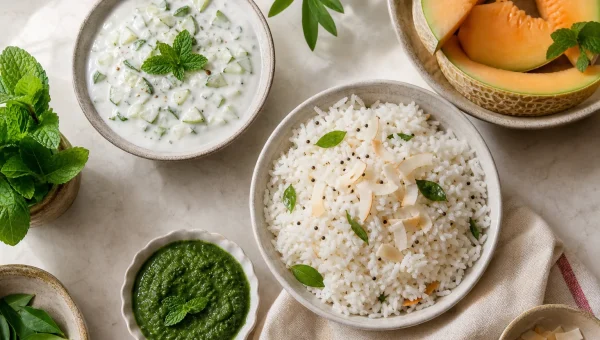
Manda is the strained liquid portion of rice gruel, while Peya is a very thin rice gruel that contains some soft rice particles. Classical dietetic sources describe very thin rice preparations with a high water ratio, often around one part rice to fourteen parts water, making them light and easy to swallow. For a baby, the preparation should be plain, smooth, fresh, and free from honey, added sugar, chili, and excess salt.
Annaprashana is the traditional ceremony that marks the first meaningful offering of grain or solid food. It is best understood as a cultural and developmental milestone rather than permission to override readiness cues. A baby should be able to sit with support, hold the head steady, open the mouth for food, and swallow rather than push food out with the tongue.
Ayurvedic Baby Foods Month by Month
This month-by-month sequence keeps the Ayurvedic principle of gradual progression while respecting modern feeding safety. The exact pace should be adjusted for each baby’s readiness, growth, allergies, stool pattern, and pediatric advice.
Month 6: Introduction Phase
Begin with one to two teaspoons of smooth food once daily, then increase slowly. Good starting options include plain manda, very thin peya, mashed rice, cooked pumpkin, cooked sweet potato, cooked pear, or smooth moong dal water. Breast milk or formula remains the primary nutrition. Avoid using only rice cereal every day; rotate suitable grains and pulses as the baby tolerates them.
Month 7: Building Variety
Introduce well-cooked and mashed vegetables such as pumpkin, carrot, bottle gourd, ridge gourd, and sweet potato, along with cooked apple or pear. Yusha, a thin pulse soup, can be made from well-cooked moong dal and strained or blended until smooth. If the family uses eggs, fish, meat, or yogurt, these should be introduced only in age-appropriate textures and with pediatric guidance, especially when there is allergy risk.
Month 8: Thicker Textures
Move gradually from thin purees to thicker mashed foods as chewing and swallowing improve. Soft khichdi made with rice and split moong dal can become a base meal, cooked with extra water until very soft and mashed thoroughly. By this age, many infants can begin soft finger foods that dissolve or mash easily, but hard, round, sticky, or raw pieces remain unsafe.
Months 9 to 12: Expanding Complexity
Offer soft family foods adapted for the baby: mashed khichdi, soft dal, cooked vegetables, ripe soft fruits, thick porridges, and small pieces of very soft foods. Introduce variety across food groups, including iron- and zinc-rich foods such as lentils, beans, fortified infant cereals, eggs, fish, or meats according to the family’s diet and the baby’s tolerance. Cow’s milk should not be used as the main drink before twelve months, although small amounts of unsweetened yogurt or cheese may be used earlier if tolerated.
Key Ayurvedic Herbs and Spices for Infant Food
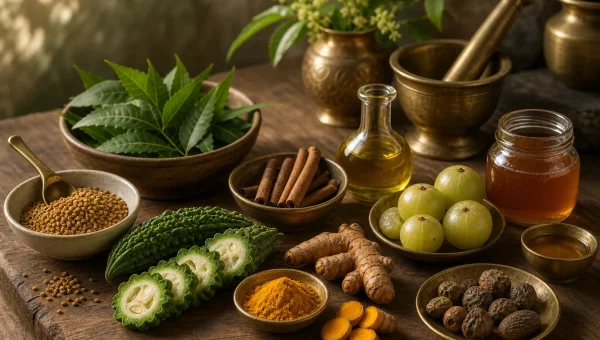
Infant food should be much milder than adult Ayurvedic food. The safest approach is to first establish tolerance to plain foods, then add tiny culinary amounts of gentle spices only when appropriate. Jeeraka (cumin) and Dhanyaka (coriander) may be used in very small amounts in cooked food after the baby has tolerated the base food. Haridra (turmeric) and Shunthi (dry ginger) are classical Ayurvedic herbs, but for infants they should not be used as therapeutic powders without qualified guidance.
Amalaki (amla) and other herbal powders should not be treated as routine infant supplements. Their sourness, potency, product quality, and dose require professional judgment. For most babies, age-appropriate fruits, vegetables, pulses, grains, breast milk or formula, and medically recommended supplements are a safer foundation than adding herbal powders to daily meals.
Dosage and Quantity Guidelines
Quantity should follow the baby, not the parent’s anxiety. Start with small tastes and increase gradually while watching hunger and fullness cues. A baby turning away, closing the mouth, leaning back, crying, gagging repeatedly, vomiting, developing rash, or having persistent stool changes needs a pause and appropriate medical advice.
- Around 6 months: Begin with small amounts such as one to two teaspoons once daily, then gradually increase as the baby accepts food.
- 6 to 8 months: Offer complementary foods two to three times daily while continuing breast milk or formula.
- 9 to 11 months: Offer complementary foods three to four times daily, with texture gradually becoming thicker and more varied.
- 12 months and beyond: Most children can eat modified family foods, with attention to nutrient density, choking safety, and continued breastfeeding if desired.
Ghee may be used sparingly in foods for babies who tolerate dairy, beginning with a few drops or a very small amount mixed into warm food. It should not displace breast milk, formula, pulses, vegetables, fruits, or iron-rich foods. Avoid ghee if dairy allergy is suspected, and discuss persistent eczema, vomiting, blood in stool, or poor growth with a pediatrician.
Foods to Avoid in the First Year
Do not give honey before twelve months because of infant botulism risk. Avoid cow’s milk as the main drink before twelve months. Avoid added sugars, salty packaged foods, caffeinated drinks, unpasteurized dairy or juices, and fruit juice before twelve months. Keep foods soft, mashed, and developmentally appropriate.
Also avoid choking hazards such as whole grapes, whole berries, hard raw carrot or apple pieces, whole nuts, seeds, popcorn, chunks of nut butter, hot dogs, hard candies, large cheese chunks, and tough pieces of meat. Ayurveda’s caution against raw, cold, heavy, stale, or overly spicy foods fits well with these safety principles for infants.
The Role of Mother’s Diet in Breastfed Infants
Ayurveda gives great importance to the breastfeeding mother’s diet and recovery. A warm, freshly cooked, nourishing diet with adequate fluids, grains, pulses, vegetables, healthy fats, and rest supports maternal strength and steady feeding routines. Shatavari is traditionally used as a galactagogue, but lactation herbs should be used only after evaluating latch, feeding frequency, maternal health, infant weight gain, and medication safety with a qualified clinician or lactation professional.
Actionable Tip: For a gentle Ayurvedic first food, rinse one tablespoon of white rice, cook it with about fourteen parts water until very soft, and strain for manda or mash thinly for peya. Serve it fresh, plain, warm, and smooth. Offer one or two small spoonfuls while the baby sits supported, then watch the baby’s interest, swallow, stool, skin, and comfort before increasing the amount.
Nothing in this article diagnoses, treats, prevents, or cures a medical condition. Consult a qualified healthcare provider and, where relevant, a qualified Ayurvedic practitioner before using herbs, supplements, medicated foods, or therapeutic protocols for infants, breastfeeding mothers, premature babies, babies with allergies, or babies with growth or developmental concerns.
References
- World Health Organization
- World Health Organization
- CDC
- Dietaryguidelines (dietaryguidelines.gov)
- NCBI
- CDC
- CDC
- Rajournals (rajournals.in)
- Archive (archive.org)
- Ijam (ijam.co.in)
- Researchgate (researchgate.net)
- Wjpr (wjpr.s3.ap-south-1.amazonaws.com)
- Ritucharya: Answer to the lifestyle disorders (2011), PubMed Central
- Medcraveonline (medcraveonline.com)
- A review on role of prakriti in aging (2011), PubMed Central
- Frontiersin (frontiersin.org)
- Ayurvedic Pharmacopoeia of India
- NCBI
My mother did exactly what yours describes with my daughter. She arrived with a spice kit within a week of the baby coming home. The moong dal water progression to rice gruel to soft vegetables is identical to what she prescribed without any books. That knowledge comes from somewhere very old.
How long before seeing results with this protocol? My practitioner said 4 weeks but I’m seeing other timelines mentioned online.
The Kapha-type baby born in monsoon season detail is specific in a way that shows actual clinical thinking rather than generic advice. My daughter was also a Kapha type born in July and the lighter, easier-to-digest first foods approach worked better than what the feeding books suggest.
can this be followed for formula-fed babies or only breastfed Found this through a search.
is ghee safe for babies with possible lactose issues? my son is sensitive to dairy curious to hear others’ experiences
This makes sense for Baby Food. The safety notes could be expanded a little.
The pediatrician being ‘not surprised’ because he had read the infant massage and diet research is the kind of integration that should be more common. Practitioners who can engage with both traditions without dismissing either are rare and valuable.
Some of the recommendations like introducing Triphala at 8 months are not aligned with standard pediatric guidance. Herbal preparations for infants should require pediatric consultation. curious to hear others’ experiences
What age is appropriate to start determining constitution in an infant? My son is four months old and I can already see some dominant tendencies but I’m not sure if constitution is assessable this early or whether these patterns are too variable at this stage.
Three years of trying to get my digestion right and finally something that addressed the root. The kapha protocol described here is essentially what turned things around for me.
Honey is mentioned in some preparations and must be strictly avoided under 12 months due to botulism risk. This needs a prominent warning, not just a footnote. curious to hear others’ experiences
can this be followed for formula-fed babies or only breastfed Anyone else tried this?
The table showing first foods by dosha and season really helps visualize what to try for a monsoon-born Kapha baby.
The seasonal calibration of first foods is the part that makes this different from standard Ayurvedic baby food guides. A summer baby and a winter baby of the same constitution should eat differently in their first foods. That kind of specificity is actually useful.
The Ashwagandha milk preparation for babies over 12 months for sleep support is something I use for my 14-month-old. Sleep improved within 2 weeks. Has anything changed since? curious to hear others’ experiences
This makes sense for Baby Food. Good starting point for a cautious reader.
The ‘she thrived’ outcome report is important but also anecdotal. What would be more useful is knowing what specific indicators the Ayurvedic nutritionist used to confirm the baby was thriving constitutionally versus just meeting standard weight gain markers.
I wonder if the thin moong dal water mentioned for Kapha infants would be easy to prepare at home without special equipment.
My mother did something very similar with my kids. The one thing I always wondered about was how she adjusted the first foods based on the season rather than just age. My son was born in late November and she refused to introduce certain foods until spring, saying his digestive fire needed time to establish first. I thought she was being overly cautious. Reading this, it sounds like there was actual reasoning behind that.
It seems the Peya recipe with ghee aligns well with modern advice on introducing single-ingredient foods gradually.
The Ashwagandha milk preparation for babies over 12 months for sleep support is something I use for my 14-month-old. Sleep improved within 2 weeks.
Moong dal water is actually a reasonable first food from a micronutrient standpoint. It provides some iron and zinc in a digestible form. The issue is portion size and cooking method. Thin dal water is mostly water and carbohydrate in the first weeks, which serves the digestive adaptation purpose without necessarily meeting full nutritional needs.
when is the right age to introduce the spice preparations? article says 6 months but that seems early for some
The section on constitution-based feeding lacks acknowledgment that many children of mixed parentage present ambiguous Prakriti and the recommendations need to be more flexible.
Honey is mentioned in some preparations and must be strictly avoided under 12 months due to botulism risk. This needs a prominent warning, not just a footnote.
is ghee safe for babies with possible lactose issues? my son is sensitive to dairy
the cooling summer foods list watermelon is included but I heard too much cooling food can disrupt digestion in babies
My sister’s daughter started on diluted moong dal water and thrived, just like the article describes.
Is the Ghee introduction timing at 6 months appropriate for families with a history of dairy allergy? The article doesn’t address family allergy history.
The avoidance of nightshades and heavy legumes in the first 8 months aligns with Ayurvedic texts and also coincidentally with many introduction delay protocols now being revisited.
the timing chart is confusing. it says introduce one new ingredient per week but the seasonal menu introduces 3 new things in week 2
recommended this to 3 other new parents in my building. the seasonal rotation prevents food boredom and keeps digestion strong
can premature babies follow this or do u need to adjust for corrected age
honey warning needed more prominently. I know some people who gave honey to 8-month-olds thinking it was natural and safe
Good reminder on Baby Food. The timing advice is the part I would start with.
Good reminder on Baby Food. This would be easier to follow with a one-week sample plan.
The Prakriti-based food selection for infants is ambitious. Most children haven’t displayed clear constitutional signs at 6-8 months. Is there a default protocol for uncertain constitution?
Some of the recommendations like introducing Triphala at 8 months are not aligned with standard pediatric guidance. Herbal preparations for infants should require pediatric consultation.
Does the article suggest any specific signs to watch for when a baby tolerates a new food like sweet potato?
Ashtanga Hridayam references for infant feeding are genuinely classical. The Mudga (green mung) dal recommendation as first protein is backed by both Ayurveda and modern allergology.
I came for Baby Food and this answered the main question. A few more examples would still help.
Good reminder on Baby Food. Good starting point for a cautious reader.
can this be followed for formula-fed babies or only breastfed
The Prakriti-based food selection for infants is ambitious. Most children haven’t displayed clear constitutional signs at 6-8 months. Is there a default protocol for uncertain constitution? Has anything changed since?
I came for Baby Food and this answered the main question. This is the kind of detail readers can test slowly.
honey warning needed more prominently. I know some people who gave honey to 8-month-olds thinking it was natural and safe Has anything changed since?
The Ashwagandha milk preparation for babies over 12 months for sleep support is something I use for my 14-month-old. Sleep improved within 2 weeks. Has anything changed since?
I came for Baby Food and this answered the main question. The article avoids making it sound like a quick fix.
I came for Baby Food and this answered the main question. I appreciate that it does not oversell the result.
can premature babies follow this or do u need to adjust for corrected age curious to hear others’ experiences
The avoidance of nightshades and heavy legumes in the first 8 months aligns with Ayurvedic texts and also coincidentally with many introduction delay protocols now being revisited. Anyone else tried this?
Is the Ghee introduction timing at 6 months appropriate for families with a history of dairy allergy? The article doesn’t address family allergy history. Has anything changed since?
recommended this to 3 other new parents in my building. the seasonal rotation prevents food boredom and keeps digestion strong curious to hear others’ experiences
I came for Baby Food and this answered the main question. Good starting point for a cautious reader.
Ashtanga Hridayam references for infant feeding are genuinely classical. The Mudga (green mung) dal recommendation as first protein is backed by both Ayurveda and modern allergology. Has anything changed since?
I found the seasonal guidance about weaker digestive fire in humid months quite convincing.
when is the right age to introduce the spice preparations? article says 6 months but that seems early for some Anyone else tried this?
The part about Baby Food feels realistic. Would be useful to see a short checklist next.
The part about Baby Food feels realistic. I would still ask a practitioner before changing medicines.
The part about Baby Food feels realistic. A few more examples would still help.
The part about Baby Food feels realistic. The practical details matter more than people think.
The part about Baby Food feels realistic. The safety notes could be expanded a little.
The part about Baby Food feels realistic. This would be easier to follow with a one-week sample plan.
The part about Baby Food feels realistic. The timing advice is the part I would start with.
The Prakriti-based food selection for infants is ambitious. Most children haven’t displayed clear constitutional signs at 6-8 months. Is there a default protocol for uncertain constitution? Curious if others had same experience.
Is the Ghee introduction timing at 6 months appropriate for families with a history of dairy allergy? The article doesn’t address family allergy history. Anyone else tried this?
The Ashwagandha milk preparation for babies over 12 months for sleep support is something I use for my 14-month-old. Sleep improved within 2 weeks. Anyone else tried this?
The part about Baby Food feels realistic. I would like to know how long to try it before judging results.
The section on constitution-based feeding lacks acknowledgment that many children of mixed parentage present ambiguous Prakriti and the recommendations need to be more flexible. Has anything changed since?
is ghee safe for babies with possible lactose issues? my son is sensitive to dairy curious to hear others’ experiences Has anything changed since?
The part about Baby Food feels realistic. Good starting point for a cautious reader.
This makes sense for Baby Food. Small daily changes are easier to follow than a perfect plan.
The three-phase framework (Ksheerapa, Ksheerannada, Annada) makes the transition from milk to solids feel less arbitrary.
when is the right age to introduce the spice preparations? article says 6 months but that seems early for some curious to hear others’ experiences
This makes sense for Baby Food. The article avoids making it sound like a quick fix.
This makes sense for Baby Food. I would still ask a practitioner before changing medicines.
recommended this to 3 other new parents in my building. the seasonal rotation prevents food boredom and keeps digestion strong Anyone else tried this?
honey warning needed more prominently. I know some people who gave honey to 8-month-olds thinking it was natural and safe Has anything changed since? Has anything changed since?
can this be followed for formula-fed babies or only breastfed Anyone else tried this? curious to hear others’ experiences
This makes sense for Baby Food. I appreciate that it does not oversell the result.
The Prakriti-based food selection for infants is ambitious. Most children haven’t displayed clear constitutional signs at 6-8 months. Is there a default protocol for uncertain constitution? Found this through a search.
This makes sense for Baby Food. The main idea is clear even if someone is new to Ayurveda.
A small pinch of turmeric in cooked khichdi could offer antimicrobial support without overwhelming a baby’s palate.
It’s interesting that Amla powder is recommended from month eight to boost vitamin C and iron absorption.
My pediatrician was curious when I mentioned trying barley gruel for a Kapha baby born in winter.
The caution against honey before twelve months matches both Ayurvedic advice and WHO recommendations.
Ashtanga Hridayam references for infant feeding are genuinely classical. The Mudga (green mung) dal recommendation as first protein is backed by both Ayurveda and modern allergology. curious to hear others’ experiences
Honey is mentioned in some preparations and must be strictly avoided under 12 months due to botulism risk. This needs a prominent warning, not just a footnote. curious to hear others’ experiences curious to hear others’ experiences
How can one assess a newborn’s prakriti reliably using observable traits like feeding patterns and skin tone?
This makes sense for Baby Food. The examples make the advice less abstract.
I would like more detail on Baby Food. The practical details matter more than people think.
I would like more detail on Baby Food. A few more examples would still help.
The suggestion to use coriander seeds to reduce Pitta-related irritability seems practical for fussy infants.
I appreciate the month-by-month breakdown that shows quantities increasing from teaspoons to half a cup.
Avoiding raw vegetables and cold dairy in the first year makes sense given the emphasis on warm, easily digestible meals.
I would like more detail on Baby Food. Small daily changes are easier to follow than a perfect plan.
honey warning needed more prominently. I know some people who gave honey to 8-month-olds thinking it was natural and safe Anyone else tried this?
I would like more detail on Baby Food. I would still ask a practitioner before changing medicines.
Is the Ghee introduction timing at 6 months appropriate for families with a history of dairy allergy? The article doesn’t address family allergy history. curious to hear others’ experiences
I would like more detail on Baby Food. This is the kind of detail readers can test slowly.
The avoidance of nightshades and heavy legumes in the first 8 months aligns with Ayurvedic texts and also coincidentally with many introduction delay protocols now being revisited. Has anything changed since?
Some of the recommendations like introducing Triphala at 8 months are not aligned with standard pediatric guidance. Herbal preparations for infants should require pediatric consultation. Anyone else tried this?
the cooling summer foods list watermelon is included but I heard too much cooling food can disrupt digestion in babies curious to hear others’ experiences
I would like more detail on Baby Food. This would be easier to follow with a one-week sample plan.
I would like more detail on Baby Food. The safety notes could be expanded a little.
the timing chart is confusing. it says introduce one new ingredient per week but the seasonal menu introduces 3 new things in week 2 curious to hear others’ experiences
I would like more detail on Baby Food. The examples make the advice less abstract.
honey warning needed more prominently. I know some people who gave honey to 8-month-olds thinking it was natural and safe Has anything changed since? Anyone else tried this?
is ghee safe for babies with possible lactose issues? my son is sensitive to dairy Anyone else tried this?
I would like more detail on Baby Food. Good starting point for a cautious reader.
Useful post on Baby Food. The practical details matter more than people think.
can premature babies follow this or do u need to adjust for corrected age Has anything changed since?
The Prakriti-based food selection for infants is ambitious. Most children haven’t displayed clear constitutional signs at 6-8 months. Is there a default protocol for uncertain constitution? Anyone else tried this?
Useful post on Baby Food. I would still ask a practitioner before changing medicines.
the cooling summer foods list watermelon is included but I heard too much cooling food can disrupt digestion in babies Has anything changed since?
can this be followed for formula-fed babies or only breastfed Anyone else tried this? Has anything changed since?
Honey is mentioned in some preparations and must be strictly avoided under 12 months due to botulism risk. This needs a prominent warning, not just a footnote. curious to hear others’ experiences curious to hear others’ experiences curious to hear others’ experiences
Is the Ghee introduction timing at 6 months appropriate for families with a history of dairy allergy? The article doesn’t address family allergy history. Has anything changed since? Anyone else tried this?
Useful post on Baby Food. This would be easier to follow with a one-week sample plan.
recommended this to 3 other new parents in my building. the seasonal rotation prevents food boredom and keeps digestion strong Anyone else tried this? Anyone else tried this?
Useful post on Baby Food. The examples make the advice less abstract.
Useful post on Baby Food. This feels more usable than a long list of herbs.
The section on constitution-based feeding lacks acknowledgment that many children of mixed parentage present ambiguous Prakriti and the recommendations need to be more flexible. Anyone else tried this?
when is the right age to introduce the spice preparations? article says 6 months but that seems early for some Has anything changed since?
Ashtanga Hridayam references for infant feeding are genuinely classical. The Mudga (green mung) dal recommendation as first protein is backed by both Ayurveda and modern allergology. Anyone else tried this?
the timing chart is confusing. it says introduce one new ingredient per week but the seasonal menu introduces 3 new things in week 2 Anyone else tried this?