
After completing a 200-kilometer sportive in October, I could barely walk down stairs for four days. My knees were irritated, my sit bones were raw, and the fatigue felt systemic rather than local. I was already training for the next event. A friend who practiced Ayurveda gave me a recovery routine he used with long-distance cyclists: warm oil care for the knees, careful skin protection around the saddle area, restorative herbs, and a simple shift toward warm, digestible post-ride food. Three weeks later, I was training again, and by the following spring, the chronic knee discomfort I had accepted as a fixed feature of cycling over 100 kilometers was greatly reduced. The routine was not magic; it was consistent tissue nourishment and recovery discipline at a level my previous approach had missed.
Cycling creates a distinctive set of stresses: repetitive quadriceps and gluteal loading, long periods of hip and knee flexion, saddle pressure and friction, wind exposure, sweat loss, and sustained aerobic demand. Ayurveda approaches this pattern through vata management, tissue nourishment, digestive steadiness, and carefully selected rasayana and joint-supporting herbs.
Understanding the Cycling Body Through Ayurveda
Long rides strongly resemble a vata-aggravating activity in Ayurvedic terms. Repetition, wind, cold, irregular eating, dehydration, and prolonged effort can leave the body dry, tense, depleted, and irregular. Cyclists who train frequently without enough warmth, oil, nourishment, and rest may notice joint cracking, stiffness, dry skin, variable digestion, disturbed sleep, and heightened irritability after heavy training blocks.
The Ayurvedic answer is not to stop cycling. It is to build a recovery routine around the ride: warm food instead of cold depletion, oil-based body care instead of dry stretching alone, steady hydration, appropriate carbohydrate intake during long efforts, and herbs chosen according to constitution, digestion, training load, and medical history.
Knee Protection: The Primary Concern
Cyclist’s knee is not one single diagnosis. It may include patellofemoral pain, iliotibial band irritation, tendon overload, or discomfort related to bike fit, cadence, training volume, strength imbalance, or recovery errors. In Ayurveda, painful, dry, cracking, or stiff joints are commonly viewed through a vata lens, especially when symptoms worsen after long, repetitive effort or cold exposure.
Knee care for cyclists should combine both frameworks. Bike fit, progressive training load, quadriceps and hip strength, and professional assessment matter. Ayurvedic support adds warmth, oil, rest, and herbs that traditionally support bala, rasayana, and vata-kapha balance in the joints.
External Protocol: Janu Basti-Inspired Knee Care
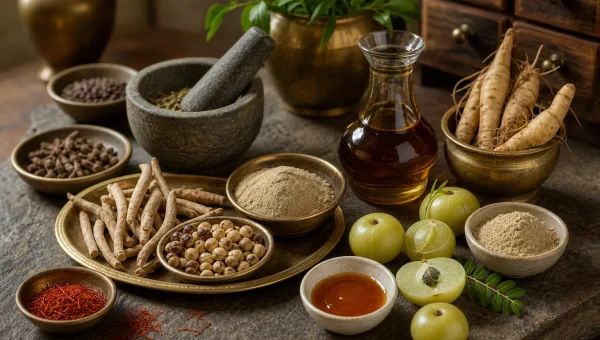
Janu Basti is a practitioner-led Ayurvedic procedure in which warm medicated oil is retained over the knee region for a set period. At home, cyclists can use a simpler and safer version: warm sesame oil or Mahanarayana taila indirectly by placing the bottle in hot water, test the temperature on the wrist, apply around the knee, and cover with a warm cotton cloth for 15 to 25 minutes after a long ride. Massage gently around the patella and along the quadriceps, but avoid aggressive pressure on painful or swollen tissue.
Mahanarayana taila is a traditional medicated oil used in vata-type stiffness and musculoskeletal discomfort. For a home routine, it should be used only on intact skin and avoided during acute injury with marked swelling, heat, redness, suspected infection, or unexplained severe pain. If the knee locks, gives way, swells repeatedly, or hurts during normal walking, a sports-medicine evaluation is necessary.
Saddle Soreness: The Unspoken Cycling Problem
Saddle soreness arises mainly from pressure, friction, moisture, heat, and repeated microtrauma to the skin and soft tissues. A good saddle, clean cycling shorts, correct bike fit, gradual mileage progression, and prompt hygiene after rides are the foundation. Ayurvedic skin care can support this foundation by protecting intact skin from dryness and friction.
- Pre-ride balm: For rides longer than 60 minutes, a small amount of ghee or coconut oil can be blended with fine Yashtimadhu powder and applied thinly to areas prone to chafing. This should be used only on intact skin and stopped if it causes irritation. It is not a treatment for open sores, boils, fungal rash, or infected follicles.
- Post-ride wash: After removing cycling shorts promptly, rinse the area with warm water and dry thoroughly. A mild Triphala wash may be used externally on intact skin by steeping Triphala powder in hot water, cooling it until warm, and straining it well before use. Do not apply herbal powders or oils to broken, bleeding, oozing, or infected skin.
Key Herbs for Cyclists
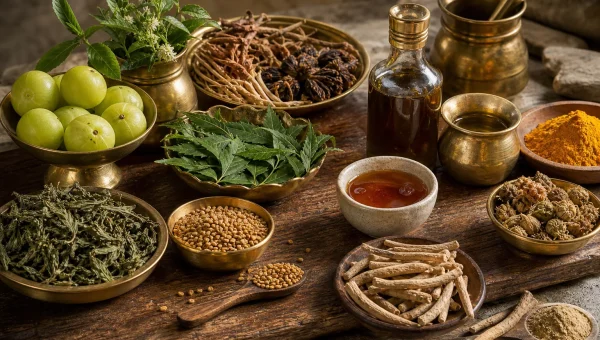
Herbs should be selected according to constitution, digestion, training load, sleep, medications, and medical history. The following table gives a practical cyclist-oriented view while keeping the herbs within their traditional Ayurvedic identity.
| Herb | Latin / Common Name | Cycling Application | Typical Adult Use to Discuss with a Practitioner | Timing |
|---|---|---|---|---|
| Ashwagandha (Aśvagandhā) | Withania somnifera | Rasayana, strength, recovery, endurance support, vata-kapha balance | 3–6 g root powder in classical use, or a standardized extract as advised | With a meal, often after training or in the evening |
| Shilajit (Śilājatu) | Purified mineral-organic exudate | Fatigue resistance, training recovery, connective-tissue support | 250–500 mg purified, tested product daily | Morning with warm water or with breakfast |
| Haridra | Curcuma longa | Post-ride soreness support, kapha-pitta balance, joint comfort | 1–3 g powder in classical use, or a curcumin product as advised | With food containing some fat |
| Shallaki / Kunduru | Boswellia serrata | Knee comfort, vata-kapha joint support, stiffness support | 1–3 g resin in classical use, or a standardized extract as advised | With meals |
| Amalaki / Dhatri | Emblica officinalis / Phyllanthus emblica | Rasayana, antioxidant nourishment, pitta balance, tissue recovery | 3–6 g dried fruit powder in classical use | Morning or after training with food if digestion is sensitive |
Shilajit for Endurance and Altitude Load
Shilajit should be treated as a purified rasayana supplement, not as a race-day stimulant. Its most practical place for cyclists is during sustained training blocks, heavy climbing phases, or recovery periods when fatigue accumulates. Modern analyses describe shilajit as containing fulvic acids, dibenzo-alpha-pyrones, and minerals, but product quality varies widely.
For cyclists, a conservative approach is 250 to 500 mg daily of purified, third-party-tested shilajit, taken in the morning. Raw, unpurified, or untested shilajit should be avoided because mineral pitch products can be contaminated with heavy metals. Anyone with kidney disease, gout, iron overload, liver disease, pregnancy, or regular medication use should consult a qualified clinician before using it.
Ashwagandha for Endurance and Recovery
Ashwagandha is classically described as rasayana, balya, and vajikarana, making it relevant to cyclists who feel depleted after repeated long rides. In practical use, it is better viewed as a recovery and resilience herb rather than an acute stimulant. It pairs best with adequate sleep, sufficient calories, progressive training, and warm post-ride nutrition.
A common cyclist routine is to take Ashwagandha with the post-ride meal or in the evening, especially when training stress affects sleep or next-day energy. It is not appropriate for everyone. People with thyroid disease, autoimmune conditions, liver disease, pregnancy, upcoming surgery, or medication use should seek medical advice before taking it.
Nutrition Protocol for Long Rides
Ayurveda emphasizes bala, agni, and ojas in recovery planning. For cyclists, this translates into steady fueling, digestible meals, adequate fluids, minerals, and warm nourishment after exertion. Long rides should not be treated as a test of willpower against hunger; under-fueling increases depletion and can worsen vata-type symptoms.
Pre-Ride: 60 to 90 Minutes Before
The pre-ride meal should be warm, familiar, and easy to digest. Good options include rice with ghee and dal, soft oats with milk, a small khichari portion, or another cooked carbohydrate meal that the rider already tolerates well.
- Avoid very heavy, greasy, raw, or unfamiliar foods before hard rides.
- Avoid very cold smoothies or iced drinks if they disturb digestion.
- Use water with electrolytes for longer rides; a simple option is water with a small pinch of rock salt and lemon, adjusted for sweat rate and climate.
During Rides Longer Than 90 Minutes
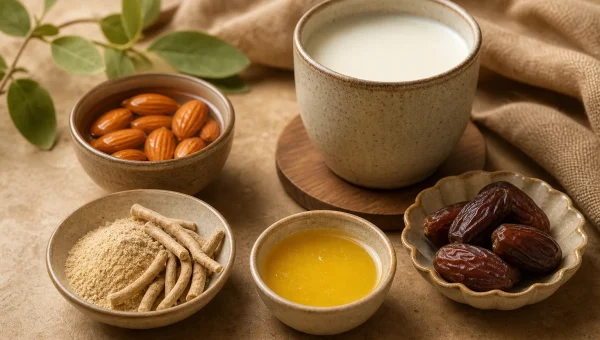
For long endurance rides, most cyclists need regular carbohydrate intake rather than plain water alone. Dates, raisins, bananas, rice cakes, or other tolerated carbohydrate sources can be used. Ayurveda classifies dates, or Kharjura, as sweet, strengthening, nourishing, and vata-pacifying, which makes them a suitable traditional food for long rides when digestion tolerates them.
- Aim for a steady carbohydrate supply across the ride rather than one large intake after fatigue begins.
- Use dates in portions that match digestion and training intensity; many riders tolerate small amounts every 30 to 45 minutes.
- Add sodium through electrolyte water, salted lime water, or a suitable sports electrolyte when sweating heavily.
- Prefer room-temperature or mildly cool fluids if very cold drinks upset digestion.
Post-Ride Recovery Protocol
Post-ride care should begin as soon as practical after the ride. The goal is to calm vata, restore fluid and minerals, provide carbohydrate and protein, and reduce the dryness and stiffness that accumulate after long repetitive effort.
- Immediate recovery: Take a warm meal or drink containing carbohydrate and protein. Options include rice and dal with ghee, warm milk with a suitable recovery meal, or a tolerated plant-based alternative. If using honey, add it only when the drink is lukewarm rather than hot.
- Evening oil massage: Apply warm sesame oil or a suitable medicated oil to the quadriceps, hamstrings, calves, hips, and around the knees. Massage for 10 to 15 minutes, then bathe with warm water.
- Digestive reset: If travel food, late eating, or heavy training disturbs bowel regularity, Triphala may be considered under guidance. It should not be used as a substitute for adequate calories, hydration, or medical care.
Addressing High-Altitude Cycling
High-altitude cycling adds hypoxia, cold, wind, dehydration, and sleep disruption to the normal training load. Ayurveda would treat this as a high-vata, high-depletion setting: warm meals, layered clothing, oil massage, steady hydration, and adequate sleep become more important, not less.
For rides above about 2,400 to 2,500 meters, acclimatization is essential. Increase sleeping altitude gradually when possible, avoid unusually hard efforts early in the trip, limit alcohol, and descend or seek medical care if symptoms become severe. Amalaki and purified shilajit can be used as supportive rasayana measures when appropriate, but they do not replace acclimatization, descent, or medical treatment for altitude illness.
Safety and Disclaimer
The information in this post is educational and does not replace professional sports-medicine assessment, medical treatment, or individualized Ayurvedic care. Knee pain with swelling, locking, instability, night pain, fever, or inability to bear weight needs prompt clinical evaluation. Saddle sores with pus, spreading redness, fever, severe pain, or recurrent boils require medical care. Herbs and supplements can interact with medicines and may be unsuitable during pregnancy, liver disease, kidney disease, thyroid disease, autoimmune illness, surgery planning, or chronic medical conditions.
Use only reputable, tested products, especially for mineral substances such as shilajit. Consult a qualified Ayurvedic practitioner or healthcare provider before starting herbs, supplements, detoxes, or therapeutic protocols, especially if you are managing a condition or taking medication.
Actionable Tip: After your next ride longer than 60 minutes, apply warm sesame oil to both knees and the surrounding thigh muscles for 10 minutes before a warm shower. Use gentle circular strokes around the knee and longer strokes on the thigh and calf. Track next-morning stiffness, sleep, digestion, and knee comfort. This simple practice, done consistently, may teach you more about Ayurvedic recovery than adding another supplement without a routine.
References
- Aafp (aafp.org)
- Getting to the Bottom of Saddle Sores: A Scoping Review of the Definition, Prevalence, Management and Prevention of Saddle Sores in Cycling (2022), PubMed Central
- Efficacy of a Multimodal Ayurveda Regimen in the Management of Primary Knee Osteoarthritis: Protocol for an Open-Label Randomized Controlled Trial (2025), PubMed Central
- Ayurvedic Pharmacopoeia of India
- Ayurvedic Pharmacopoeia of India
- Ayurvedic Pharmacopoeia of India
- A double-blind, randomized, placebo-controlled trial on the effect of Ashwagandha (Withania somnifera dunal.) root extract in improving cardiorespiratory endurance and recovery in healthy athletic adults (2021), PubMed
- NCCIH
- NCBI
- The effects of Shilajit supplementation on fatigue-induced decreases in muscular strength and serum hydroxyproline levels (2019), PubMed
- Hazardous or Advantageous: Uncovering the Roles of Heavy Metals and Humic Substances in Shilajit (Phyto-mineral) with Emphasis on Heavy Metals Toxicity and Their Detoxification Mechanisms (2024), PubMed
- NCCIH
- FDA
- Curcumin supplementation likely attenuates delayed onset muscle soreness (DOMS) (2015), PubMed
- The effect of curcumin supplementation on recovery following exercise-induced muscle damage and delayed-onset muscle soreness: A systematic review and meta-analysis of randomized controlled trials (2021), PubMed
- Efficacy and tolerability of Boswellia serrata extract in treatment of osteoarthritis of knee–a randomized double blind placebo controlled trial (2003), PubMed
- A pilot, randomized, double-blind, placebo-controlled trial to assess the safety and efficacy of a novel Boswellia serrata extract in the management of osteoarthritis of the knee (2019), PubMed Central
- A step towards personalized sports nutrition: carbohydrate intake during exercise (2014), PubMed Central
- Carbohydrates and Endurance Exercise: A Narrative Review of a Food First Approach (2023), PubMed Central
- Mskcc (mskcc.org)
- The anti-inflammatory activity of licorice, a widely used Chinese herb (2017), PubMed Central
- Wwwnc (wwwnc.cdc.gov)
Did a 160km sportive last September and then the 200km one from the article description. The sesame oil knee massage every evening after long rides is the change that made the biggest difference in how I felt day after day of riding.
The saddle sore protocol is what I came here for. What specifically is the medicated oil and where do you get it? The commercial chamois creams are terrible.
I cycle 200km per week and the Ashwagandha and Shatavari endurance combination is something I’ve been using for a year. Recovery is noticeably better than before, particularly in back-to-back ride weeks.
The dietary adjustment you initially dismissed as too simple is the one I’m most curious about. What was it?
most ayurvedic oils stain cycling kit. not practical to apply before a ride
The warm sesame oil massage for knees each evening sounds like a simple habit that could fit into any post ride routine.
As a competitive cyclist I’m skeptical of recovery claims from non-evidence-based protocols. The sesame oil massage has biomechanical plausibility, the herbs are harder to evaluate for cycling-specific adaptation. Any controlled data?
The Vata aggravation from cycling makes complete sense. Vibration, wind exposure, prolonged compression, and repetitive motion all classic Vata triggers. I never understood why I felt so scattered after long rides until this framing.
My friend mentioned Janu Basti and I’m curious how long the oil should stay on the knee for noticeable relief.
I liked the practical side of Cyclists. I would still ask a practitioner before changing medicines.
After reading about ashwagandha’s effect on VO2max, I wonder if a six hundred milligram dose taken with food would help my endurance on long rides.
For women cyclists specifically, the saddle sore recommendations may need modification. The anatomy is different enough that a direct translation doesn’t work. Has anyone addressed this?
One practical tip from the article is to apply a licorice ghee balm before rides longer than sixty minutes to reduce saddle soreness.
I tried the triphala sitz bath after a weekend ride and noticed the skin felt less irritated the next morning.
The combination of Mahanarayan for muscle soreness and Dhanwantaram for nerve compression from bike fit issues is what my Ayurvedic physician recommended. Having the clinical reasoning behind it helps me stay consistent.
The electrolyte composition in the recommended cycling drink, specifically the sodium-potassium ratio, should be compared to established sports nutrition guidelines to assess adequacy.
For mountain cyclists dealing with altitude, combining shilajit with rhodiola seems like a logical way to support mitochondrial function.
The article’s suggestion to avoid cold smoothies before a ride made me rethink my pre ride nutrition habits.
You could warm sesame oil in a bowl of hot water, massage each knee for ten minutes, and see how morning comfort changes.
Some riders might find the dietary adjustment of eating dates every forty five minutes easier than carrying gels.
It’s interesting that the protocol focuses on tissue nourishment rather than just masking pain with topical creams.
Does the pre-ride warm up protocol differ by season? The Vata-aggravation from winter cycling seems like it would need additional preparation compared to summer.
The grounding (earthing) recommendation for parasympathetic recovery after rides is something I’ve incorporated. Bare feet on grass for 20 minutes post-ride genuinely reduces heart rate recovery time.
A question I have is whether mahanarayana taila needs to be heated exactly to forty five degrees Celsius or if a rough warm feel works.
Shilajit for altitude cycling changed my experience significantly. did a Himalayan route and the breathing and endurance at altitude was noticeably better than previous years
We should remember that any new herb regimen is best discussed with a healthcare provider, especially if taking thyroid medication.
article assumes all cyclists eat a vegetarian diet in places. non-veg cyclists might need different protein recovery guidance
is Moringa powder useful as a cycling recovery supplement or is it more of a general health thing
The emphasis on consistent practice over weeks, instead of expecting instant results, matches what many athletes experience with recovery routines.
Cycling-specific injuries like IT band syndrome, cyclist’s palsy, and patellar tendinopathy have distinct anatomical causes. The general Vata-management protocol is not specific enough for these.
which oil for knee massage before or after rides? article lists several
The Mahanarayan oil for knee joint support post-ride is exactly right. The combination of camphor and sesame as the carrier addresses both inflammation and deep tissue penetration.
The Cyclists section feels grounded enough to try carefully. This feels more usable than a long list of herbs.
the electrolyte drink with Narikela (coconut) water and rock salt replaced my commercial sports drink 3 months ago. bonking less on long rides and recovery is faster
The Cyclists section feels grounded enough to try carefully. The examples make the advice less abstract.
Triphala for digestive support during multi-day cycling events is practical. The gut motility issues on long rides are real and the regularity support helps significantly.
The muscle fatigue protocol combining Ashwagandha and Shilajit is interesting from an ATP production standpoint. The fulvic acid in Shilajit facilitating mitochondrial electron transport is mechanistically plausible.
knee pain after long rides was my biggest issue. the Mahanarayan oil massage 3x per week for 6 weeks essentially eliminated it
The post-ride Abhyanga protocol for lactic acid clearing is interesting. The research on massage for lactate metabolism is mixed but the Mahanarayan oil’s anti-inflammatory effect is separate and supported.
I was looking for a plain explanation of Cyclists. Would be useful to see a short checklist next.
I was looking for a plain explanation of Cyclists. I would still ask a practitioner before changing medicines.
can u take Ashwagandha before a race or only in training? concerned about it affecting heart rate
I was looking for a plain explanation of Cyclists. This is the kind of detail readers can test slowly.
knee pain after long rides was my biggest issue. the Mahanarayan oil massage 3x per week for 6 weeks essentially eliminated it Third time reading this.
Shilajit for altitude cycling changed my experience significantly. did a Himalayan route and the breathing and endurance at altitude was noticeably better than previous years 349
which oil for knee massage before or after rides? article lists several 966
Cycling-specific injuries like IT band syndrome, cyclist’s palsy, and patellar tendinopathy have distinct anatomical causes. The general Vata-management protocol is not specific enough for these. 345
The electrolyte composition in the recommended cycling drink, specifically the sodium-potassium ratio, should be compared to established sports nutrition guidelines to assess adequacy. 286
I was looking for a plain explanation of Cyclists. The main idea is clear even if someone is new to Ayurveda.
most ayurvedic oils stain cycling kit. not practical to apply before a ride 314
the electrolyte drink with Narikela (coconut) water and rock salt replaced my commercial sports drink 3 months ago. bonking less on long rides and recovery is faster 183
The muscle fatigue protocol combining Ashwagandha and Shilajit is interesting from an ATP production standpoint. The fulvic acid in Shilajit facilitating mitochondrial electron transport is mechanistically plausible. 111
Triphala for digestive support during multi-day cycling events is practical. The gut motility issues on long rides are real and the regularity support helps significantly. 583
can u take Ashwagandha before a race or only in training? concerned about it affecting heart rate 218