Traditional vs. Modern Probiotics: Evidence for Ayurvedic Buttermilk (Takra)
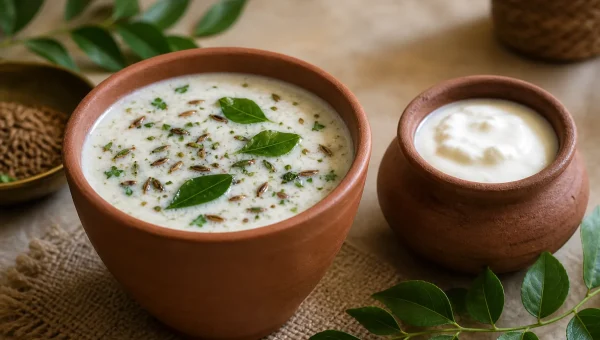
Takra, the churned-curd preparation used in Ayurveda, and a commercial probiotic supplement are not interchangeable. Takra is a perishable fermented...

March 6, 2026
PhD in Pharmacognosy with a focus on Ayurvedic botanicals. Has published peer-reviewed research on herbal medicine efficacy. Bridges traditional Ayurveda and modern biomedical research with rigorous evidence-based analysis.
Takra, the churned-curd preparation used in Ayurveda, and a commercial probiotic supplement are not interchangeable. Takra is a perishable fermented...
Antimicrobial resistance (AMR) is a major public-health threat because bacteria, fungi, viruses, and parasites can become less responsive to medicines...
Few substances in Ayurvedic medicine attract as much marketing language as Shilajit. Labels commonly call it a “mineral-rich superfood,” advertise...
Low and variable oral exposure can limit the interpretation of laboratory findings for isolated plant constituents such as curcumin, andrographolide...
Berberine and metformin are compared because both can lower glycaemic markers and influence cellular energy metabolism. Berberine is an isoquinoline...
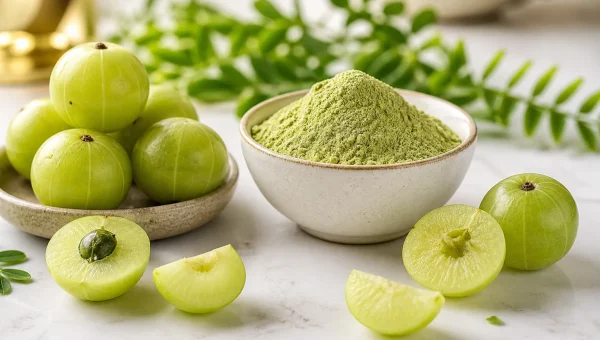
Amalaki or Amla is the fruit of Emblica officinalis Gaertn. (syn. Phyllanthus emblica L.). Describing it only as a source...
Andrographis paniculata (Burm. f.) Wall. ex Nees, commonly called Kalmegh or Kālamegha, is an Acanthaceae herb used in Ayurveda. Its...
Zinc deficiency affects an estimated 17.3% of the global population, according to a 2012 analysis published in Nutrients , yet...
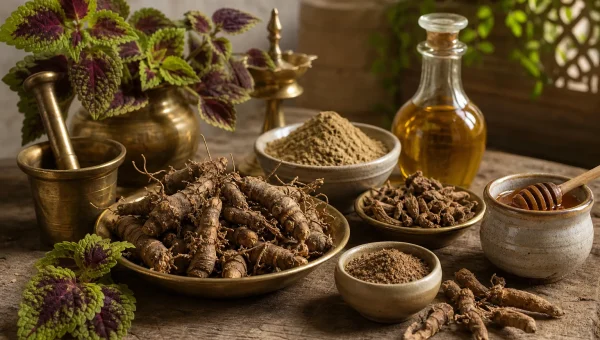
Coleus forskohlii Briq. is the name used for Gandira root in the Ayurvedic Pharmacopoeia of India (API). Current Kew taxonomy...
The word “adaptogen” belongs to twentieth-century pharmacology, not to classical Ayurvedic terminology. The European Medicines Agency traces it to the...