
I have recommended Ashwagandha to clients for years, but I had never run a disciplined, tracked protocol on myself with baseline measurements and controlled variables. So I treated it like a simple personal experiment: 60 days, one supplement change, and everything else held as constant as I could keep it. This was not a blinded clinical trial; it was a structured self-trial. Here is what happened.
The Setup
Before sharing results, the protocol matters. Without protocol details, supplement anecdotes are difficult to interpret.
The supplement: I used KSM-66 Ashwagandha, a branded, root-only Ashwagandha extract made by Ixoreal. The older note in my draft naming Natreon was corrected because Natreon is associated with Sensoril, not KSM-66. I chose a standardized branded extract so that the daily amount would remain consistent across the full 60 days.
Dosage: I took 600 mg per day, split into two doses: 300 mg with breakfast and 300 mg with dinner. I took each dose after food with whole milk and a small amount of ghee, not because I was trying to prove a superior absorption method, but because Ashwagandha is traditionally used as a nourishing Rasayana and is commonly paired with milk or other suitable anupana in Ayurvedic practice.
Training context: I trained 4 days per week on an upper/lower split. I had been lifting consistently for 9 years. My programming, sleep schedule, diet, creatine monohydrate, whey protein, and multivitamin stayed the same. The only deliberate supplement change was Ashwagandha.
Baseline measurements taken on Day 0:
- Bench press 1RM: 245 lbs
- Deadlift 1RM: 405 lbs
- Average sleep onset: 28 minutes, tracked with an Oura ring
- Resting heart rate: 62 bpm
- Perceived recovery score, daily 1-10: averaging 6.2
- Morning cortisol: 18.4 mcg/dL
- Total testosterone: 612 ng/dL
- Free testosterone: 14.8 pg/mL
Weeks 1-2: Nothing Dramatic
The first two weeks were uneventful. There was no obvious energy surge and no sudden strength spike. I felt slightly calmer in the evenings, but that could easily have been normal variation or expectation. My training numbers did not move. Sleep onset dropped by a few minutes on average, which I did not treat as meaningful at that stage.
This matched how I explain Ashwagandha to clients: it is better understood as a steady adaptogenic and Rasayana herb than as an acute stimulant. I do not expect a clean day-one effect. For a fair personal trial, I prefer a full 8-week window before judging it.
Weeks 3-4: Recovery Changes
Around day 18, the first change I noticed was recovery. My delayed onset muscle soreness after heavy lower-body sessions seemed to clear faster than usual. Previously, a heavy leg day often left me sore for 48-60 hours. During this phase, soreness often felt mostly resolved closer to 30-36 hours. My perceived recovery score moved from a 6.2 baseline average to about 7.1.
Sleep was the bigger subjective shift. Average sleep onset moved from 28 minutes to about 17 minutes. My Oura-tracked deep sleep percentage moved from 18% to 23%. Wearable sleep data is not the same as a lab sleep study, but because the device, schedule, and tracking method were consistent, I treated the direction of change as useful personal feedback.
I also noticed less reactivity to minor stressors. Traffic, annoying emails, and routine interruptions still registered, but I did not feel the same internal spike. That calmer response was the first change that felt clearly noticeable outside the gym.
Weeks 5-6: Strength Numbers Move
At the week 5 mark, my bench press working sets started feeling easier. My 5×5 at 205 lbs felt less grinding than it had in the previous block. By week 6, I hit 205 lbs for 5×6 with the same rest periods and without changing the program.
End of week 6 1RM tests:
- Bench press: 255 lbs, up 10 lbs from 245
- Deadlift: 420 lbs, up 15 lbs from 405
For a beginner, that would not be shocking. For someone with 9 years of consistent lifting, a clean 10-15 lb movement in a single block is meaningful. I do not interpret this as Ashwagandha directly forcing strength gains. My interpretation is simpler: better sleep, calmer stress response, and better perceived recovery allowed better training quality across several weeks.
Weeks 7-8: Blood Work Follow-Up
At day 60, I repeated blood work at the same lab, at the same time of day, fasted.
| Marker | Day 0 | Day 60 | Change |
|---|---|---|---|
| Morning cortisol | 18.4 mcg/dL | 14.1 mcg/dL | Down 23% |
| Total testosterone | 612 ng/dL | 668 ng/dL | Up 9% |
| Free testosterone | 14.8 pg/mL | 16.2 pg/mL | Up 9.5% |
| Resting heart rate | 62 bpm | 58 bpm | Down 6.5% |
The cortisol change was the most useful marker for me because it lined up with the subjective changes I felt: calmer evenings, better sleep onset, and better training recovery. The testosterone change was real on my lab report but modest. I would not describe Ashwagandha as a “testosterone booster” in the aggressive supplement-marketing sense. In my case, it looked more like a recovery-and-stress support herb that happened to coincide with a small hormone change.
The Ayurvedic Reading of the Experiment
In classical Ayurvedic language, Ashwagandha is used as a Balya and Rasayana herb. That framing fits this experiment better than the modern gym phrase “test booster.” Balya points toward strength and support; Rasayana points toward nourishment, resilience, and restoration. For my constitution and training context, the noticeable effects were not stimulation or aggression, but steadier recovery and resilience.
The Ayurvedic Pharmacopoeia identifies Ashwagandha as the dried mature root of Withania somnifera. Its commonly described properties include madhura rasa, guru and snigdha guna, ushna virya, and madhura vipaka. This profile helps explain why it is traditionally paired with milk or ghee in nourishing protocols and why it is usually not treated as a light, drying, quick-acting stimulant.
Additional Herbs in My Stack
For context, these were the other Ayurvedic substances I used regularly, but they were held constant during the 60 days. Because they were not new variables, I do not attribute the changes above to them.
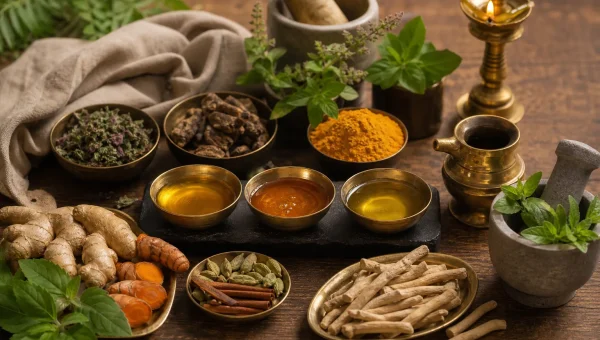
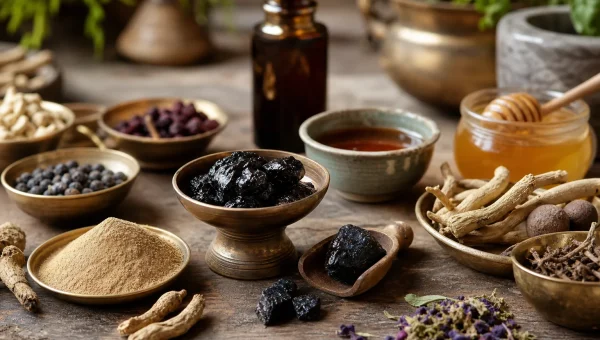
Shilajit: I used a purified Shilajit resin in the morning. Shilajit is a mineral-rich natural substance discussed in Ayurveda and is known chemically for humic substances, including fulvic acid. I kept the dose unchanged throughout the experiment.
Shatavari: I used Shatavari with dinner. Although it is often discussed in relation to female reproductive health, I did not use it as the explanation for the training changes in this experiment because it was already part of my routine.
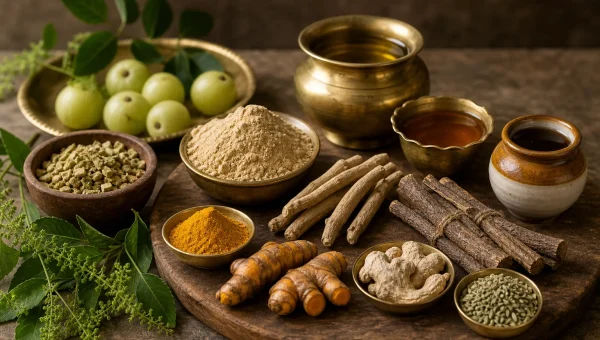
Triphala: I used Triphala before bed. In Ayurveda, Triphala is the classical three-fruit combination of Haritaki, Bibhitaki, and Amalaki, commonly used to support regular digestion. Since digestion and bowel regularity affect how I feel during training, I kept this stable rather than changing it during the trial.
Who Should Consider a Similar Trial
I would only consider this kind of 60-day Ashwagandha trial for someone who already has the basics in place. It makes the most sense when training, food, hydration, sleep timing, and recovery habits are already consistent enough that a single new variable can be evaluated honestly.
- Training has been consistent for at least 6 months
- Sleep, nutrition, and hydration are already reasonably stable
- Recovery feels poor despite sensible programming
- Stress reactivity, sleep disruption, or stalled progress is part of the pattern
- The person is willing to track for a full 8 weeks instead of judging after a few days
Who Should Avoid or Use Extra Caution
Important safety information: Ashwagandha is not appropriate for everyone. Avoid self-prescribing it if you are pregnant, breastfeeding, preparing for surgery, have a thyroid disorder, autoimmune disorder, liver disease, hormone-sensitive prostate cancer, or are taking thyroid medication, sedatives, anti-seizure medication, diabetes medication, blood pressure medication, or immunosuppressant drugs. Stop use and consult a qualified healthcare provider if you develop unusual drowsiness, stomach upset, diarrhea, vomiting, jaundice, dark urine, itching, or other concerning symptoms.
Men using testosterone replacement therapy or other hormone-related medication should speak with their physician before adding Ashwagandha. Anyone with Hashimoto’s thyroiditis, hyperthyroidism, autoimmune disease, or a history of liver issues should be especially cautious and should not treat this as a casual daily supplement.
The Honest Bottom Line
Ashwagandha did not transform my physique or turn me into a different athlete. What it did was support a measurable improvement in my recovery pattern, sleep onset, stress resilience, and training performance over 8 weeks. My tracked results were a 10 lb increase on bench press, a 15 lb increase on deadlift, a 23% lower morning cortisol value, a small testosterone increase, and a lower resting heart rate.
The most important lesson was not that Ashwagandha is magic. The lesson was that a single well-chosen herb, used consistently and tracked properly, can be evaluated much more honestly than a vague supplement routine. The cleaner the protocol, the cleaner the feedback.
For anyone trying this, keep it simple: choose a reputable standardized product or a practitioner-guided classical preparation, do not change several supplements at once, take it consistently, track sleep and training, and give it a full 60 days before judging.
Disclaimer: This article describes a personal experiment and is not medical advice. Individual results vary. Consult a qualified Ayurvedic practitioner or healthcare provider before starting Ashwagandha or any supplement, especially if you have a medical condition or take prescription medication.
Related Reading
- My Ayurvedic Sleep Stack: Jatamansi + Ashwagandha Changed My Patients' Nights
- Beyond Ashwagandha: 5 Ayurvedic Sleep Remedies for Chronic Insomnia
- Ashwagandha for Athletes: What 7 Clinical Trials Reveal About Gains
References
- NIH Office of Dietary Supplements
- Ksm66ashwagandhaa (ksm66ashwagandhaa.com)
- Nutraceuticalsworld (nutraceuticalsworld.com)
- A prospective, randomized double-blind, placebo-controlled study of safety and efficacy of a high-concentration full-spectrum extract of ashwagandha root in reducing stress and anxiety in adults (2012), PubMed Central
- Link (link.springer.com)
- Clinical evaluation of the pharmacological impact of ashwagandha root extract on sleep in healthy volunteers and insomnia patients: A double-blind, randomized, parallel-group, placebo-controlled study (2021), PubMed
- Effect of Ashwagandha (Withania somnifera) extract on sleep: A systematic review and meta-analysis (2021), PubMed Central
- Ayurvedic Pharmacopoeia of India
- CCRAS
- Eu-assets (eu-assets.contentstack.com)
- NCCIH
- Shilajit: a natural phytocomplex with potential procognitive activity (2012), PubMed Central
- Therapeutic Uses of Triphala in Ayurvedic Medicine (2017), PubMed Central
- Herbalgram (herbalgram.org)
I was doing this all wrong for months. This article corrected my approach and Im already feeling better
What’s the best time of year to start this? Does the season matter for effectiveness?
The tracked experiment format is exactly what the supplement space needs more of. Baseline measurements, controlled variables, honest reporting. The strength metrics you shared are specific enough to be meaningful rather than just ‘I felt better.’
the tips at the end are gold. love the actionable steps not just theory
I think there’s a middle ground being missed here. You don’t have to choose between Ayurveda and conventional medicine, both have value.
The part about My 60-Day Ashwagandha Experiment feels realistic. I would still ask a practitioner before changing medicines.
Thank you for this! You’ve articulated it beautifully, it’s exactly this kind of awareness that sets Ayurveda apart from a one-size-fits-all approach.
The sleep quality improvement as a vector for strength gains is the mechanism I find most plausible. Ashwagandha’s sleep-improving effect is well-established. Better sleep equals better recovery equals better gym performance. The herb may not be directly anabolic.
The section on timing is something I’ve never seen addressed elsewhere. So important.
This is constructive feedback we take seriously. We’ve added a note about consulting with your healthcare provider, especially if you’re on existing medications.
I did a 45-day self-experiment with the same KSM-66 extract at the same dose. My 1RM improvements were in the 6-8% range on the main lifts, which is close to your numbers. The recovery time between sessions was the most noticeable subjective change.
I appreciate the framing but the case study is a sample of one. The natural history of this condition means some people improve without intervention.
Did you notice any difference between taking it pre-workout versus your bedtime protocol? I’ve seen conflicting recommendations and wondered whether the timing optimization changed anything for you over the 60 days.
The anxiety component you mention baseline anxiety reduction as a secondary observation. For athletes who train with high psychological load (competitions, testing), that anxiety reduction might actually drive performance more than any direct anabolic effect.
The 23% cortisol reduction after two months lines up with what the research shows for KSM-66.
What did you do after day 60? Did you continue, cycle off, or change the dose? The results during the protocol are interesting but the real test is whether gains persist after stopping.
Did anyone else notice faster DOMS relief around week three?
Splitting the dose with milk and ghee seems like a smart way to boost absorption.
I tried a similar protocol but kept my caffeine intake unchanged and still saw better sleep scores.
The bench press jump from 245 to 255 pounds feels realistic for someone with nine years of lifting.
Tracking sleep onset with an Oura ring adds credibility to the self experiment.
It’s interesting that free testosterone rose almost as much as total testosterone.
Would the same results happen if the supplement was taken on an empty stomach?
The advice to commit to at least sixty days before judging effects matches my own experience with adaptogens.
I appreciate the clear baseline numbers; they make the outcome easier to interpret.
Using a branded extract like KSM-66 removes a lot of guesswork about potency.
The mention of Shilajit and Shatavari as constant stack items makes me curious about their individual roles.
Lower resting heart rate from 62 to 58 bpm could be helpful for endurance work as well.
I wonder if the strength gains would plateau after another six weeks without changing the routine.
The article’s caution about thyroid conditions is a good reminder to check with a doctor first.
does ashwagandha interact with protein supplements or creatine? I’m currently taking both
same here, though I found the timing made a bigger difference than the dose
at what point in the 60 days did you notice the strength improvements vs the sleep improvements first?
the 600mg KSM-66 you mention, is that one dose or split morning and evening?
can women take the same dose or should it be adjusted? the experiment seems focused on male subjects
how do you cycle it? 60 days on and how many weeks off before restarting?
sorry off-topic but has anyone here used Ayurveda for hair loss? nothing seems to work
yes that specific thing you mentioned is what made the difference for me too
sorry to go off topic but any tips for Ayurvedic approach to knee pain?
the 600mg KSM-66 u mention, is that one dose or split morning and evening? धन्यवाद
does asgwagandha interact with protein supplements or creatine? I’m currently taking both
I’ve been wondering the same thing. let me know if you find out
Need this
unrelated question but does anyone know a good vaidya in Pune?
Same here
how do u cycle it? 60 days on and how many weeks off before restarting?