
I was 34 when I got the ADHD diagnosis. By then I had already cycled through two careers, left a corporate strategy role in the middle of a successful project because I could not bring myself to finish the final report, and accumulated an impressive collection of half-finished books, courses, and business plans. A psychiatrist gave me the diagnosis and offered medication. The focus was real, but my body did not feel settled on that path. Ayurveda did not give me a second diagnosis; it gave me a functional map: steady the daily rhythm, reduce sensory overload, calm Vata, train attention through breath, nourish the body properly, and use medhya support only after the foundation was in place.
The framework that helped me most was Manovaha Srotas, the Ayurvedic way of discussing the pathways through which mind, senses, body, and behavior influence one another. Over eighteen months, I treated the problem less as a willpower defect and more as a Vata-sensitive mind-body pattern that needed rhythm, oil, breath, warm nourishment, sleep discipline, and carefully selected support.
The Ayurvedic Lens on Adult ADHD
Ayurveda does not use the modern diagnostic category of ADHD. It looks at attention through Manas, Buddhi, Indriya, Chitta, Dhi, Dhriti, Smriti, Prana Vata, and the balance of Sattva, Rajas, and Tamas. Classical discussion of Manas describes the mind as central to perception, sense coordination, restraint, thinking, and decision-making; Vata is described as the dosha that directs the mind and activates the senses. In this lens, distractibility, restlessness, inconsistent follow-through, impulsive sensory seeking, racing thoughts, and mental fatigue are approached as patterns to be steadied, not as moral failure.
Manovaha Srotas should be understood carefully. It is not presented in the same way as the thirteen major srotas listed in all classical enumerations, but Ayurvedic commentaries and clinical teaching use the concept to discuss how mental functions move through the body-mind system. When Rajas, Tamas, disturbed Vata, irregular routine, poor sleep, unresolved emotional stress, or excessive sensory input dominate, the mind becomes harder to hold steady. This Ayurvedic view does not replace psychiatric assessment; it helps organize daily care around the nervous system.
Step 1: The Dinacharya Foundation
My turning point was accepting that a scattered mind cannot be stabilized by supplements while the day itself remains scattered. Dinacharya gives Prana Vata predictable cues: waking, elimination, light, oiling, meals, work, rest, and sleep at roughly the same times. Many adults with ADHD also struggle with delayed sleep timing, so rhythm is not a cosmetic habit; it is part of the foundation.
- Wake and sleep timing: Choose one wake time and keep it within a narrow range, including weekends. Brahma Muhurta is praised in Ayurvedic daily routine, but the practical non-negotiable for adult ADHD is consistency. For many people, a dawn-oriented routine works best; for others, the first goal is simply to stop shifting wake time every few days.
- Morning light before morning noise: Get natural light soon after waking when possible, then delay phone, email, news, and social media during the first part of the morning. This creates a calmer entry into the day and reduces the sense of being pulled outward before the mind has gathered itself.
- Abhyanga: Use warm oil selected for your constitution, commonly sesame-based oil when Vata predominates, for 5-15 minutes before bathing. Focus on the scalp, ears, neck, joints, soles, and abdomen. Skip oil massage during fever, acute illness, active skin infection, or when your practitioner advises against it.
- Nasya with caution: Do not improvise strong nasya at home. If nasal oiling is appropriate for you, keep it mild and practitioner-guided, such as a small amount of suitable oil after morning hygiene. Classical Ayurveda treats the nose as an important route for care of the head region, but nasal therapies should be avoided during acute cold, sinus infection, immediately after meals, intoxication, or when contraindicated.
- Fixed meal times: Eat at predictable times, with lunch as the strongest meal and dinner early enough to protect sleep. For the first 60 days, I found it useful to stop constant grazing and give digestion a rhythm.
- Screen-free work entry: Begin the first work block before opening the most stimulating apps. Even 45-90 minutes of protected morning focus can change the tone of the entire day.
Step 2: Medhya Rasayana Support
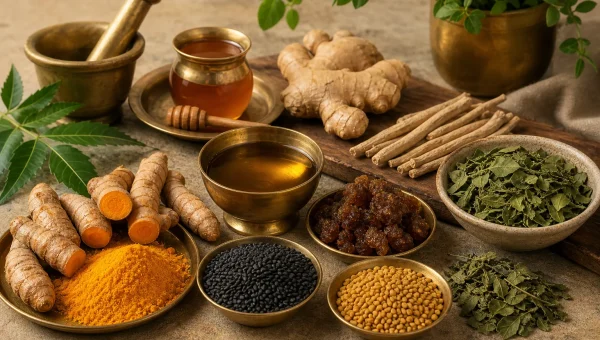
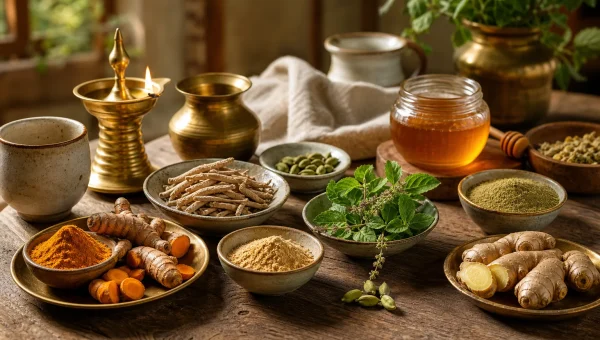
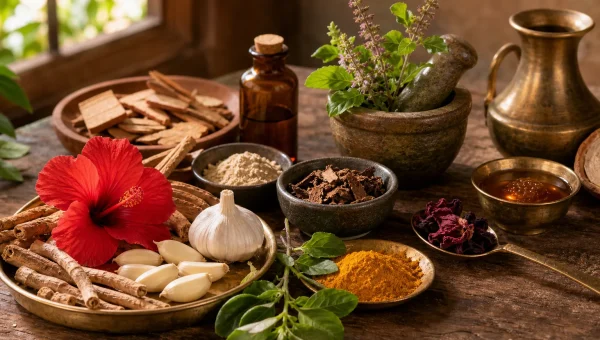
The classical medhya rasayana approach is not a stimulant stack. Charaka names Mandukaparni, Yashtimadhu, Guduchi, and Shankhapushpi as medhya rasayana preparations. The practical lesson is to select support carefully, match it to constitution and medication status, and give it enough time instead of changing products every week.
Brahmi (Bacopa monnieri) became the core morning herb in my plan. The Ayurvedic Pharmacopoeia of India identifies Brahmi as the whole plant of Bacopa monnieri and lists it as medhya, rasayana, and vatahara, with a classical powder dose of 1-3 g. In modern supplement form, Bacopa extracts are commonly used around 300-450 mg per day depending on standardization. I used it with breakfast rather than on an empty stomach because Brahmi can be difficult on digestion for some people.
Shankhapushpi became my evening medhya support. The Ayurvedic Pharmacopoeia lists Shankhapushpi as medhya and rasayana, with a powder dose range of 3-8 g, and notes that regional substitution exists with related plants used under the same name. This matters: buy from a reputable source, verify the botanical identity, and do not assume every product labeled “Shankhpushpi” is identical.
Ashwagandha is not one of Charaka’s four medhya rasayana herbs in that passage, but it can be useful when the adult ADHD picture includes stress depletion, poor sleep, body tension, and Vata exhaustion. I treated it as a support for resilience rather than as a direct attention herb. It should be avoided or used only with medical guidance during pregnancy, significant thyroid disease, liver disease, autoimmune complexity, sedative use, or complex psychiatric medication use.
Jatamansi is best reserved for practitioner-guided use, especially when night-time mental agitation and sleep disturbance are central. I no longer treat it as a casual “take nightly” supplement because quality, sustainability, sedation, and medication interactions matter. For many adults, sleep rhythm, abhyanga, evening Shankhapushpi, and breath practice are safer first steps.
Step 3: Pranayama as Nervous System Regulation
This is where I push back against the simple advice to “just meditate.” Meditation that depends entirely on sustained attention can feel impossible when sustained attention is the very faculty that is unstable. Pranayama gives the mind a physical, rhythmic, predictable structure to follow, which makes it more usable for a restless or scattered attention pattern.
- Nadi Shodhana or Anulom Vilom: Practice 8-10 minutes in the morning. Begin without breath retention. Use a comfortable equal rhythm, such as 4 counts in and 4 counts out, then gradually lengthen the exhale only if it remains easy. Stop if there is dizziness, strain, panic, or breath hunger.
- Bhramari: Practice 3-5 minutes in the late afternoon or evening. Use a gentle humming exhale, relaxed jaw, soft throat, and no force. I use it as a transition practice when the mind feels noisy but the day is not yet over.
Step 4: Diet Modifications Specific to Vata-Type Inattention
The food goal is not to create a universal “ADHD diet.” The Ayurvedic goal is to reduce Vata aggravation, protect Agni, and make the body feel steady enough for the mind to stay with one task. For me, this meant fewer dry, cold, rushed, irregular meals and more warm, moist, predictable nourishment.
- Warm cooked meals: Favor khichdi, dal, rice, oats, soups, stews, cooked vegetables, and other simple meals that are warm and easy to digest.
- Enough unctuousness: Use ghee or suitable oil in modest amounts if digestion, lipid status, and your clinician allow it. Dry food patterns made my mind feel more scattered.
- Soaked nuts when tolerated: A small portion of soaked almonds can be a useful nourishing addition, but they should not be treated as medicine and should be avoided if they do not digest well.
- Regular meals before stimulants: Do not run the day on urgency, caffeine, and skipped food. When sleep is delayed or anxiety is high, a caffeine-free trial or a strict morning-only caffeine rule may be worth discussing with a clinician.
- Earlier, lighter dinner: A heavy late meal worsened my sleep and made the next morning harder. Moving dinner earlier was more powerful than adding another supplement.
Dosage Summary
The ranges below are educational adult ranges drawn from classical pharmacopoeial use, common supplement practice, or cautious clinical use. They are not a prescription. Constitution, digestion, sleep pattern, diagnosis, pregnancy status, and medication use can change what is appropriate.
| Intervention | Typical Adult Range | Timing | Practical Notes |
|---|---|---|---|
| Brahmi / Bacopa extract | 300-450 mg daily, depending on standardization | Morning with food | Give it several weeks; reduce or stop if it causes digestive discomfort or medication concerns. |
| Brahmi powder | 1-3 g daily | Morning or as prescribed | Classical powder form; use under practitioner guidance if combining with other medicines. |
| Ashwagandha extract | 300-600 mg daily | With food, often evening or divided | Use for stress-depletion patterns, not as a direct ADHD substitute. Avoid self-use in pregnancy, thyroid disease, liver disease, or complex medication use. |
| Shankhapushpi powder | 3-5 g commonly used; API lists 3-8 g | Evening | Verify botanical identity and product quality. |
| Jatamansi | Practitioner-dosed only | Bedtime if prescribed | Reserve for selected sleep and agitation patterns; avoid casual combination with sedatives or alcohol. |
| Abhyanga | 5-15 minutes | Morning before bathing | Use warm constitution-appropriate oil; skip during acute illness or contraindications. |
| Mild nasal oleation / Nasya | Only as advised | After morning hygiene | Avoid strong nasya without supervision and avoid during acute nasal or sinus illness. |
| Nadi Shodhana / Anulom Vilom | 8-10 minutes | Morning | Begin without retention; keep the breath smooth and easy. |
| Bhramari | 3-5 minutes | Late afternoon or evening | Use gentle humming; stop if it creates pressure or discomfort. |
For related reading, see Ayurvedic herbs for concentration, our deep dive on Bacopa monnieri clinical dosage, and digital detox the Ayurvedic way.
Important: This protocol complements, not replaces, conventional ADHD care. Do not stop or change stimulant, non-stimulant, antidepressant, anticonvulsant, thyroid, sedative, blood pressure, or bipolar medication without your prescriber. Consult a qualified Ayurvedic practitioner and healthcare provider before starting herbs, nasal therapies, supplements, detoxes, or therapeutic protocols, especially if pregnant, breastfeeding, trying to conceive, managing bipolar disorder or mania history, seizures, liver disease, thyroid disease, heart rhythm issues, or complex medication use.
References
- Nice (nice.org.uk)
- Mayoclinic (mayoclinic.org)
- Charaka Samhita — Katidhapurusha Sharira
- Charaka Samhita — Manovaha srotas
- Easyayurveda (easyayurveda.com)
- Easyayurveda (easyayurveda.com)
- Charaka Samhita — Matrashiteeya Adhyaya
- Easyayurveda (easyayurveda.com)
- Sleep and Circadian Rhythmicity in Adult ADHD and the Effect of Stimulants (2017), PubMed
- A systematic review of circadian function, chronotype and chronotherapy in attention deficit hyperactivity disorder (2017), PubMed
- Effects of chronotherapy on circadian rhythm and ADHD symptoms in adults with attention-deficit/hyperactivity disorder and delayed sleep phase syndrome: a randomized clinical trial (2021), PubMed
- Jaims (jaims.in)
- Ayurvedic Pharmacopoeia of India
- NCBI
- Efficacy and Safety of Ashwagandha Root Extract on Cognitive Functions in Healthy, Stressed Adults: A Randomized, Double-Blind, Placebo-Controlled Study (2021), PubMed Central
- A prospective, randomized double-blind, placebo-controlled study of safety and efficacy of a high-concentration full-spectrum extract of ashwagandha root in reducing stress and anxiety in adults (2012), PubMed Central
- NIH Office of Dietary Supplements
- An important Indian traditional drug of ayurveda jatamansi and its substitute bhootkeshi: chemical profiling and antioxidant activity (2013), PubMed Central
- Alternate-Nostril Yoga Breathing Reduced Blood Pressure While Increasing Performance in a Vigilance Test (2017), PubMed Central
- Changes in P300 following alternate nostril yoga breathing and breath awareness (2013), PubMed Central
- Effects of Bhramari Pranayama on health – A systematic review (2018), PubMed Central
Useful
Glad it’s useful — which part are you starting with? I’m trying to figure out whether to focus on the dietary changes or the Brahmi-based protocol first. Hard to know what to prioritize when everything in your life feels scattered.
My Ayurvedic doctor recommended the same thing last month. Good to find it confirmed here.
any guidance on dosage for women with ADHD? hormone cycling affects symptoms
That’s such an important question and I’m glad someone asked it. The hormonal dimension of ADHD symptoms is massively underaddressed. Do you find your concentration difficulties shift noticeably across your cycle? I’m a woman with a late ADHD diagnosis and the luteal phase is a whole different challenge — curious whether the Manovaha Srotas approach would need to be adapted for that.
the diet section is the most practical part. removing rajasic food actually made a difference for me
I take Vyvanse 40mg daily. Can these herbs be combined with stimulant medication safely?
medhya herbs didnt work for me after 4 months. Everyone responds differently.
Just found this. Really helpful for my situation.
The part about leaving projects unfinished mid-stream really hit me. I spent six months designing a home gym setup and never bought a single piece of equipment. I genuinely thought I was just lazy. Is the Brahmi + Ashwagandha combination mentioned here something you take together, or at different times of day?
I had a similar experience cycling through careers before a late ADHD diagnosis. One thing I keep wondering — does the Manovaha Srotas protocol here require a full Panchakarma cleanse first, or can someone start with the daily Medhya Rasayana herbs on their own?
35 years old, diagnosed ADHD at 32. The Manovaha Srotas framework gives a different lens than dopamine-only models.
Probably not the right thread for fatty liver questions — this post is specifically about ADHD and the Manovaha Srotas. Worth searching the site separately for that.
Same here
scattered minds cant follow 20-step protocols. the irony of a complex treatment plan for ADHD
Late to this post, found it via Google. Is this still the recommended approach in 2027?
Brahmi + Shankhapushpi stack for ADHD 3 months in, and my ability to finish tasks has genuinely improved.
नमस्ते, longtime reader first comment. This post finally convinced me to start.
धन्यवाद for explaining this so clearly
Found this helpful. The ADHD in Adults section was particularly useful for my situation.
Found this helpful. The ADHD in Adults section was particularly useful fpr my situation.
Found this helpful. The ADHD in Adults section was particularly useful for my situation. (asking as someone dealing with this since 2021)
🙌 Found this helpful. The ADHD in Adults section was particularly useful for my situation.
❤️ Found this helpful. The ADHD in Adults section was particularly useful for my situation.
🌿 Found this helpful. The ADHD in Adults section was particularly useful for my situation.
The explanation of Manovaha Srotas as the mind’s channels made the ADHD experience feel concrete rather than abstract.
Found tjis helpful. The ADHD in Adults section was particularly useful for my situation.
🙏 found this helpful. The ADHD in Adults section was particularly useful for my situation.
Found tjis helpful. The ADHD in Adults section was particularly useful for my situation. (asking as someone dealing with this since 2022)
🙏 Found this helpful. The ADHD in Adults section was particularly useful for my situation. (asking as someone dealing with this since 2023)
Reading about the Dinacharya foundation made me reconsider how fixed wake times could actually help with focus.
❤️ Found this helpful. The ADHD in Adults section was particularly useful for my situation. (asking as someone dealing with this since 2020)
Found this helpful. The ADHD in Adults section was particularly useful fpr my situation. (asking as someone dealing with this since 2022)
I wonder if the nasya practice with sesame oil would feel awkward at first but become routine after a few days.
Found this helpful. The ADHD in Adults section was particularly useful for my situation. 💯 (asking as someone dealing with this since 2022)
The idea of eliminating caffeine for thirty days seems extreme yet aligns with the Vata pacifying diet described.
A question: does the Brahmi extract dosage of 300mg daily need to be taken with food to avoid stomach upset?
✨ Found this helpful. The ADHD in Adults section was particularly useful for my situation.
It was helpful to see the stepwise protocol laid out, especially the pranayama section that offers a physical rhythm for an unfocused mind.
After trying similar herb stacks, I found that Ashwagandha helped calm my racing thoughts without making me drowsy.