
Around two to four months after giving birth, many women notice something alarming: hair begins shedding in quantities that feel incompatible with a healthy scalp. It appears in the shower, on the pillow, in brushes, and around the hairline. For a new mother already navigating sleep deprivation, feeding, physical recovery, and emotional adjustment, this can feel like one more loss on top of too many. The important point is this: postpartum shedding is usually physiologically predictable, usually temporary, and in Ayurveda it can be understood as a visible sign that the deeper tissues need rebuilding rather than harsh stimulation.
The Ayurvedic Explanation: Postpartum Hair Loss as Dhatu Depletion
In Ayurveda, hair (kesha) is traditionally linked with asthi dhatu, the tissue principle associated with bone and structural strength. Classical Ayurvedic teaching describes kesha, body hair, nails, and related structures as reflecting the condition of deeper tissue metabolism, and descriptions of asthi kshaya include weakness or falling of hair, nails, and teeth. This does not mean postpartum hair loss is a “bone disease”; it means Ayurveda reads the hair as one of the outer signs of inner nourishment.
The postpartum period is called sutika kala in Ayurveda. After childbirth, the mother’s body has undergone blood and fluid loss, physical exertion, uterine recovery, interrupted sleep, and the new metabolic demand of lactation. Ayurvedic postpartum care therefore emphasizes Vata-pacifying nourishment: warmth, oiliness, rest, digestible meals, regular elimination, and gradual strengthening. Hair recovery begins with this internal rebuilding; scalp oils and hair tonics are supportive, but they cannot replace food, rest, and restored tissue nutrition.
Contemporary dermatology describes most postpartum shedding as telogen effluvium. During pregnancy, hormonal changes keep a larger proportion of hairs in the growth phase. After delivery, hormonal levels shift, and many follicles move together into the resting and shedding phase. This commonly begins around two to four months after delivery, often peaks around four months, and for most women improves over the following months, with normal fullness commonly returning by the baby’s first birthday. If shedding continues beyond a year, becomes patchy, is associated with scalp pain or scaling, or comes with fatigue, weight change, palpitations, dizziness, or heavy bleeding, it deserves medical evaluation.
The Three-Month Recovery Framework
The Ayurvedic approach to postpartum hair recovery is best understood as a rebuilding plan, not a quick anti-hair-fall trick. The sequence is simple: first stop further depletion, then protect the scalp and hair shaft, then consolidate regrowth and check for medical factors that may delay recovery.
Month 1: Stop the Depletion
The first month of the hair recovery plan focuses on dhatu poshana, the nourishment of depleted tissues. Meals should be warm, cooked, regular, and easy to digest: rice or wheat preparations, mung dal, lentils if tolerated, ghee, milk if suitable, sesame, dates, leafy greens, nuts, seeds, and adequate protein at each meal. A breastfeeding mother should not crash diet to lose pregnancy weight; severe calorie or protein restriction can worsen diffuse shedding.
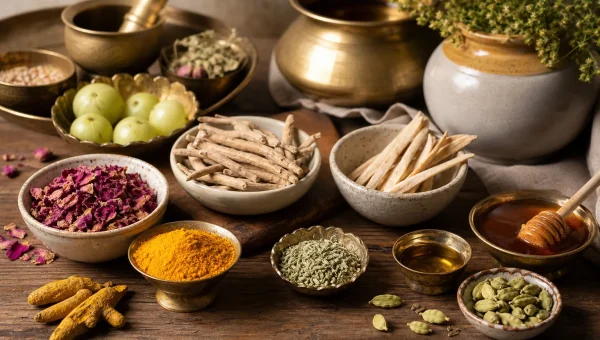
Shatavari (Asparagus racemosus): In the Ayurvedic Pharmacopoeia of India, Shatavari is described as madhura-tikta in taste, guru and snigdha in quality, cooling in potency, rasayana, strengthening, and stanyakara, meaning supportive of lactation. It is one of the most relevant classical herbs for the postpartum period when prescribed appropriately. The pharmacopoeial adult powder dose is 3–6 g, but postpartum use should be individualized by a qualified practitioner, especially while breastfeeding.
Ashwagandha (Withania somnifera): Ashwagandha is listed in the Ayurvedic Pharmacopoeia of India as rasayana, balya, and vata-kapha pacifying, with an adult powder dose of 3–6 g. It may be considered when the mother has depletion, weakness, poor sleep, or marked Vata aggravation, but it should not be self-started during breastfeeding. It is best used only when an Ayurvedic practitioner and healthcare provider have considered the mother’s constitution, medicines, thyroid status, liver health, and infant safety.
Black sesame seeds (tila): Sesame is a traditional strengthening food and a practical postpartum addition when digestion allows. It supplies plant protein, fats, calcium, iron, zinc, magnesium, and lignans. A small daily serving can be taken as roasted sesame, sesame-jaggery laddoo, sesame chutney, or sesame stirred into porridge. Soaking, roasting, or grinding improves usability and reduces the burden on digestion.
Protein at each meal
Ghee or suitable fats
Black sesame if tolerated
Shatavari only with guidance
No crash dieting
Bhringraj oil if suitable
Mild cleanser only
Avoid tight hairstyles
Avoid harsh brushing
Continue internal nourishment
Assess new baby hairs
Check ferritin if shedding persists
Check thyroid if symptomatic
Nasya only if prescribed
Seek care for patchy loss
Month 2: Topical Scalp Therapies
Once food, rest, and lactation support are in place, topical scalp care becomes useful. In Ayurveda, oiling the head is part of murdhni taila, and shiro abhyanga means massage of the head with oil. For postpartum hair shedding, the aim is not to “force growth” but to reduce dryness, calm Vata, protect the hair shaft, and support a healthy scalp environment.
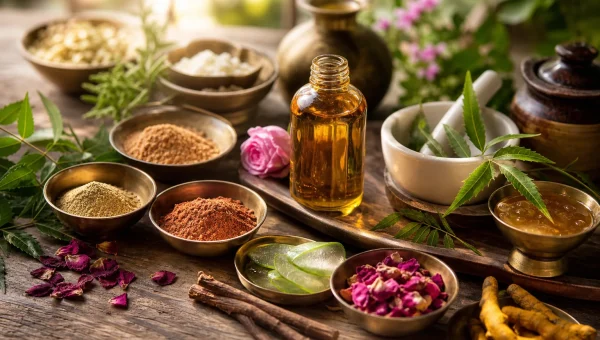
Bhringraj (Eclipta alba) is one of Ayurveda’s best-known hair-supporting herbs and is widely used in medicated hair oils. A simple routine is to warm a small amount of suitable oil, apply it to the scalp with the fingertips, massage gently for five to ten minutes, leave it for 30–60 minutes, and wash with a mild cleanser. Avoid vigorous rubbing, tight buns, very hot water, frequent heat styling, chemical treatments, and aggressive detangling, because postpartum hair shafts may already be fragile.
Sesame oil is traditionally warming and Vata-pacifying, while coconut-based oils are cooler and may suit mothers with heat, burning, or Pitta-type scalp sensitivity. Medicated oils should be chosen according to constitution, climate, scalp condition, and tolerance. Do not apply oil over scalp infection, active dermatitis, fever, severe headache, or immediately after a heavy meal.
Month 3: Consolidation and Practitioner-Guided Therapies
The third month is for consolidation, not for adding many strong interventions. Continue nourishment, gentle oiling, adequate fluids, sleep support wherever possible, and mild hair care. Look for early regrowth: short, fine baby hairs along the hairline are often a reassuring sign that follicles are returning to the growth phase.
Nasya, the Ayurvedic administration of medicine through the nasal route, is classically used for disorders of the head and region above the clavicle. In the postpartum context, it should be considered only under professional supervision. A mother who is breastfeeding, recovering from delivery, prone to sinus problems, or taking medication should not begin medicated nasal oils on her own. When appropriate, a practitioner may choose a mild form and timing after assessing strength, digestion, season, and contraindications.
| Intervention | Type | How It Supports Recovery | When to Consider |
|---|---|---|---|
| Warm postpartum diet | Food foundation | Supports tissue rebuilding, digestion, and lactation | Week 1 onward |
| Protein at each meal | Nutrition | Supports keratin formation and recovery from depletion | Week 1 onward |
| Shatavari | Internal herb | Classical rasayana and stanyakara herb | Only with practitioner guidance |
| Ashwagandha | Internal herb | Classical rasayana and balya herb | Only if cleared during breastfeeding |
| Black sesame | Dietary support | Provides minerals, fats, and plant protein | When digestion is stable |
| Bhringraj scalp oil | Topical support | Traditional hair-supporting oil for scalp care | From Month 2 if scalp is healthy |
| Ferritin, CBC, thyroid, vitamin D review | Medical evaluation | Identifies common factors that can prolong diffuse shedding | If shedding is severe, prolonged, or symptomatic |
| Nasya | Ayurvedic procedure | Classical therapy for selected head-region disorders | Only under qualified supervision |
Nutrition: The Non-Negotiable Foundation
No herb substitutes for adequate protein, iron, zinc, vitamin D, calcium, hydration, and sleep support. Hair is built largely from keratin, a structural protein, so a depleted mother needs enough protein and total calories to support both lactation and tissue repair. Vegetarian mothers should be especially attentive to protein variety: dal, mung, chickpeas, rajma if tolerated, paneer or curd if suitable, soy foods if tolerated, nuts, seeds, milk, and balanced grains all have a role.
Iron status matters because childbirth blood loss, pregnancy demands, vegetarian diets, and heavy bleeding can reduce iron stores. Vitamin D, B12, zinc, and thyroid function can also influence diffuse shedding. Postpartum thyroiditis can occur within the first year after delivery, and hair loss may be one of its symptoms. When hair loss is unusually heavy, prolonged, or accompanied by fatigue, dizziness, low mood, palpitations, weight change, cold intolerance, or menstrual irregularity, ask a healthcare provider about appropriate testing rather than adding more hair oils or supplements.
Gentle hair care also matters. Use a mild cleanser, condition the lengths rather than the scalp if the hair is dry, detangle slowly from the ends upward, avoid tight ponytails and buns, and reduce heat styling. Cutting the hair does not stop telogen effluvium, but a shorter style can reduce tangling and make shedding feel less overwhelming while regrowth catches up.
Nothing in this article diagnoses or treats a medical condition. Use it as educational information and consult a qualified Ayurvedic practitioner, dermatologist, obstetrician, pediatrician, or healthcare provider before starting herbs, supplements, medicated oils, detoxes, nasya, or therapeutic protocols, especially while breastfeeding, recovering from birth, managing thyroid/liver/autoimmune conditions, or taking medication.
References
- Aad (aad.org)
- My (my.clevelandclinic.org)
- Investigation of exacerbating factors for postpartum hair loss: a questionnaire-based cross-sectional study (2023), PubMed Central
- NCBI
- Telogen Effluvium: A Review (2015), PubMed Central
- Wjpr (wjpr.s3.ap-south-1.amazonaws.com)
- Jaims (jaims.in)
- Internationaljournal (internationaljournal.org.in)
- Medpulse (medpulse.in)
- Miracledrinksclinic (miracledrinksclinic.com)
- NCBI
- Ayurvedic Pharmacopoeia of India
- NCBI
- Sesame (Sesamum indicum L.): A Comprehensive Review of Nutritional Value, Phytochemical Composition, Health Benefits, Development of Food, and Industrial Applications (2022), PubMed Central
- Fdc (fdc.nal.usda.gov)
- Verywellhealth (verywellhealth.com)
- My (my.clevelandclinic.org)
- The structure of people’s hair (2014), PubMed Central
- Ijdvl (ijdvl.com)
- The Diagnostic Value of Serum Ferritin for Telogen Effluvium: A Cross-Sectional Comparative Study (2021), PubMed Central
- Serum ferritin and vitamin D levels should be evaluated in patients with diffuse hair loss prior to treatment (2020), PubMed Central
- Hopkinsmedicine (hopkinsmedicine.org)
- My (my.clevelandclinic.org)
- Easyayurveda (easyayurveda.com)
- Easyayurveda (easyayurveda.com)
- Eclipta alba extract with potential for hair growth promoting activity (2009), PubMed
- Hair growth promoting activity of Eclipta alba in male albino rats (2008), PubMed
- Internationaljournal (internationaljournal.org.in)
I keep coming back to this article. There’s always something new I pick up on each read
Been waiting for someone to write about this topic properly. You delivered.
sent this to friends who are curious about ayurveda. perfect starting point
You make an excellent point about individual variation. What works beautifully for one person may need adjustment for another, that’s the beauty of personalized Ayurvedic care.
My postpartum hair loss at 3 months after delivery was alarming. Clumps on the pillow and in the shower drain. I started the Bhringraj oil and scalp massage from this protocol alongside the Shatavari supplement at 4 months and by month 7 the shedding had completely normalized. The regrowth confirmed it was the treatment and not just the natural end of the shedding phase.
My doctor isn’t familiar with Ayurveda. How do I discuss this with them without getting dismissed?
The professional background you bring to this discussion is really valuable. Thank you for reading and contributing.
Clear, evidence-based, and practical. Everything a good health article should be
The article explains telogen effluvium well in Ayurvedic terms but doesn’t address the timeline clearly enough. Postpartum hair loss typically resolves on its own around 6-12 months. How do we know whether recovery was due to the protocol or just the natural hormonal normalization that would have happened anyway?
Thank you for engaging with this so deeply! Your perspective adds so much value to the conversation here.
omg this is exactly what I needed today.. bookmarked for later
After my diagnosis last year, I turned to Ayurveda as a complement to my treatment. This article validates my choice
My experience was mixed at best. The dietary changes helped a little but the herbal recommendations did nothing noticeable
The safest part of the Postpartum Hair Loss advice is keeping it simple. The safety notes could be expanded a little.
The information is presented confidently but where are the sample sizes? A study with 20 participants doesn’t prove much
yep the combination approach is what worked for me too. good to see it validated
The advice around Postpartum Hair Loss is specific enough to be useful. I would still ask a practitioner before changing medicines.
The way you connect traditional wisdom with modern understanding is brilliant
The advice around Postpartum Hair Loss is specific enough to be useful. The article avoids making it sound like a quick fix.
Tried the morning routine version and it’s become non-negotiable in my daily schedule now.
The Postpartum Hair Loss angle is useful here. The safety notes could be expanded a little.
I am 5 months postpartum and the article helped me understand why the scalp massage with warm oil is recommended for heat application not just for the oil itself. The blood flow to dormant follicles explanation makes more sense than the versions I have heard that focus only on the herbal properties.
This is constructive feedback we take seriously. We’ve added a note about consulting with your healthcare provider, especially if you’re on existing medications.
The safest part of the Postpartum Hair Loss advice is keeping it simple. This feels more usable than a long list of herbs.
The 6-month commitment timeframe the article mentions is important to set expectations. I gave up after 3 months when I did not see results and then my hair started recovering at month 5 naturally. Looking back I wish I had continued the protocol instead of stopping because the new growth I have now might have been stronger.
The diet recommendations specifically the avoidance of raw salads and cold foods in the postpartum period are consistent with traditional practices across many cultures, not just Ayurveda. My Chinese MIL and my Indian mother said exactly the same things about warm, cooked foods after delivery.
I have heard mixed things about Brahmi for postpartum hair loss. This article doesn’t mention Brahmi at all in the protocol but several other sources list it as a primary herb. Is there a reason Brahmi is not included or is it considered optional compared to Bhringraj and Shatavari?
The explanation about asthi dhatu depletion really helped me connect postpartum hair loss to bone health.
i lost so much hair after my second delivery that i could see my scalp through the parting. the Triphala and Amalaki powder protocol here combined with oiling three times a week helped more than I expected. it took 8 full months before i felt confident again about my hair but it did come back.
The Vata-imbalance framing for postpartum conditions makes intuitive sense from a physiological standpoint. The body’s drastic hormonal shift combined with sleep deprivation and physical recovery demands does create something resembling the Vata-aggravated picture. The approach of building stability through warm food, oil, and rest is sound regardless of framework.
Do the black sesame seeds need to be roasted, or can they be eaten raw for the same effect?
I tried ashwagandha milk at night and felt calmer, though hair fall continues for now.
The three month plan makes sense, but I wonder if adding a vitamin D supplement would clash with the herbs.
Shatavari sounds promising for both milk supply and hair, has anyone noticed a difference in lactation while taking it?
Massaging bhringraj oil several times a week feels tedious, yet the scalp massage itself is relaxing.
The article is good but the pitta aggravation post-delivery explanation should come with a stronger dosage caution.
The section on the timeline you gave , when to expect results was helpful. any follow-up posts planned on this?
Good reminder on Postpartum Hair Loss. This feels more usable than a long list of herbs.
interesting. did you try the pitta aggravation post-delivery explanation with or without food?
Asked my vaidya about the timeline you gave , when to expect results. he agreed but said to add triphala first.
tried the pitta aggravation post-delivery explanation for about 3 weeks now and genuinely impressed with the results.
tried the timeline you gave , when to expect results exactly as described, got no results after 6 weeks. maybe I have a different constitution.
Adding the internal shatavari protocol alongside topical to my protocol. This post made it clear why.
the pitta aggravation post-delivery explanation , the quality of supplements varies so much in India. hard to replicate results.
yes same experience with the pitta aggravation post-delivery explanation. consistency is key.
for the timeline you gave , when to expect results, is morning or evening application better?
Seems overhyped to me. the timeline you gave , when to expect results didn’t work for anyone in my family.
Reading about the pitta aggravation post-delivery explanation here for the first time. need to research more.
Question about the week 1 to week 12 protocol structure , what if someone has high pitta? same dosage?
Seems overhyped to me. your recommendation for bhringraj oil with coconut base didn’t work for anyone in my family.
Starting the pitta aggravation post-delivery explanation next week. will update if I remember to.
tried your recommendation for bhringraj oil with coconut base exactly as described, got no results after 6 weeks. maybe I have a different constitution 🌿
i had the opposite result with the timeline you gave , when to expect results. might be constitution difference.
Tried the internal shatavari protocol alongside topical for about 3 weeks now and genuinely impressed with the results.
been thinking about the pitta aggravation post-delivery explanation for a while. this post clarified some doubts.
for the pitta aggravation post-delivery explanation, my practitioner said start low and increase.
for the timeline you gave , when to expect results, my practitioner said start low and increase.
My mother tried the week 1 to week 12 protocol structure on my suggestion, she says her sleep has improved a lot.
i’d want a peer-reviewed source for the pitta aggravation post-delivery explanation before recommending to patients.
I appreciate the write-up but the pitta aggravation post-delivery explanation caused me stomach upset after 4 days ✨
Found this old post searching for the timeline. Anyone know if the protocol changed?