
There is a particular heaviness that can settle in around late February and early March in Delhi. The mornings may still ask for a jacket, while the afternoons begin to feel slow, damp, and undecided. In classical Ayurvedic timing, this is the edge between Shishira and Vasanta, a seasonal crossing where the body benefits from a gradual shift rather than a sudden cleanse. My own appetite often starts asking for lighter grains, bitter greens, radish, and warm ginger water before spring fully announces itself. Ayurveda gives a clear language for that instinct: as spring develops, Kapha needs to be kept moving so that heaviness, sluggish digestion, coating, and congestion do not dominate the season.
Why Spring Is the Time to Lighten the Diet
Ayurveda describes Vasanta ritu, the spring season, as the period when accumulated Shleshma or Kapha is stirred by increasing warmth. Charaka explains that this disturbed Kapha can weaken agni, the digestive power, and become a cause of seasonal disorders. The practical response is not starvation or a harsh modern “detox,” but a steady change in food and routine: lighter meals, less heaviness, more warmth, and foods that do not add to Kapha’s cold, dense, oily, and sweet qualities.
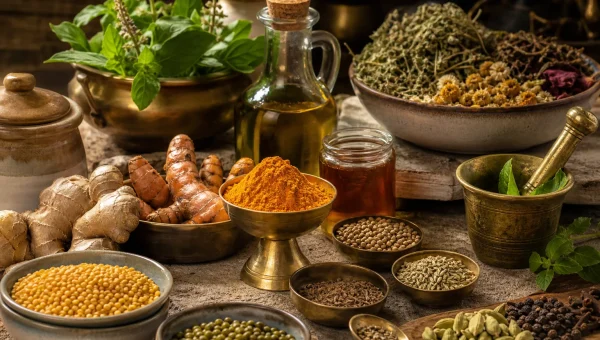
Classical spring guidance especially warns against heavy, sour, unctuous, and sweet foods, as well as daytime sleep. It encourages exercise, dry massage, warm cleansing habits, and foods that are easy to digest. Charaka lists barley and wheat among spring foods, while the Ashtanga Hridaya also emphasizes old barley, wheat, honey, light dry foods, and Kapha-reducing measures. For a vegetarian modern kitchen, this translates well into barley, millets, mung, bitter greens, radish, asparagus, ginger, black pepper, mustard seed, fenugreek, and lightly cooked legumes.
The Principles Behind Kapha-Clearing Meals
A Kapha-clearing spring meal should feel warm, light, aromatic, and satisfying without being oily or heavy. The goal is to support agni, reduce excess damp heaviness, and avoid the sleepy after-meal feeling that rich winter foods can create once the weather warms. Favor cooked food over cold refrigerated food, use spices intelligently rather than aggressively, and let lunch be the main meal when digestion is strongest. Dinner should be simple and early. Breakfast may be light, or skipped when there is no true hunger, but this should be done according to strength, constitution, work demands, and medical condition.
Old wheat in moderation
Mung dal and light legumes
Bitter greens and methi
Radish and spring onion
Ginger, pepper, mustard
Small unheated honey
Excess white rice
Curd and heavy dairy
Cold drinks
Sweet desserts
Fried foods
Excess oil and ghee
Light breakfast if hungry
Main meal at lunch
Light dinner by evening
Avoid late-night eating
Avoid daytime sleep
Shift gradually in ritusandhi
5 Kapha-Clearing Recipes for the Spring Transition
These recipes keep the original Ayurvedic logic of spring eating: warm food, lighter grains, bitter and pungent accents, moderate fat, and simple digestion. They are not therapeutic prescriptions, but seasonal meal ideas inspired by Vasanta ritucharya.
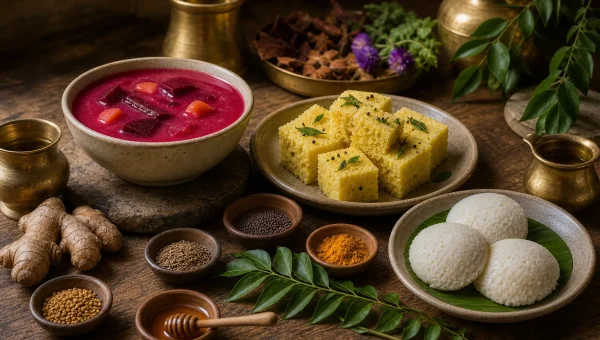
Recipe 1: Barley and Bitter Greens Khichdi
Barley, or yava, has a special place in spring regimens because it is repeatedly listed in classical seasonal guidance. Its dry, light culinary effect makes it useful when the body feels heavy after winter. Bitter greens such as methi, bathua, or tender mustard greens bring a sharp green note that suits the spring table. Barley also contains beta-glucan soluble fiber; recognized food-labeling standards allow heart-health claims for certain barley beta-glucan sources when used as part of a diet low in saturated fat and cholesterol.
Ingredients (serves 2): 1/2 cup pearled barley, soaked 4 hours; 1/4 cup yellow moong dal, soaked 1 hour; 1 cup fresh methi leaves or bathua, chopped; 1 tsp mustard seeds; 1/2 tsp dry ginger powder; 1/4 tsp turmeric; 1/4 tsp black pepper; 1 tsp sunflower oil or a small amount of ghee; 1/2 tsp rock salt; 3.5 cups water; juice of 1/2 lemon.
Method: Heat the oil or ghee in a heavy pot. Add mustard seeds and let them pop. Add ginger powder, turmeric, and black pepper, then stir briefly. Add drained barley and moong dal and stir to coat with the spices. Add water and salt. Bring to a boil, reduce the heat, cover, and cook for about 35 minutes, or until the barley is tender. Stir in the greens and cook uncovered for 5 more minutes. Finish with lemon juice and serve hot. The texture should be looser than pulao but less heavy than a rice khichdi.
Recipe 2: Radish and Spring Onion Stir-Fry with Millet
Radish is pungent, crisp, and light, which makes it a natural fit for a Kapha-season plate. It belongs to the cruciferous family and contains glucosinolate-derived compounds that give radish its characteristic sharpness. Cooking it quickly with mustard, ajwain, and spring onion keeps the meal warm and digestible while preserving the vegetable’s lively spring character. Millet or ragi roti keeps the meal lighter than a heavy wheat-based lunch.
Ingredients (serves 2): 1 cup cooked foxtail millet or 2 ragi rotis; 6 medium radishes, sliced thin; 4 spring onions with greens, chopped; 1 tsp mustard oil; 1/2 tsp black mustard seeds; 1/4 tsp ajwain; a pinch of asafoetida; 1/4 tsp turmeric; salt to taste; 1 tbsp fresh coriander.
Method: Heat mustard oil until aromatic, then reduce the heat. Add mustard seeds, ajwain, and asafoetida. When the seeds pop, add radish slices and stir-fry on medium-high heat for about 3 minutes. Add spring onions and turmeric, then cook for 2 more minutes so the vegetables stay slightly crisp. Season with salt, garnish with coriander, and serve with millet or ragi roti.
Recipe 3: Spiced Lentil and Asparagus Soup
Asparagus is not the same as the Ayurvedic herb shatavari, but as a spring vegetable it works well in a light, warm soup. It provides dietary fiber, and asparagus fructans are discussed in nutrition literature as prebiotic fibers. In Ayurvedic cooking, the important point is preparation: cook it lightly with dal and warming spices so the meal remains easy to digest rather than cold or raw.
Ingredients (serves 2): 1/2 cup toor dal or split yellow moong dal, soaked 30 minutes; 10 asparagus spears, cut into 1-inch pieces; 1 medium tomato, chopped; 1 tsp ghee; 1/2 tsp cumin seeds; 1/4 tsp fenugreek seeds; 1/4 tsp turmeric; 1/2 tsp coriander powder; 1/4 tsp dry ginger; 1/4 tsp black pepper; salt to taste; fresh lemon juice; coriander leaves; 3 cups water.
Method: Pressure cook the dal with water and turmeric until soft. In a separate pan, heat ghee and add cumin and fenugreek seeds. Add tomato, coriander powder, dry ginger, and black pepper, then cook for 3 minutes. Add asparagus and cook for 2 minutes. Combine with the cooked dal and simmer for 8 to 10 minutes. Add salt, finish with lemon and coriander, and serve warm.
Recipe 4: Warm Ginger-Turmeric Mung Sprout Salad
Sprouted mung has a bright, fresh quality, but raw sprouts are not ideal for everyone. Ayurveda generally protects digestion by using warmth, spice, and moderation, and modern food-safety guidance also favors cooking sprouts to reduce contamination risk. A brief steaming keeps this dish light while making it safer and gentler. Germination increases mung bean sprout vitamin C, phytochemical content, and antioxidant activity, so this recipe keeps the sprout idea but prepares it in a more spring-appropriate way.
Ingredients (serves 2): 1.5 cups mung sprouts; 1/4 cup grated carrot; 2 tbsp pomegranate seeds; 1 tbsp fresh coriander; 1 tsp freshly grated ginger; juice of 1 lime; 1/4 tsp black pepper; a pinch of turmeric; a pinch of rock salt; 1/2 tsp mustard oil; 1/4 tsp unheated honey, optional.
Method: Steam the mung sprouts for 3 to 5 minutes, then let them become warm rather than hot. Whisk ginger, lime juice, black pepper, turmeric, salt, mustard oil, and optional honey in a small bowl. Toss the warm sprouts with carrot, pomegranate, coriander, and dressing. Eat freshly prepared; do not serve straight from the refrigerator.
Recipe 5: Warming Methi and Quinoa Pulao
Fenugreek leaves bring the bitter taste that suits a spring Kapha meal, while mustard, cumin, ginger, and black pepper keep the dish warm. Quinoa is not a classical Ayurvedic grain, so it should not be presented as a traditional substitute for yava; it is simply a practical modern grain-like seed that cooks light and works well with methi. Fenugreek seed has clinical literature on glycemic markers, but this recipe uses methi primarily as a bitter culinary green rather than as a treatment.
Ingredients (serves 2): 1 cup quinoa, well rinsed; 1.5 cups fresh methi leaves, chopped; 1/2 cup green peas; 1 small onion, minced; 1 small garlic clove, minced, optional; 1 tsp ghee or sunflower oil; 1/2 tsp mustard seeds; 1/4 tsp cumin seeds; 1/4 tsp turmeric; 1/4 tsp black pepper; 1/4 tsp dry ginger; 1/2 tsp salt; 1.75 cups water.
Method: Heat ghee or oil and add mustard and cumin seeds. When they pop, add onion and optional garlic, cooking until soft. Add turmeric, ginger, and black pepper. Add quinoa and stir to coat. Add water, salt, peas, and methi leaves. Bring to a boil, cover, and simmer for about 15 minutes until the water is absorbed. Rest for 5 minutes, fluff with a fork, and serve warm.
Nutrition and Ayurvedic Overview
The recipes below are best understood as seasonal food patterns rather than medical interventions. They use classical spring principles: lighter grains, warm preparation, reduced heaviness, moderate fat, and bitter or pungent accents. Vata-dominant people may need more softness, oil, and cooked texture; Pitta-dominant people should use pungent spices moderately; Kapha-dominant people usually tolerate the lighter, drier spring pattern best.
| Recipe | Kapha-Clearing Logic | Best Meal Time | Dosha Notes |
|---|---|---|---|
| Barley and Bitter Greens Khichdi | Classical spring grain with bitter greens and warming spices | Lunch or early dinner | Best for Kapha; add more moisture for Vata |
| Radish and Spring Onion Stir-Fry | Pungent, warm, quick-cooked vegetable with light millet | Lunch | Good for Kapha; use less mustard and pepper for Pitta |
| Spiced Lentil and Asparagus Soup | Warm, light soup with dal, spring vegetable, and digestive spices | Lunch or dinner | Generally gentle when well cooked |
| Warm Mung Sprout Salad | Lightly steamed sprouts with ginger, lime, and black pepper | Noon meal | Avoid raw sprouts; steam well for Vata or sensitive digestion |
| Methi and Quinoa Pulao | Bitter green with warm spices and a light modern grain-like base | Lunch | Good for Kapha; reduce spices for Pitta |
Spring cleansing in Ayurveda is not punishment. It is the intelligent art of eating with the season: less heaviness, less coldness, less late-night food, and more warmth, bitterness, movement, and digestive clarity. When the weather turns from cold to damp-warm, a bowl of barley khichdi, a radish stir-fry, or a lightly spiced soup can feel more natural than another rich winter meal. That is the quiet usefulness of ritucharya: it teaches the diet to move before the body has to complain.
Nothing in this article diagnoses, treats, or cures any medical condition. Use it as educational information and consult a qualified Ayurvedic practitioner or healthcare provider before starting herbs, supplements, fasting, cleansing practices, or therapeutic protocols, especially if you are pregnant, elderly, immunocompromised, managing diabetes or another medical condition, or taking medication.
References
- Charaka Samhita — Tasyashiteeya Adhyaya
- Planetayurveda (planetayurveda.com)
- A systematic review and meta-analysis of randomized controlled trials of the effect of barley β-glucan on LDL-C, non-HDL-C and apoB for cardiovascular disease risk reduction(i-iv) (2016), PubMed
- Ecfr (ecfr.gov)
- Aqueous extract from Spanish black radish (Raphanus sativus L. Var. niger) induces detoxification enzymes in the HepG2 human hepatoma cell line (2007), PubMed
- Raphasatin is a more potent inducer of the detoxification enzymes than its degradation products (2011), PubMed
- Asparagus Fructans as Emerging Prebiotics (2022), PubMed Central
- Health Effects and Sources of Prebiotic Dietary Fiber (2018), PubMed Central
- Effect of germination on phytochemical profiles and antioxidant activity of mung bean sprouts (Vigna radiata) (2012), PubMed
- Archive (archive.cdc.gov)
- Foodsafety (foodsafety.uconn.edu)
- Effect of fenugreek (Trigonella foenum-graecum L.) intake on glycemia: a meta-analysis of clinical trials (2014), PubMed Central
- The Effect of Fenugreek in Type 2 Diabetes and Prediabetes: A Systematic Review and Meta-Analysis of Randomized Controlled Trials (2023), PubMed Central
The part about Spring Cleansing Recipes feels realistic. This feels more usable than a long list of herbs.
The part about Spring Cleansing Recipes feels realistic. The examples make the advice less abstract.
The kapha-clearing dal recipe with trikatu is something my grandmother made every February. She called it the cleaning soup. I now understand why the season required it rather than just inheriting the practice without explanation.
The dry-cooked grain over oily preparations shift for spring makes intuitive sense. You’re reducing the building Kapha quality that winter encouraged. The millet and barley emphasis over wheat and rice is the culinary expression of the seasonal shift.
How do these recipes adapt for someone who already has a mild Kapha constitution year-round? The spring cleansing is most needed for Kapha types but some of the bitter and pungent intensities might be too strong for daily use.
The radish and ginger stir-fry recipe is the simplest thing in the collection and also the one I’ve made most. Eight minutes from start to finish, genuinely kapha-reducing effect, and my gut functions differently the next morning.
The barley khichdi recipe looks like a perfect way to start lunch when the Delhi mornings still feel chilly.
The explanation of why heavy winter foods need active clearing rather than just stopping eating them is the piece I needed. Kapha doesn’t just dissipate when you stop feeding it. You need the bitter-pungent clearing to move what’s accumulated.
Is fasting appropriate alongside these recipes for the spring cleanse or does the approach here replace short fasts? My understanding was that Vasanta Ritucharya included periodic fasting but these filling meals seem to suggest otherwise.
This makes sense for Spring Cleansing Recipes. I would still ask a practitioner before changing medicines.
I’ve been craving bitter greens lately, and the methi leaves in that khichdi sound exactly right for clearing winter heaviness.
This makes sense for Spring Cleansing Recipes. This is the kind of detail readers can test slowly.
The weight gain I have every winter that refuses to move despite reasonable eating makes sense in this framework. Winter food builds Kapha by design. Spring eating actively reduces what accumulated. I’ve been treating them as the same when they’re designed to be opposite.
Do you think the radish stir-fry would work just as well with daikon instead of mooli?
I find the idea that you need to eat specific foods to seasonally reset plausible from an evolutionary standpoint but I’d want more evidence that the specific Kapha-clearing foods here do something beyond being lighter calorie meals. The cleansing narrative may be overloaded onto what is essentially a lower-calorie spring diet.
After trying the asparagus soup, I noticed my digestion felt lighter without feeling deprived.
It’s interesting how the article links Kapha qualities to the melting snow metaphor for late February.
Have you experimented with using quinoa in the methi pulao, or do you stick to barley for the diuretic effect?
Sometimes a simple ginger tea in the morning makes the transition from heavy winter foods easier to handle.
The mung sprout salad dressing with lime and black pepper seems like a bright way to enjoy raw sprouts safely.
I wonder if skipping breakfast really helps with Kapha reduction, or if it just leaves me sluggish by noon.
The emphasis on dry, light grains like millet and barley matches what I’ve read about seasonal eating elsewhere.
One thing that stands out is the advice to avoid cold drinks and sweet desserts during this Kapha season.
The Triphala in spring schedule in section 2 , is that for all three doshas or specifically for Kapha?
Reading about the Journal of Ethnopharmacology study gave me confidence that these meals aren’t just tradition but have modern backing.
For someone with Pitta imbalance, does the Kapha-clearing soup recipe need to be modified?
Picked up a bottle of the Kapha-clearing soup recipe last week but wasn’t sure about timing. Your dosage section helped.
shared this with my mom, shes been asking about bitter greens protocol for spring forever
been searching for this for weeks. the Triphala in spring explanation makes total sense now
not sure about the the Trikatu morning flush part but my practitioner said give it 6 weeks
I have a personal practice around the Kapha-clearing soup recipe that’s slightly different from what you’ve outlined here.
Have been doing seasonal detox foods list for about 3 months. Saw improvement in month 2, slight plateau now.
How long before you start seeing results with the Trikatu morning flush? My practitioner said 90 days.
The dosage table you included for the Kapha-clearing soup recipe is genuinely helpful, bookmarked. ❤️
the article is good but the the Kapha-clearing soup recipe part felt rushed. could use more depth
The chart you showed for Triphala in spring , is that based on any published clinical guidelines?
the article is good but the the Trikatu morning flush part felt rushed. could use more depth
Not dismissing the Kapha-clearing soup recipe entirely but it didn’t do much for me. My constitution might be different.
The scientific evidence behind the Kapha-clearing soup recipe seems to lag well behind the traditional claims.
Can Triphala in spring be done at home or do you need a certified practitioner?
Can the Trikatu morning flush be done at home or do you need a certified practitioner? ✨
What’s the difference between the Triphala in spring approach for acute vs chronic conditions?
Picked up a bottle of seasonal detox foods list last week but wasn’t sure about timing. Your dosage section helped.
The dosage table you included for the Trikatu morning flush is genuinely helpful, bookmarked.
Is there an age limit for the Trikatu morning flush? Asking for my 68-year-old father. 🙏
I liked the practical side of Spring Cleansing Recipes. The main idea is clear even if someone is new to Ayurveda.
Trying this next month.
OT but curious if there’s a post on Ayurvedic approaches to thyroid issues?
I have a personal practice around seasonal detox foods list that’s slightly different from what you’ve outlined here.
For someone with Pitta imbalance, does the Trikatu morning flush need to be modified?
my ayurvedic doctor told me the same thing about seasonal detox foods list last month. glad to see it here