
Lepam Therapy: The Art of Ayurvedic Herbal Paste Applications
In Ayurvedic external therapy, Lepam or Lepana refers to the application of a freshly prepared medicinal paste over the skin, face, joints, swelling, wounds, or another affected area. Its value lies in direct local contact: the paste may cool, warm, soften, absorb, soothe, cleanse, or support healing according to the herbs, liquid medium, thickness, temperature, and timing used.
This guide presents Lepam as a practical bridge between simple home care and practitioner-guided Ayurvedic treatment. It explains the classical categories of paste application, corrected formulation details, safe preparation rules, application timing, and when professional assessment is necessary.
What Is Lepam Therapy?
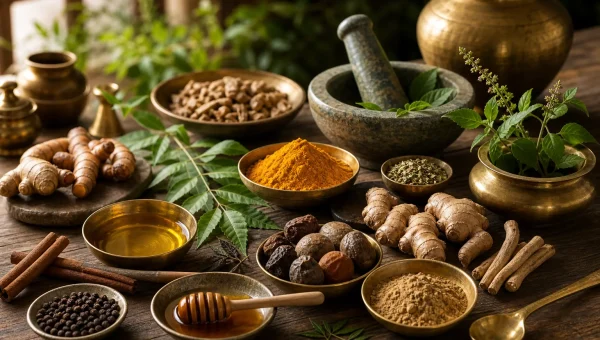
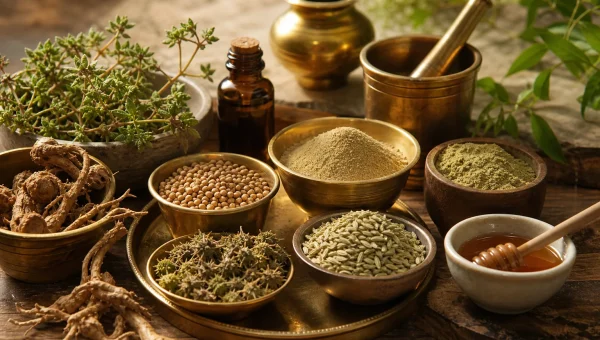
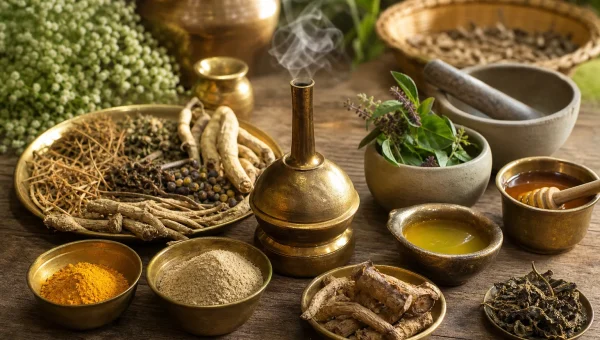
Lepam is an external Ayurvedic procedure in which herbs, minerals, grains, oils, ghee, decoctions, milk, buttermilk, fermented liquids, or other suitable media are made into a paste and applied to a specific area. The paste is not chosen randomly: Ayurveda selects ingredients according to the condition, dosha involvement, location, season, strength of the patient, and whether the treatment requires cooling, warming, cleansing, softening, absorbing, or wound-supporting action.
Classical surgical and therapeutic discussions describe external pastes as important in inflammatory swelling, wound care, facial care, pain, discoloration, and skin disorders. In modern terms, Lepam is best understood as a topical therapy: its effect depends on the contact of the formulation with the skin or wound surface, the nature of the vehicle, the condition of the skin barrier, and the time for which it is left in place.
Classical Types of Lepam: Pralepa, Pradeha, and Alepana
Classical Ayurvedic descriptions distinguish paste applications by thickness, temperature, purpose, and removal time. The most important practical distinction is that Pralepa is generally thinner and cooling, Pradeha may be thicker and is often used for Vata-Kapha type swelling or pain, and Alepana is described as an intermediate type.
Pralepa: Thin Cooling Paste
Pralepa is described as a thin paste, generally cooling in nature, and suitable for conditions dominated by Pitta, Rakta, burning, heat, discoloration, and sensitive inflammatory presentations. It may be absorbing or non-absorbing depending on the formulation and purpose.
- Consistency: Thin, smooth, and easy to spread.
- Temperature: Usually cool or room temperature, especially for Pitta-type heat and burning.
- Best suited for: Burning sensation, redness, Pitta-type skin irritation, facial care, discoloration, and acute heat-dominant inflammation.
- Removal: Removed before it becomes excessively dry, especially on the face or sensitive skin.
Pradeha: Thicker Therapeutic Paste
Pradeha is used for deeper local action in pain, swelling, stiffness, and Vata-Kapha type conditions. It may be thick or thin and may be warm or cool depending on the condition, but warm applications are commonly chosen for cold, stiff, heavy, or Kapha-Vata presentations.
- Consistency: Substantial paste layer, often thicker than Pralepa.
- Temperature: Warm for Vata-Kapha stiffness and pain; cool when the condition has heat, burning, or Pitta-Rakta involvement.
- Best suited for: Joint pain, swelling, stiffness, heaviness, localized Kapha-Vata conditions, and selected wound-supportive applications under guidance.
- Removal: Removed once it dries or as directed; dried paste should not be kept on unnecessarily.
Alepana: Intermediate Paste Application
Alepana is described as an intermediate application between thin Pralepa and thicker Pradeha. In practical use, this category helps explain moderate paste applications where neither a very thin facial-type layer nor a dense therapeutic layer is required.
- Consistency: Moderate thickness.
- Use: Selected according to the local condition, dosha pattern, and desired strength of action.
- Removal: Removed before the paste becomes irritating, excessively dry, or unsuitable for the site.
8 Useful Lepam Formulations and External Applications
The following formulations are included because they are commonly used in Ayurvedic external practice or are closely related to classical paste, powder, oil, or dressing traditions. Some are true lepas, while others are choornam, taila, or seasonal mukhalepa preparations that are applied externally in paste-like or topical form.
1. Dashanga Lepa for Swelling and Inflammatory Skin Conditions
Dashanga Lepa is a ten-ingredient external formulation used for inflammatory swelling, skin eruptions, herpes-like eruptions, insect-bite reactions, and localized inflammatory conditions. It is traditionally prepared as a powder and mixed with a suitable liquid medium at the time of use.
Composition: Commonly listed ingredients include Shirisha, Yashtimadhu, Tagara, Rakta Chandana, Ela, Jatamansi, Haridra, Daruharidra, Kushta, and Sugandha Bala.
Preparation: The powdered ingredients are mixed freshly with water, ghee, or another practitioner-selected medium to make a smooth paste. Some clinical preparations combine the powder with a small quantity of ghee for external application.
Application: Apply over the affected area as a moderate layer, extending slightly beyond the visible swelling or eruption. Remove when the paste dries or earlier if heat, irritation, or discomfort develops.
Indications: Inflammatory swelling, skin eruptions, Visarpa-type presentations, insect-bite reactions, local burning with swelling, and selected inflammatory skin disorders under supervision.
2. Eladi Choornam Lepa for Itching, Rashes, and Complexion Support
Eladi Choornam is a fragrant external powder used in Kerala Ayurvedic practice for skin health. It is commonly mixed with coconut milk, buttermilk, fermented cereal water, milk, or another suitable medium and applied to the skin.
Composition: Ingredient lists vary by lineage and manufacturer, but classical-style Eladi preparations commonly include aromatic and skin-supportive herbs such as Ela, Sthula Ela, Karpura, Kushta, Priyangu, Jatamansi, Hribera, Tagara, Devadaru, Agaru, Punnaga, Nagakesara, and related fragrant substances.
Preparation: Mix the powder with coconut milk, buttermilk, milk, rose water, or a practitioner-recommended medium to form a smooth paste.
Application: Apply as a thin Pralepa over the affected skin or face, avoiding the eyes and lips. Keep it briefly on the skin and remove before excessive drying, especially for dry or sensitive skin.
Indications: Itching, rashes, minor inflammatory skin discomfort, dull complexion, and external skin-care use. It may be used alongside broader Ayurvedic acne management when blemishes and uneven tone are both present.
3. Mukhalepa for Facial Care and Complexion
Mukhalepa means facial paste application. Classical descriptions classify it into three purposes: dosha-pacifying, anti-toxic or protective, and complexion-promoting. It is applied carefully because facial skin is delicate and easily aggravated by over-drying, excessive heat, or harsh ingredients.
Composition: Mukhalepa formulas vary by season and purpose. Classical seasonal examples include jujube pulp and Lodhra in the cold season, Daruharidra and sesame in late winter, vetiver and camphor in spring, water lily, durva, licorice, and sandalwood in summer, and jatamansi, tagara, padmaka, sesame, and vetiver in the rainy season.
Preparation: Use finely powdered herbs mixed with rose water, milk, aloe gel, decoction, or another suitable medium. The paste should be smooth and free from coarse particles.
Application: Apply gently over the face in an upward direction, avoiding the eyes, nostrils, and lips. Remove before the paste becomes uncomfortably dry, then moisten and cleanse gently. A light oil massage may be used afterward when appropriate.
Indications: Facial care, complexion support, Pitta-type redness, mild rashes, dullness, and seasonal skin maintenance. It is especially relevant in Pitta-type skin conditions when cooling and gentle application are required.
4. Grihadhoomadi Lepa for Vata-Kapha Type Pain
Grihadhoomadi Lepa is a traditional external paste used in Vata-Kapha dominant painful conditions, especially when pain is associated with stiffness, heaviness, or gouty joint presentations. It is not a cosmetic paste and should be used with proper assessment.
Composition: Commonly listed ingredients include Grihadhooma, Vacha, Kushta, Shatapushpa, Haridra, and Daruharidra.
Preparation: The powder is mixed with water or another suitable medium to form a paste. For cold and stiff Vata-Kapha presentations, the paste may be used warm under practitioner direction.
Application: Apply locally over the painful area as a Pradeha. Remove when the paste dries or earlier if burning, irritation, or excessive discomfort appears.
Indications: Vata-Kapha type joint pain, painful gouty presentations, stiffness, and localized musculoskeletal discomfort. It may complement a broader Ayurvedic joint pain management protocol.
5. Jatyadi Taila or Ghrita Dressing for Wounds and Burns
Jatyadi preparations are more accurately described as medicated oil or ghee dressings rather than ordinary home lepas. They are traditionally used externally in wounds, ulcers, burns, scalds, fissures, fistula-related wounds, eczema-like lesions, and chronic non-healing sores under appropriate care.
Composition: Jatyadi Taila is classically prepared with a sesame oil base and herbs such as Jati, Haridra, Daruharidra, Nimba, Patola, Karanja, Kushta, Madhuka, Manjistha, Padmaka, Haritaki, Lodhra, Neelotpala, Sariva, Siktha, and related ingredients according to the formulation.
Preparation: A proper Jatyadi oil or ghee is prepared by the classical medicated oil method rather than by simply mixing raw powders into a wound. For clinical use, sterile dressing technique and wound assessment are essential.
Application: Apply only as directed by a qualified practitioner or healthcare provider. Wounds, ulcers, burns, diabetic foot lesions, infected areas, and surgical sites require clinical assessment before topical application.
Indications: Chronic wounds, ulcers, burns, scalds, fissures, eczema-like lesions, and skin regeneration support when professional wound care is in place.
6. Nalpamaradi for Skin Tone, Discoloration, and Body Application
Nalpamaradi refers to formulations centered on the barks of four Ficus trees. It appears in powder and oil traditions and is widely used externally for skin tone, discoloration, tanning, and general body care.
Composition: The four principal barks are Nyagrodha, Udumbara, Ashwattha, and Plaksha. Nalpamaradi oil preparations may also include additional herbs such as turmeric, Triphala ingredients, sandalwood, vetiver, manjistha, kushta, agaru, and a coconut or sesame oil base depending on the formulation.
Preparation: Nalpamaradi Choornam may be mixed with water, decoction, or another suitable liquid. Nalpamaradi oil is applied directly as a topical oil before bathing.
Application: Apply over the body before bathing and leave for a short period, then wash off. On the face, use cautiously and avoid prolonged contact if the skin is dry, sensitive, or acne-prone.
Indications: Skin toning, discoloration, tanning, roughness, and general body care. It may be used after Abhyanga when oil application and skin maintenance are part of the routine.
7. Kolakulathadi Lepa for Pain and Joint Swelling
Kolakulathadi Choornam is a classical external powder used as a warm paste for pain and inflammation of joints, especially in Vata-Kapha type presentations such as stiffness, swelling, and knee discomfort.
Composition: Commonly listed ingredients include Kola, Kulattha, Devadaru, Yava, Shatapushpa, Masha, Atasi, Vacha, Kushta, Rasna, Tila, Sarshapa, Eranda, and Ingudi beeja.
Preparation: The powder is mixed with sour media such as tamarind leaf juice, amla kanji, fermented cereal liquid, or another practitioner-selected medium. It may be warmed before application when suitable.
Application: Apply warm as a Pradeha over the painful or swollen joint. Cover lightly if warmth needs to be retained. Remove once the paste dries or if heat, burning, or irritation develops.
Indications: Joint pain, swelling, stiffness, Janu Sandhigata Vata-type knee conditions, Vata-Kapha musculoskeletal discomfort, and selected recovery contexts such as post-workout muscle soreness when heat and heaviness dominate.
8. Cooling Chandanadi and Summer Mukhalepa for Burning and Heat
Chandana or sandalwood-centered cooling pastes are used in Pitta-dominant conditions marked by burning, heat, redness, or summer aggravation. Classical summer Mukhalepa descriptions include cooling herbs such as water lily, blue water lily, durva, licorice, and sandalwood.
Composition: A cooling paste may include Chandana, Yashtimadhu, durva, water lily, blue water lily, vetiver, lotus-type aquatic herbs, rose water, or cool water depending on the exact purpose and tradition.
Preparation: Finely powdered cooling herbs are mixed with cool water, rose water, milk, or another suitable cooling medium to form a smooth paste.
Application: Apply as a thin Pralepa over areas of burning, heat, or mild Pitta-type irritation. Keep the layer moist and remove before it becomes excessively dry.
Indications: Burning sensation, summer heat aggravation, Pitta-type redness, mild sun-related irritation, and inflammatory skin discomfort where cooling application is appropriate.
Comprehensive Comparison Table: 8 Lepam and Topical Formulations
This table summarizes the corrected practical use of the eight external applications. Exact ingredients, vehicle, temperature, and duration should be adjusted by a qualified practitioner when the condition is chronic, severe, infected, painful, or recurrent.
| Formulation | Type | Key Ingredients | Primary Action | Main Indications | Typical Contact Time |
|---|---|---|---|---|---|
| Dashanga Lepa | Pradeha / therapeutic paste | Shirisha, Yashtimadhu, Tagara, Rakta Chandana, Ela, Jatamansi, Haridra, Daruharidra, Kushta, Sugandha Bala | Inflammatory swelling support | Swelling, eruptions, Visarpa-type conditions, insect-bite reactions | Until drying or as directed |
| Eladi Choornam Lepa | Pralepa / external skin paste | Ela, Karpura, Kushta, Priyangu, Jatamansi, Tagara, Devadaru, Agaru, Nagakesara | Skin comfort and complexion support | Itching, rashes, dull complexion, mild inflammatory skin discomfort | Brief application; remove before over-drying |
| Mukhalepa | Facial Pralepa | Seasonal herbs such as Lodhra, sandalwood, licorice, durva, vetiver, padmaka, tagara, and jatamansi | Facial care and complexion | Redness, dullness, mild rashes, seasonal facial care | Until slightly dry; moisten before removal |
| Grihadhoomadi Lepa | Pradeha | Grihadhooma, Vacha, Kushta, Shatapushpa, Haridra, Daruharidra | Pain and stiffness support | Vata-Kapha pain, gouty joint pain, stiffness | Until drying or as directed |
| Jatyadi Taila / Ghrita | Medicated wound oil or dressing | Jati, Nimba, Haridra, Daruharidra, Patola, Karanja, Manjistha, Lodhra, Sariva, sesame oil or ghee base | Wound and burn support | Ulcers, burns, fissures, chronic wounds, eczema-like lesions | As directed in wound care |
| Nalpamaradi | Choornam paste or oil | Nyagrodha, Udumbara, Ashwattha, Plaksha, often with turmeric and other skin herbs in oil forms | Skin tone and discoloration support | Tanning, discoloration, roughness, body care | Short pre-bath application |
| Kolakulathadi Choornam Lepa | Warm Pradeha | Kola, Kulattha, Devadaru, Yava, Shatapushpa, Masha, Atasi, Vacha, Kushta, Rasna, Tila, Sarshapa, Eranda | Pain and swelling support | Joint pain, swelling, knee stiffness, Vata-Kapha musculoskeletal discomfort | Until drying or as directed |
| Cooling Chandanadi / Summer Mukhalepa | Cooling Pralepa | Chandana, Yashtimadhu, durva, water lily, blue water lily, vetiver, rose water or cool water | Cooling and soothing | Burning, heat, redness, summer Pitta aggravation | Remove before over-drying |
General Application Rules from Classical Texts
Classical Ayurvedic instructions emphasize freshness, correct direction, correct temperature, and timely removal. These rules are important because an unsuitable paste, stale paste, wrong temperature, or excessive drying can irritate the skin instead of helping it.
- Prepare fresh: Make the paste fresh for each use. Do not reheat, remoisten, or reuse an old paste.
- Do not layer over old paste: Remove the previous application before applying a new one.
- Apply in the correct direction: Classical surgical guidance describes application in the opposite direction of local hair growth. Facial application is traditionally done upward and gently.
- Choose the correct temperature: Warm applications are generally selected for Vata-Kapha stiffness and cold pain; cool applications are selected for Pitta, Rakta, burning, heat, and redness.
- Do not keep dried paste unnecessarily: A paste that has dried fully should be removed unless a practitioner has given a specific instruction for the condition.
- Moisten before removing facial paste: Facial pastes should not be scraped off harshly. Moisten, soften, and remove gently.
- Avoid harsh exposure during facial paste: While using Mukhalepa, avoid strong sun, fire heat, excessive talking, day sleep, anger, and strain.
- Use proper thickness: Pralepa is thin; Pradeha is thicker; Mukhalepa thickness varies by strength of application and should remain comfortable for the skin.
- Extend slightly beyond the affected area: For swelling or local pain, cover the surrounding area as well, unless the site is sensitive or restricted.
- Cleanse gently afterward: Use lukewarm water for Vata-Kapha applications and cool or room-temperature cleansing for Pitta-type heat, unless otherwise advised.
Topical Delivery and Modern Context
Modern topical-pharmacy literature describes skin application as a route in which medicinal substances are placed directly on the skin or mucous membrane for local effect or, in selected cases, deeper absorption. This supports the practical logic of Lepam without implying that every herb in every paste penetrates deeply or acts systemically.
Ingredients commonly used in Lepam, such as turmeric and manjistha, also have contemporary dermatological literature describing antioxidant, anti-inflammatory, antimicrobial, and skin-supportive properties. Their performance in a paste depends on particle size, vehicle, skin condition, contact time, and whether the preparation is suitable for the individual.
Fatty media such as ghee, sesame oil, and coconut oil may be chosen when softening, lubrication, or improved contact with the skin is desired. Aqueous media such as water, rose water, decoctions, buttermilk, or fermented liquids may be chosen when cooling, cleansing, scraping, or Kapha-reducing action is desired.
DIY Guidelines and When to Seek Professional Application
Simple Lepam can be part of home self-care when the ingredients are gentle, the skin is intact, and the condition is minor. Strong formulations, painful swellings, wounds, burns, ulcers, infected lesions, diabetic foot problems, eye-area applications, genital-area applications, and recurrent skin disease require professional assessment.
Generally Suitable for Careful Home Use
Home use should be limited to mild, non-urgent situations and gentle ingredients that are already known to suit the person. Even then, a small patch test is wise before applying any paste over a larger area.
- Gentle Mukhalepa with mild, non-irritating ingredients.
- Cooling sandalwood- or rose-water-based paste for mild heat and redness.
- Nalpamaradi oil or powder for short pre-bath body application when tolerated.
- Simple turmeric or neem-based paste only when the skin is intact and not sensitive.
Requires Professional Guidance
Practitioner guidance is needed when the formula is strong, the diagnosis is uncertain, or the application site is damaged, infected, painful, or medically complex.
- Dashanga Lepa for significant inflammatory swelling or eruptions.
- Grihadhoomadi Lepa for gouty or severe joint pain.
- Kolakulathadi Lepa for knee osteoarthritis, swelling, or persistent pain.
- Jatyadi Taila, Jatyadi Ghrita, or any topical dressing for wounds, ulcers, burns, fissures, diabetic lesions, or surgical sites.
- Any Lepam used during pregnancy, in children, in elderly patients, or in people with immune compromise or chronic disease.
General Precautions
Lepam is external, but it can still cause irritation, allergy, burns, staining, infection risk, or delayed medical care if used incorrectly. Consult a qualified Ayurvedic practitioner or healthcare provider before using Lepam for chronic, severe, recurrent, infected, painful, or medically significant conditions.
- Perform a patch test before full application, especially on the face.
- Do not apply herbal paste into the eyes, nostrils, mouth, deep wounds, or genital area.
- Stop immediately if burning, swelling, rash, itching, blistering, dizziness, or breathing discomfort occurs.
- Use clean utensils, clean water, and fresh paste for each application.
- Source herbs and finished Ayurvedic products from reputable suppliers to reduce the risk of adulteration or contamination.
- Do not use Lepam as a substitute for urgent care in burns, spreading infection, fever, diabetic wounds, severe pain, sudden swelling, or non-healing ulcers.
- Be cautious with herbs such as turmeric if you are on blood thinners, have a bleeding disorder, are preparing for surgery, or have known allergies.
- Support topical care with suitable diet, rest, hygiene, and Dinacharya rather than relying on paste application alone.
This article is for informational purposes only and does not replace medical advice. Always consult a qualified Ayurvedic practitioner or healthcare provider before starting any new treatment, especially for wounds, burns, ulcers, chronic skin disease, joint disease, pregnancy, children, or serious medical conditions.
References
- En (en.wikisource.org)
- Easyayurveda (easyayurveda.com)
- Jahm (jahm.co.in)
- Easyayurveda (easyayurveda.com)
- Ijam (ijam.co.in)
- Vaidyaratnamstore (vaidyaratnamstore.com)
- Aryavaidyasala (aryavaidyasala.com)
- Ayurmedinfo (ayurmedinfo.com)
- Vaidyaratnamstore (vaidyaratnamstore.com)
- Jetir (jetir.org)
- Ayurmedinfo (ayurmedinfo.com)
- Ashtamgam (ashtamgam.org)
- Vaidyaratnamstore (vaidyaratnamstore.com)
- Vaidyaratnamstore (vaidyaratnamstore.com)
- Ayushdhara (ayushdhara.in)
- NCBI
- Potential of Curcumin in Skin Disorders (2019), PubMed Central
- A comprehensive review of Rubia cordifolia L.: Traditional uses, phytochemistry, pharmacological activities, and clinical applications (2022), PubMed Central
- FDA
I liked the practical side of Lepam Therapy. Good starting point for a cautious reader.
The shelf stability question for Lepam pastes prepared ahead of time how long can you store an Ayurvedic paste before the therapeutic compounds degrade? Fresh is always better but preparation time is a practical constraint.
My rheumatologist was skeptical when I mentioned Ayurvedic treatment but Im going to share this article with her. The clinical evidence cited might open a conversation.
I traveled to Kerala specifically for Panchakarma treatment and everything described here matches my experience. Would absolutely recommend the in-depth preparation they do.
I appreciate you sharing the skeptical perspective too. It keeps the conversation grounded
As a massage therapist with interest in Ayurvedic bodywork, this is a fascinating read. The theory behind the techniques is something I’m actively studying to integrate into my practice
Thank you for sharing the practical tip about sourcing. That’s something I’ve been confused about.
The Lepam Therapy section feels grounded enough to try carefully. The timing advice is the part I would start with.
the discussion of how classical and modern approaches to these therapies compare and contrast was particularly interesting from an academic standpoint.
My practitioner recommended Panchakarma and I’ve been researching it for months. This is the clearest and most honest overview I’ve found. The expectations section especially is helpful.
The grandmothers always knew! I keep finding that traditional knowledge holds up to modern scrutiny
The section on post-treatment care is critical and often missing from other articles. What you do after matters just as much as the treatment itself
This helped me understand Lepam Therapy without too much jargon. The main idea is clear even if someone is new to Ayurveda.
Your experience with the diet changes mirrors mine almost exactly. Week two is when it clicks.
This helped me understand Lepam Therapy without too much jargon. This feels more usable than a long list of herbs.
Went for a consultation after reading this and the practitioner confirmed what I’d identified as my issues. Feeling confident starting treatment.
I went through a full Panchakarma program last year and this article accurately describes what to expect. The preparation phase is often underemphasized elsewhere, glad you highlighted it.
I appreciate you sharing the skeptical perspective too. It keeps the conversation grounded.
the comparison of different preparation methods here matches what my grandmother described from her experience in India decades ago. This knowledge has clearly been consistent.
I’m in my third week of treatment and using this as a reference to understand what’s happening. Having this context makes the process feel less mysterious and more participatory.
Can you recommend how to find a qualified Panchakarma practitioner? There seem to be so many clinics claiming expertise but very different quality levels.
I’m going to share this comment with my skeptical partner. Exactly what I needed to articulate why this works.
The description of how the different therapies work together as a system was new information for me. I’d been thinking of them as standalone treatments rather than an integrated protocol.
I was looking for a plain explanation of Lepam Therapy. A few more examples would still help.
The Lepam Therapy section feels grounded enough to try carefully. I appreciate that it does not oversell the result.
The Lepam Therapy section feels grounded enough to try carefully. I would still ask a practitioner before changing medicines.
The contraindications section is important and responsible. I wish more Ayurvedic content was this thoughtful about who these treatments are and aren’t appropriate for.
Thank you for sharing the practical tip about sourcing. That’s something I’ve been confused about
The integration of traditional explanation with modern physiological understanding is exactly what makes this content valuable. Not either/or but both together.
The Lepam Therapy section feels grounded enough to try carefully. The practical details matter more than people think.
Can Lepam be applied over broken or abraded skin? I have psoriasis and during flares the skin is compromised. Applying herb paste to broken skin seems like it could cause irritation or infection risk.
The Haridra and Neem Lepam for skin conditions I’ve been using this for chronic eczema for 3 months on the advice of my Ayurvedic dermatologist. The texture and moisture retention between flares has improved and I need less topical steroid to manage active flares.
The safest part of the Lepam Therapy advice is keeping it simple. Would be useful to see a short checklist next.
Some genuinely useful tips mixed in with some questionable claims. The dietary advice is spot on but the herbal recommendations feel too generic
I think there’s a middle ground being missed here. You don’t have to choose between Ayurveda and conventional medicine, both have value.
The preparation time is the main barrier for me. Making a fresh Lepam paste requires sourcing and grinding herbs that aren’t always available. Commercial Ayurvedic paste products are available do they preserve the therapeutic properties adequately?
Thank you for sharing your experience, it’s important that readers see the full range of outcomes, not just success stories. Not every approach works for everyone.
The cooling Lepam for Pitta headaches applied to the forehead Chandan and rose paste is something my mother used to apply to us as children. We thought it was grandmother custom. Understanding it as Pitta management is retrospectively satisfying.
I’d appreciate a section on contraindications. Not mentioning who should NOT try this is a significant oversight in health content.
I want to believe this works, but after trying three different Ayurvedic protocols with zero results, I’m starting to think individual mileage varies way more than these articles suggest
Your skepticism is healthy and welcome. We never intend for our content to replace medical advice, and we’ll make that clearer going forward.
The article explains that Pradeha is a thick paste left to dry while Pralepa is removed while still moist. How do you decide which type to use for joint pain?
It mentions Eladi Lepa uses ingredients like cardamom and red sandalwood mixed with milk or rose water for a thin facial mask.
After reading about Grihadhooma Lepa, I wonder if the warm sesame oil base makes it feel more comforting on stiff knees.
The article notes that Jatyadi Lepa should be applied to wounds under professional supervision, which seems wise for chronic ulcers.
Applying Mukhalepa in an upward direction from chin to forehead is a detail I hadn’t seen in other skincare routines.
Using Nalpamaradi as a Pralepa before bathing, especially after an Abhyanga oil massage, sounds like a pleasant way to improve complexion.
For athletes dealing with post workout muscle soreness, Kolakulathadi’s warm thick paste with horse gram and castor oil could be a natural recovery option.
Before trying Chandanadi Lepa on sunburned skin, the article advises a patch test to check for any irritation, which feels like a sensible precaution.
I’ve tried multiple approaches before landing on what the article recommends. Finding a good source was the challenge.
Would appreciate a follow-up article specifically on the dosage for elderly patients. The timing of doses matters more than I expected.
The integration with modern physiology is what makes this article stand out. Finding a good source was the challenge.
Does anyone know if this applies for a Vata-Pitta dual prakriti? Digestive improvement came before other benefits.
Late to this post but it answered a question I’ve had for months. Still a work in progress.
Would love to see a version of this article aimed at practitioners. Combined with yoga practice for better results.
Shared this with my mother who has been dealing with this for 5 years. Consistency seems to be the key.
The diet changes listed here are harder to follow than the herbs but more impactful. Consistency seems to be the key.
What is the clinical rationale for warm application? Vasodilation for better absorption?
My integrative doctor agrees with this approach, which surprised me. Results are slow but steady.
Tried this for 3 months and noticed good results. The diet changes helped too.
Late to this post but it answered a question I’ve had for months. The diet changes helped too.
The dosage section here is more specific than most sources I’ve seen. Started with half the dose initially.
Would love to see a version of this article aimed at practitioners. Still a work in progress.
Been using this for 4 months and noticed significant change. Results are slow but steady.
The contraindication list should be read first before starting anything here. My sleep improved first, then energy.
Useful post on Lepam Therapy. I would still ask a practitioner before changing medicines.
I’ve tried multiple approaches before landing on what the article recommends. Digestive improvement came before other benefits.
Does anyone know if this applies for a Vata-Pitta dual prakriti? Combining with dietary changes.
The classical Sanskrit terms with explanations are helpful for beginners. Finding a good source was the challenge.
Tried the recipe/formula mentioned and the results after 6 weeks were encouraging. Started with half the dose initially.
Late to this (found it 2026-08-25) but wanted to ask about the dosage section.
Came here via a Reddit thread on 2026-09-04. Still relevant.
The Lepam for burns (Jatyadi Lepa with Madhu) clinical use case that many people could benefit from knowing.
Chandanadi Lepa for inflammatory joint conditions cooling action is immediate on my knee arthritis.
The avoidance of cold foods during treatment is something my body confirmed independently. Results are slow but steady.