Neuropathy Herbs Nerve Regeneration: The Majja Dhatu Research Perspective
Neuropathy herbs for nerve regeneration are best understood through two parallel lenses: the modern biology of peripheral nerve repair and the Ayurvedic logic of majja dhatu, vata, nourishment, and channel function. The peripheral nervous system can regenerate after injury more readily than the central nervous system, but recovery is usually slow; a commonly cited clinical average for axonal regrowth is about 1 mm per day, with variation by nerve, injury type, distance, blood supply, and metabolic health. Regeneration depends on axonal sprouting, Schwann-cell support, remyelination, adequate neurotrophic signalling, and a tissue environment that is not dominated by ongoing inflammation, toxicity, ischemia, or uncontrolled diabetes.
In Ayurveda, majja dhatu is classically described as the tissue that fills the cavities of bone and contributes to bodily strength. Later clinical interpretation often extends majja to nervous-system nourishment because the brain, spinal cord, marrow, and nerve pathways share the same deep, protected, unctuous, strength-supporting therapeutic logic. Classical descriptions of majja kshaya include weakness, lightness or wasting of bony structures, and frequent vata disorders. Therefore, neuropathy is commonly approached as a vata-dominant problem with varying contributions from dhatu kshaya depletion, avarana obstruction, impaired digestion, and metabolic disease.
The Ayurvedic Strategy: Nourish Majja, Pacify Vata, Clear Obstruction
The practical Ayurvedic strategy is not simply to add a “nerve herb.” In chronic neuropathy, especially when diabetes, B12 deficiency, thyroid disease, alcohol exposure, chemotherapy, autoimmune disease, compression, or trauma is involved, the first requirement is to identify and manage the cause. Ayurvedic treatment then uses brimhana nourishment, snehana oleation, vata-shamana, and carefully chosen rasayana herbs to support tissue resilience. When there is heaviness, coating, sluggish digestion, edema, obesity, poor glycemic control, or obstructive kapha-meda features, the plan must also include channel-correcting measures before heavy tonics are emphasized.
This is why majja-oriented herbs are most appropriate as part of a wider protocol: food quality, glucose control, sleep, movement, digestive strength, external oil therapies, and medical monitoring all influence whether nourishment can actually reach the affected nerve tissue. In diabetic neuropathy, the Ayurvedic model of madhumeha can include both tissue depletion and obstruction of vata; clinically, this supports a balanced approach rather than indiscriminate use of heavy tonics.
Ashwagandha: A Leading Rasayana Candidate for Nerve Support
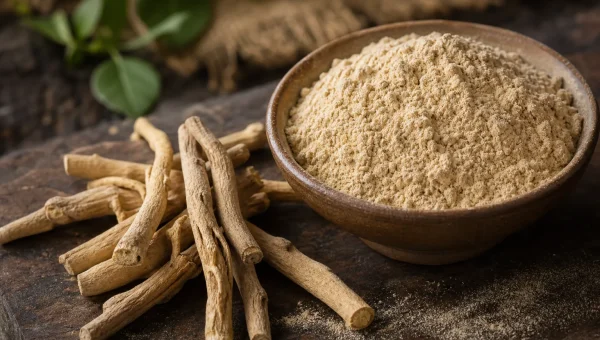
Ashwagandha (Withania somnifera) remains one of the most important Ayurvedic herbs to consider in a majja-vata protocol because it is classically used as a strengthening rasayana and has a substantial modern preclinical literature around neurite growth, neuronal resilience, stress physiology, and inflammation. Withanolide A and related withanolides have been evaluated in cell and animal models for neurite extension and synaptic reconstruction, which makes Ashwagandha relevant to the nerve-regeneration discussion without claiming that it has proven human peripheral nerve regeneration as a standalone therapy.
For neuropathy patients, Ashwagandha is most rational when there is depletion, poor sleep, stress load, muscle weakness, fatigue, anxiety around chronic symptoms, or a dry vata pattern. Human trials have evaluated Ashwagandha root extract for cognitive outcomes such as memory, executive function, attention, and processing speed, which supports its broader neurocognitive relevance. These outcomes should not be substituted for direct proof of peripheral nerve repair, but they do support its role as a nervous-system rasayana when used appropriately.
Ashwagandha is not suitable for everyone. It should be avoided during pregnancy and breastfeeding, used cautiously in autoimmune or thyroid conditions, and stopped if symptoms suggest liver injury such as jaundice, dark urine, severe fatigue, itching, nausea, or right-sided abdominal pain. People taking sedatives, thyroid medicines, immunosuppressants, or multiple prescription drugs should use it only with professional guidance.
Bala: The Classical Strength and Vata Herb
Bala (Sida cordifolia) literally means “strength,” and it is traditionally valued for balya, brimhana, vatahara, and tissue-supporting actions. In the context of neuropathy, Bala is better presented as a majja-vata nourisher and an important ingredient in medicated oils rather than as a directly proven myelin-regeneration drug. It is especially relevant where neuropathy is accompanied by weakness, wasting, tremulousness, dryness, pain, or chronic vata aggravation.
Bala’s importance is also practical because it appears in classical and widely used oil preparations such as Ksheerabala Taila. Used externally in massage, pichu, localized oil retention, or practitioner-supervised basti, Bala-containing preparations fit the Ayurvedic principle that dry, painful, degenerative vata disorders respond to unctuous, warm, nourishing therapies. This does not mean Bala should be self-prescribed in high doses: Sida cordifolia can contain ephedrine-type alkaloids, so it requires caution in hypertension, heart disease, palpitations, anxiety, insomnia, stimulant sensitivity, pregnancy, and with stimulant or cardiovascular medications.
Brahmi: BDNF, Cognition, and Medhya Support
Brahmi, commonly identified in contemporary practice as Bacopa monnieri, is primarily a medhya herb used for memory, learning, attention, and mental steadiness. Its relevance to neuropathy is indirect but meaningful: chronic neuropathy often involves sleep disruption, anxiety, impaired concentration, and stress physiology, and nerve recovery depends on more than the injured axon alone. Bacopa extracts have been evaluated in human cognitive studies and in preclinical models involving antioxidant activity, synaptic plasticity, and BDNF-related pathways.
BDNF is relevant because it participates in neuronal survival and plasticity, and altered neurotrophic-factor status has been discussed in diabetic neuropathy research. However, Brahmi should not be described as a proven human peripheral nerve-regeneration treatment. Its best role in a neuropathy protocol is as a gentle medhya rasayana when the patient’s constitution, digestion, sleep, and medication profile allow it. Some people experience nausea, loose stools, abdominal cramping, or sedation, so it is usually better introduced gradually under supervision.
Shankhpushpi: A Gentle Medhya Rasayana for Nervous-System Calm
Shankhpushpi is a classical medhya rasayana used for intellect, memory, sleep quality, and mental calm. In current botanical practice it is commonly associated with Convolvulus pluricaulis, though regional substitutions and related species occur. Its neuropathy relevance is supportive rather than primary: it may be considered where pain, tingling, worry, disturbed sleep, and nervous irritability aggravate the vata cycle.
Modern work on Convolvulus pluricaulis is mostly preclinical, including models of neuroprotection, oxidative stress, and hippocampal synaptic plasticity. That places Shankhpushpi in the supportive medhya category, not in the category of a proven nerve-regeneration drug. It is often more appropriate in formulas than as a single aggressive intervention, especially for patients who are sensitive, elderly, heavily medicated, or prone to sedation.
Kapikacchu: Specific Use in Dopaminergic Disorders, Not Routine Peripheral Neuropathy
Kapikacchu (Mucuna pruriens) is important in the nervous-system discussion because the seed naturally contains levodopa. Its most specific modern relevance is Parkinson’s disease and dopaminergic motor disorders, not ordinary diabetic or compressive peripheral neuropathy. Clinical trials in Parkinson’s disease have compared Mucuna pruriens preparations with conventional levodopa therapy, including acute crossover studies and longer pilot work.
Because Kapikacchu contains a pharmacologically active levodopa source, it should not be treated as a general nerve tonic. It may interact with levodopa-carbidopa, dopamine agonists, MAO inhibitors, antipsychotics, blood-pressure medicines, psychiatric medicines, and anesthesia plans. It should be avoided without neurologist supervision in Parkinson’s disease, psychosis, severe anxiety, arrhythmia, uncontrolled hypertension, pregnancy, or when dopaminergic adverse effects are already present.
Ksheerabala Taila and Basti: The Oil-Based Majja-Vata Route
Ksheerabala Taila is a Bala-based medicated oil traditionally prepared with Bala, milk, and sesame oil, and it is widely used for vata disorders involving pain, stiffness, weakness, and neuromuscular depletion. Its importance in neuropathy is not that it “delivers nerve-regenerating compounds directly to nerves,” but that it expresses a core Ayurvedic principle: chronic vata disorders often require unctuous, warm, nourishing therapies applied through appropriate routes.
External oil therapies may be used for dryness, burning, tingling, stiffness, and pain when there is no acute infection, open wound, severe edema, or contraindication. Anuvasana basti or other basti protocols are more specialized and should be performed only by trained practitioners after assessing strength, digestion, bowel pattern, age, disease stage, and contraindications. The current human data around basti and Ksheerabala Taila is stronger for vata-related musculoskeletal conditions than for direct nerve-regeneration endpoints, but the classical rationale remains clinically relevant in majja-vata depletion patterns.
| Herb / Therapy | Ayurvedic Role | Modern Research-Relevant Angle | Best Fit in Neuropathy Protocol | Key Caution |
|---|---|---|---|---|
| Ashwagandha | Rasayana, balya, vata support | Withanolides studied for neurite growth and neuronal resilience | Depletion, stress, poor sleep, weakness | Pregnancy, liver concerns, sedatives, thyroid/autoimmune conditions |
| Bala | Balya, brimhana, vatahara | Used in strengthening oils and vata formulas; contains active alkaloids | Weakness, wasting, dry painful vata patterns | Hypertension, heart disease, stimulant sensitivity |
| Brahmi (Bacopa monnieri) | Medhya rasayana | Human cognitive trials; preclinical BDNF and synaptic-plasticity pathways | Cognitive fatigue, stress, sleep-related nervous exhaustion | GI upset, sedation, medication interactions |
| Shankhpushpi | Medhya, calming vata support | Preclinical neuroprotection and synaptic-plasticity data | Tingling worsened by stress, poor sleep, nervous irritability | Sedation or hypotension in sensitive patients |
| Kapikacchu | Vata-related motor support in selected contexts | Natural levodopa source studied in Parkinson’s disease | Dopaminergic motor disorders under neurologist supervision | Do not combine casually with dopaminergic or psychiatric medicines |
| Ksheerabala Taila / Basti | Snehana, vata pacification, majja-vata nourishment | Clinical use in vata disorders; limited direct neuropathy endpoint data | Dryness, pain, stiffness, weakness, chronic vata depletion | Basti requires qualified supervision and contraindication screening |
Clinical Use: Where These Herbs Fit
The most responsible clinical interpretation is that Ayurvedic herbs can support the terrain of nerve recovery, but they do not replace neurological diagnosis or treatment of the underlying cause. Burning, numbness, tingling, weakness, loss of balance, foot ulcers, rapidly progressive symptoms, bladder or bowel changes, or one-sided neurological signs require medical evaluation. Nerve conduction studies, EMG, glucose testing, B12 and thyroid assessment, medication review, and screening for autoimmune, infectious, toxic, or compressive causes may be necessary.
When the cause is known and actively managed, a majja-vata plan may include warm oil massage, gentle strengthening, glycemic control, adequate protein, B12 correction when deficient, sleep restoration, digestive correction, and carefully selected rasayana herbs. Ashwagandha, Bala, Brahmi, Shankhpushpi, Kapikacchu, and Ksheerabala Taila each have a distinct place; they should not be used interchangeably, and they should not all be combined without a clear constitution-based reason.
Bottom Line
The strongest on-intent conclusion is that majja-oriented Ayurveda offers a coherent framework for neuropathy support: nourish depleted tissue, pacify aggravated vata, correct obstruction, and protect the metabolic environment in which nerves attempt to repair. Ashwagandha has the most relevant preclinical neurite-regeneration profile among the herbs discussed; Bala provides the classical strength-and-vata foundation; Brahmi and Shankhpushpi support medhya and stress-related nervous-system function; Kapikacchu is specific to dopaminergic disorders; and Ksheerabala Taila expresses the oil-based logic of majja-vata care.
Medical Disclaimer: This content is for educational purposes only and does not diagnose, treat, cure, or prevent any disease. Neuropathy requires proper medical evaluation, especially when symptoms are progressive, painful, asymmetric, associated with weakness, or linked with diabetes, chemotherapy, alcohol use, B12 deficiency, thyroid disease, autoimmune disease, or medication exposure. Consult a qualified Ayurvedic practitioner and a licensed healthcare provider before starting herbs, supplements, oils, basti, detoxes, or therapeutic protocols, especially if pregnant, breastfeeding, managing a medical condition, or taking medication.
References
- Peripheral Nerve Healing: So Near and Yet So Far (2021), PubMed Central
- Wallerian degeneration and peripheral nerve conditions for both axonal regeneration and neuropathic pain induction (2011), PubMed
- Mayoclinichealthsystem (mayoclinichealthsystem.org)
- Charaka Samhita — Kiyanta Shiraseeya Adhyaya
- Neuritic regeneration and synaptic reconstruction induced by withanolide A (2005), PubMed Central
- Dendrite extension by methanol extract of Ashwagandha (roots of Withania somnifera) in SK-N-SH cells (2000), PubMed
- Withanolide derivatives from the roots of Withania somnifera and their neurite outgrowth activities (2002), PubMed
- Efficacy and Safety of Ashwagandha (Withania somnifera (L.) Dunal) Root Extract in Improving Memory and Cognitive Functions (2017), PubMed
- NCCIH
- Jaims (jaims.in)
- NCBI
- Effects of a standardized Bacopa monnieri extract on cognitive performance, anxiety, and depression in the elderly: a randomized, double-blind, placebo-controlled trial (2008), PubMed Central
- Chronic administration of bacopa monniera increases BDNF protein and mRNA expressions: a study in chronic unpredictable stress induced animal model of depression (2014), PubMed Central
- Brain-derived neurotrophic factor (BDNF) and other neurotrophic factors in type 2 diabetes mellitus and their association with neuropathy (2024), PubMed
- Phytochemical Profile, Pharmacological Attributes and Medicinal Properties of Convolvulus prostratus – A Cognitive Enhancer Herb for the Management of Neurodegenerative Etiologies (2020), PubMed Central
- Convolvulus pluricaulis extract can modulate synaptic plasticity in rat brain hippocampus (2020), PubMed
- Mucuna pruriens in Parkinson’s disease: a double blind clinical and pharmacological study (2004), PubMed
- Mucuna pruriens in Parkinson disease: A double-blind, randomized, controlled, crossover study (2017), PubMed
- Daily intake of Mucuna pruriens in advanced Parkinson’s disease: A 16-week, noninferiority, randomized, crossover, pilot study (2018), PubMed
- Effect of anuvasana basti with ksheerabala taila in sandhigata vata (osteoarthritis) (2014), PubMed Central
- Ayurvedic management of idiopathic small fibre neuropathy- A case report (2023), PubMed Central
- NIDDK
- Mayoclinic (mayoclinic.org)
- My (my.clevelandclinic.org)