
Serotonin, Mood and Tarpaka Kapha: When Neurochemistry Meets Classical Theory
Serotonin mood Ayurveda Tarpaka connections are best understood as a careful cross-map rather than a one-to-one identity. In Ayurveda, Tarpaka Kapha is a head-localized subdivision of Kapha connected with tarpana, the nourishing, soothing and refreshing function that supports the brain, sense organs and sensory centers. In modern physiology, serotonin participates in mood, memory, sleep, appetite, pain perception and gastrointestinal function. The overlap is meaningful, but Tarpaka Kapha is broader than a single neurotransmitter and should not be reduced to serotonin alone.
A balanced interpretation is that Tarpaka Kapha describes a functional terrain of mental steadiness, sensory comfort, sleep restoration and cognitive nourishment. Serotonin-related biology may be one part of that terrain, alongside gut microbiota, tryptophan availability, sleep rhythm, stress hormones, GABAergic tone, cholinergic function, tissue nourishment and the digestive-metabolic state described in Ayurveda through agni. This keeps the comparison useful without forcing classical Ayurvedic language into a narrow biochemical label.
The Gut-Serotonin Connection in Ayurvedic Terms
The gut is central to serotonin physiology. Nearly 95% of the body’s serotonin is found in the gastrointestinal tract, largely produced by enterochromaffin cells, where it helps regulate motility, secretion, sensation, immune activity and intestinal communication. Peripheral serotonin does not simply enter the brain as a mood chemical; the brain makes its own serotonin from tryptophan, while the gut communicates with the nervous system through vagal, immune, endocrine, microbial and metabolic pathways.
This makes the Ayurvedic agni-manas relationship clinically relevant. Ayurveda reads digestion, appetite, bowel rhythm, heaviness, āma tendencies, sleep quality and mental clarity as connected expressions of one organism rather than isolated systems. A serotonin-informed explanation can sit beside this classical view: digestive strength and microbial ecology influence the substances and signals that shape mood, sleep and sensory steadiness. The broader gut-brain context is discussed in the gut-brain axis agni manas vagus nerve guide.
Ayurvedic Botanicals at the Serotonin Interface
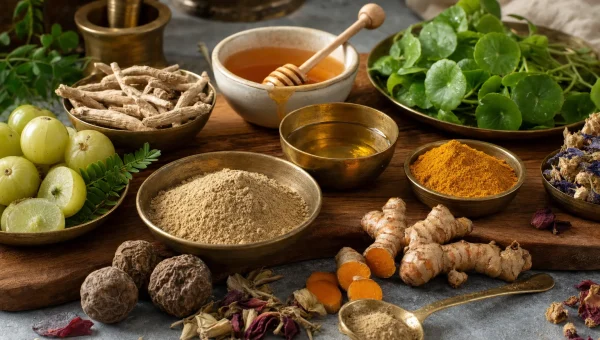
Several Ayurvedic botanicals sit near the serotonin-mood-Tarpaka Kapha interface, but they do so through different pathways. Saffron is the clearest modern mood bridge. Brahmi is better understood as a Medhya Rasayana with cognitive, anxiolytic and nervous-system support. Ashwagandha works primarily through stress physiology and sleep. Jatamansi has the strongest classical fit for sleep, mind and head-localized nourishment, with modern pharmacology still largely preclinical. Shankhpushpi belongs to the Medhya Rasayana tradition and is best used as a mind-supporting herb rather than a narrowly serotonergic drug.
| Herb | Ayurvedic Frame | Modern Interface | Typical Referenced Use Range |
|---|---|---|---|
| Saffron (Kesar) | Mood-supporting aromatic used in small amounts | Serotonergic, monoaminergic and stress-response pathways proposed | 30 mg/day standardized extract commonly used in mood trials |
| Brahmi (Bacopa monnieri) | Medhya Rasayana for memory, learning and mental calm | Cognition, anxiety, cholinergic support, stress-axis and monoamine modulation | 300-450 mg/day standardized extract in many human studies; traditional forms vary |
| Ashwagandha | Rasayana and stress-depletion support | Stress, anxiety, sleep, fatigue and cortisol regulation | 300-600 mg/day root extract commonly used in trials |
| Jatamansi | Medhya, Nidrajanana and Manasaroga-oriented classical herb | Monoamine, MAO, GABA and SERT-related preclinical activity | API: 2-3 g powder or 5-10 g decoction; extracts require supervision |
| Shankhpushpi | Medhya Rasayana and nootropic tradition | Neuroprotective, cognition, anxiety and sleep-oriented traditional use; mostly preclinical modern work | Dose depends on species, form and formulation; practitioner-guided use is preferred |
Saffron as the Clearest Modern Mood Bridge
Saffron (Crocus sativus, Kesar) is the most clinically developed plant in this group for mood support. Human trial summaries include saffron as a botanical used in depressive symptoms, anxiety symptoms and low-mood states, commonly at 30 mg/day of standardized extract for six to eight weeks. Its active constituents, including crocin, crocetin and safranal, are discussed in relation to serotonin, dopamine, norepinephrine, inflammation, oxidative stress and stress-response pathways.
In an Ayurvedic interpretation, saffron is not a replacement for psychiatric care, but it can be understood as a refined, mood-supporting aromatic that may suit selected low-mood presentations when used safely and professionally. Its strength is that the modern mood literature is more human-centered than for many other botanicals, while its Ayurvedic use remains small-dose, quality-sensitive and context-dependent.
Brahmi and Ashwagandha: Cognitive Nourishment and Stress Regulation
Brahmi (Bacopa monnieri) is best placed under Medhya Rasayana rather than treated as a simple serotonin herb. Classical and modern descriptions connect it with memory, learning, anxiety reduction and nervous-system support. Human trials and reviews emphasize cognition, attention, verbal learning and anxiety more consistently than direct treatment of major depression. Preclinical work places Bacopa near cholinergic, stress-axis, monoamine and GABA-related pathways, which fits a broad Tarpaka Kapha interpretation of cognitive nourishment and mental steadiness.
Ashwagandha (Withania somnifera) belongs more to the stress-sleep side of the mood picture. Modern summaries describe reductions in stress, anxiety, sleeplessness, fatigue and cortisol in adults using standardized root extracts, especially around 500-600 mg/day in several trials. In Ayurvedic practice, this makes Ashwagandha more appropriate for stress depletion, poor recovery, sleep disturbance and nervous fatigue than for a narrow claim of direct serotonin replacement.
Jatamansi and the Tarpaka Kapha Localization
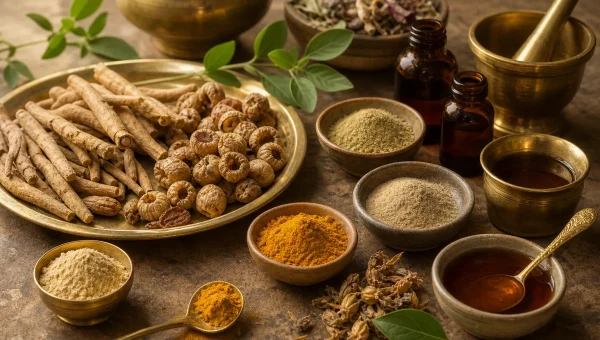
Jatamansi (Nardostachys jatamansi) has a strong classical fit for the Tarpaka Kapha discussion because the Ayurvedic Pharmacopoeia of India lists it as Medhya and Nidrajanana, with therapeutic use in Manasaroga and Anidra. The same official monograph gives its rasa as Tikta and Kashaya, guna as Laghu, virya as Shita, vipaka as Katu, and karma as Medhya, Tridosanut, Varnya, Nidrajanana and Kushaghna. These attributes place Jatamansi in the territory of mind, sleep, cooling, restoration and sensory-nervous steadiness.
Modern pharmacology adds a cautious bridge: animal and laboratory work connects Nardostachys jatamansi with central monoamines, MAO-related activity, GABA-related activity and serotonin transporter-related mechanisms. Human clinical data for mood disorders remain limited, so Jatamansi should be handled as a potent traditional herb rather than a casual supplement. The plant also carries sustainability concerns because wild Himalayan material has faced harvesting pressure; authentic, legal and sustainably sourced material from reputable manufacturers is essential.
The Gut Microbiome as a Tarpaka Kapha Support
The microbiome is another practical bridge between serotonin physiology and Ayurvedic mental care. Gut bacteria can influence enterochromaffin-cell serotonin production, tryptophan metabolism, short-chain fatty acids, immune signaling and vagus-linked gut-brain communication. In Ayurvedic terms, this supports attention to agni, bowel regularity, āma reduction, compatible foods, warm meals, appropriate meal timing and constitution-specific digestive care.
Not every probiotic or fermented food is suitable for every person, but the principle is useful: gut ecology can shape the signals that influence mood and sleep. Triphala is especially relevant because its polyphenol-rich fruits interact with gut microbes and are discussed for supporting beneficial bacteria such as Bifidobacteria and Lactobacillus while discouraging some undesirable organisms. The Triphala context is explored further in the Triphala IBS research guide.
A corrected probiotic example is Lactobacillus rhamnosus JB-1. In mice, this strain altered emotional behavior and central GABA receptor expression through a vagus-dependent pathway. This is useful for the gut-brain model, but it should not be generalized into a blanket claim that all probiotics directly raise serotonin or treat depression.
Dietary Serotonin Precursors: The Tryptophan Connection
Central serotonin synthesis begins with tryptophan. Tryptophan crosses the blood-brain barrier in competition with other large neutral amino acids, and carbohydrate intake can temporarily raise the tryptophan-to-competing-amino-acid ratio through insulin-mediated amino acid shifts. This helps explain why meal composition, timing and digestive capacity matter when discussing mood, sleep and restoration.
Ayurveda does not reduce this to eating sugar for mood. The practical approach is steadier: warm, digestible, regular meals; adequate protein; appropriate fats; and foods that suit the person’s agni and constitution. Milk, sesame, almonds, legumes and eggs are examples of tryptophan-containing foods, though tolerance and dietary preference matter. Serotonin also serves as a precursor for melatonin, connecting mood regulation with sleep rhythm and the restorative dimension of Tarpaka Kapha.
A Practical Serotonin-Tarpaka Support Framework
A useful integrative framework begins with the idea that mood is supported by nourishment, rhythm and clear signaling rather than by one chemical alone. Tarpaka Kapha care therefore includes digestive regulation, sleep restoration, sensory moderation, constitution-specific herbs and appropriate medical care when symptoms are persistent or severe.
- Care for agni: Favor regular, warm, digestible meals and avoid heavy late-night eating when it disturbs sleep or digestion.
- Support the gut-brain pathway: Use fiber-rich foods, suitable fermented foods and bowel-regulating herbs only when they match the person’s constitution and digestive state.
- Choose herbs by pattern: Saffron may suit selected mood-support needs, Brahmi may suit cognitive and anxiety terrain, Ashwagandha may suit stress and sleep depletion, and Jatamansi may suit mind-sleep patterns under supervision.
- Restore rhythm: Consistent sleep-wake timing, evening sensory quiet, gentle breathwork, meditation and reduced overstimulation support the same calm, nourishing terrain that Tarpaka Kapha represents.
Medical Disclaimer: This content is for educational discussion only. Depression, persistent low mood, bipolar symptoms, panic, psychosis, medication changes and any thoughts of self-harm require care from a qualified healthcare provider. In an emergency or suicidal crisis, seek urgent local help immediately.
Nothing in this article diagnoses or treats a medical condition. Consult a qualified Ayurvedic practitioner and a licensed healthcare provider before starting saffron extracts, Bacopa, Ashwagandha, Jatamansi, Shankhpushpi, Triphala, supplements, detoxes or therapeutic protocols, especially if pregnant, breastfeeding, managing a medical condition or taking antidepressants, sedatives, thyroid medication, antidiabetic medication, antihypertensives, anticoagulants or other prescriptions. Concentrated herbs and supplements should not be combined with SSRIs, SNRIs, MAOIs or sedatives without professional supervision.
References
- Easyayurveda (easyayurveda.com)
- Jetir (jetir.org)
- Keralatourism (keralatourism.org)
- NCBI
- Intechopen (intechopen.com)
- NCBI
- Wjarr (wjarr.com)
- Academic (academic.oup.com)
- Frontiersin (frontiersin.org)
- Saffron and its active ingredients against human disorders: A literature review on existing clinical evidence (2022), PubMed Central
- NCBI
- NIH Office of Dietary Supplements
- Ayurvedic Pharmacopoeia of India
- Effects of Nardostachys jatamansi on biogenic amines and inhibitory amino acids in the rat brain (1994), PubMed
- Inhibition of MAO and GABA: probable mechanisms for antidepressant-like activity of Nardostachys jatamansi DC. in mice (2008), PubMed
- Antidepressant activities and regulative effects on serotonin transporter of Nardostachys jatamansi DC (2021), PubMed
- Traffic (traffic.org)
- Iucnredlist (iucnredlist.org)
- Nootropic herbs (Medhya Rasayana) in Ayurveda: An update (2012), PubMed Central
- An update on Ayurvedic herb Convolvulus pluricaulis Choisy (2014), PubMed Central
- Indigenous bacteria from the gut microbiota regulate host serotonin biosynthesis (2015), PubMed Central
- Therapeutic Uses of Triphala in Ayurvedic Medicine (2017), PubMed Central
- Pnas (pnas.org)
- Frontiersin (frontiersin.org)
- Fdc (fdc.nal.usda.gov)
- NCBI
- Nimh (nimh.nih.gov)

is Brahmi or Jatamansi preferred as first-line support for Tarpaka Kapha specifically? ✨