Postpartum Hair Loss Ayurvedic Treatment: Why the Body Sheds
Postpartum hair loss Ayurvedic treatment begins with calm, accurate understanding: the shedding is usually a reversible hair-cycle transition, not permanent follicle loss. Modern dermatology calls this telogen effluvium. During pregnancy, higher estrogen keeps more hairs in the growing phase; after delivery, estrogen falls and many of those retained hairs move into the resting phase together, so they shed a few months later. The amount can look alarming because pregnancy temporarily reduced ordinary daily shedding.
Ayurveda approaches this same period through the language of sutika care, vata, agni, and dhatu nourishment. After birth, the mother is recovering from exertion, blood loss, interrupted sleep, lactation demands, and a rapidly changing hormonal state. The Ayurvedic priority is not to force normal telogen hairs to remain, but to restore digestive strength, rasa-rakta nourishment, vata steadiness, scalp comfort, and maternal strength so that new growth has a stable foundation.
The Timeline: What to Expect and When
Shedding often becomes noticeable around the third postpartum month, commonly reaches its most visible stage around the fourth month, and then settles over the following months. Many women see the hair cycle normalize by six to twelve months postpartum, and many regain their usual fullness by the baby’s first birthday.
The goal of Ayurvedic intervention is therefore supportive rather than suppressive: reduce avoidable breakage, protect scalp and hair shafts, rebuild postpartum nutrition, steady sleep and vata as much as possible, and identify treatable contributors such as low iron, thyroid imbalance, insufficient protein intake, crash dieting, or exhaustion. Severe shedding, bald patches, scalp pain or scaling, or heavy loss that continues beyond the expected recovery window should be assessed by a healthcare provider.
Internal Nourishment: A Safe Dhatu-Rebuilding Approach
For a breastfeeding or newly postpartum mother, internal herbs should be chosen conservatively and adjusted to digestion, bleeding history, milk supply, medications, constitution, and the baby’s age. The practical sequence is to rebuild appetite and assimilation first, then add classical rasayana or keshya herbs only when they are appropriate, instead of taking several supplements at once.
Shatavari (Asparagus racemosus): Shatavari is the most relevant internal herb in this context when an Ayurvedic practitioner considers it suitable. The Ayurvedic Pharmacopoeia of India lists Shatavari root as madhura-tikta in rasa, guru-snigdha in guna, shita in virya, and madhura in vipaka, with actions that include balya, rasayana, vatahara, and stanyakara. Its therapeutic uses include sutika roga, stanya dosha, and stanya kshaya. The API gives a general root dose of 3-6 g, but postpartum dose, timing, and anupana should be individualized rather than assumed to be automatically suitable for every breastfeeding mother.
Ashwagandha (Withania somnifera): The API lists Ashwagandha root as tikta-kashaya in rasa, laghu in guna, ushna in virya, and madhura in vipaka, with balya, rasayana, and vatakaphapaha actions. It may fit some depleted, vata-dominant postpartum patterns after professional assessment. It is not a routine self-prescribed breastfeeding herb, especially while nursing a newborn or preterm infant; use it only when both a qualified Ayurvedic practitioner and healthcare provider consider it appropriate.
Bhringaraja (Eclipta alba): The API monograph describes Bhringaraja as the whole plant of Eclipta alba and lists it as katu-tikta in rasa, ruksha-tikshna in guna, ushna in virya, and katu in vipaka, with keshya, rasayana, balya, vatahara, and kaphahara actions. In a postpartum hair protocol, its cleanest role is external scalp care through Bhringaraja Taila, Bhringamalakadi Taila, or Nili Bhringadi Taila when the scalp tolerates herbal oiling well. Internal juice, decoction, or powder should be used only under individual supervision during breastfeeding.
Food before formulas: Warm, freshly prepared meals, adequate lactation calories, protein at each meal, and iron repletion when indicated are more important than adding many herbs. Well-cooked dals, beans, lentils, milk or paneer if tolerated, eggs or meat if part of the diet, nuts, seeds, whole grains, vegetables, and clinician-prescribed supplements can all be woven into a recovery plan. Plant iron foods are best paired with vitamin-C-containing foods such as citrus, tomato, or bell pepper, while iron supplements should remain clinician-guided.
Postpartum Hair Support by Month
The following schedule keeps the intervention aligned with the usual shedding curve while respecting the early recovery period. It is a framework, not a prescription; heavier bleeding, cesarean recovery, fever, mastitis, thyroid disease, anemia, medications, or infant health concerns change the plan.
| Postpartum Phase | Primary Focus | Internal Support | External Treatment |
|---|---|---|---|
| Weeks 0-8 | Rest, agni protection, vata calming, lactation nourishment | Warm cooked meals, adequate fluids, protein foods; practitioner-guided Shatavari if indicated | Gentle warm oiling of scalp or feet 1-3 times weekly as comfortable; no forceful massage |
| Months 3-4 | Visible shedding phase, breakage reduction, iron and thyroid awareness | Continue food-first rebuilding; check iron or thyroid status when symptoms suggest | Bhringaraja-based scalp oil 1-3 times weekly if tolerated; gentle washing and combing |
| Months 5-6 | Support new growth and maintain maternal strength | Protein, iron repletion if prescribed, steady meals, sleep support where possible | Scalp oiling 1-2 times weekly; avoid tight hairstyles and heat styling |
| Months 7-12 | Consolidate regrowth and review persistent shedding | Continue individualized nourishment; review herbs and labs if density is not returning | Weekly shiro abhyanga or light scalp oiling as tolerated |
Shiro Abhyanga: The Scalp Oil Protocol
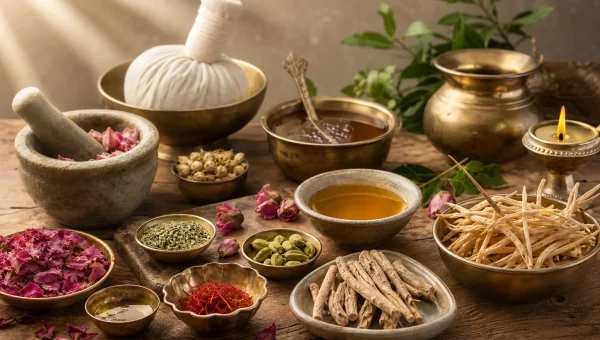
Shiro abhyanga has a direct place in classical daily care: head oiling is described for protecting the head, sleep, and hair, and abhyanga is described as vata-pacifying. In postpartum care, keep it gentle. The purpose is to soothe vata, reduce dryness and friction, protect existing strands from breakage, and support scalp comfort while the normal shedding cycle completes.
Use a small amount of warm sesame oil, coconut oil, or a prepared Bhringaraja-based oil according to scalp comfort and practitioner guidance. Classical Bhringaraja formulations listed in the API include Bhringaraja Taila, Bhringamalakadi Taila, and Nili Bhringadi Taila. Patch-test the oil first, avoid fragranced or irritating preparations, and do not oil inflamed, infected, very itchy, or actively scaling skin.
Application technique: part the hair, place oil on the scalp rather than only on the hair length, massage softly with the finger pads for five to ten minutes, cover with a warm towel if comfortable, and wash out after twenty to sixty minutes. During peak shedding, comb gently, avoid tight buns or braids, avoid heat styling, and keep conditioner mainly on the hair ends. For more detail on matching oil choice to scalp and hair type, see the Ayurvedic hair oiling dosha guide.
Nutritional Priorities for Hair Regrowth
Hair is made from protein-rich keratin, so postpartum regrowth depends on adequate protein, calories, and micronutrients rather than hair oils alone. A breastfeeding mother generally needs additional calories, and many nutrition references place typical lactation protein needs around 71 g per day or recommend protein foods several times daily. Individual needs change with body size, diet pattern, activity, wound healing, and milk production.
Iron deserves special attention after delivery because blood loss, low intake, or heavy postpartum bleeding can leave stores depleted. Use food and supplements intelligently: legumes, beans, lentils, greens, nuts and seeds, fortified foods, eggs, meat, or seafood if eaten, and clinician-prescribed iron when indicated. Vitamin-C-containing foods taken with plant iron foods improve absorption, while iron supplements should not be started blindly during the postpartum period.
From the Ayurvedic perspective, this is the practical meaning of rasa and rakta rebuilding: eat enough, digest well, keep meals warm and simple when agni is delicate, and avoid aggressive cleansing, fasting, crash dieting, or very drying regimens during sutika and breastfeeding. For the broader pregnancy-to-postpartum framework, see the Ayurvedic pregnancy guide herbs trimester.
When to Seek Medical or Ayurvedic Care
Seek care promptly if shedding comes with bald patches, scalp inflammation, pain, scaling, fever, severe fatigue, dizziness, cold intolerance, palpitations, heavy bleeding, low mood, sudden weight change, reduced milk supply, continued heavy shedding beyond six months, or poor return of density by twelve months. A qualified clinician can evaluate iron deficiency, thyroid disease, nutritional deficiency, medication effects, and scalp disorders, while a qualified Ayurvedic practitioner can individualize diet, oiling, and herbs within a safe postpartum plan.
Medical Disclaimer: This content is for educational purposes only. Postpartum hair loss that is severe, prolonged, patchy, painful, or associated with fatigue, cold intolerance, dizziness, heavy bleeding, mood changes, or breast milk supply changes should be evaluated by a healthcare provider. Consult a qualified Ayurvedic practitioner and physician before starting herbs, supplements, medicated oils, detoxes, or therapeutic protocols during breastfeeding or postpartum recovery.
Nothing in this article diagnoses or treats a medical condition. Use it as educational information and consult a qualified Ayurvedic practitioner or healthcare provider before beginning any postpartum hair-loss protocol, especially if breastfeeding, recovering from delivery complications, managing a medical condition, or taking medication.
References
- Aad (aad.org)
- My (my.clevelandclinic.org)
- Hopkinsmedicine (hopkinsmedicine.org)
- Jaims (jaims.in)
- Ayurvedic Pharmacopoeia of India
- NCBI
- Ayurvedic Pharmacopoeia of India
- NCBI
- Ayurvedic Pharmacopoeia of India
- Charaka Samhita — Matrashiteeya Adhyaya
- CDC
- Mayoclinic (mayoclinic.org)
- Perinatology (perinatology.com)
- NIH Office of Dietary Supplements
- My (my.clevelandclinic.org)