Keloid Scar Ayurvedic Treatment: Vrana Chikitsa for Problematic Wound Healing
Keloid scar Ayurvedic treatment through Vrana Chikitsa is best understood as supportive scar care after the skin has fully closed, not as a replacement for dermatological treatment. Keloids and hypertrophic scars are raised, firm scars that form when the wound-healing response produces excessive repair tissue and collagen. A hypertrophic scar stays within the boundary of the original wound and may gradually settle, while a keloid extends beyond the original injury and may continue to grow. These scars can itch, hurt, restrict movement when placed near joints, and cause significant cosmetic and emotional distress, especially in people with personal or family keloid tendency and in skin types more prone to keloid formation.
Classical Ayurveda does not name “keloid” as a separate modern diagnosis, so the Ayurvedic approach is a clinical framework rather than a one-to-one classical label. Vrana Chikitsa evaluates the post-wound area by site, colour, swelling, hardness, pain, itching, heat, moisture, tissue involvement, and dosha predominance. A raised, firm, slow-changing scar is approached as a Kapha-dominant post-vrana pattern; redness, heat, burning or itching adds Pitta and Rakta involvement; tightness, tenderness and pulling pain add Vata. The treatment aim is to protect the scar from fresh trauma, calm Pitta-Rakta irritation, reduce Kapha heaviness and hardness, and support orderly Ropana after proper Shodhana.
Understanding the Scar Pattern
Modern scar care and Ayurvedic wound care agree on a practical principle: early, gentle, consistent care is easier than trying to reverse a mature, spreading keloid. Silicone gel or silicone sheets, corticosteroid injections, cryotherapy, laser treatment, surgery, and other dermatologist-directed procedures may be used depending on scar size, site, symptoms and recurrence risk. Ayurveda is most useful as complementary care for scar-prone skin, early hypertrophic thickening, itching, redness, dryness, post-inflammatory discoloration, and recovery support after professional assessment. Large, rapidly growing, recurrent, painful, infected, bleeding, or movement-limiting scars should be managed with a dermatologist first.
| Scar Type | Clinical Features | Ayurvedic Supportive Focus | Best Role for Ayurveda |
|---|---|---|---|
| Early hypertrophic scar | Raised, firm, still within the original wound boundary | Kapha-Pitta Shotha with Rakta-Twak irritation | Best window for conservative support, silicone, and gentle topical care |
| Established hypertrophic scar | Raised and firm but not spreading beyond the wound edge | Stable Kapha hardness with possible Vata tightness | Slow softening, itch reduction, barrier protection, and adjuvant care |
| Small or stable keloid | Extends beyond the original wound; may itch, ache, or thicken slowly | Kapha-Pitta-Rakta pattern; Vata if painful or tight | Complementary care with dermatologist guidance |
| Large, active, or recurrent keloid | Spreading, painful, cosmetically distressing, or restricting movement | Complex Tridosha involvement after tissue injury | Dermatology-led treatment first; Ayurveda as supervised adjuvant care |
Classical Ayurvedic Ingredients for Closed Scar Care
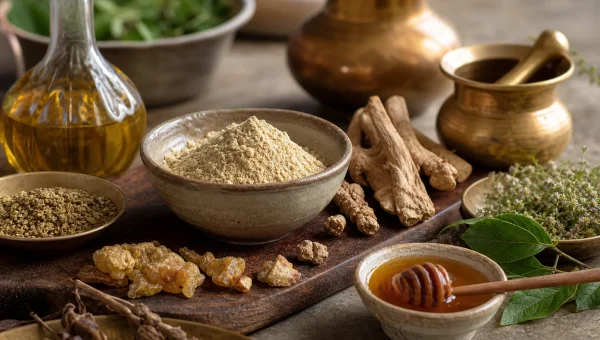
The herbs below are retained because their identities, properties and classical indications are supported in Ayurvedic pharmacopoeial sources. They should be used on closed, intact skin only, with patch testing and professional guidance when the scar is active, painful, infected, rapidly enlarging, or located on the face, chest, ear, breast, genital area, or over a joint.
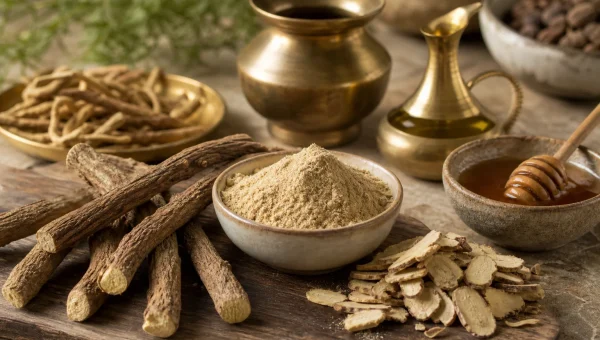
Manjistha (Rubia cordifolia): Manjistha is a central Rakta-Twak herb in this protocol. The Ayurvedic Pharmacopoeia of India describes Manjistha as having madhura, tikta and kashaya rasa, guru guna, ushna virya and katu vipaka, with actions including Kaphapittashamaka, Varnya, Shothaghna, Kushthaghna, Rasayana and Shonitasthapana. It is also listed in classical formulations such as Manjishthadi Taila and Brihanmanjishthadi Kvatha. In scar care, it is most appropriate where the scar is red, itchy, discoloured, inflamed or associated with a broader Pitta-Rakta skin tendency.
Haridra (Turmeric / Curcuma longa): Haridra is described as katu-tikta in rasa, ruksha in guna, ushna in virya and katu in vipaka, with Kaphapittanut, Varnya, Kushthaghna and Vrana-related uses. Its natural constituents include curcumin and volatile oil. In a topical scar lepa, Haridra is used in small quantity to support Kapha-Pitta balance in the skin; excessive amounts can stain the skin and irritate sensitive scars.
Lodhra (Symplocos racemosa): Lodhra is kashaya in rasa, laghu in guna, shita in virya and katu in vipaka, with Kaphapittanut and Shotha-related uses. Its astringent and cooling profile makes it suitable in a practitioner-designed lepa when the scar is puffy, red, mildly itchy, oily, or Pitta-Kapha dominant.
Kanchanara (Bauhinia variegata): Kanchanara bark is described as kashaya in rasa, laghu-ruksha in guna, shita in virya and katu in vipaka, and is associated with Kanchanara Guggulu and classical uses such as Apachi, Gandamala and Vrana. In keloid-prone scar care, it should be viewed as a practitioner-selected Kapha-firmness herb, not as a stand-alone scar cure.
Nimba (Neem / Azadirachta indica): Nimba leaf is tikta and ruksha with shita virya and Pittanashaka action, and its listed uses include Kushtha and Vrana. It belongs only in selected Pitta-Kapha presentations such as itchy, inflamed, heat-dominant skin; it is not suitable for every scar, every constitution, or unsupervised long-term internal use.
Topical Lepa Formulations for Closed Scars
A lepa should be applied only after the wound has fully closed and there is no scab, discharge, bleeding, infection, raw skin, suture opening, or fresh surgical wound. The aim is gentle dosha-balancing contact, not scraping, burning, peeling, or aggressive massage. Begin with a small patch test on nearby skin and stop immediately if burning, swelling, rash, increased itching, cracking, or increased redness appears.
Kapha-Pitta Scar Lepa for raised, closed scars:
- Manjistha powder: 2 parts
- Lodhra powder: 1 part
- Haridra powder: 1/4 to 1/2 part
- Kanchanara bark powder: 1 part, only when the scar is thick, stable and Kapha-dominant, and preferably under practitioner guidance
- Mixing vehicle: clean water or plain fresh aloe gel if tolerated by the skin
Application: Mix into a smooth paste and apply a thin layer over the closed scar and a small margin of surrounding skin. Keep the contact short at first, rinse gently, and avoid friction. If tolerated, a qualified practitioner may adjust frequency and duration according to the scar’s heat, itch, dryness, thickness and site. Do not combine this with chemical exfoliants, retinoids, acids, strong essential oils, garlic, lemon juice, caustic preparations, or home cautery methods.
Cooling Pitta-Rakta variation: For scars that are red, warm, itchy or easily irritated, reduce Haridra, omit Kanchanara, and emphasize Manjistha with Lodhra in a clean, non-oily vehicle. This version is preferred when the scar reacts badly to heat, friction, sweat, or heavy oils.
Dry, tight Vata variation: For a fully closed scar that feels tight, dry or pulling but is not red, hot or actively spreading, a practitioner may use a milder lepa followed by a small amount of gentle oiling. Strong rubbing is avoided because repeated irritation can aggravate scar-prone skin.
Oil, Silicone, and Daily Scar Care
Daily scar care should protect the skin barrier and avoid new irritation. Silicone gel or silicone sheets can be used on fully closed scars as part of standard scar prevention and keloid management. Herbal lepa, if used, should be applied at a separate time from silicone so the skin can be cleaned and dried properly before silicone contact.
For daily Ayurvedic support, a practitioner may choose a prepared Manjishthadi Taila or another suitable medicated oil when the scar is dry, tight or Vata-dominant. Heavy oiling is not ideal for every scar; red, hot, itchy or acne-prone areas may respond better to cooling, non-occlusive care and dermatologist-directed silicone. Medicated oils should be professionally prepared or prescribed; the earlier claim that scar oil should be made through Kshirapaka is corrected, because Kshirapaka refers to milk-decoction processing, while medicated oils belong to Sneha Paka preparation principles.
Internal Rakta and Twak Support
Internal treatment for keloid-prone skin should not be a fixed online supplement stack. In Ayurveda, the practitioner decides whether Rakta, Pitta, Kapha, Vata, Agni, bowel pattern, diet, sleep, hormonal state, medication use, and recurrence tendency require internal support. Manjistha or Manjishthadi formulations may be considered where Pitta-Rakta skin signs dominate; Triphala may be used when digestion and bowel regularity need support; Nimba belongs only in selected bitter-cooling protocols; Haridra may be used through diet or clinician-selected formulations when appropriate.
Self-prescribing multiple internal herbs for months is not recommended. Neem, concentrated turmeric extracts, aloe latex preparations, Triphala, guggulu-containing formulas, bitter detox formulas, and high-dose herbal extracts may be unsuitable during pregnancy, breastfeeding, medication use, surgery planning, liver or kidney disease, bleeding disorders, autoimmune treatment, or significant digestive sensitivity. Internal herbs should be taken only under a qualified Ayurvedic practitioner or healthcare provider.
Prevention: The Most Effective Strategy
For people with a known keloid tendency, prevention is the most valuable strategy. Avoid unnecessary piercings, tattoos, cosmetic skin trauma, harsh acne picking, and repeated irritation over the chest, shoulders, jawline, earlobes and other keloid-prone areas. If surgery or a procedure is necessary, tell the surgeon or dermatologist about the keloid history before treatment so preventive scar planning can begin early.
After a wound has fully closed, silicone gel or silicone sheeting may be used as directed by a dermatologist. Keep the area protected from tension, friction, sunburn and repeated inflammation. In Ayurvedic terms, this is the practical continuation of Vrana care: avoid new trauma, support clean healing, calm Pitta-Rakta reactivity, and prevent Kapha from settling into a hard, raised, persistent scar.
When to Seek Medical Care
Seek dermatological evaluation if the scar is rapidly enlarging, very painful, bleeding, ulcerating, infected, restricting movement, located on the ear after piercing, recurring after removal, or causing significant distress. Keloids often need combined care, and conventional options such as steroid injections, cryotherapy, laser, pressure therapy, silicone, or carefully planned surgery may be required. Ayurvedic care is best used as an individualized adjunct, especially for early scar tendency, symptom comfort, skin-barrier protection and recurrence prevention.
Medical Disclaimer: Keloids and hypertrophic scars are dermatological conditions best evaluated by a dermatologist. Large, rapidly growing, recurrent, painful, infected, bleeding, or movement-limiting scars may require conventional medical treatment before or alongside Ayurvedic complementary care. Do not apply herbal pastes, oils, scrubs, caustic substances, or home remedies to open wounds, fresh surgical sites, infected skin, raw skin, or unhealed sutures.
This article is educational and does not diagnose, treat, or cure any medical condition. Consult a qualified Ayurvedic practitioner and a licensed healthcare provider before starting herbs, supplements, detoxes, medicated oils, lepa protocols, or long-term scar treatment, especially if pregnant, breastfeeding, managing a health condition, preparing for surgery, or taking medication.
References
- NCBI
- Current Advances in Hypertrophic Scar and Keloid Management (2021), PubMed Central
- Keloid treatments: an evidence-based systematic review of recent advances (2023), PubMed Central
- Aad (aad.org)
- Charaka Samhita — Dwivraniya Chikitsa
- Pharmacodynamic appraisal of wound-healing herbs of Sushruta Samhita (2021), PubMed Central
- Ayurvedic Pharmacopoeia of India
- Ayurvedic Pharmacopoeia of India
- Ayurvedic Pharmacopoeia of India
- Webprod (webprod.hc-sc.gc.ca)
- Ayush (ayush.delhi.gov.in)
- NCCIH