Parkinson’s Ayurvedic Daily Management: The Kampa Vata Protocol
Parkinson’s disease is a progressive neurodegenerative disorder in which daily function is affected by both motor symptoms such as tremor, slowness, stiffness, gait change, and postural instability, and non-motor symptoms such as constipation, sleep disturbance, anxiety, low mood, autonomic dysfunction, and cognitive change. In Ayurvedic clinical language, tremor and disturbed movement are commonly approached as a Vata-dominant Kampa or Kampavata presentation, with attention to steadiness, warmth, oiling, digestion, elimination, sleep, and a regular daily rhythm.
The Ayurvedic role in Parkinson’s care is supportive and complementary. It may include carefully supervised use of Kapikacchu (Mucuna pruriens), daily Abhyanga, bowel and sleep support, diet timing, and routine-based Vata pacification. These measures are not substitutes for neurologist-directed Parkinson’s treatment, and they should not be presented as curative or disease-modifying. Their practical purpose is to support daily comfort, mobility, digestion, sleep, and quality of life while conventional neurological care continues.
Kapikacchu (Mucuna Pruriens): Ayurvedic Levodopa Support
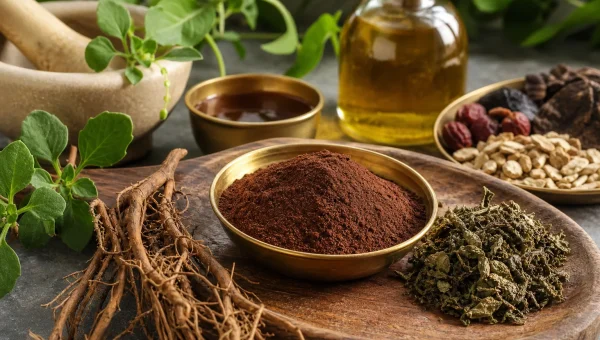
Kapikacchu, also called Atmagupta, is the Ayurvedic drug identity associated with the mature seed of Mucuna pruriens. The Ayurvedic Pharmacopoeia of India identifies Atmagupta seed under Mucuna prurita Hook., with Mucuna pruriens as a synonym. In modern Parkinson’s care, Kapikacchu is clinically important because Mucuna seeds naturally contain levodopa, the same active dopamine precursor used in conventional Parkinson’s therapy.
Because Kapikacchu contains active levodopa, it must be treated as a medicine rather than as a casual supplement. Natural seed powders, extracts, and commercial supplements can vary widely in levodopa content, and products may not contain the amount implied by their labels. Mucuna preparations also generally do not include carbidopa or benserazide, the peripheral decarboxylase inhibitors used in standard levodopa therapy to improve tolerability and central availability.
In controlled single-dose clinical protocols, Mucuna seed powder has produced motor improvement in levodopa-responsive Parkinson’s patients. In the Katzenschlager clinical comparison, 30 g of Mucuna seed powder had a faster onset than standard levodopa-carbidopa and a longer “on” duration, without a matching increase in dyskinesia during that single-dose observation. Later single-dose work with roasted Mucuna powder also reported motor benefit in advanced Parkinson’s disease, while a longer 16-week pilot trial found that tolerability was a major limitation for many participants.
Critical safety note: Kapikacchu contains active levodopa. It must not be added to carbidopa-levodopa, levodopa-benserazide, dopamine agonists, MAO-B inhibitors, COMT inhibitors, or other Parkinson’s medicines without direct neurologist supervision. Combining levodopa sources can increase the risk of nausea, dizziness, hallucinations, agitation, severe dyskinesia, psychosis, blood pressure changes, and medication toxicity. Do not start, stop, replace, or adjust Parkinson’s medication based on an Ayurvedic herb protocol.
| Mucuna Form | Levodopa Consideration | Clinical Use | Safety Requirement |
|---|---|---|---|
| Whole Mucuna seed powder | Naturally contains levodopa; amount varies by seed source and preparation | Used in clinical Parkinson’s protocols only with controlled dosing | Neurologist-directed levodopa-equivalent calculation |
| Standardized Mucuna extract | Labelled percentage may not reflect actual levodopa exposure unless independently tested | Not appropriate for self-dosing in Parkinson’s disease | Avoid combining with Parkinson’s medication unless prescribed |
| Classical Kapikacchu / Atmagupta churna | Ayurvedic drug identity does not make it a standardized Parkinson’s levodopa product | Practitioner-directed only, especially in older adults or medicated patients | Requires both Ayurvedic and neurological oversight |
Daily Abhyanga for Kampa Vata
Daily Abhyanga, the application of warm oil to the body, is one of the central Vata-pacifying practices in Ayurveda. For a Parkinson’s patient, Abhyanga is best understood as a supportive daily routine for comfort, warmth, circulation, stiffness, sleep preparation, body awareness, and steadiness. It should be gentle, predictable, and safe, not forceful or exhausting.
Therapeutic massage has also been used as complementary care in Parkinson’s disease, with reported benefit for selected motor and non-motor symptoms. Ayurvedic Abhyanga differs from ordinary massage by emphasizing warm oil, Vata-calming rhythm, joint attention, and regularity. The practice should always be adapted to the person’s balance, skin condition, blood pressure, fatigue level, medication timing, and fall risk.
Kampa Vata Abhyanga protocol:
- Oil: Use comfortably warm sesame oil, Mahanarayan Taila, or Ksheerabala Taila when appropriate for the person’s constitution and clinical state. The oil should be warm, never hot. Patch-test first if the person has sensitive skin.
- Sequence: Begin with the feet and lower legs, then move upward. Use long strokes along the limbs, gentle circular motions at the joints, and mild pressure over the shoulders, back, hips, calves, hands, and fingers. Avoid forceful pressure over fragile skin, swollen areas, varicose veins, painful joints, or recent injuries.
- Hands and feet: Spend extra time on the palms, fingers, soles, and toes, because fine motor stiffness, foot rigidity, and gait confidence often affect daily function in Parkinson’s disease.
- Head and sleep support: If safe and comfortable, a small amount of oil may be applied to the scalp or soles in the evening for relaxation. Keep floors dry and use non-slip mats to reduce fall risk.
- Duration: A caregiver-assisted session may last 20-30 minutes. A self-care version can be limited to 10-15 minutes for the feet, hands, face, neck, and shoulders.
- Timing: Keep oil handling separate from tablets and food preparation. Wash hands thoroughly before taking medication. A warm bath or shower after oiling may be used if balance is stable and bathroom safety is adequate.
The Non-Motor Symptom Protocol
Non-motor symptoms are a major part of Parkinson’s disease and often shape daily quality of life as much as tremor or rigidity. Ayurveda gives special importance to bowel regularity, sleep rhythm, mood steadiness, nourishment, and daily routine because these areas reflect Vata balance and directly affect comfort, medication response, and resilience.
Constipation: Constipation is common in Parkinson’s disease and may appear years before the main motor diagnosis. The daily protocol should begin with warm water on waking, a consistent toilet time after breakfast, adequate fluids, cooked vegetables, appropriate dietary fiber, and enough healthy fats such as ghee or oil when medically suitable. Triphala, the classical combination of Haritaki, Bibhitaki, and Amalaki, may be used as practitioner-guided bowel support at bedtime. Avoid overuse, diarrhea, dehydration, or electrolyte disturbance. Castor oil and stronger purgative measures should be used only when specifically prescribed by a qualified practitioner.
Sleep disturbance: Sleep disturbance in Parkinson’s may include insomnia, fragmented sleep, vivid dreams, REM sleep behavior symptoms, nighttime stiffness, nocturia, anxiety, and medication-related effects. A Vata-calming sleep routine should include a regular bedtime, reduced stimulation in the late evening, warm foot oiling when safe, gentle breathing practice, and a quiet sleeping environment. Ashwagandha or other sedating herbs should be used only after clinician review, especially when the person uses sedatives, antidepressants, blood pressure medicines, thyroid medicines, immune-modifying medicines, or Parkinson’s drugs.
Mood, fatigue, and motivation: Low mood, anxiety, apathy, and fatigue require medical attention when persistent. Ayurvedic support can include daylight exposure, gentle walking or physiotherapy-approved movement, regular meals, simple pranayama, meditation, and nourishing warm foods. Saffron may be considered by a clinician as a mild mood-supporting adjunct in appropriate adults, but it should not replace prescribed antidepressants or mental health care.
Diet and Medication Timing
Diet timing is important in levodopa-dependent Parkinson’s disease because dietary amino acids from protein can compete with levodopa for transport in the gut and across the blood-brain barrier. For some patients, high-protein meals can delay or reduce levodopa effect and worsen wearing-off. This does not mean that protein should be removed from the diet. Protein is essential for strength, immunity, muscle maintenance, and recovery, especially in older adults.
The practical Ayurvedic approach is to keep meals warm, regular, digestible, and suited to the person’s appetite and bowel pattern. If motor symptoms clearly worsen after protein-heavy meals, a neurologist and dietitian may consider a protein redistribution plan, in which most protein is shifted to a time of day when motor control is less critical. This should be individualized, because excessive restriction can cause weakness, weight loss, sarcopenia, and frailty.
Medication-aware diet protocol:
- Take Parkinson’s medicines exactly as prescribed by the neurologist.
- Track meals, medication timing, bowel movements, and wearing-off patterns for one to two weeks before changing diet structure.
- If levodopa works poorly after protein-heavy meals, discuss protein redistribution with a neurologist or dietitian.
- If nausea occurs when levodopa is taken without food, ask the treating clinician whether a small low-protein snack is appropriate.
- Keep constipation actively managed, because gut slowing can affect comfort and medication reliability.
- Apply the same caution to Mucuna, because it is also a levodopa-containing source.
Daily Kampa Vata Routine
The daily routine for Parkinson’s should be steady rather than intense. Ayurveda favors repetition, warmth, oiling, nourishment, and predictable timing for Vata-dominant conditions. In Parkinson’s care, this translates into a simple schedule that supports medication consistency, bowel function, mobility, rest, and emotional steadiness.
| Time | Supportive Practice | Purpose |
|---|---|---|
| Morning | Wake at a consistent time, drink warm water, follow the prescribed medication schedule, allow bowel time, and perform gentle mobility or Abhyanga if safe | Supports rhythm, elimination, stiffness reduction, and medication consistency |
| Midday | Eat a warm, digestible meal; walk or stretch according to physiotherapy guidance; record wearing-off or meal-related symptom changes | Supports Agni, movement confidence, and pattern recognition |
| Evening | Use calming routines, protein timing if advised, foot oiling if safe, quiet breathing, and a regular bedtime | Supports sleep, Vata calming, and recovery |
For Ayurvedic background on digestion, rhythm, and daily steadiness, see the Agni article. For a related neurological framework in Ayurveda, see the Apasmara Chikitsa article, which discusses supportive principles for a different Majja Vaha Srotas presentation.
Medical Disclaimer: Parkinson’s disease requires diagnosis and management by a qualified neurologist. Kapikacchu / Mucuna pruriens contains levodopa and must never be added to existing Parkinson’s medication without specific neurologist supervision and dose adjustment. Do not alter Parkinson’s medicines based on this article. The practices described here are complementary care supports for daily quality of life, not disease-modifying or curative interventions. Consult a qualified Ayurvedic practitioner and your healthcare provider before adding herbs, oils, supplements, purgatives, or major diet changes to a Parkinson’s management plan.
References
- Ninds (ninds.nih.gov)
- NCBI
- Motor Complications of Dopaminergic Medications in Parkinson’s Disease (2017), PubMed Central
- Parkinson disease: an update (2004), PubMed Central
- Ayurvedic Pharmacopoeia of India
- The Magic Velvet Bean of Mucuna pruriens (2012), PubMed Central
- Jamanetwork (jamanetwork.com)
- Mucuna pruriens in Parkinson’s disease: a double blind clinical and pharmacological study (2004), PubMed
- Mucuna pruriens in Parkinson disease: A double-blind, randomized, controlled, crossover study (2017), PubMed
- Daily intake of Mucuna pruriens in advanced Parkinson’s disease: A 16-week, noninferiority, randomized, crossover, pilot study (2018), PubMed
- Dopamine Dysregulation Syndrome Presenting as Overuse of Mucuna pruriens Levodopa Supplement (2024), PubMed Central
- Easyayurveda (easyayurveda.com)
- Effectiveness of therapeutic massage for improving motor symptoms in Parkinson’s disease: A systematic review and meta-analysis (2022), PubMed Central
- Ayurvedic Pharmacopoeia of India
- Panchagavyarepository (panchagavyarepository.com)
- Parkinson disease with constipation: clinical features and relevant factors (2018), PubMed Central
- Frequency of bowel movements and the future risk of Parkinson’s disease (2001), PubMed
- Therapeutic Uses of Triphala in Ayurvedic Medicine (2017), PubMed Central
- Effect of Ashwagandha (Withania somnifera) extract on sleep: A systematic review and meta-analysis (2021), PubMed
- NIH Office of Dietary Supplements
- Hydro-alcoholic extract of Crocus sativus L. versus fluoxetine in the treatment of mild to moderate depression: a double-blind, randomized pilot trial (2005), PubMed
- Nature (nature.com)
- Protein-Restricted Diets for Ameliorating Motor Fluctuations in Parkinson’s Disease (2017), PubMed Central
- Influence of fluctuations of plasma large neutral amino acids with normal diets on the clinical response to levodopa (1989), PubMed Central
- Dietary Approaches to Improve Efficacy and Control Side Effects of Levodopa Therapy in Parkinson’s Disease: A Systematic Review (2021), PubMed Central