
Many Vata-dominant mornings follow the same pattern: waking up scattered, light, restless, and not especially hungry; skipping breakfast; taking coffee first; then feeling shaky or craving something cold, crunchy, or sweet by mid-morning. From an Ayurvedic point of view, this is exactly the kind of rhythm that can aggravate Vata. A good Vata breakfast is not complicated, but it does need to be warm, moist, gently oily, steadying, and eaten without hurry.
What Vata Actually Needs in the Morning
Ayurveda describes Vata as dry, cool, light, subtle, mobile, clear, and rough. The practical rule is simple: Vata is pacified by qualities that oppose these tendencies. In breakfast terms, that means warm instead of cold, moist and slightly unctuous instead of dry, grounding instead of airy, and freshly cooked instead of raw or stale.
This is why a Vata-supportive breakfast usually works better as porridge, upma, soft rice, warm milk, ghee, cooked fruit, or a gently spiced grain bowl rather than cold cereal, dry granola, raw fruit, iced smoothies, or coffee alone. The goal is not heaviness for its own sake; the goal is a meal that is soft, digestible, lubricating, and steady.
Ayurveda places this discussion under agni, the digestive and metabolic capacity. A breakfast may be wholesome in ingredients, but it still needs to match appetite, season, constitution, and digestive strength. Charaka’s dietary guidance emphasizes warm food, unctuous food, proper quantity, eating after the previous meal is digested, and eating with attention rather than while rushing, talking, or laughing.
Foods to Prioritize and Avoid
A Vata breakfast is built from a cooked base, a little fat, warm liquid, and gentle seasoning. Sweet taste is especially steadying for Vata, while small amounts of sour and salty tastes can support appetite and help counter dryness when appropriate. Bitter, astringent, very dry, and very cold foods are better kept modest in the morning when Vata is high.
Ghee or sesame oil in small quantity
Warm milk, warm water, or warm herbal drink
Cooked fruit such as stewed apple, dates, or raisins
Soft textures: porridge, congee, kheer-like bowls, upma
Mild natural sweetness when needed
Iced smoothies and chilled drinks
Raw fruit as the whole breakfast
Dry toast without fat or warm liquid
Coffee before any food
Skipping breakfast after a restless night
Eating while walking, driving, or rushing
Cardamom: aromatic and gentle
Cinnamon: warming, use modestly
Ajwain: useful in savory breakfasts
Fennel: aromatic and Vata-Kapha friendly
Nutmeg: fragrant, use only a tiny pinch
The Timing Rule
Ayurveda does not ask a Vata person to force a large meal when digestion is not ready. It asks that food be taken when the previous meal is digested and genuine appetite is present. For a scattered morning with weak appetite, begin with a small cup of warm water, optionally infused with a little fresh ginger and a few drops of lemon. Then sit for a few minutes and eat a small warm breakfast rather than replacing food with coffee.
The seated ritual matters. Vata is mobile and easily disturbed by multitasking, speed, and irregularity. A quiet breakfast at the same approximate time each morning is often more balancing than an elaborate recipe eaten in a rush. Eat warm food, in a comfortable place, in a quantity that feels satisfying but not heavy.
Complete Vata Breakfast Recipes
The following recipes apply the same core principles: warm preparation, soft texture, moderate unctuousness, gentle spices, and easy digestibility. Adjust quantity and richness according to appetite, season, and constitution.
Recipe 1: Spiced Oat Porridge with Dates and Ghee
This is a practical modern Vata breakfast: soft, warm, sweet, moist, and easy to vary. Rolled oats cook quickly into a creamy texture, while dates, milk, cardamom, and ghee make the bowl more grounding than plain dry cereal.
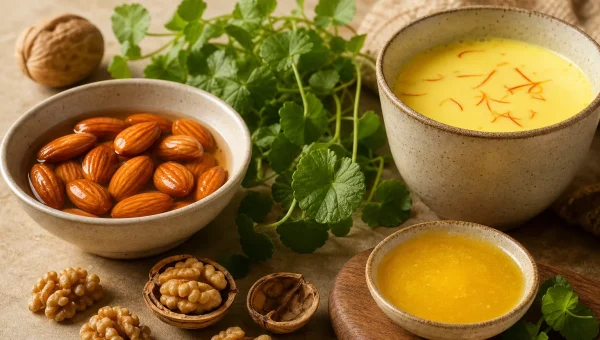
Ingredients (serves 1): 1/2 cup rolled oats, 1.5 cups whole milk or oat milk, 2 to 3 chopped dates, 1 tsp ghee, 1/4 tsp cinnamon powder, 1/4 tsp cardamom powder, a small pinch of dry ginger powder, a very small pinch of nutmeg, 1 tbsp soaked peeled almonds, 1 tsp jaggery if needed, and a pinch of rock salt.
Method: Warm the milk in a small saucepan. Add the oats and cook on low to medium heat for 5 to 7 minutes, stirring until soft and creamy. Add the dates, cinnamon, cardamom, ginger, nutmeg, and salt. Cook for another 1 to 2 minutes. Turn off the heat and stir in the ghee. Top with soaked almonds and jaggery if using. Eat warm, seated, and unhurried.
Recipe 2: Semolina Upma with Vegetables
Upma is a useful savory option when sweet porridge feels too soft or monotonous. For Vata, the key is to make it moist rather than dry, to use enough warm water, and to include ghee, ginger, cumin, and a little lemon at the end for aroma and appetite.
Ingredients (serves 2): 1 cup fine semolina (suji/rava), 2 to 2.5 cups water, 1/2 cup peas, 1 grated carrot, 1 small potato cut into small cubes, 1 tbsp ghee, 1/2 tsp black mustard seeds, 1/2 tsp cumin seeds, 8 to 10 curry leaves, a pinch of asafoetida, 1/2 tsp grated fresh ginger, 1/4 tsp turmeric, 3/4 tsp salt, juice of half a lemon, and 2 tbsp chopped fresh coriander.
Method: Dry-roast the semolina on low to medium heat for 3 to 5 minutes until aromatic, then set it aside. Heat ghee in the same pan. Add mustard seeds, cumin, asafoetida, curry leaves, ginger, potato, and carrot. Cook until the vegetables begin to soften. Add turmeric, water, and salt; bring to a gentle boil. Slowly add the roasted semolina while stirring continuously to prevent lumps. Cover and cook on low heat until soft and moist. Stir in peas near the end. Finish with lemon juice and coriander. Serve warm.
Recipe 3: Sweet Rice Porridge for Delicate Appetite
When appetite is low after travel, poor sleep, stress, or recovery, a soft rice porridge is often gentler than a dense breakfast. Rice, milk, ghee, raisins, and mild spices create a warm, soft meal that is easy to reduce or enrich according to digestive strength.
Ingredients (serves 1 to 2): 1/3 cup white basmati rice, soaked for 20 minutes and drained; 2 cups whole milk or diluted milk; 1 cup water; 1 tsp ghee; 3 to 4 lightly crushed cardamom pods; 1 small cinnamon stick; 1 tbsp raisins; 1 tsp jaggery or raw sugar if needed; a pinch of saffron soaked in warm milk; and a pinch of salt.
Method: Combine the rice, milk, water, cardamom, and cinnamon in a heavy saucepan. Bring to a gentle boil, then reduce to the lowest heat. Cook partly covered for 25 to 30 minutes, stirring often, until the rice becomes very soft and the mixture turns creamy and porridge-like. Add ghee, raisins, jaggery, saffron milk, and salt in the last few minutes. Remove the whole spices before serving. Eat warm.
How to Adjust the Breakfast
If appetite is weak, make the meal thinner, warmer, and smaller: more liquid, less grain, and only a little ghee. If the morning feels dry, restless, or depleted, make the bowl softer and more unctuous with ghee, warm milk, dates, or soaked almonds. If there is heaviness or coating on the tongue, keep the meal lighter and use ginger, ajwain, or cumin rather than making it very sweet or rich.
For Vata, consistency is more important than novelty. Repeating one reliable warm breakfast for several weeks can be more useful than changing recipes every day. The body learns the rhythm, appetite becomes easier to read, and the morning starts with steadiness rather than stimulation.
Practical Comparison of Vata Breakfasts
Each option below serves a different morning. Choose the one that matches appetite and activity rather than assuming one recipe is best for every Vata person every day.
| Breakfast | Prep Time | Key Vata Benefit | When to Use |
|---|---|---|---|
| Spiced Oat Porridge | 10-15 min | Warm, soft, sweet, grounding | Daily maintenance and busy mornings |
| Semolina Upma | 20 min | Warm, savory, moist, steady | Active mornings or when sweet breakfast is not appealing |
| Sweet Rice Porridge | 30 min | Softest and gentlest texture | Weak appetite, travel recovery, or a delicate digestive day |
The best Vata breakfast is not merely a list of ingredients. It is a complete morning practice: warm food, enough moisture, a little unctuousness, mild seasoning, proper quantity, and calm attention while eating. Start there before adding complicated protocols. For many Vata-dominant people, this single change can make the whole day feel more settled.
Nothing in this article diagnoses or treats a medical condition. Use it as educational information and consult a qualified Ayurvedic practitioner or healthcare provider before starting herbs, supplements, detoxes, or therapeutic protocols, especially if pregnant, managing a medical condition, or taking medication.
References
- Charaka Samhita — Deerghanjiviteeya Adhyaya
- Charaka Samhita — Rasa Vimana
- Charaka Samhita — Agni
- Charaka Samhita — Rasa
- Charaka Samhita — Matrashiteeya Adhyaya
- Charaka Samhita — Snehadhyaya
- Charaka Samhita — Annapanavidhi Adhyaya
- Charaka Samhita — Shunthi
- Charaka Samhita — Ela
- Charaka Samhita — Talk%3ATwak
- Charaka Samhita — Shatapushpa
- Charaka Samhita — Gulma Chikitsa
- Charaka Samhita — Dinacharya
The skip breakfast and grab coffee pattern described is exactly how I spent my 30s. The mid-morning shakiness, the cravings, the inability to focus until noon. I thought I was just not a morning person. The Vata-morning connection reframes that entire period as a dietary mistake I can fix.
Useful post on The Vata Breakfast Blueprint. A few more examples would still help.
The sesame seed ladoo as a portable Vata breakfast is something my grandmother used to make in winter. She would give them to everyone before they left the house. I thought it was just a sweet. It is actually exactly the warm, oily, dense breakfast this article recommends for Vata morning grounding.
The research on anxiety and meal timing is not as settled as this article implies. Some of the hunger-before-meal anxiety is just hypoglycemia and is fixed by any breakfast, not specifically an Ayurvedic one. What evidence supports the specific warming, oily quality of the Vata breakfast over any other high-quality breakfast?
Useful post on The Vata Breakfast Blueprint. Would be useful to see a short checklist next.
Useful post on The Vata Breakfast Blueprint. I would still ask a practitioner before changing medicines.
Trying the spiced oat porridge with dates and ghee gave me a warm start that kept my midmorning cravings at bay.
What’s the shelf life of the prepared vata formulations? I ask because some preparations I’ve used seemed less potent after 2-3 months.
My father-in-law has been on this approach for four months. His joints are better than they were at 55. He credits vata and the diet changes together.
Does eating a cooked grain breakfast really help reduce that shaky feeling by ten a.m. for Vata types?
The tip about sipping warm ginger water before the meal makes sense for kickstarting digestion.
One thing I noticed is that the semolina upma feels heavier than oat porridge, which might suit active mornings better.
The description of waking up scattered and skipping breakfast is embarrassingly accurate for me. I convinced myself I wasn’t hungry in the mornings and that was fine. What changed things was trying the warm spiced oatmeal with ghee and a few soaked dates. Three weeks in and the 10am crash I had written off as normal just stopped happening. Wish the article had existed when I started reading about Vata management.
How does one identify a qualified Ayurvedic practitioner in a country without formal licensing? The advice to consult a Vaidya is given throughout but there is no guidance on how to verify credentials.
I find the advice to eat within ninety minutes of waking helpful, even when hunger feels absent.
Maybe the rice congee would be gentler on days when my gut feels especially irritated after travel.
What spices do you usually add to your oatmeal to mimic the cardamom, cinnamon, ginger combo mentioned?
Finally someone wrote clearly about spiced oatmeal recipe without the usual vague advice.
I would like more detail on The Vata Breakfast Blueprint. I appreciate that it does not oversell the result.
Tried soaked almonds + ghee combination twice before with no results. Three months each time. Not everyone responds the same.
some of the claims about avoiding cold smoothies advice seem exaggerated. been in this space for years
Not dismissing soaked almonds + ghee combination entirely but it didn’t do much for me. My constitution might be different.
@Chris same experience here. give it another few weeks.
agree completely. the sweet potato for Vata part especially.
omg the spiced oatmeal recipe part is exactly what i needed to read today
yeah the soaked almonds + ghee combination claims need better sourcing
For The Vata Breakfast Blueprint, consistency seems like the hard part. This feels more usable than a long list of herbs.
shared this with my mom, shes been asking about soaked almonds + ghee combination forever
soaked almonds + ghee combination protocol gave me headaches the first week. had to reduce the dose significantly
I notice you don’t mention any contraindications for the warm breakfast protocol. That feels like an important omission.
glad it helped. the the warm breakfast protocol timing makes a big difference.
good question about spiced oatmeal recipe. I was wondering the same thing 🌿
interesting but i disagree with the sweet potato for Vata approach. my experience was the opposite
The part about sweet potato for Vata finally cleared up something I’d been confused about for months.
The scientific evidence behind spiced oatmeal recipe seems to lag well behind the traditional claims.
Is the spiced oatmeal recipe protocol you described safe for someone with hypothyroidism?
What’s the difference between the soaked almonds + ghee combination approach for acute vs chronic conditions?
The chart you showed for avoiding cold smoothies advice , is that based on any published clinical guidelines?
Not dismissing avoiding cold smoothies advice entirely but it didn’t do much for me. My constitution might be different.
Started spiced oatmeal recipe six weeks ago after reading a different article, came here to compare approaches.
The soaked almonds + ghee combination schedule in section 2 , is that for all three doshas or specifically for Kapha?
bookmarked. the spiced oatmeal recipe section saved me so much confusion