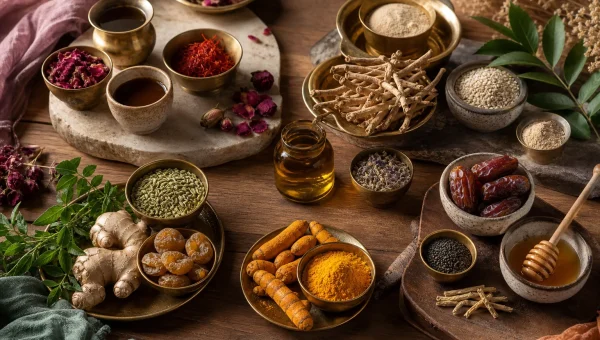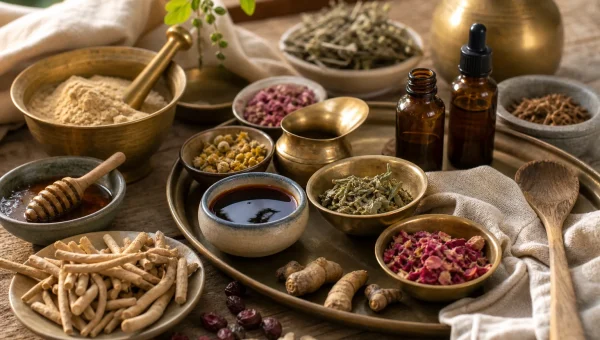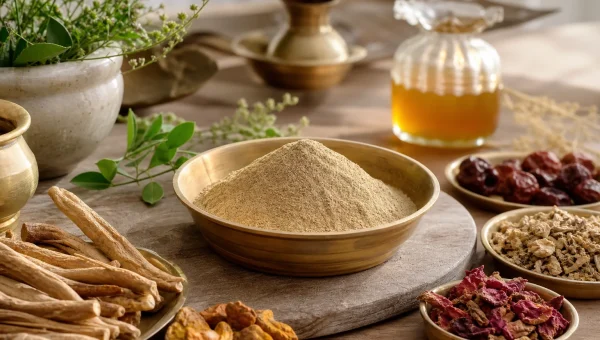
Uterine Fibroids Ayurvedic Herbs: The Garbhashaya Granthi Framework
Uterine fibroids ayurvedic herbs work best when the condition is understood through both the modern diagnosis and the Ayurvedic pattern behind it. Fibroids are benign smooth-muscle growths of the uterus; in Ayurvedic practice, they are approached through a garbhashaya-focused granthi framework: a knot-like, localized overgrowth in the uterine field, involving mamsa dhatu, meda dhatu, kapha compactness, pitta-rakta disturbance when bleeding is heavy or hot, and vata obstruction when pain, cramping, pressure, or displacement symptoms are prominent.
Classically, granthi is described as a round, knotty, elevated swelling formed when aggravated doshas vitiate mamsa, rakta, and meda with kapha involvement. Arbuda describes a larger, deeper, immobile, slowly developing fleshy mass. A uterine fibroid may draw from both ideas depending on its size, location, density, and symptom pattern. The Ayurvedic goal is therefore not merely to “shrink a lump,” but to reduce kapha-meda accumulation, regulate artava-vaha-srotas, calm pitta-rakta bleeding, and release vata obstruction in the pelvis.
Understanding What Fibroid Growth Represents
In modern gynecology, fibroids are estrogen-and-progesterone-responsive benign tumors that usually arise during the reproductive years and often become smaller after menopause. They may remain silent, or they may cause heavy menstrual bleeding, clots, pelvic pressure, pain, urinary frequency, constipation, anemia, infertility, or pregnancy-related difficulty depending on their size and location.
In Ayurveda, the uterus belongs to the field of artava-vaha-srotas, the channels concerned with menstrual and reproductive function. When kapha becomes heavy and stagnant, meda and mamsa can become more prone to dense overgrowth. When pitta and rakta are disturbed, the same condition may express as heavy, prolonged, bright, hot, or clotted bleeding. When vata is obstructed by the mass or by pelvic stagnation, pain, cramping, dragging pressure, constipation, and irregular flow become more prominent.
Three practical drivers therefore deserve correction alongside herbs: weak agni with ama-producing or incompatible food patterns; kapha-meda accumulation from heavy, cold, sweet, oily, stale, or sedentary living; and pitta-rakta aggravation from alcohol, heat, excess sour-spicy foods, sleep loss, unmanaged stress, and constipation. Modern endocrine-disrupting chemical exposure from some plastics, fragrances, and personal-care products is also best treated as a modifiable aggravating factor rather than as a single cause.
The Core Protocol: Kanchanara Guggulu with Ashoka, Manjistha, and Shatavari
The classical center of this approach is Kanchanara Guggulu. In the Ayurvedic Formulary of India, Kanchanara Guggulu is given from Sharangadhara Samhita and includes kanchanara bark, triphala, trikatu, varuna, ela, tvak, patra, and purified guggulu. Its listed therapeutic uses include gulma, granthi, gandamala, apachi, vrana, kushtha, bhagandara, and shlipada. This makes it the main formulation when the fibroid presentation is dense, heavy, slow-growing, kapha-dominant, and associated with pelvic fullness or obstruction. The formulary dose is 3 g as a prepared formulation, but commercial tablet strengths vary, so practical dosing should be individualized by a qualified Ayurvedic practitioner.
Kanchanara (Bauhinia variegata): Kanchanara bark is the signature herb in this formula. The Ayurvedic Pharmacopoeia of India describes it as kashaya in rasa, laghu and ruksha in guna, shita in virya, and katu in vipaka, with actions including dipana, grahi, tridoshahara, and gandavriddhihara. In a fibroid protocol, this profile supports kapha reduction, tissue firmness correction, and channel-clearing without adding excessive heat.
Ashoka (Saraca asoca): Ashoka is not the primary granthi-resolving herb; its importance is in the bleeding side of the presentation. The Ayurvedic Pharmacopoeia of India lists ashoka bark with tikta-kashaya rasa, laghu-ruksha guna, shita virya, and katu vipaka, with therapeutic uses including asrgdara, raktadosha, daha, and shotha. It is therefore especially appropriate when fibroids present with heavy, prolonged, hot, or pitta-rakta type menstrual bleeding. Ashokarishta may be selected by practitioners when a fermented preparation is more suitable than decoction.
Manjistha (Rubia cordifolia): Manjistha is selected for rakta and pelvic stagnation patterns. The Ayurvedic Pharmacopoeia of India describes it as madhura, tikta, and kashaya in rasa, guru in guna, ushna in virya, and katu in vipaka, with actions including kaphapittashamaka, shothaghna, stambhana, artavajanana, rasayana, and shonitasthapana, and with yoni roga listed among its uses. Although it is heating in virya, its classical karma makes it useful where clotting, congestion, inflammation-like swelling, and disturbed menstrual flow occur together.
Shatavari (Asparagus racemosus): Shatavari is supportive rather than scraping. The Ayurvedic Pharmacopoeia of India describes it as madhura-tikta in rasa, guru-snigdha in guna, shita in virya, and madhura in vipaka, with actions including balya, rasayana, pittahara, vatahara, vrishya, and stanyakara. In fibroid management it is best used when there is pitta-vata depletion, burning, weakness, cycle exhaustion, dryness, or post-bleeding fatigue. When the presentation is strongly kapha-dominant with heaviness, coating, edema, sluggish digestion, or weight accumulation, shatavari should be used cautiously or reserved for a later phase.
Monthly Dietary Cycle for Fibroid Management
A monthly diet rhythm is useful because the same person may need different support during bleeding, rebuilding, and premenstrual phases. This cycle does not replace individualized chikitsa, but it helps keep kapha, pitta-rakta, and vata from being aggravated at the wrong time.
| Cycle Phase | Days | Dietary Focus | Herb Priority | Key Restriction |
|---|---|---|---|---|
| Menstrual | 1-5 | Warm, soft, light meals such as rice-mung soup, cooked greens, sesame, and iron-supportive foods | Ashoka and manjistha as prescribed; avoid overly aggressive scraping when pain or exhaustion is high | No cold, raw, fried, very sour, heavy curd, or intense exercise |
| Follicular | 6-13 | Bitter and astringent vegetables, cruciferous vegetables, pulses, barley, millet, and steady bowel support | Kanchanara Guggulu at practitioner-guided dose | Minimize sweets, refined flour, cold dairy, day sleep, and inactivity |
| Luteal | 14-28 | Lighter dinners, warm cooked vegetables, fiber-rich meals, moderate seeds and nuts, and constipation prevention | Manjistha or Ashoka according to bleeding pattern; shatavari only when depletion signs are present | No alcohol, excess sugar, heavy late meals, or long sedentary evenings |
Foods That Support a Fibroid Plan
Food management in fibroids is not about fear of food; it is about reducing the terrain that supports kapha-meda accumulation and pitta-rakta disturbance. The most important correction is to move away from heavy, cold, oily, sweet, stale, incompatible, and digestion-suppressing patterns and toward warm, freshly cooked, fiber-rich, mineral-supportive meals.
For non-vegetarians, frequent processed red meat and ham are poor fits for a fibroid plan. For vegetarians, the comparable kapha-building pattern is frequent paneer, cheese-heavy meals, sweets, bakery foods, refined flour, deep-fried snacks, and cold desserts. Replace these with cooked leafy greens, lentils, mung, beans when digestible, sesame, whole grains, bitter vegetables, and warm spices used according to prakriti. Plant iron sources are useful when bleeding is heavy, and pairing them with vitamin-C-rich foods such as amla or lemon, when tolerated, improves non-heme iron absorption.
Cruciferous vegetables such as broccoli, cabbage, cauliflower, Brussels sprouts, radish, mustard greens, and similar bitter-pungent vegetables deserve a regular place in the diet. They contain glucosinolates that yield indole-3-carbinol and related compounds involved in normal estrogen metabolism. In practice, a cooked serving most days is a safe food-based approach; high-dose isolated supplements should not be used without professional guidance.
Dairy does not need to be treated as automatically harmful for every woman with fibroids. Small, warm, well-digested amounts may suit a depleted vata-pitta person, while cold curd, ice cream, sweet milkshakes, cheese-heavy meals, and late-night dairy aggravate kapha and ama in many fibroid patterns. The Ayurvedic rule is individualization: match the food to agni, kapha load, bleeding pattern, bowel function, and the person’s strength.
When Ayurvedic Management Has Clear Limits
Ayurvedic management is strongest as coordinated care for menstrual pattern, pain, pelvic heaviness, digestion, bowel regularity, anemia support, and the constitutional terrain around fibroid growth. It should not be used to delay needed gynecological evaluation, imaging, iron therapy, medication, or surgery when complications are present.
- Heavy bleeding causing anemia, dizziness, faintness, shortness of breath, or marked fatigue needs medical assessment.
- Urinary obstruction, kidney pressure, severe constipation, bowel compression, or rapidly worsening pelvic pressure requires gynecological care.
- Postmenopausal bleeding or postmenopausal growth must be evaluated promptly.
- Severe sudden pain, pregnancy with fibroids, recurrent miscarriage, or infertility with cavity distortion needs specialist management.
- Submucosal or cavity-distorting fibroids may require hysteroscopic or other gynecological treatment before conception attempts.
For women interested in conception, the position of the fibroid is more important than a single size rule. Submucosal fibroids and fibroids that distort the uterine cavity can interfere with implantation and pregnancy planning, while some subserosal fibroids may cause fewer fertility problems unless they are large or compressive. The complete pregnancy context is at Ayurvedic pregnancy planning by trimester. For those managing fibroids as part of hormone balance and channel health, see the broader framework at artava vaha srotas health.
The realistic path is neither premature surgery for every fibroid nor denial of surgery when it is necessary. The Ayurvedic path is monitored management: correct kapha-meda and pitta-rakta triggers, choose herbs by presentation, restore agni and bowel rhythm, protect strength after heavy bleeding, and use ultrasound follow-up to track the actual uterus.
Medical Disclaimer: This content is for educational purposes only and does not constitute medical advice. Uterine fibroids require diagnosis by ultrasound and evaluation by a qualified gynecologist to assess size, location, bleeding risk, fertility impact, and complications. Heavy menstrual bleeding causing anemia, symptomatic large fibroids, pregnancy-related fibroids, postmenopausal bleeding, or compressive urinary or bowel symptoms may require medical or surgical management. Consult a licensed Ayurvedic practitioner and gynecologist before starting herbal protocols. Kanchanara Guggulu, Ashoka, Manjistha, Shatavari, and related formulations require professional selection and dosing guidance.
References
- NCBI
- Reproductivefacts (reproductivefacts.org)
- Aafp (aafp.org)
- Wisdomlib — classical text
- Easyayurveda (easyayurveda.com)
- Ayurvedic Pharmacopoeia of India
- Dravyaguna notes
- Ayurvedic Pharmacopoeia of India
- Ayurvedic Pharmacopoeia of India
- Viruddha Ahara: A critical view (2012), PubMed Central
- Diet and uterine myomas (1999), PubMed
- NIH Office of Dietary Supplements
- Lpi (lpi.oregonstate.edu)
- Altered estrogen metabolism and excretion in humans following consumption of indole-3-carbinol (1991), PubMed
- A prospective study of dairy intake and risk of uterine leiomyomata (2010), PubMed Central
- The role of endocrine-disrupting chemicals in uterine fibroid pathogenesis (2020), PubMed Central