
Hair that feels heavy soon after washing, roots that fall flat within an hour, dull lengths, itching, and a coated feeling at the scalp can all point to product buildup. This is not a mystical “toxin” problem. It is a practical scalp-care problem: sebum, sweat, dead skin cells, dry shampoo, leave-in conditioners, oils, gels, styling creams, and film-forming ingredients can collect at the scalp and along the hair shaft when they are not fully removed.
An Ayurvedic scalp detox, in this context, means a careful botanical clarifying ritual. The aim is to remove heaviness and residue without repeatedly stripping the scalp. The two cleansing herbs at the center of the routine are Shikakai and Reetha. Shikakai is commonly sold as Acacia concinna, while current botanical databases treat it under Senegalia rugata. Reetha is Sapindus mukorossi, the soapnut. Both are valued because their saponins act as natural cleansing agents.
Why the Scalp Needs a Dedicated Clarifying Ritual
The scalp is skin with hair follicles, sebaceous glands, sweat, surface lipids, and a living microbial environment. When too much oil, dead skin, powder, wax, conditioner, or styling residue sits at the roots, the scalp can feel greasy, itchy, coated, or irritated. A clarifying ritual is useful because ordinary washing may clean the hair length while leaving the scalp feeling congested, especially when heavy products are used frequently.
In Ayurvedic language, a sticky, heavy, oily scalp pattern is commonly approached as a local Kapha-dominant state, often with Pitta involvement when there is redness, heat, itching, or sensitivity. The goal is not aggressive stripping. The goal is to loosen residue, reduce excess oiliness, calm irritation, and leave the scalp light enough for normal care.
The Five Key Ingredients in an Ayurvedic Scalp Detox
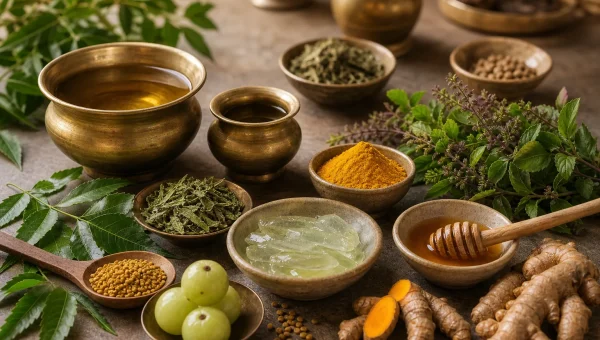
Each ingredient in this formula has a specific role. The cleansing work comes mainly from Shikakai and Reetha; the clay helps lift excess oil; Neem is used sparingly for itchy or oily scalp patterns; and Brahmi supports a gentler finish after cleansing.
| Herb / Ingredient | Botanical / Classical Identity | Role in the Detox | Ayurvedic Fit |
|---|---|---|---|
| Shikakai | Commonly sold as Acacia concinna; botanically treated as Senegalia rugata | Saponin-rich pod cleanser that helps loosen oil and dulling residue | Best for oily, heavy, Kapha-type buildup when used moderately |
| Reetha | Sapindus mukorossi | Soapnut cleanser with stronger foaming saponins | Useful for Kapha-heavy scalps; dilute well and keep away from the eyes |
| Multani Mitti | Fuller’s earth clay | Adsorbs excess oil, sebum, and surface debris from the scalp | Useful for oily or heavy scalps; use cautiously on dry or sensitive skin |
| Neem | Nimba; Azadirachta indica | Bitter scalp herb used in small amounts for itchy, oily, or irritated scalp patterns | Classically bitter, cooling, Kapha-Pitta reducing, and Kandughna |
| Brahmi | Bacopa monnieri | Cooling finishing rinse or oil support after cleansing | Classically cooling, Rasayana, Medhya, Vatahara, and Kaphahara |
How Shikakai and Reetha Cleanse
Saponins behave like mild natural surfactants. A surfactant has a water-loving side and an oil-loving side, allowing it to help loosen oily residue so that water and massage can carry it away. Reetha gives more noticeable foam, while Shikakai gives a softer cleansing effect traditionally valued for hair washing.
A scalp-friendly cleanse should also respect the natural acidity of the scalp and hair shaft. Hair-care literature commonly notes that shampoos with a lower, scalp-compatible pH are preferred over harsh alkaline washing, because alkaline products can increase friction, roughness, and frizz. A properly strained Shikakai-Reetha wash will not feel like a commercial sulfate shampoo, and it will not foam as dramatically. Its strength is gentle cleansing with thorough scalp massage and rinsing.
Very heavy buildup from frequent dry shampoo, waxes, oils, or water-insoluble conditioning films may need more than one herbal wash, and some people may need an occasional conventional clarifying shampoo before shifting into herbal maintenance. For routine monthly care, the herbal method is often enough to keep the scalp lighter and less coated.
The Monthly Scalp Detox Protocol
This protocol is best done when you have enough time to apply, rinse, and observe how your scalp responds. For most people, one session takes about 60 to 90 minutes. Do not scrub aggressively, do not use hot water, and do not let clay dry into a hard crust on the scalp.
Step 1: Decide Whether to Pre-Oil
Pre-oiling is not needed for every scalp. A heavy oil layer can interfere with clay’s ability to absorb excess sebum, so oily Kapha-type scalps usually do better without it. Dry or sensitive Vata-type scalps may need a very small amount of oil before cleansing.
- For oily, itchy, product-heavy scalps: Skip oiling and begin with the clay mask.
- For dry, tight, flaky, or sensitive scalps: Massage 1 to 2 teaspoons of warm Brahmi oil or plain sesame oil into the scalp only. Leave for 15 to 20 minutes, then proceed.
- For inflamed or burning scalps: Do not start a detox during an active flare. Seek professional guidance first.
Step 2: Multani Mitti and Neem Scalp Mask
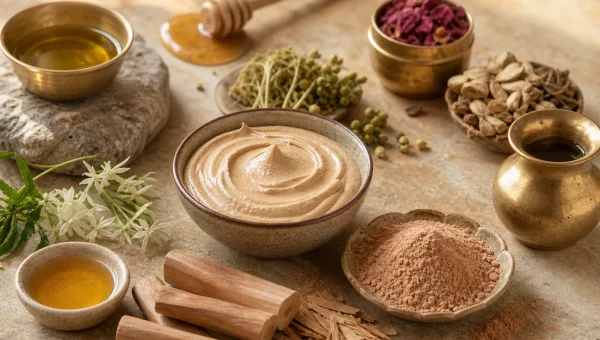
The clay step is for the scalp, not the hair length. Its purpose is to lift excess oil and surface residue from the roots before the herbal wash. Keep the paste moist while it sits, and rinse before it becomes hard or uncomfortable.
Ingredients:
- 3 tablespoons Multani Mitti or cosmetic-grade Fuller’s earth clay
- ½ to 1 teaspoon Neem powder
- 1 teaspoon Amalaki powder for Pitta-type sensitivity, redness, or heat
- Optional: ½ teaspoon apple cider vinegar for very oily, non-sensitive scalps only
- Enough room-temperature water to make a smooth, spreadable paste
Preparation: Mix the dry powders first. Add water slowly until the paste reaches the consistency of thick yogurt. Add apple cider vinegar only if your scalp is oily and not sensitive. Skip vinegar if your scalp is dry, red, burning, recently scratched, or prone to irritation.
Application: Part the hair into sections and apply the paste directly to the scalp. Do not coat the full length unless your hair is very oily. Leave for 10 to 15 minutes. For very oily Kapha-type scalps, 20 minutes may be tolerated, but the paste should not be allowed to fully harden. Rinse thoroughly with warm water.
Step 3: Shikakai and Reetha Wash
This is the main cleansing step. The liquid should be strained carefully so that no gritty particles remain on the scalp. Keep it away from the eyes, because soapnut liquid can sting.
Ingredients:
- 6 to 8 Reetha pods, cracked and deseeded
- 1 to 2 tablespoons Shikakai powder, or 5 to 6 dried Shikakai pods
- 2 cups water
Method: Soak the Reetha and Shikakai in water for at least 4 hours, or overnight. Simmer gently for 10 to 15 minutes, then allow the liquid to cool. Mash the softened pods, strain through a fine cloth or sieve, and transfer the liquid to a squeeze bottle.
Application: After rinsing the clay mask, apply the Shikakai-Reetha liquid directly to the scalp. Massage gently for 3 to 5 minutes. The foam will be light. Rinse thoroughly with warm water. Repeat once only if the scalp still feels coated or oily.
Step 4: Brahmi Rinse
A Brahmi rinse gives a softer finish after the cleansing steps, especially for Pitta or Vata scalps. It should be thin, well-strained, and comfortable on the skin.
- Steep 1 tablespoon Brahmi powder in 2 cups warm water for 15 to 20 minutes.
- Strain through a fine cloth so the rinse is smooth.
- Pour over the scalp after the main wash. Leave for 5 minutes, then rinse lightly if you dislike residue.
Step 5: Finish Lightly
After detoxing, avoid placing heavy conditioner, serum, or oil directly on the scalp. If the hair length feels dry, apply conditioner only from mid-length to ends, then rinse well. Let the scalp dry naturally or use low heat.
How Often and What to Expect
For most people, once a month is enough. Heavy users of dry shampoo, wax, gel, leave-in creams, or scalp oils may use the protocol every 3 to 4 weeks at first. Dry, sensitive, or Vata-type scalps usually do better every 6 to 8 weeks, with less clay and more oil protection.
- After the first session: The roots may feel lighter, the scalp may feel less coated, and shampoo may rinse more cleanly in the following washes.
- After repeated monthly use: Styling products may be needed less often because the roots are not weighed down by old residue.
- If itching, scaling, redness, crusting, or shedding continues: Stop the protocol and get the scalp assessed, because dandruff, seborrheic dermatitis, psoriasis, eczema, contact dermatitis, fungal infection, or other conditions may need specific care.
Adapting the Protocol for Your Dosha
The same base method can be adjusted by scalp pattern. Use the dosha language as a practical guide to oiliness, dryness, heat, sensitivity, and heaviness rather than as a substitute for medical diagnosis.
- Vata scalp — dry, tight, flaky, fine, or easily irritated: use a small pre-oil, reduce Neem to ½ teaspoon or skip it, avoid apple cider vinegar, keep the clay mask to 10 minutes, and do not repeat the Shikakai-Reetha wash.
- Pitta scalp — sensitive, warm, red, itchy, or inflamed: use cool-to-lukewarm water, add 1 teaspoon Amalaki or use the Brahmi rinse, avoid vigorous scrubbing, and skip vinegar if there is any burning or redness.
- Kapha scalp — oily, heavy, dull, waxy, or product-laden: skip pre-oiling, use the full Reetha amount, keep the clay mask on for 15 to 20 minutes if comfortable, and repeat the herbal wash once if needed.
A Note on Sourcing
Buy correctly identified herbs from reputable Ayurvedic suppliers. Whole Reetha and Shikakai pods are easier to inspect than powders, while powders are more convenient but should be fresh, clean-smelling, and free from grit or artificial fragrance. Use cosmetic-grade clay for topical use, avoid inhaling fine powders, and discard any prepared liquid that changes smell, color, or texture.
What to Stop Doing Between Detoxes
The detox works best when daily styling habits do not immediately recreate the same buildup. Keep the scalp simple between sessions and place heavier products only where they are needed.
- Keep serums, waxes, leave-ins, and oils away from the scalp unless they are part of a planned oiling treatment.
- Use dry shampoo sparingly and wash it out thoroughly rather than layering it for several days.
- Rinse conditioners completely, especially near the crown and behind the ears.
- Wash combs, brushes, clips, and pillowcases regularly so old oil and product do not return to the scalp.
- Choose lighter scalp products when your roots flatten quickly after washing.
Start with one gentle session and observe the scalp for the next few days. A good Ayurvedic scalp detox should leave the roots lighter, the scalp calmer, and the hair easier to manage without making the skin feel raw, tight, or stripped.
Disclaimer: This content is for informational and educational purposes only and does not constitute medical advice. Consult a qualified Ayurvedic practitioner, dermatologist, or healthcare provider before using this protocol if you have psoriasis, seborrheic dermatitis, eczema, fungal infection, open wounds, unusual hair loss, pregnancy, known plant allergies, or a sensitive scalp. Perform a patch test before applying any new herb, clay, oil, or rinse. Avoid neem during pregnancy unless a qualified clinician approves it. Keep herbal washes away from the eyes and do not ingest clay or hair-wash preparations.
References
- Medicalnewstoday (medicalnewstoday.com)
- Healthline (healthline.com)
- The Potential Relevance of the Microbiome to Hair Physiology and Regeneration: The Emerging Role of Metagenomics (2021), PubMed Central
- Mayoclinic (mayoclinic.org)
- Powo (powo.science.kew.org)
- Powo (powo.science.kew.org)
- Natural alternatives from your garden for hair care: Revisiting the benefits of tropical herbs (2023), PubMed Central
- Triterpenoid Saponins from Washnut (Sapindus mukorossi Gaertn.)-A Source of Natural Surfactants and Other Active Components (2022), PubMed Central
- Mdpi (mdpi.com)
- Kruss-scientific (kruss-scientific.com)
- The Shampoo pH can Affect the Hair: Myth or Reality? (2014), PubMed Central
- Medicalnewstoday (medicalnewstoday.com)
- The Therapeutic Effects of a Bentonite-Based Facial Mask With Alcea sulphurea Extract on Acne Severity and Patient Experience: Add-On Randomized Controlled Clinical Trial (2025), PubMed Central
- Ayurvedic Pharmacopoeia of India
- Ayurvedic Pharmacopoeia of India
- Ayurvedic Pharmacopoeia of India
- My (my.clevelandclinic.org)
- NCCIH
- Npic (npic.orst.edu)
The product buildup description is my exact situation six months ago. Heavy and dull roots going flat in an hour. Switched to a shikakai and reetha wash followed by cold water rinse and the difference in two weeks was significant. No more silicone layering.
Is the multani mitti treatment safe for colored hair? I have highlights and I’m concerned about whether the clay draws out color along with the product buildup.
The salon serum bag story is me but I was the workshop attendee. I genuinely thought more products meant better hair. The concept of scalp suffocation from layered silicones is something no beauty brand wants you to understand.
Will try
@Vikram The product buildup causing actual hair fall is something I hadn’t considered as a cause
The neem and shikakai combination is what my mother used on my hair growing up and I abandoned it for years thinking it was old-fashioned. Coming back to it at 34 after years of expensive salon products and my scalp health has visibly improved within weeks.
The multani mitti application how long to leave before it dries completely?
This helped clarify my doubts.
My Pitta constitution responds exactly as described here. The detox worked within two weeks for me where pharmaceutical options had failed for months.
I tried a similar approach last year but without the specific sequencing. Wonder if that’s why it didn’t work
What’s the minimum frequency for the detox treatment to maintain results? Weekly seems like a lot to add to a hair care routine. Can it be done monthly for maintenance once the initial buildup is cleared?
The part about Scalp Detox feels realistic. The timing advice is the part I would start with.
Are there food interactions with detox that I should be aware of? My Ayurvedic doctor mentioned something about dairy but wasn’t specific.
The itching scalp that started after heavy product use is something dermatologists usually attribute to the dry shampoo benzene contamination issue. The Ayurvedic framing of product-induced scalp suffocation provides a different causal explanation that’s also plausible.
I tried the Shikakai-Reetha wash and noticed my roots felt less weighed down after rinsing.
The part about Scalp Detox feels realistic. The main idea is clear even if someone is new to Ayurveda.
Useful post
Are there clinical studies backing the specific herb combination you mentioned?
Did this for 6 weeks exactly as described, going to update here with results ✨
Can this be combined with modern medication or is it better standalone?
Would love a follow-up article going deeper on the herb preparation methods
The clay + amla combo for scalp worked really well after first use. Hair felt lighter
Where do you recommend sourcing the herbs mentioned here in India?
Same here 🌿
Will try this approach soon.
Doing this
For scalp psoriasis is the detox protocol safe or could it aggravate? 💯
Is this suitable for elderly patients or does the dosage need adjustment?
I appreciate how specific the instructions are compared to most Ayurveda articles
What’s the typical duration of the treatment before reassessing?
The section on dosage was the most practically useful for me
Anyone else tried this for longer than 6 months? Wondering about long-term effects
The contraindications section was important and often missing from similar articles
Thanks!
Good information on this topic.
The seasonal variation angle is underused in most health content. Good to see it here
Does the detox protocol differ for color-treated hair? 🌿
How often can you do the deep detox treatment without over-stripping scalp oils?
Sorry off-topic but anyone here used Ayurveda for hair fall? Would love recommendations
Good article on this subject. #66
Good article on this subject. #70
The build-up from dry shampoo you mentioned is something I’ve been contributing to for months 🌿
The overnight neem oil treatment how to get it out completely? Takes multiple washes
Does this apply to children or only adults?
tbh wasnt expecting much from this but the specifics are actually helpful
The clay mask step sounded messy, but the instructions on consistency helped me get it right.
The Ayurvedic framing made this topic much easier to understand than the Western medical version
Been following Ayurveda for 5 years and this article still taught me something new
My doctor dismissed this as pseudoscience. Going to try it anyway and report back
good info, sharing with my father who has been looking for something like this
Good article on this subject. #62 🙏
How long typically before seeing results with this approach?
Does this protocol change if someone is pregnant or breastfeeding?
The shikakai vs commercial shampoo comparison does shikakai actually lather enough?
The traditional context helps understand why it’s done this way. Not just ‘eat this herb’
Following this protocol now.
Is the morning or evening timing more important for this protocol overall?
started this 3 weeks ago, too early to say but the process itself feels right ठीक है
This explains something I’ve experienced but couldn’t name. Good validation
Shared this with my Ayurveda practitioner. She agreed with most points ✨
My scalp gets oily 24 hours after washing. Could that be buildup related or just overactive sebum?
The dosage range given is wide. Is there a way to determine where in the range I should start? ✨
Not skeptical about Ayurveda generally but some claims here need stronger evidence
Good article on this subject. #74
The connection between gut health and this condition is the angle most allopathic doctors miss
Helpful article, thank you.
Tried this, results were good.
Interesting perspective here.
Thanks for the clear explanation.
Does the Brahmi rinse really need to be left in, or can I rinse it out after a few minutes?
Useful and actionable.
Bookmarked for future reference.
Good article on this subject. #55
Good article on this subject. #73
Good article on this subject. #56
Good article on this subject. #57
Good article on this subject. #58
Good article on this subject. #81
Good article on this subject. #59 🙌
Good article on this subject. #60
Good article on this subject. #61
Good article on this subject. #71
The dosha-specific tweaks, especially adding sandalwood for Pitta scalps, seem useful.
Good article on this subject. #63
Good article on this subject. #64
Good article on this subject. #65
Checking my conditioner for silicones led me to switch to a water soluble formula.
Good article on this subject. #67
Good article on this subject. #68
Good article on this subject. #69
Good article on this subject. #72
Good article on this subject. #75
Good article on this subject. #76
Good article on this subject. #77
Good article on this subject. #78 ठीक है
Good article on this subject. #79
Good article on this subject. #80
Good article on this subject. #82
Good article on this subject. #83
Good article on this subject. #84 🙌
Good article on this subject. #85
Good article on this subject. #86
Good article on this subject. #87
Good article on this subject. #88
Good article on this subject. #89
Good article on this subject. #90