Amavata Requires a Year-Round Strategy
Panchakarma for amavata is best understood as part of a continuing, seasonal strategy rather than a single cleansing course. In classical Ayurveda, amavata begins with weakened agni, formation of ama, and the movement of aggravated vata into the joints and related channels. The result is a pattern of pain, swelling, stiffness, heaviness, low appetite, indigestion, feverishness, fatigue, and restricted movement. When the person also has a medical diagnosis of rheumatoid arthritis, the Ayurvedic plan should be coordinated with rheumatology care because RA is a chronic inflammatory autoimmune disease in which regular treatment and monitoring help protect joint structure and function.
The realistic goal of long-term Ayurvedic management is not to promise a permanent cure from one panchakarma course. The practical goals are to reduce flare frequency and severity, improve digestion and metabolic clarity, preserve mobility, support strength, reduce pain and morning stiffness, and help the patient live with better function while medical treatment is supervised. In this model, shodhana procedures, diet, daily routine, herb selection, exercise, and follow-up testing are adjusted through the year according to the stage of ama, the strength of the patient, the season, and the current level of joint inflammation.
Understanding the Amavata Pathology in Practical Terms
Ama in amavata should be described in Ayurvedic terms rather than equated directly with one modern laboratory marker. It refers to incompletely processed, heavy, sticky, obstructive material produced when agni is weak. Vata then carries this ama into the joints, where the condition expresses as pain, swelling, stiffness, heaviness, poor appetite, sluggish digestion, and variable systemic symptoms. Classical descriptions also connect amavata with causes such as incompatible food and habits, poor digestive strength, lack of movement, and exertion soon after heavy or unctuous food.
The treatment logic is therefore staged. In the sama stage, where ama is prominent, the first priority is langhana, deepana, pachana, and appropriate swedana to lighten, kindle digestion, and reduce obstruction. Strong oiling, heavy rasayana, or nourishing therapies are avoided until the ama burden is reduced. Once the patient is closer to a nirama state, vata-shamana measures such as basti, suitable snehana, and restorative care can be used more safely. This sequencing is central: ama must be digested and cleared before the body is heavily nourished.
Annual Panchakarma Scheduling for Amavata
Ayurveda places treatment within ritucharya, the seasonal framework for preserving health and preventing dosha aggravation. For amavata, this does not mean that every patient receives the same procedure every season. It means that the physician uses seasonal dosha tendencies to decide when to emphasize ama-reduction, vata care, pitta clearing, kapha-lightening, or local joint support.
| Seasonal Window | Amavata Priority | Usual Ayurvedic Emphasis | Practical Notes |
|---|---|---|---|
| Varsha / rainy season | Vata aggravation with weak digestion | Deepana-pachana, ruksha swedana when suitable, and physician-led basti after ama reduction | Basti is considered the major shodhana procedure for vata, but in amavata it should be used only after assessing ama, strength, bowel habit, and medication status. |
| Sharad / autumn | Pitta tendency, heat, burning, or inflammatory expression | Virechana when indicated, followed by samsarjana krama | Virechana is not a routine laxative; it requires preparation, physician selection of medicine, observation, and a graduated post-cleansing diet. |
| Hemanta / Shishira / winter | Cold stiffness, vata pain, and need for strength preservation | Warmth, regulated movement, local therapies, and carefully chosen snehana after ama is reduced | Heavy oiling and rasayana are reserved for patients who are not in an active ama-dominant flare. |
| Vasanta / spring | Kapha accumulation, heaviness, sluggishness, and coating | Langhana, udvartana, ruksha swedana, deepana-pachana; vamana only in selected kapha-dominant patients | Vamana is not required for every amavata patient. It is reserved for appropriate strength, clear kapha dominance, and a supervised clinical setting. |
The Basti Cycle: Central Procedure After Ama Reduction
Basti has a central place in vata disorders, and amavata becomes a basti-responsive condition only when the physician has first addressed the ama stage. Classical schedules include karma basti, kala basti, and yoga basti, but the actual plan in chronic amavata is individualized. A shorter yoga or kala pattern may be chosen when the patient is weak, medicated, working full-time, elderly, or prone to digestive instability. A fuller basti schedule may be considered only when strength, digestion, bowel function, and supervision allow it.
For amavata, basti is commonly planned with formulations that combine vata-shamana and ama-reducing intent. Vaitarana basti is a well-known choice in amavata practice, and other basti plans may use decoctions, oils, salts, sour media, or paste components according to the patient’s stage. Anuvasana and niruha basti should not be self-administered from a fixed internet dosage. The volume, sequence, medicine, retention expectation, and number of bastis belong to the treating Ayurvedic physician, especially when the patient is taking DMARDs, biologics, anticoagulants, steroids, pain medicines, or has bowel disease.
The Panchakarma complete guide at panchakarma complete guide can be used for a general overview of the five cleansing therapies. For the disease framework, see ayurvedic rheumatoid arthritis amavata.
Virechana for Pitta-Ama and Shodhana Readiness
Virechana is used in amavata when the clinical picture supports purgation and the patient is ready for shodhana. It is especially considered when there is a pitta-associated pattern such as heat, burning, marked inflammatory expression, irritability, sourness, or seasonal aggravation in sharad. It is not simply a way to force loose stools during a flare. The patient must first be assessed for digestive strength, bowel habit, age, stamina, active medicines, hydration status, and contraindications.
The classical method includes preparation, proper oleation and sudation when appropriate, administration of the selected virechana medicine, observation of the response, and samsarjana krama afterward. Samsarjana krama is the graduated post-cleansing diet that protects agni after purgation. In amavata patients, this recovery phase is important because weak agni is part of the original pathology. Returning immediately to heavy, cold, fried, incompatible, or irregular food can recreate the same ama-forming conditions that the treatment was meant to correct.
Herb Phasing for Long-Term Management
Long-term herbal management should be phased by disease stage rather than rotated mechanically by the calendar. In an ama-heavy phase, the emphasis is on langhana, deepana, pachana, and reducing heaviness. In a joint-pain and vata-dominant phase, the plan may include classical guggulu preparations, rasna-based support, local applications, and basti planning. In a heat-dominant phase, the physician may reduce overly heating medicines and use a cooler, pitta-aware approach. In a rebuilding phase, rasayana and strengthening support are introduced only when digestion is steadier and ama signs have reduced.
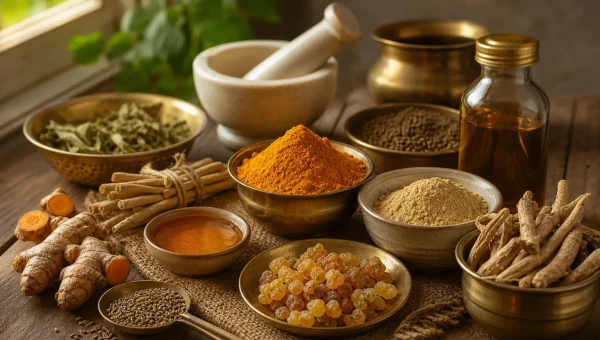
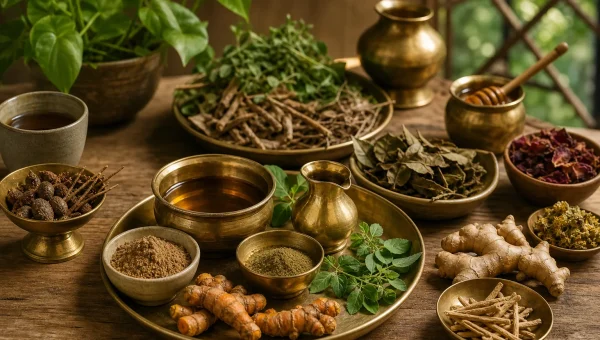
Common Ayurvedic materia medica used in amavata-oriented care includes rasna, rasona, guduchi, shunthi, nirgundi, shallaki, bala, eranda, and guggulu-based formulations such as simhanada guggulu or vatari guggulu when indicated. These are not interchangeable supplements. Guggulu preparations, mineral-containing formulations, high-dose herbs, castor-based medicines, and purgative medicines require professional supervision. Product quality also matters; medicines should be obtained from reputable manufacturers following applicable Ayurvedic pharmacopoeial and safety standards.
Diet, Routine, and Daily Flare Prevention
The year-round plan is built on food and routine as much as procedures. During ama-dominant periods, the diet is kept warm, light, freshly prepared, and easy to digest. Heavy curd, cold drinks, refrigerated food, excessive fried food, overeating, daytime sleeping, and irregular meals are avoided when they worsen stiffness, coating, heaviness, or indigestion. Warm water, appropriate spices, simple meals, and regular timing are often more important than adding more medicines.
Movement is also staged. During an acute swollen-joint flare, the priority is rest, gentle range of motion, warmth or other physician-advised local care, and medical review if swelling is severe. During a stable phase, daily walking, mobility work, mild strengthening, and joint-protective exercise help preserve function. Exercise immediately after heavy or oily food is avoided in the classical amavata logic because it can disturb digestion and aggravate the underlying pattern.
Monitoring Inflammatory Markers and Joint Function
Long-term amavata management should be tracked with both Ayurvedic observation and biomedical monitoring. Useful clinical markers include morning stiffness duration, number of swollen joints, number of tender joints, walking capacity, grip strength, sleep, appetite, bowel regularity, coating on the tongue, flare frequency, and functional ability. These markers show whether the plan is actually helping the person live and move better.
For rheumatoid arthritis, laboratory and medical follow-up should remain under a rheumatologist. ESR and CRP are commonly used to follow inflammatory activity. RF and anti-CCP help in diagnosis and prognosis but may remain positive and are not usually repeated as routine activity markers once diagnosis is established. CBC, liver function, kidney function, and other safety tests may be needed depending on the patient’s DMARDs, biologics, pain medicines, steroids, and herbal plan. If methotrexate or other DMARDs are used, the monitoring schedule should follow rheumatology guidance.
DAS28 can be useful when calculated by a clinician because it combines joint counts, patient assessment, and an inflammatory marker. A DAS28-ESR value above 5.1 is generally considered high disease activity, while a value below 2.6 is generally considered remission. These numbers should not be used as a self-diagnosis tool, and DAS28-CRP may be interpreted differently from DAS28-ESR. In practical integrated care, a favorable direction is fewer swollen joints, shorter morning stiffness, better function, lower inflammatory markers when they were elevated, stable medication safety labs, and no avoidable delay in medical treatment.
Safety Boundaries for Integrated Care
Rheumatoid arthritis can damage joints and affect quality of life if active inflammation is undertreated. Ayurvedic care can be integrated thoughtfully, but it should not be used to abruptly replace DMARDs, biologics, steroids, or rheumatology follow-up. Any reduction in conventional medicine must be decided by the rheumatologist based on disease activity, imaging, laboratory markers, medication risk, and the patient’s overall condition.
Medical disclaimer: Amavata and rheumatoid arthritis require individualized care. Panchakarma procedures should be performed only by qualified Ayurvedic physicians in appropriate clinical settings. Consult a qualified Ayurvedic practitioner and a licensed healthcare provider before starting herbs, basti, virechana, vamana, or any medicine change. Never reduce or stop DMARDs, biologics, steroids, anticoagulants, or prescribed pain medicines without rheumatologist guidance. This article is educational and does not replace professional medical care.
References
- Easyayurveda (easyayurveda.com)
- Acspublisher (acspublisher.com)
- Charaka Samhita — Ritucharya
- Charaka Samhita — Kala
- Charaka Samhita — Panchakarma in modern lifestyle
- Clinical evaluation of efficacy of Alambushadi Ghana Vati and Vaitarana Basti in the management of Amavata with special reference to rheumatoid arthritis (2016), PubMed
- Clinical efficacy of Shiva Guggulu and Simhanada Guggulu in Amavata (Rheumatoid Arthritis) (2012), PubMed
- A comparative study of Rasona Rasnadi Ghanavati and Simhanada Guggulu on Amavata with special reference to Rheumatoid arthritis (2011), PubMed
- LWW Journals
- CCRAS
- Ayurvedic Pharmacopoeia of India
- Mayoclinic (mayoclinic.org)
- Hss (hss.edu)
- 2021 American College of Rheumatology Guideline for the Treatment of Rheumatoid Arthritis (2021), PubMed Central
- Acrjournals (acrjournals.onlinelibrary.wiley.com)
- Das-score (das-score.nl)
- DAS28-CRP Cutoffs for High Disease Activity and Remission Are Lower Than DAS28-ESR in Rheumatoid Arthritis (2020), PubMed Central
- Mskcc (mskcc.org)
- NCBI