
Ayurvedic Approach to Low Libido in Men Under 40: Beyond Shilajit and Ashwagandha
Let me be direct. If you are a man under 40 dealing with low libido, ordering ashwagandha and shilajit without asking why your desire has dropped is usually an incomplete approach. Ayurveda looks at low libido through the combined state of agni digestion and metabolism, nidra sleep, manas mind, ojas vitality, and shukra dhatu reproductive tissue. Vajikarana is the classical Ayurvedic branch concerned with virility and sexual function, but it is not a shortcut for a depleted, stressed, poorly nourished, or sleep-restricted body.
In the Charaka Samhita, Vajikarana is discussed in Chikitsa Sthana Chapter 2. Its scope includes conduct, diet, qualities of semen, factors affecting virility, the role of the mind, and the use of formulations. The practical lesson is simple: aphrodisiac therapy works best when the foundation of digestion, nourishment, strength, sleep, and mental steadiness is already being rebuilt.
Root Causes of Low Libido in Young Men: The Ayurvedic Diagnostic Framework
Before choosing herbs, the first question is not “Which supplement increases testosterone?” The first question is “Which pattern is weakening desire?” In men under 40, the most useful Ayurvedic framework is to separate stress, depletion, obstruction, heat, and medical red flags.
| Ayurvedic Pattern | Common Presentation Under 40 | First Priority |
|---|---|---|
| Manasika / rajas-vata pattern | Stress, anxiety, overthinking, pressure to perform, grief, depression, work burnout, mental fatigue | Sleep, nervous-system calming, counseling when needed, gentle medhya support before strong vajikarana |
| Ojas and shukra depletion | Low drive with fatigue, weak recovery, poor sleep, excessive training, under-eating, dryness, low body reserves | Brimhana nourishment, rest, healthy fats, milk or ghee when suitable, balya and shukrala herbs |
| Agni-ama / kapha-meda obstruction | Sluggish digestion, heaviness, lethargy, weight gain, dull desire, low motivation, coated tongue, bloating | Improve digestion, lighten meals, regular movement, reduce excess heaviness before rich aphrodisiac formulas |
| Pitta-burnout pattern | Irritability, heat, acidity, disturbed sleep, driven work habits, anger, restlessness, inflamed body-mind state | Cooling routine, pitta-pacifying diet, shatavari and vidari-type nourishment when appropriate |
| Medical red-flag pattern | Sudden libido loss, erectile dysfunction, absent morning erections, gynecomastia, loss of body hair, infertility, testicular injury, medication-related changes | Medical evaluation first; Ayurveda can support but should not delay diagnosis |
For many younger men, low libido is not a lack of one exotic herb. It is often the body’s refusal to keep spending reproductive energy while sleep, digestion, mental steadiness, and recovery are being neglected.
Step 1: Rebuild the Foundation Before Adding Strong Herbs
This is where most “natural libido” advice fails. Rich, heating, or stimulating vajikarana herbs can be poorly tolerated when digestion is weak, sleep is short, and the nervous system is constantly activated. The first three to four weeks should rebuild the conditions that allow shukra dhatu to be nourished.
Sleep Restoration
Sleep is non-negotiable because male reproductive hormones are sensitive to sleep restriction. Adults generally need at least seven hours of sleep, and short sleep can quickly affect daytime testosterone in healthy young men. In Ayurvedic terms, poor sleep aggravates vata, weakens recovery, and gradually drains ojas.
- Set a fixed sleep window: Aim for 7-8 hours, with consistent sleep and wake times as far as possible.
- Protect the last hour before bed: Keep the room dark and cool, reduce stimulating work, and avoid turning the bed into a place for scrolling and problem-solving.
- Use food as part of the sleep protocol: If suitable for your digestion, a small serving of warm milk with a little ghee or a pinch of warming spice can be used as a nourishing bedtime support.
- Use ashwagandha selectively: Ashwagandha root is listed in the Ayurvedic Pharmacopoeia of India as rasayana, balya, and vajikarana, with classical powder dosage in the range of 3-6 g. It is warming, so it is not ideal for every pitta-dominant or heat-aggravated person.
- Respect safety: Ashwagandha should be used cautiously in people with thyroid disorders, liver concerns, hormone-sensitive prostate cancer, or those taking regular medication, and it should be personalized by a qualified practitioner.
Stress, Manas, and Sexual Desire
Ayurveda gives the mind a central role in sexual vitality. A pleasant, settled, affectionate, and unpressured mental state supports desire; chronic pressure, worry, fear of failure, resentment, and overstimulation weaken it. In a stress-dominant pattern, the first medicine is not a stronger aphrodisiac; it is reducing the constant drain on manas and ojas.
- Nadi Shodhana: Practice alternate nostril breathing for 5-10 minutes once or twice daily, without strain or breath-holding.
- Oil massage: Warm sesame oil self-massage, especially on days of training or nervous exhaustion, helps counter the dry, scattered quality of aggravated vata.
- Reduce unnecessary stimulation: Late-night work, constant notifications, excessive caffeine, and emotional conflict all keep the system in a state that is unfriendly to libido.
- Get support when needed: When low desire is tied to anxiety, depression, trauma, relationship distress, or performance fear, counseling or mental health care belongs in the treatment plan.
Dietary Foundation for Shukra Dhatu
Shukra is described as one of the seven dhatus, nourished through the successive transformation of food into body tissues. This means reproductive vitality depends on the quality of diet, digestion, and tissue nourishment over time. A man who is under-eating, crash-dieting, living on cold snacks, or skipping meals is not giving shukra dhatu the raw material it needs.
- Do not run a constant calorie deficit: Low libido during aggressive cutting, fasting, or under-eating is often a sign that the body is conserving energy.
- Favor warm, digestible meals: Khichdi, rice, dal, soups, stews, cooked vegetables, and appropriate spices are usually better than cold, dry, raw, irregular eating when depletion is present.
- Use nourishing fats intelligently: Ghee is classically connected with rasa, shukra, and ojas. Use it according to digestion, constitution, lipid status, and overall diet.
- Include strength-building foods: Black gram, shashtika rice, wheat, milk preparations, nuts, seeds, paneer, dal, eggs, fish, or other suitable protein sources can be selected according to constitution, ethics, and digestion.
- Do not overload weak digestion: If there is bloating, heaviness, coated tongue, sour belching, or sluggish bowels, correct agni before using heavy vajikarana preparations.
Step 2: The Vajikarana Protocol After the Foundation Is Stable
Once sleep, food, digestion, stress, and recovery are improving, vajikarana herbs can be introduced more intelligently. The goal is not to take every herb at once. The goal is to match the herb to the pattern: calming and strengthening for stress depletion, cooling and unctuous for pitta-vata depletion, and lighter digestive correction when kapha-ama is blocking vitality.
Tier 1: Foundational Vajikarana Herbs
These herbs should be chosen by constitution, digestion, medications, and the dominant pattern. The dose ranges below reflect classical or pharmacopoeial powder ranges where available, but individual prescribing should come from a qualified practitioner.
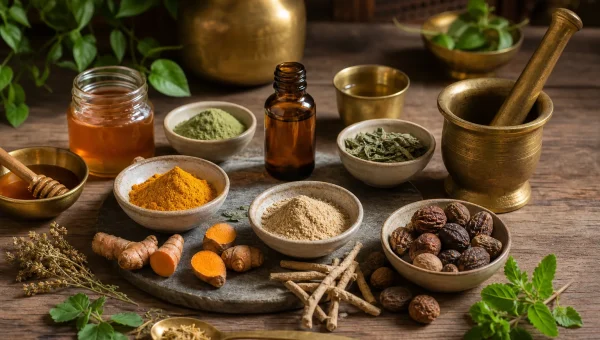
- Ashwagandha (Withania somnifera): Best suited to vata-kapha depletion with fatigue, nervous exhaustion, weakness, and stress-related low drive. The Ayurvedic Pharmacopoeia lists it as tikta-kashaya in rasa, laghu in guna, ushna in virya, madhura in vipaka, and rasayana, balya, and vajikarana in karma. Its powder dose is listed as 3-6 g.
- Kapikacchu / Atmagupta (Mucuna pruriens): A stronger choice when low libido is tied to weakness, low motivation, shukra depletion, and poor vitality. The Ayurvedic Pharmacopoeia lists Atmagupta seed as vrishya, balya, brimhana, and useful in klaivya and daurbalya, with a dose of 3-6 g. Because it contains L-DOPA, it needs professional supervision, especially if you use psychiatric medication, Parkinson’s medication, or dopaminergic medicines.
- Gokshura (Tribulus terrestris): Best suited when low libido is accompanied by urinary or urogenital weakness, vata aggravation, dryness, or the need for gentle brimhana support. The Ayurvedic Pharmacopoeia lists Gokshura root as madhura, guru, snigdha, sheeta, madhura vipaka, and mutrala, vrishya, vatanut, and brimhana.
- Safed Musli (Chlorophytum borivilianum): A valued vajikarana and rasayana herb in modern Ayurvedic practice, especially where weakness, low stamina, and reproductive depletion are part of the picture. Because quality, adulteration, and sustainable sourcing are real concerns, it should be purchased only from reputable, tested sources and used under guidance.
Tier 2: Cooling, Unctuous, and Tissue-Building Support
Not every low-libido case needs more stimulation. Many men need cooling, unctuous, tissue-building support because they are dry, depleted, overheated, irritable, underweight, or burned out from intense work and training.
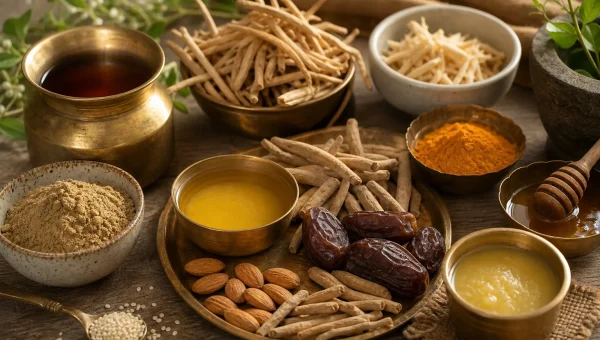
- Shatavari (Asparagus racemosus): Despite its reputation as a women’s herb, Shatavari is also listed as shukrala, balya, medhya, rasayana, and vrishya. It is madhura-tikta, guru, snigdha, sheeta, and madhura vipaka, making it useful when pitta-vata depletion, dryness, heat, or irritability is present.
- Vidari / Vidarikanda (Pueraria tuberosa): A classic brimhana and balya choice when the person is undernourished, lean, dry, or depleted. The Ayurvedic Pharmacopoeia lists Vidarikanda as madhura, guru, snigdha, sheeta, madhura vipaka, and balya, jivaniya, brhana, vatahara, vrishya, vajikarana, and rasayana, with shukrakshaya among its therapeutic uses.
- Ghee-based delivery: When digestion allows, ghee can be an important anupana or processing medium because it is traditionally connected with rasa, shukra, and ojas and carries fat-soluble herbal qualities deeply into tissues.
Where Shilajit Fits
Purified shilajit can be useful in a supervised plan, but it should not be treated as the first answer for a sleep-deprived, overstressed, underfed young man. It belongs later in the protocol, after the basics are improving, and only when the product is purified, tested, and appropriate for the person.
- Use only purified shilajit from a reliable source with testing for heavy metals and contaminants.
- Avoid raw mineral resin or unknown online products.
- Do not combine shilajit casually with multiple heating herbs if there is acidity, heat, irritability, or pitta aggravation.
- Use caution if you have kidney disease, gout tendency, iron overload, chronic medical conditions, or are taking regular medication.
Classical and Practical Formulation Choices
Formulations should be chosen by pattern rather than popularity. The same low-libido complaint may need a calming ashwagandha-based approach, a cooling shatavari-vidari approach, a kapikacchu-based shukra-support approach, or a digestive-lightening plan before any rich formula is appropriate.
| Formulation Direction | Best Suited For | Use Notes |
|---|---|---|
| Ashwagandha-based arishta, churna, or ghrita approach | Stress depletion, nervous fatigue, vata-kapha weakness, poor recovery | Useful when sleep and strength are low; avoid casual long-term use without checking heat, thyroid, liver, and medication context |
| Shatavari or Vidari ghrita / kalpa approach | Pitta-vata depletion, dryness, underweight state, heat with weakness | Better for cooling, unctuous, tissue-building support than for a kapha-heavy or ama-heavy presentation |
| Kapikacchu-based approach | Shukra depletion, daurbalya, low motivation, poor vitality | Requires supervision because of L-DOPA content and potential interaction concerns |
| Gokshura-based approach | Urogenital weakness, urinary involvement, vata aggravation, dryness | Often supportive rather than aggressively stimulating; choose according to digestion and urinary history |
| Dietary vajikarana approach with milk, ghee, masha, rice, and strengthening foods | Low reserves, low body weight, poor tissue nourishment, training-related depletion | Should be adjusted for digestion, lactose tolerance, lipid profile, ethics, and constitution |
Step 3: Exercise Optimization
Exercise should build vitality, not consume it. Ayurveda describes exercise as strength-promoting when practiced in the right amount, but the same activity becomes depleting when it becomes over-exertion. The classical guideline is capacity-based: stop before exhaustion, traditionally around half of one’s capacity, and adjust according to season, strength, constitution, age, diet, and recovery.
Over-Training
If intense training leaves you wired at night, flat in the morning, constantly sore, irritable, hungry but undernourished, or losing morning erections, your libido protocol may require reducing training volume. This is not laziness; it is correcting excess. In Ayurvedic terms, chronic over-exertion aggravates vata and drains the reserves needed for shukra and ojas.
Under-Training
If you are sedentary, heavy, sluggish, and mentally dull, the plan is different. Regular walking, mobility, and moderate resistance training help kindle agni, reduce kapha-meda stagnation, improve confidence, and restore the body’s sense of strength. Start gradually rather than jumping into punishing routines.
The Sweet Spot
A practical template is strength training a few times weekly, daily walking, mobility work, and enough rest days to wake up stronger rather than depleted. Compound movements, progressive loading, and steady routine usually support libido better than both complete inactivity and constant high-intensity exhaustion.
Step 4: Address Specific Contributing Factors
Low libido in a young man is often multi-factorial. Herbs work better when the daily inputs that weaken sexual vitality are reduced. The most common inputs are alcohol, sensory overstimulation, endocrine-disrupting exposures, unresolved mental strain, and medications that affect sexual desire or performance.
Alcohol
Increased or heavy alcohol use can reduce testosterone, worsen erectile function, disrupt sleep, and lower libido. During a serious vajikarana protocol, alcohol should be minimized or stopped, especially when sleep quality, mood, erections, or fertility are already affected.
Digital Sexual Overstimulation
Classical Ayurveda does not discuss modern pornography, but it does describe inappropriate or excessive contact of the senses with their objects as a cause of imbalance. If pornography, compulsive novelty-seeking, or late-night sexual media is replacing real intimacy or making normal arousal feel dull, treat it as sensory excess. Reduce or stop it while rebuilding sleep, energy, and relational desire, and seek professional support if the behavior feels compulsive.
Environmental and Food-Packaging Exposures
Endocrine-disrupting chemicals can mimic, block, or interfere with hormone signaling. The practical approach is not fear; it is reducing avoidable exposure. Use glass or stainless-steel bottles, avoid heating food in plastic, reduce highly processed packaged foods, wash produce well, and choose cleaner food sources where practical.
Timeline of Expected Progress
This timeline is a practical sequence, not a guarantee. Libido returns differently depending on sleep debt, relationship context, hormones, medications, digestion, training history, and mental health. The aim is steady rebuilding rather than forcing a quick response.
- Weeks 1-3: Foundation phase. Sleep, meals, digestion, stress, and training are corrected. Energy and morning freshness often improve first.
- Weeks 4-8: Vajikarana initiation. A practitioner-selected herb or formulation is added according to pattern. Desire may return gradually, especially when anxiety and fatigue reduce.
- Weeks 9-16: Deeper tissue support. The plan is adjusted based on digestion, heat, sleep, erections, mood, stamina, and tolerance of herbs.
- Month 4 onward: Maintenance. Strong herbs are reduced or cycled, while sleep, diet, exercise, stress care, and relationship health remain the foundation.
When Herbs Are Not Enough: Getting Medical Help
Low libido can be a symptom of hormonal, psychological, metabolic, cardiovascular, neurological, medication-related, or relationship-related issues. If the change is sudden, persistent, or accompanied by erectile dysfunction or other physical changes, medical evaluation should come first.
- Low libido persists despite 3-4 months of consistent lifestyle and practitioner-guided Ayurvedic care
- Erectile dysfunction is present, especially if morning erections are absent
- You have persistent fatigue, depressed mood, gynecomastia, loss of body hair, infertility, hot flashes, or reduced muscle and strength
- You have a history of testicular injury, chemotherapy, pituitary disease, diabetes, thyroid disease, sleep apnea, or cardiovascular risk
- You take medicines associated with sexual side effects, including antidepressants, blood pressure medicines, opioids, finasteride, some prostate medicines, or other long-term prescriptions
- You have genital pain, penile curvature, urinary symptoms, or sudden change in sexual function
Medical Disclaimer: This article is for educational purposes only and does not constitute medical advice. Low libido can be a symptom of medical conditions, medication side effects, depression, hormonal disorders, sleep disorders, cardiovascular disease, or relationship distress. Always consult a qualified healthcare provider for persistent or sudden sexual health concerns, and consult a qualified Ayurvedic practitioner before using herbs, mineral preparations, shilajit, or classical formulations. Do not discontinue prescribed medication based on this article. Some Ayurvedic products may contain heavy metals or contaminants if improperly manufactured, so use only reputable, tested products.
References
- Charaka Samhita — Vajikarana Adhyaya
- Charaka Samhita — Agni
- CDC
- Effect of 1 week of sleep restriction on testosterone levels in young healthy men (2011), PubMed Central
- Ayurvedic Pharmacopoeia of India
- NIH Office of Dietary Supplements
- Ayurvedic Pharmacopoeia of India
- Mucuna pruriens improves male fertility by its action on the hypothalamus-pituitary-gonadal axis (2009), PubMed
- Ayurvedic Pharmacopoeia of India
- Ayurvedic Pharmacopoeia of India
- Safed musli (Chlorophytum borivilianum): a review of its botany, ethnopharmacology and phytochemistry (2013), PubMed
- Clinical evaluation of purified Shilajit on testosterone levels in healthy volunteers (2016), PubMed
- Charaka Samhita — Vyayama
- Charaka Samhita — Asatmyendriyartha
- Mayoclinichealthsystem (mayoclinichealthsystem.org)
- Mayoclinic (mayoclinic.org)
- Endocrine (endocrine.org)
- Niehs (niehs.nih.gov)
- Food packaging and endocrine disruptors (2024), PubMed Central
- NCCIH
the article mentions Ashwagandha potentially being overused. when should someone stop Ashwagandha and switch to other adaptogens? ❤️
low libido under 40 is not always testosterone. sleep, porn, stress all need mention
Safed Musli + Shatavari combination alongside the psychological tools described in section 4 made more difference than anything I’d tried in 2 years.
the article doesn’t address SSRI-related sexual dysfunction which is extremely common in this age group. Ayurveda is not a substitute for a medication review.
low libido in men under 40 often has hormonal causes (low T, high prolactin, thyroid issues) that require blood tests before starting any protocol.
does the testosterone-supporting protocol work for men with low-normal testosterone (350-500 ng/dL) or only for clearly deficient levels? 🌿
the liver health angle for testosterone precursor conversion was something I’d never considered. treating the fatty liver alongside libido protocol gave synergistic results.
low libido in men inder 40 often has hormonal causes (low T, high prolactin, thyroid issues) that require blood tests before starting any protocol.
@David the article doesn’t address SSRI-related sexual dysfunction which is extremely common in this age group. Ayurveda is not a substitute for a medication review.
The breakdown of Charaka’s Klaibya types helped me see why just taking ashwagandha wasn’t enough for my situation.
The point about ojas depletion as the root mechanism rather than testosterone deficiency is what makes this article stand out. Most content on low libido in young men goes straight to adaptogens without addressing sleep debt, overtraining, or digestive fire — all of which are covered here in a way that actually connects to lived experience.
the framing that goes beyond Shilajit and Ashwagandha is exactly whst was missing. my issues are clearly Manovahasrotas-related and the Manasika Klaibya section addressed that.
the article mentioms Ashwagandha potentially being overused. when should someone stop Ashwagandha and switch to other adaptogens?
Useful info.
the framing that goes beyond Shilajit and Ashwagandha is exactly what was missing. my issues are clearly Manovahasrotas-related and the Manasika Klaibya section addressed that.
I wonder how many men actually check their sleep quality before trying any herbs for low drive.
@Steve the liver health angle for testosterone precursor conversion was something I’d never considered. treating the fatty liver alongside libido protocol gave synergistic results.
The breakdown of how chronic stress depletes shukra dhatu over time is something I wish I’d read years ago. The modern framing of it as adrenal fatigue doesn’t really capture the same thing — the Ayurvedic model of tissue-level depletion moving inward feels more complete somehow.
The point about stress being the actual root cause hits close to home. I was convinced I just needed more ashwagandha but after reading this I’m realizing my 6am-10pm work schedule is doing far more damage than any herb can fix.
Practical tip: switching to warm milk with ghee at night made a noticeable difference in my morning energy.
good that it goes beyond shilajit. men get sold the same two supplements everywhere
the liver health angle for trstosterone precursor conversion was something I’d never considered. treating the fatty liver alongside libido protocol gave synergistic results.
Useful info. ❤️
the article mentions Ashwagandha potentially being overusrd. when should someone stop Ashwagandha and switch to other adaptogens? tbh
@Meera the framing that goes beyond Shilajit and Ashwagandha is exactly what was missing. my issues are clearly Manovahasrotas-related and the Manasika Klaibya section addressed that.
ashwagandha may help some, but anxiety and relationship stress can be bigger causes
Good one.
Has anyone tried the Nadi Shodhana breathing routine mentioned and felt a shift in stress levels?
Interesting.
The analogy about pouring fuel into a broken engine really clicked for me when thinking about supplement use.
I appreciate the emphasis on addressing ojas depletion before jumping to vajikarana herbs.
Really appreciate that the article goes beyond the usual shilajit recommendation. Do you think the Vata-calming dietary changes described here would also help someone whose low libido is more stress-driven than hormonal?