
When I first encountered the concept of xenobiotics in toxicology training, I had already spent six years studying Ayurvedic pharmacology. The parallel was immediate, but it is best understood as a functional bridge rather than a one-word translation. Xenobiotics are chemical substances foreign to the body’s normal biology; Ayurveda evaluates whether Agni can transform inputs cleanly, whether Ama-like residues burden the Srotas, and whether tissues can maintain clear metabolism and elimination.
This convergence is clinically useful because it frames “detoxification” as a measurable set of physiological functions: digestion, hepatic biotransformation, bile flow, bowel regularity, antioxidant reserve, tissue metabolism and exposure reduction. In that sense, Ayurvedic Agni theory offers a practical way to ask which individuals may be more vulnerable to modern chemical burden and which herbs may best support the body’s normal xenobiotic-handling capacity.
Xenobiotics: What They Are and Where They Come From
Xenobiotics include chemical substances foreign to an organism, including environmental pollutants, pesticides, plasticisers, industrial chemicals, combustion by-products, pharmaceutical residues and some food-contact chemicals. They may enter through food, water, air and skin: pesticide residues in food, phthalates and bisphenol compounds from plastics, PFAS in contaminated water or materials, polycyclic aromatic hydrocarbons from combustion, volatile organic compounds from buildings and workplaces, and cosmetic or occupational chemical exposures.
Human exposure is not hypothetical. Large biomonitoring programmes measure environmental chemicals and their metabolites in blood, serum and urine, including phthalate metabolites, bisphenol A, pesticide metabolites, PFAS and other persistent pollutants. The clinical question is not whether exposure exists, but how well an individual can metabolise, conjugate, store, mobilise and eliminate these compounds while maintaining healthy Agni, tissue function and Srotas flow.
Agni, Ama and Xenobiotic Metabolism
Ayurveda describes Agni as the principle of transformation responsible for digestion, metabolism, tissue nourishment and the conversion of raw input into usable biological substance. When Agni is weak, irregular or obstructed, incompletely transformed material is described as Ama, which can accumulate, obstruct Srotas and disturb normal function. This does not mean that every xenobiotic is literally Ama; it means that xenobiotic burden can be understood through the Ayurvedic lens of impaired transformation, residue formation, tissue load and obstructed elimination.
Modern toxicology describes a related sequence. Phase I enzymes, especially cytochrome P450 enzymes, oxidise many xenobiotics into more reactive intermediates. Phase II pathways conjugate these intermediates with molecules such as glutathione, sulfate or glucuronic acid so they can be excreted through urine or bile. Biliary compounds may pass into the intestine, and some can be reabsorbed through enterohepatic circulation. When transformation, conjugation or elimination is inefficient, reactive intermediates, oxidative stress and tissue storage become more clinically relevant.
Three Evidence Pathways for an Ayurvedic Detoxification Model
The first pathway is hepatic biotransformation. The liver is central to xenobiotic metabolism, and its capacity depends on enzyme activity, antioxidant reserve, bile movement and adequate nutritional support. In Ayurvedic language, this corresponds most closely with the integrity of Agni, Yakrit function, Pitta regulation and the unobstructed movement of Mala and Srotas. Herbs such as Katuki, Amalaki and Guduchi are traditionally placed in this territory because they support digestion, liver function, Pitta balance, Rasayana action or Kamala-related indications in classical and pharmacopoeial sources.
The second pathway is the gut-liver axis. The gut microbiome participates in xenobiotic transformation, bile acid metabolism and enterohepatic cycling. Glyphosate is a useful example because it targets the EPSPS enzyme in the shikimate pathway, which humans do not possess but many plants and bacteria do. For Ayurveda, this strengthens the practical importance of Jatharagni, bowel regularity, Apana Vata and Srotas clarity when designing any detoxification-support protocol.
The third pathway is mitochondrial and tissue-level metabolism. Environmental chemical classes such as heavy metals, pesticides, air pollutants, endocrine-disrupting compounds and persistent pollutants have been associated with mitochondrial stress, oxidative damage and altered cellular energy function. This provides a modern biological bridge to Dhatvagni: the capacity of each tissue to transform, use and clear what it receives. A detoxification herb protocol that ignores tissue strength, nourishment and recovery is incomplete from both Ayurvedic and physiological perspectives.
Individual Vulnerability: The Prakriti-Xenobiotic Connection
One of Ayurveda’s strongest contributions is personalisation. Prakriti does not replace laboratory exposure testing, but it helps organise clinical vulnerability: how variable the Agni is, how strongly Pitta-driven metabolism expresses itself, how easily Kapha and Meda store burden, and how resilient the person is during mobilisation and elimination. Modern work linking Prakriti with metaboliser categories and gut microbiome patterns supports this personalised lens.
Vata-dominant individuals, with Vishama Agni and lower physiological reserve, may tolerate aggressive cleansing poorly. Their detoxification support is usually better built around warmth, regular meals, mild Deepana-Pachana, bowel regularity, sleep and gradual exposure reduction rather than forceful purgation or fasting.
Pitta-dominant individuals, with Tikshna Agni and strong metabolic heat, may show chemical burden through inflammatory, hepatic, skin or Rakta-Pitta patterns. Their support often emphasises Pitta regulation, antioxidant reserve, cooling Rasayana herbs, healthy bile movement and avoidance of excess heat, alcohol, over-spicing and harsh “detox” practices.
Kapha-dominant individuals, with Manda Agni and greater Meda emphasis, may be more vulnerable to slow accumulation and sluggish elimination, especially with lipophilic persistent pollutants that partition into fat stores. PFAS should be understood differently from classic fat-stored organochlorines because many bind strongly to proteins and distribute through blood, liver and other tissues. Kapha-oriented detoxification support usually requires gradual Agni strengthening, movement, bowel regularity and long-term exposure reduction rather than sudden mobilisation.
Ayurvedic Detoxification Herbs: The Evidence
The Ayurvedic herbs most relevant to xenobiotic metabolism are not “toxin flushers.” They are better understood as supports for normal physiological detoxification: liver protection, Agni regulation, antioxidant reserve, bile and bowel movement, immune cleanup and tissue resilience. The strongest practical evidence comes from combining pharmacopoeial Ayurvedic identity and actions with preclinical hepatoprotection, antioxidant data, digestive clinical use and safety knowledge.
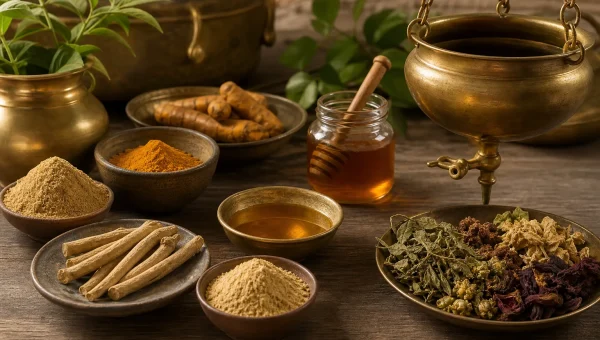
Katuki / Kutki (Picrorhiza kurroa) is one of Ayurveda’s most important bitter liver-supporting herbs. The Ayurvedic Pharmacopoeia of India describes Katuka as the dried rhizome with root of Picrorhiza kurroa, with Katu-Tikta Rasa, Laghu Guna, Ushna Virya, Katu Vipaka and actions including Dipani, Bhedini, Pittahara and Jvarahara, with traditional use in Kamala. Preclinical liver-injury models support its hepatoprotective and antioxidant profile, including effects on lipid peroxidation and glutathione-related antioxidant systems. Classical/pharmacopoeial dose: 1–3 g powder, used under practitioner guidance.
Amalaki (Emblica officinalis / Phyllanthus emblica) is a Rasayana fruit especially valuable when detoxification support must also protect tissues from heat and oxidative strain. The Ayurvedic Pharmacopoeia of India lists Amalaki fruit with Madhura, Amla, Katu, Tikta and Kashaya Rasa, Laghu-Ruksha Guna, Shita Virya, Madhura Vipaka and actions including Rasayana, Chakshushya, Tridoshajit and Vrishya. Experimental toxicant models support hepatoprotective and antioxidant activity, including preservation of glutathione and antioxidant enzymes. Classical/pharmacopoeial dose: 3–6 g dried fruit powder, or 5–10 ml fresh juice where appropriate.
Guduchi (Tinospora cordifolia) supports detoxification through Rasayana, Deepana, Raktashodhaka, Tridoshashamaka and liver-supportive indications in classical use. The Ayurvedic Pharmacopoeia of India describes Guduchi as the dried mature stem of Tinospora cordifolia, with Tikta-Kashaya Rasa, Laghu Guna, Ushna Virya and Madhura Vipaka. Experimental work describes hepatoprotective and immunomodulatory activity, including effects on Kupffer-cell function and liver-injury models. Because Tinospora products have also been associated with liver-injury case reports, correct botanical identity, patient selection and supervision are essential. Classical/pharmacopoeial dose: 3–6 g stem powder or decoction prepared from 20–30 g crude drug.
Triphala combines Haritaki, Bibhitaki and Amalaki and is especially relevant for the elimination side of detoxification. Bile-conjugated compounds can enter the intestine and, in some cases, participate in enterohepatic circulation. Triphala’s practical value is its support for bowel regularity, stool form and Apana flow, helping prevent the stagnation that undermines elimination. Human clinical work supports its use for constipation-related symptoms, while Ayurveda values it as a mild Rasayana and bowel-regulating formulation. Common formulary dose: 5–10 g per day, often adjusted to bowel response and constitution.
Evidence Summary
The best evidence-based Ayurvedic detoxification model is layered: reduce ongoing exposure, protect liver and tissues, maintain gut and bowel elimination, match herb selection to Prakriti and Agni, and avoid aggressive cleansing when strength is low. The following table summarises the practical evidence for the four herbs discussed above.
| Herb | Ayurvedic Rationale | Xenobiotic-Metabolism Relevance | Evidence Level | Dose |
|---|---|---|---|---|
| Katuki / Kutki (Picrorhiza kurroa) | Dipani, Bhedini, Pittahara; used in Kamala-related indications | Hepatic support, antioxidant defence, glutathione-related enzyme support in liver-injury models | Classical/API + preclinical | 1–3 g powder under supervision |
| Amalaki (Emblica officinalis) | Rasayana, Tridoshajit, cooling tissue support | Antioxidant reserve, glutathione preservation, hepatoprotective support in toxicant models | Classical/API + preclinical | 3–6 g powder or 5–10 ml fresh juice |
| Guduchi (Tinospora cordifolia) | Rasayana, Deepana, Raktashodhaka, Tridoshashamaka | Liver protection, immune cleanup, Kupffer-cell modulation; requires safety screening | Classical/API + preclinical + safety case reports | 3–6 g powder or decoction from 20–30 g crude drug |
| Triphala | Mild bowel regulation, Apana support, Rasayana action | Supports intestinal elimination and regular transit; relevant to biliary excretion and enterohepatic cycling | Classical/formulary + human GI clinical data | 5–10 g per day, adjusted to bowel response |
How to Apply This Evidence Clinically
A sound Ayurvedic xenobiotic-support protocol begins with exposure reduction, not herbs. Cleaner water, reduced plastic contact with hot food and drinks, better ventilation, occupational protection, careful cosmetic selection and lower-pesticide food choices reduce the incoming burden. Herbs then support the body’s normal capacity to digest, transform, conjugate, excrete and recover.
The second rule is to match the intervention to Agni and Prakriti. Vata patterns usually need grounding and gentle regulation. Pitta patterns need cooling liver support and antioxidant protection. Kapha patterns need gradual Agni stimulation, movement and steady bowel regularity. In all three, the goal is not dramatic purging but sustainable restoration of metabolic clarity.
The third rule is to support both the liver and the bowel. Mobilising stored burden while constipation, dehydration or poor appetite persists is poor Ayurvedic strategy. Triphala-type bowel support, adequate hydration, regular meals and appropriate dietary fibre may be as important as liver herbs in many practical protocols.
The fourth rule is to preserve strength. Rasayana support, sleep, protein adequacy, mineral sufficiency and recovery time matter because detoxification consumes biological resources. A person who becomes depleted, anxious, sleepless or inflamed during a cleanse is not detoxifying well from an Ayurvedic perspective; their Agni and Ojas require protection.
References and Further Reading
The following sources support the definitions, Ayurvedic pharmacopoeial details, mechanisms and safety framing used in this article.
- Xenobiotic definition and metabolism overview
- CDC National Biomonitoring Program
- CDC National Report on Human Exposure to Environmental Chemicals
- Charaka Samhita Online: Ama
- Biotransformation and Phase I/Phase II metabolism
- Enterohepatic circulation review
- Glyphosate and gut microbiome review
- Environmental chemicals and mitochondrial dysfunction review
- PCIMH Ayurvedic Pharmacopoeial Publications
- Ayurvedic Pharmacopoeia of India, Part I, Volume I
- Ayurvedic Pharmacopoeia of India, Part I, Volume II
- Picrorhiza kurroa pharmacology and clinical review
- Emblica officinalis tannoid fraction and hepatoprotection
- Emblica officinalis and glutathione-related antioxidant protection in arsenic exposure model
- Tinospora cordifolia and Kupffer-cell modulation
- Tinospora cordifolia safety and liver-injury reports
- Triphala clinical trial in functional constipation
- NCCIH safety overview on detoxes and cleanses
For related reading, the metabolomics and Ayurveda blood testing article discusses modern analytical tools in Ayurvedic outcome assessment, while the gut-skin axis and Rakta-Pitta theory article explores how gut-liver imbalance can manifest through skin pathways.
Safety disclaimer: Xenobiotic metabolism is complex. The herbs discussed here support normal physiological functions; they are not a substitute for removing ongoing exposure, treating poisoning, or managing liver, kidney, endocrine or immune disease. Avoid aggressive commercial detoxes, prolonged fasting, laxative cleanses, unsupervised chelation and strong purgation unless supervised by a qualified clinician. Kutki should be avoided in pregnancy or breastfeeding unless specifically prescribed. Guduchi/Tinospora products require caution in liver disease, autoimmune features, unexplained jaundice or use of hepatotoxic medicines. Consult a qualified Ayurvedic practitioner or healthcare provider before starting herbs, supplements, detoxes or therapeutic protocols, especially if pregnant, managing a condition or taking medication.
References
- The Simplest Flowchart Stating the Mechanisms for Organic Xenobiotics-induced Toxicity: Can it Possibly be Accepted as a “Central Dogma” for Toxic Mechanisms? (2014), PubMed Central
- CDC
- CDC
- Charaka Samhita — Ama
- Charaka Samhita — Ama
- NCBI
- Enterohepatic circulation: physiological, pharmacokinetic and clinical implications (2002), PubMed
- Research (research.ucc.ie)
- Environmental Chemical Exposures and Mitochondrial Dysfunction: a Review of Recent Literature (2022), PubMed
- Traditional Medicine to Modern Pharmacogenomics: Ayurveda Prakriti Type and CYP2C19 Gene Polymorphism Associated with the Metabolic Variability (2011), PubMed Central
- Prakriti phenotypes as a stratifier of gut microbiome: A new frontier in personalized medicine? (2020), PubMed Central
- Toxicological function of adipose tissue: focus on persistent organic pollutants (2013), PubMed Central
- Niehs (niehs.nih.gov)
- Ayurvedic Pharmacopoeia of India
- Ayurvedic Pharmacopoeia of India
- Pharmacological and Clinical Efficacy of Picrorhiza kurroa and Its Secondary Metabolites: A Comprehensive Review (2022), PubMed Central
- Effect of bioactive tannoid principles of Emblica officinalis on iron-induced hepatic toxicity in rats (2000), PubMed
- Immunomodulatory role of Emblica officinalis in arsenic induced oxidative damage and apoptosis in thymocytes of mice (2013), PubMed Central
- Modulation of Kupffer cell activity by Tinospora cordifolia in liver damage (1994), PubMed
- Hepatoprotective and immunomodulatory properties of Tinospora cordifolia in CCl4 intoxicated mature albino rats (2002), PubMed
- NCBI
- Utoronto (utoronto.scholaris.ca)
- Ijpsonline (ijpsonline.com)
- NCCIH

The classical references you include make this more credible than most Ayurveda blogs.
Useful
Agreed — citing the Charaka Samhita alongside modern toxicology literature in the same argument is rare and it earns trust. Which classical text did the section on pesticide-specific Agni disruption draw from? I would like to read further.
🌿 धन्यवाद for explaining this so clearly
Doing this
My Ayurvedic doctor recommended the same thing last month. Good to find it confirmed here.
The parallel between xenobiotics and Ama is something I had never seen written out so explicitly before. I studied biochemistry before getting into Ayurveda and the Phase I/II detox pathways do map surprisingly well onto Agni function.
Just found this. Really helpful for my situation. ❤️
Same here
Trikatu for xenobiotic clearance makes sense given its effect on cytochrome P450 but that also means drug interactions.
we eat organic now but the previous 40 years of exposure. how do you undo that damage
Asking for a Triphala protocol to clear pesticide load from 20 years of agricultural exposure. Is 3g twice daily appropriate?
Makaradhwaja for heavy metal detox concerns me greatly. Mercury-based preparations need stricter warnings.
That is a fair concern and worth raising directly with any practitioner who recommends it. Properly processed Makaradhwaja from a licensed source is a different thing from unregulated preparations, but the article should probably make that distinction clearer.
Will try
The connection between xenobiotics and agni makes a lot of sense when you think about how foreign chemicals overload the liver.
🌿 The section on heavy metal accumulation and Shodhana therapy was the most interesting part. Any follow-up posts planned?
नमस्ते, longtime reader first comment. This post finally convinced me to start.
found this helpful. The Xenobiotics and Agni Theory section was particularly useful for my situation.
✨ Found this helpful. The Xenobiotics and Agni Theory section was particularly useful for my situation.
xenobiotics and agni needs real examples, like pesticides, plastics, solvents. otherwise toxin talk gets vague
Found this helpful. The Xenobiotics anf Agni Theory section was particularly useful for my situation.
I wonder if measuring gut microbiome changes could help predict who will accumulate more toxins.
The three mechanisms described hepatic enzyme inhibition gut disruption and mitochondrial dysfunction look like they map neatly onto Ayurvedic concepts.
❤️ Reading this made me think differently about why my digestion gets sluggish every time I move to a city with worse air quality. The idea that environmental toxins directly impair Agni — not just burden the liver — is a more useful model for me.
It would be helpful to see a simple diet plan that lowers exposure to common xenobiotics like phthalates and bisphenol A.
I tried adding amalaki powder to my smoothies and noticed less bloating after meals.
The idea that kapha types store more lipophilic toxins in fat tissue fits with what I’ve read about ayurvedic body types.
Are there any clinical trials testing kutki supplements on people with high pesticide levels?
Found tjis helpful. The Xenobiotics and Agni Theory section was particularly useful for my situation.
Practical steps like using a water filter and choosing organic produce seem like the first line of defense against xenobiotic burden.
Found this helpful. The Xenobiotics and Agni Theory section was particularly useful fpr my situation. (asking as someone dealing with this since 2021)
💯 Found this helpful. The Xenobiotics anf Agni Theory section was particularly useful for my situation.
🌿 The point about the body not evolving pathways to metabolise synthetic pesticides resonated. It explains why standard detox advice built around food choices alone feels insufficient when the exposures are industrial-scale.
The connection between xenobiotics and Ama formation really clicked for me here. I’d read about endocrine disruptors in the context of modern toxicology but never framed them as Agni-suppressants. Does the post’s reasoning extend to ingested plastics like BPA, or mainly to airborne/waterborne compounds?