
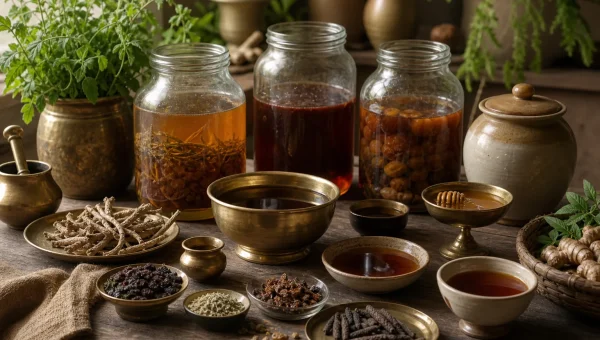
My grandfather kept three clay pots on a shelf in the back of his kitchen in Pune that were strictly off-limits to children. They bubbled quietly. They smelled strange: sour, yeasty, grainy, and faintly medicinal from the spices and herbs added to each batch. He called them his “pharmacy pots” and would measure out small quantities into brass cups for different family members. One was for appetite. One was for sluggish digestion. One was for the cold, heavy feeling that sometimes followed illness or overeating.
I understood those pots only much later, when I studied the Ayurvedic category of fermented preparations known as Sandhana Kalpana. Ayurveda does not treat all fermented drinks as casual beverages. Classical texts describe fermented preparations with distinct ingredients, properties, indications, dose logic, and contraindications. Grain-based preparations such as Sura, Jagala, Sauviraka, Tuṣodaka, and sour gruels belong to this wider family of food-medicine, where fermentation changes the action of the grain, sweetener, herbs, and water.
This guide is not for brewing beer. It is a careful, kitchen-scale guide to Ayurvedic fermented grain preparations inspired by classical descriptions, with practical safety limits for modern households. These preparations should be treated as small-dose digestive aids, not recreational drinks and not substitutes for standardized Ayurvedic medicines prepared under pharmaceutical conditions.
The Classical Framework: Sandhana Kalpana
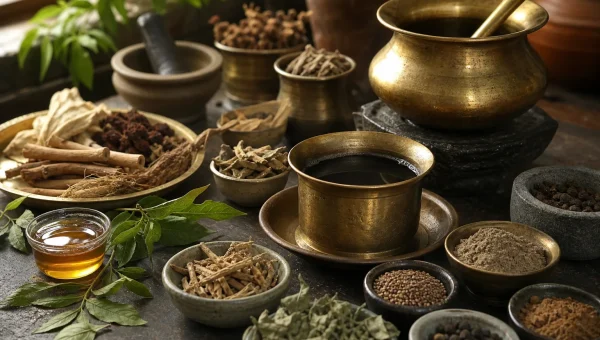
Sandhana Kalpana refers to fermented Ayurvedic preparations. In the classical and later pharmaceutical tradition, this includes preparations in which herbs, grains, juices, decoctions, sweeteners, and fermenting materials transform over time into sour or mildly alcoholic medicinal liquids. The best-known examples are Asava and Arishta, but the grain-based preparations in the Madyavarga are equally important for understanding household fermentation.
The wider Ayurvedic fermented-preparation family includes:
- Arishta: A fermented decoction, typically made from a herb decoction, sweetening material, and fermenting support.
- Asava: A fermented preparation generally made without first preparing a strong decoction, often from fresh juices, water, herbs, sweeteners, and fermenting support.
- Sura: A grain-based fermented drink described in classical Madyavarga contexts, with strong digestive and Vata-reducing associations when used appropriately.
- Jagala: A fermented preparation described as dry, hot, grasping, and digestive, especially relevant where Kapha and Vata are involved.
- Sauviraka and Tuṣodaka: Sour fermented grain preparations described with appetite-kindling and digestive actions.
- Amla-kanjika: A sour fermented gruel-like preparation used traditionally for digestive and cooling applications depending on route and context.
For home use, the safest approach is to keep these preparations simple, fresh, clean, and small in dose. Classical Sura and related preparations were not meant to be consumed casually in large glasses. Their Ayurvedic value comes from correct selection, correct quantity, correct timing, and respect for contraindications.
Preparation 1: Tuṣodaka-Style Sour Grain Water
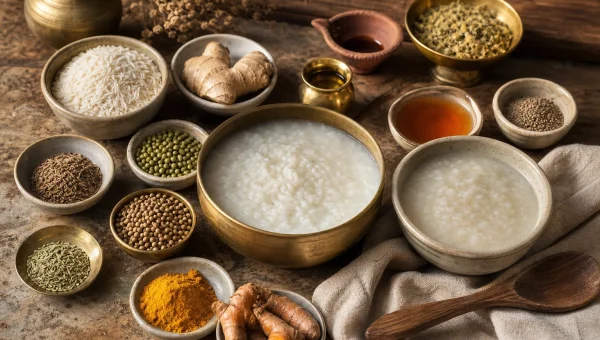
Tuṣodaka should not be reduced to plain rice rinse water. In the Ayurvedic fermented-grain context, it belongs to the family of sour grain preparations used for appetite and digestion. A safe home version can be made as a light sour grain water, using rice or barley, and consumed fresh in small quantities.
Best fit: Mild appetite loss, post-illness heaviness, sluggish digestion after simple meals, and a Kapha-type coated-tongue feeling when there is no acute infection, bleeding, pregnancy, alcohol restriction, or severe acidity.
Home preparation:
- Wash 2 tablespoons of unpolished rice or lightly crushed barley thoroughly.
- Place the grain in a clean glass jar with 500 ml boiled and cooled water.
- Add 1 teaspoon jaggery only if a stronger souring action is desired; omit it for a very light version.
- Cover the jar with clean cloth and keep it at room temperature for 12–24 hours in warm weather or up to 36 hours in cooler weather.
- When the liquid is pleasantly sour and slightly cloudy, strain it.
- Add a pinch of roasted cumin powder and a small pinch of rock salt if suitable for the person.
- Use immediately or refrigerate and finish the same day.
Use: Take 30–60 ml before meals, once daily to begin. Do not keep this preparation for long storage. Discard it if it smells rotten, develops mold, becomes slimy, fizzes aggressively, or tastes unpleasantly sharp rather than pleasantly sour.
Preparation 2: Yava Sauviraka-Style Light Barley Ferment
Barley, called Yava in Ayurveda, is described as dry, comparatively light, strengthening, and useful in Kapha-type conditions. This makes it a sensible grain for a light sour digestive ferment where the person feels heavy, dull, coated, or sluggish after meals. The following preparation is a household adaptation inspired by Sauviraka and Tuṣodaka-style sour grain drinks, not a classical pharmacy formula.
Home preparation:
- Lightly dry-roast 100 g barley until aromatic but not browned heavily.
- Boil it in 1 liter water for 20–25 minutes, then cool until lukewarm.
- Transfer the barley and liquid to a clean glass jar.
- Add 20–30 g jaggery and stir until dissolved.
- Add 1–2 g Dhataki flowers if available from a reliable Ayurvedic source, or use a tiny pinch of food-grade yeast as a modern kitchen aid.
- Cover with clean cloth and keep at room temperature for 2–4 days, depending on climate.
- Stir once daily with a clean spoon.
- When the taste is mildly sour and the active bubbling has settled, strain and refrigerate.
Use: Take 30 ml diluted with an equal amount of water after lunch. This is best used for a few days at a time, not continuously for weeks. Avoid it in people with dryness, burning acidity, active diarrhea, pregnancy, liver disease, alcohol restriction, or a history of alcohol dependence.
Preparation 3: Simplified Sura-Style Grain Ferment
Sura is the best-known classical grain ferment in this group. Charaka describes Sura as Vata-reducing and relevant in specific conditions such as emaciation, urinary obstruction, Grahani-type disorders, piles, and tissue deficiency contexts. In modern home practice, it should be approached with restraint because natural fermentation can produce alcohol, and the alcohol level in a household batch is not standardized.
Vata-balancing Sura-style base:
- Combine 100 g unpolished rice, 50 g whole wheat, and 50 g barley.
- Cook the grains in 1.2 liters water until very soft.
- Mash the cooked grains into a thin gruel and add 500 ml boiled and cooled water.
- Cool the mixture below body temperature before adding fermenting materials.
- Add 50–60 g jaggery, 3 g dry ginger powder, 1 g long pepper powder, and 1 g black pepper powder.
- Add 3–4 g Dhataki flowers if available from a reliable source, or a very small pinch of food-grade yeast as a non-classical kitchen substitute.
- Transfer to a clean glass jar, leaving space at the top for bubbling.
- Cover with clean cloth rather than sealing airtight.
- Ferment for 3–7 days in warm weather or slightly longer in cooler weather.
- When bubbling reduces and the smell is pleasantly sour-grainy, strain and refrigerate.
Use: Begin with 15–30 ml diluted with warm water after food. Do not use this as a beverage. Do not serve it to children, pregnant people, people avoiding alcohol, people taking medicines that interact with alcohol, or anyone with liver disease or alcohol-dependence history.
Important note on alcohol: A Sura-style ferment should be assumed to contain alcohol even when the quantity is small. Home fermentation cannot reliably standardize alcohol percentage. Anyone who must avoid alcohol should avoid this preparation entirely and use non-fermented digestive options under professional guidance.
Preparation 4: Jagala-Inspired Digestive Sour
Jagala is described in the classical Madyavarga with dry, hot, grasping, and digestive qualities. This makes it conceptually different from a sweet tonic. It is closer to a sharp digestive sour, used only where the person’s condition calls for that drying and digestive direction. A simple home version should be mild and short-fermented.
Home preparation:
- Cook 50 g red rice or barley in 700 ml water until soft.
- Mash lightly and cool completely.
- Add 10–15 g jaggery, 1 g dry ginger, and a pinch of roasted cumin.
- Place in a clean glass jar and cover with cloth.
- Ferment for 24–48 hours only, until pleasantly sour.
- Strain and refrigerate.
Use: Take 20–30 ml before a heavy meal when appetite is dull and there is no burning sensation, bleeding tendency, acute fever, active infection, pregnancy, alcohol restriction, or severe dehydration. Stop if it causes heat, loose stools, dizziness, burning, or discomfort.
| Preparation | Base | Typical Fermentation Time | Starting Dose | Best Ayurvedic Fit |
|---|---|---|---|---|
| Tuṣodaka-style sour grain water | Rice or barley | 12–36 hours | 30–60 ml before meals | Mild appetite loss, light Kapha-type digestive heaviness |
| Yava Sauviraka-style barley ferment | Roasted barley | 2–4 days | 30 ml diluted after lunch | Kapha-type sluggish digestion, heaviness after food |
| Sura-style grain ferment | Mixed grains with digestive spices | 3–7 days or more depending on climate | 15–30 ml diluted after food | Selected Vata-Kapha digestive weakness where alcohol is not contraindicated |
| Jagala-inspired digestive sour | Rice or barley with warming spices | 24–48 hours | 20–30 ml before food | Dull appetite with heaviness and no Pitta aggravation |
Modern Fermentation Perspective
Fermentation changes grain preparations through microbial and enzymatic transformation. In sour cereal ferments, carbohydrates may be converted into organic acids, aromatic compounds, and sometimes alcohol. Traditional fermented foods and beverages commonly involve lactic acid bacteria and yeasts, which explains the sour taste, bubbling, preservation effect, and altered digestibility that traditional kitchens valued.
Barley also has a modern nutritional reason for continued interest: its soluble beta-glucan fiber is recognized in food-health contexts for cholesterol-related and post-meal glucose-response effects when consumed in appropriate dietary amounts. A small Ayurvedic barley ferment should not be treated as a clinical beta-glucan dose, but barley remains a meaningful grain choice for Kapha-oriented digestive preparations.
Classical Use and Dosha Logic
Charaka’s Madyavarga describes fermented and alcoholic preparations with careful distinctions. Madya in general is associated with sourness and heat, but individual preparations differ. Sura is described as Vata-reducing. Jagala is dry, hot, grasping, and digestive. Sauviraka and Tuṣodaka are described with appetite-kindling and digestive actions. Aged fermented preparations are treated differently from newly prepared ones, with the newer forms considered heavier and more likely to disturb the doshas.
This supports the practical Ayurvedic rule: fermented grain preparations are not universally good or universally bad. They must match the person’s Agni, dosha state, strength, season, disease context, and tolerance. A dry, cold, heavy Kapha presentation may benefit from a small sour digestive preparation, while a hot, bleeding, inflamed, acidic, or depleted Pitta presentation may be aggravated by the same preparation.
Who Should Avoid These Preparations
Because these preparations can contain alcohol, acids, live microbes, and variable fermentation by-products, they are not appropriate for everyone. Household ferments are especially unsuitable where precise alcohol control, microbial control, or medical safety is required.
- Pregnant people should avoid alcohol-containing ferments completely.
- Children and teenagers should not be given Sura-style alcohol-containing preparations.
- Anyone with alcohol dependence, recovery from alcohol dependence, liver disease, or medication restrictions should avoid these preparations unless specifically supervised by a qualified clinician.
- People with active fever, acute infection, vomiting, severe diarrhea, bleeding disorders, severe acidity, ulcers, or strong burning sensations should avoid them.
- People with significant immune compromise should avoid home-fermented preparations unless cleared by a healthcare provider.
- People with suspected SIBO, recurrent Candida problems, histamine intolerance, or severe gut sensitivity should consult a qualified practitioner before using fermented foods medicinally.
Kitchen Safety Rules
Cleanliness, acidity, time, smell, and storage matter. Traditional household knowledge assumed careful observation; modern households should add basic food-safety discipline. A ferment that looks, smells, or tastes wrong should never be “rescued” with spices or reheating.
- Use clean glass or food-safe ceramic vessels; avoid reactive metal containers for sour ferments.
- Use boiled and cooled water where possible.
- Keep the vessel covered with clean cloth so gas can escape while dust and insects stay out.
- Do not seal active ferments airtight.
- Make small batches and refrigerate once the desired sourness develops.
- Discard any batch with mold, rotten odor, sliminess, unusual discoloration, or harsh bitterness.
- For longer storage, safe acidity matters; home fermenters should understand pH control rather than relying only on taste.
- Do not mix old leftovers into new batches unless working under a reliable, clean, tested fermentation method.
Closing Reflection
My grandfather did not call his pots “pharmacy pots” by accident. He understood through inherited practice that a bubbling grain preparation could be more than a drink. Ayurveda preserves that same idea in a more disciplined way: fermented grain preparations can kindle appetite, alter digestion, reduce certain forms of heaviness, and support selected Vata-Kapha conditions when used in small amounts with correct judgment.
The safest revival is not large jars of casual drinking. It is clean preparation, small batches, small doses, correct constitution, and respect for contraindications. Used this way, fermented grain preparations can return to the kitchen as careful food-medicine rather than novelty beverages.
Disclaimer: Fermented grain preparations with natural alcohol content are not appropriate for everyone. Start only with small amounts if appropriate, and stop if any discomfort occurs. These preparations are food-medicine, not pharmaceutical drugs, and home preparations do not replicate the quality controls of standardized Ayurvedic pharmacies.
Nothing in this article diagnoses, treats, or cures any medical condition. Consult a qualified Ayurvedic practitioner or healthcare provider before starting herbs, ferments, supplements, detoxes, or therapeutic protocols, especially if pregnant, managing a medical condition, avoiding alcohol, immunocompromised, or taking medication.
References
- A progressive review of Sandhana kalpana (Biomedical fermentation): An advanced innovative dosage form of Ayurveda (2011), PubMed Central
- Charaka Samhita — Annapanavidhi Adhyaya
- Charaka Samhita — Snehadhyaya
- Jaims (jaims.in)
- Ayurvedic Pharmacopoeia of India
- Fermented Foods: Definitions and Characteristics, Impact on the Gut Microbiota and Effects on Gastrointestinal Health and Disease (2019), PubMed Central
- Traditional Fermented Foods and Beverages from around the World and Their Health Benefits (2022), PubMed Central
- NCBI
- Fermented Cereal-based Products: Nutritional Aspects, Possible Impact on Gut Microbiota and Health Implications (2020), PubMed Central
- Ecfr (ecfr.gov)
- Gov (gov.uk)
- CDC
- Niaaa (niaaa.nih.gov)
- CDC
- Extension (extension.usu.edu)
- Nchfp (nchfp.uga.edu)
home Arishta preparation is complex and failure modes (contamination, excessive fermentation) are not addressed. this could lead to unsafe products.
the medicated Arishta preparation described is something my grandmother made but I had no idea about the Ayurvedic rationale. the article recovered something I thought was just family tradition.
fermentation at home for Arishta the article doesn’t address what happens if fermentation goes wrong. how do you know if a batch has spoiled?
That’s actually a really important question for home fermentation. From what I’ve read, off smells — anything sulfurous or putrid rather than yeasty-sour — are the main warning sign. A properly fermenting Arishta should smell sour and slightly alcoholic, not rotten. Would be great if the article had a troubleshooting section for this.
@Kiran the medicated Arishta preparation described is something my grandmother made but I had no idea about the Ayurvedic rationale. the article recovered something I thought was just family tradition.
the alcohol content in Arishta preparations is this a concern for people who are alcohol-sensitive or on medications that interact with alcohol?
for pregnant women, which of the described preparations are safe? some classical Arishtas are given during pregnancy but this article doesn’t flag this.
the therapeutic claims for fermented grain drinks need much stronger evidemce. most research on these preparations is traditional use data, not clinical trials. tbh
the therapeutic claims for fermented grain drinks need much stronger evidence. most research on these preparations is traditional use data, not clinical trials. 🌿
the article says fermented preparations enhance bioavailability. is this through the alcohol carrier or through fermentation-produced metabolites?
Useful info.
Good one.
@Naveen the article says fermented preparations enhance bioavailability. is this through the alcohol carrier or through fermentation-produced metabolites?
@Paul the therapeutic claims for fermented grain drinks need much stronger evidence. most research on these preparations is traditional use data, not clinical trials.
@Paul home Arishta preparation is complex and failure modes (contamination, excessive fermentation) are not addressed. this could lead to unsafe products. ❤️
the fermented grain drink for post-illness recovery (Takrarishta variation) is genuinely restorative. taste is better than expected and the digestive benefit is real.
the therapeutic claims for fermented grain drinks need much stronger evidence. most research on tjese preparations is traditional use data, not clinical trials. 🙌
The story about the clay pots in Pune really brings the tradition to life, makes me wonder if similar practices exist in other regions.
the article says fermented preparations enhance bioavailability. is this throigh the alcohol carrier or through fermentation-produced metabolites?
fermentatiom at home for Arishta the article doesnt address what happens if fermentation goes wrong. how do you know if a batch has spoiled?
@Madhuri for pregnant women, which of the described preparations are safe? some classical Arishtas are given during pregnancy but this article doesn’t flag this. 🙏
Makes sense.
I tried making Tushodaka with brown rice and a pinch of cumin, the sour smell after 24 hours was exactly as described.
@Karen the alcohol content in Arishta preparations is this a concern for people who are alcohol-sensitive or on medications that interact with alcohol? धन्यवाद
fermentation at home for Arishta the article doesnt address what happens if fermentation goes wrong. how do you know if a batch has spoiled?
Does the fermentation time for Medaka change if the room temperature stays above 28 degrees Celsius?
The pharmacy pots story at the beginning hit differently reading it as an adult. My great-uncle kept something similar — a large clay pot of what I think was Draksharishta — and we were never allowed near it. Reading this made me wish I had asked more questions when I had the chance.
Same here.
It is interesting that classical texts mention specific dosing like 30ml twice daily for Sura, seems precise for a home preparation.
the alcohol content in Arishta preparations is this a concern for people who are alcohol-sensitive or on medications that interact with alcohol? tbh
I had no idea there were so many therapeutic variations beyond the standard Arishtas you find in stores. The grain-based preparations especially — are any of these still commercially available, or is home preparation the only real option at this point?
I appreciate the warning about alcohol content in Sura, it reminds me to consider personal sensitivities before trying it.
Doing this.
The reference to Lactobacillus plantarum in the 2025 study connects ancient preparation to modern microbiome science nicely.
Would substituting jaggery with coconut sugar affect the fermentation process for Medaka?
My grandmother used to keep a small jar of fermented rice water for digestion, hearing the classical name Tushodaka validates that practice.
The contraindication list for pregnancy and liver disease feels necessary, especially given the low alcohol content.
the article says fermented preparations enhance bioavailability. is this througj the alcohol carrier or through fermentation-produced metabolites? tbh
I found the step about cooling the barley decoction below 40 degrees before adding jaggery crucial to keep the fermenting agents alive.
the fermented grain drink for post-illness recoveey (Takrarishta variation) is genuinely restorative. taste is better than expected and the digestive benefit is real. 🌿
@Rekha home Arishta preparation is complex and failure modes (contamination, excessive fermentation) are not addressed. this could lead to unsafe products.
Reading about Arishta and Asava alongside Sura helps place these grain drinks within the broader Ayurvedic pharmacology framework.
The suggestion to start with Tushodaka as a beginner friendly option makes sense given its minimal equipment needs.