
A patient once arrived with progressive myopia and retinal or macular findings that his ophthalmologist planned to monitor. He also reported long screen-based working days, dryness, and visual fatigue. Screens can aggravate dry eye and digital eye strain, but retinal or macular change requires ophthalmic assessment and should not be attributed to screens or a dosha pattern without evidence.
Ayurveda associates vision with Alochaka Pitta, located in the eyes and linked with rupa-grahana, apprehension of visible form. This is a classical model, not a modern biochemical explanation. Eye diseases are not all Pitta disorders: the texts also describe Vata, Kapha, Rakta, combined-dosha, traumatic, and external causes. Chakshushya and netrya mean traditionally eye-supportive; they do not prove efficacy for myopia, cataract, glaucoma, macular disease, or retinal degeneration.
The Classical Framework of Netra
The opening chapter of the Sushruta Samhita‘s Uttara Tantra describes five mandalas, six sandhis, and six patalas, including two of the eyelids and four of the eye proper. It enumerates 76 eye diseases: 10 attributed to Vata, 10 to Pitta, 13 to Kapha, 16 to vitiated blood, 25 to combined doshas, and two to external causes. Diseases are also grouped by ocular site. This sophisticated Shalakya Tantra framework should not be mapped one-to-one onto modern anatomy or diagnoses; a translated term is not automatically cataract, glaucoma, or retinal disease.
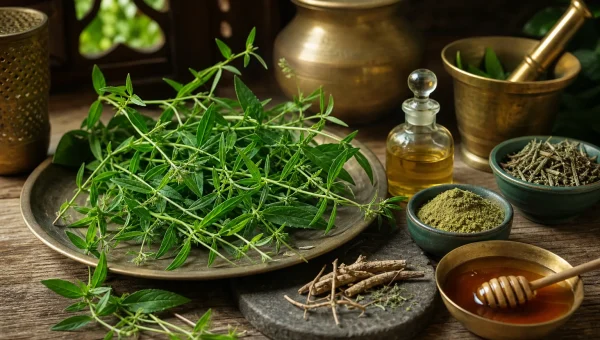
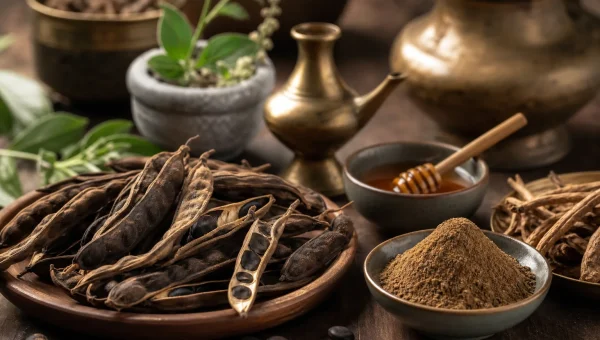
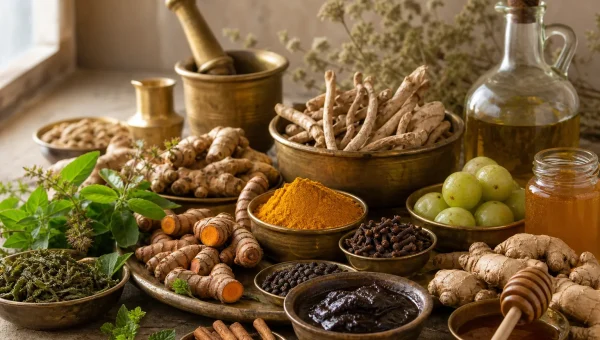
Verified Chakshushya and Netrya Drugs
The Ayurvedic Pharmacopoeia of India verifies identity, quality standards, and recorded traditional properties. It does not establish that an oral herb reverses structural eye disease. Plant part, product quality, interactions, pregnancy status, tolerance, and diagnosis matter.
Amalaki (Emblica officinalis, syn. Phyllanthus emblica)
The official monograph gives Amalaki madhura, amla, katu, tikta, and kashaya rasa; laghu and ruksha guna; shita virya; and madhura vipaka. Its actions include tridoshajit, rasayana, and chakshushya. It identifies ascorbic acid and tannins or gallotannins, but not the claims that Amalaki has the world’s highest vitamin C content, that its vitamin C is fully heat-stable, or that its polyphenols have a special proven affinity for the retina.
Laboratory and selenite-rat cataract findings do not show that Amalaki prevents or treats human cataract, glaucoma, myopia, or macular disease. It cannot replace refraction, retinal imaging, pressure measurement, prescribed treatment, or surgery.
Triphala and Haritaki (Terminalia chebula)
Triphala combines Haritaki, Bibhitaki, and Amalaki. The Pharmacopoeia records Amalaki and Haritaki as chakshushya. Haritaki has five tastes other than salty, laghu and ruksha guna, ushna virya, and madhura vipaka. The unsupported attribution of Haritaki as the primary treatment for deep retinal disease in a specific Ashtanga Hridaya chapter has been removed.
A 2010 study tested Triphala in an in-vitro lens model and selenite-treated rats. It was not a human glaucoma trial and did not show reduced intraocular pressure in patients. No verified 2018 paper matching the claimed Triphala retinal neuroprotection through Nrf2 was located.
Shatavari (Asparagus racemosus)
The Shatavari root monograph records madhura and tikta rasa, guru and snigdha guna, shita virya, and madhura vipaka. Its actions include netrya, and its use list includes naktandhya, commonly glossed as night blindness. This does not verify that Shatavari is the primary internal treatment for dry eye or that its saponins clinically restore the conjunctival mucin layer.
Mild dryness is commonly managed with sterile artificial tears and lifestyle measures; persistent pain, redness, light sensitivity, or blurred vision needs examination. Shatavari should never be placed in the eye.
Punarnava (Boerhaavia diffusa)
The Pharmacopoeia records madhura, tikta, and kashaya rasa, ruksha guna, ushna virya, and madhura vipaka. Its actions include shothahara, mutrala, anulomana, and vata-shleshmahara; listed uses are shotha and pandu. It is not identified as the primary medicine for conjunctivitis, haemorrhage, tearing, floaters, or eye puffiness.
The claimed 2011 Phytomedicine NSAID-comparison study could not be verified. A red, painful, discharging, injured, or suddenly vision-impaired eye should not be self-treated with Punarnava or a homemade preparation.
Classical Formulations: What Is Actually Verified
An official monograph verifies composition, manufacturing standards, and traditional uses, not modern clinical effectiveness. Medicated ghees and mineral-containing medicines require quality-controlled manufacture and practitioner selection.
| Formulation or procedure | Verified description | Limit |
|---|---|---|
| Mahatriphaladya Ghrita | Official ghee formulation containing Triphala and additional drugs; its monograph records traditional eye indications. | Does not prove reversal of cataract, glaucoma, myopia, or blindness. Use under supervision. |
| Saptamrita Lauha | Herbo-mineral preparation based on Triphala, Yashtimadhu, and Lauha Bhasma. | Not a proven treatment for vision loss or cataract; use only a licensed, tested product under supervision. |
| Triphala Ghrita Tarpana | Supervised procedure retaining a selected lipid preparation over the open eye within a dough boundary. | A 30-patient open-label dry-eye study lacked placebo and standard-care controls. |
Anu Taila is a nasal oil, not a proven eye lubricant. Pushyanuga Churna is not a verified treatment for vitreous opacity or floaters. New floaters, flashes, or a curtain-like shadow can indicate retinal detachment and require urgent examination.
Netra Tarpana: Classical Procedure, Modern Limits
Netra Tarpana is a local ocular kriyakalpa procedure. A boundary is formed around the orbit and prescribed medicated ghee is retained while the patient opens and closes the eyes under supervision. It is not a home eye bath, and evidence does not show that surface medicines reach the retina or optic nerve in therapeutic amounts.
The dry-eye study compared two ghee preparations rather than Tarpana with sterile artificial tears, placebo, or no treatment. Its findings are preliminary. Homemade Triphala, Amalaki, honey, ghee, rose-water, or decoction eye drops are not recommended: cloth straining does not make them sterile or particle-free. Contact-lens users should use only approved sterile solutions and prescribed products.
A Safe Daily Routine for Screen-Related Eye Strain
Screen discomfort commonly reflects reduced blinking, prolonged near focus, glare, poor ergonomics, and dry air; it does not explain progressive myopia or retinal findings without examination.
- Take distance breaks: about every 20 minutes, look roughly 20 feet away for at least 20 seconds and blink fully.
- Improve ergonomics: keep the screen comfortably distant and slightly below eye level, enlarge text, and reduce glare.
- Protect the tear film: avoid direct fan or air-conditioner flow, consider a humidifier, and ask about preservative-free artificial tears.
- Respect sleep: bright evening screens can delay sleep, but routine screen blue light has not been shown to damage the retina.
- Avoid medicinal kajal or surma: many traditional products contain lead. Do not apply cosmetics inside an irritated eye.
Trataka may be contemplative if comfortable, but it is not an established treatment for refractive error or retinal disease and has not been shown to strengthen eye muscles. Stop if it causes pain, headache, tearing, or prolonged after-images.
For related reading, see Ayurveda for esports and gamers: protecting eyes.
When Ayurveda Must Not Delay Eye Care
Sudden floaters, flashes, a curtain or shadow in vision, sudden loss or distortion of vision, severe pain, chemical exposure, trauma, marked light sensitivity, or a red eye with reduced vision requires urgent assessment. Progressive myopia and suspected macular, retinal, optic-nerve, or glaucoma-related change require follow-up with an optometrist or ophthalmologist even when Ayurvedic support is used.
Consult a qualified Ayurvedic practitioner and an ophthalmologist before beginning any eye-treatment protocol. Never place food, oil, ghee, honey, plant juice, powder, decoction, or another non-sterile preparation directly in the eye. Ayurvedic care should complement, not replace, diagnosis, monitoring, prescribed eye drops, laser treatment, injections, or surgery when indicated.
References
- Charaka Samhita — Pitta dosha
- Wisdomlib — classical text
- Ayurvedic Pharmacopoeia of India
- Miracledrinksclinic (miracledrinksclinic.com)
- Miracledrinksclinic (miracledrinksclinic.com)
- Miracledrinksclinic (miracledrinksclinic.com)
- Natural Ingredient Resource Center
- Evaluation of anticataract potential of Triphala in selenite-induced cataract: In vitro and in vivo studies (2010), PubMed
- Efficacy of Triphala Ghrita and Goghrita Manda Tarpana in the management of Shushkakshipaka w.s.r. to dry eye syndrome: An open labelled randomized comparative clinical trial (2020), PubMed
- Nei (nei.nih.gov)
- Nei (nei.nih.gov)
- Aao (aao.org)
- FDA


The advice around Chakshuya Herbs is specific enough to be useful. This would be easier to follow with a one-week sample plan.
The Alochaka Pitta framework is one of those concepts that clicks immediately when you encounter it. Vision isn’t just mechanical, it’s a metabolic process. Once you understand that, the treatment logic makes sense.
I’m skeptical that Triphala eye wash can reverse early macular changes. That’s a serious retinal condition. This article needs a much stronger disclaimer that none of this replaces ophthalmological monitoring.
The advice around Chakshuya Herbs is specific enough to be useful. This feels more usable than a long list of herbs.
The part about screen-induced Vata-Pitta aggravation is useful but the article doesn’t give practical screen break protocols. How long, how often, what to do during the break to actually pacify the doshas?
The advice around Chakshuya Herbs is specific enough to be useful. I would like to know how long to try it before judging results.
I found the explanation of Alochaka Pitta and its link to rupa grahana really clarified why eye strain feels different after long coding sessions.
The section on Saptamrita Lauha for macular health is interesting but needs dosage clarity. How many mg, how long a course, and what are the contraindications? This feels like the critical practical detail that’s missing.
My father had macular degeneration and conventional medicine had nothing to offer beyond supplements. I wish this pharmacopoeia existed in a form his retina specialist could engage with.
The part about the Sushruta Samhita listing 76 eye diseases made me wonder how many of those correspond to modern diagnoses like glaucoma.
I tried the triphala eye wash for 6 weeks. Prepared it exactly as described. My eyes were less irritated by week 3. But i have no way to know if that’s placebo or actual effect. Would really want a controlled study.
No one in my allopathic eye clinic has ever mentioned diet or lifestyle changes for myopia management. The connection between gut health and eye health through Rakta-Pitta metabolism that’s genuinely new information for me.
I appreciate the caution that Triphala Ghrita tarpana studies so far lack placebo controls, so I’ll stick to my prescribed eye drops for now.
Been using Amalaki rasayana for 4 months now specifically for eye health as my optometrist was concerned about early changes. My contrast sensitivity test improved slightly at my last visit. coincidence possibly, but I’m continuing.
Reading about Punarnava not being a primary medicine for conjunctivitis saved me from trying a homemade drop I saw online.
The claim that Ayurvedic herbs can slow or reverse macular changes is a serious one and I’d expect to see at minimum case series or observational data cited. Some of these claims go beyond what the evidence actually supports.
The article’s reminder to never put food or oil directly in the eye is something I’ll share with friends who like DIY eye masks.
I liked the breakdown of how Vata, Pitta, Kapha, and Rakta each contribute to different eye issues; it’s more nuanced than just blaming pitta.
The 20-20-20 rule is fine but combining it with palming as described here is much more effective. I work in IT and started doing this 6 months ago. My end of day headaches are nearly gone.
Does anyone know if the verified Amalaki monograph mentions any specific dosage for general eye comfort, or is it only for traditional use?
The screen related tips about the 20 20 20 rule and humidifiers are practical, though I wish they’d included a note on monitor brightness settings.
I’m curious whether the classical Netra Tarpana procedure could ever be adapted for contact lens wearers, given the sterility concerns mentioned.
The article’s note that retinal changes need ophthalmic assessment, not just a dosha label, matches what my optometrist always says.
My dadima used to apply pure ghee to her eyelids before sleeping. I thought it was just a superstition. Reading the Medhya-Netra connection section here, i’m beginning to understand the logic.
I appreciated the list of verified formulations like Saptamrita Lauha and the reminder to use only licensed products under supervision.
It’s helpful to know that Shatavari’s traditional use for night blindness doesn’t automatically mean it treats dry eye, especially since the mucin layer claim isn’t verified.
After reading about the limits of mapping Ayurvedic terms onto modern anatomy, I’ll be more careful when I see products claiming to cure macular degeneration.
The connection between Vata-Pitta constitution and progressive myopia is one I’ve seen described in other sources too. Would appreciate if the article linked to any studies on the Prakriti-myopia association though.
been eating the kitchari variant from this for two weeks and my energy in the afternoon is better
The preparation is too labor-intensive to sustain long term, needs a simpler version for daily use. 💯
The Chakshuya Herbs explanation is clearer than most short posts. The examples make the advice less abstract.
came across this post on a forum, adding it to my research, not tried yet but looks credible
is this suitable for pitta dominant constitution or mainly vata? i get confused about cross-dosha applications
my vaidya confirmed the exact dosing you described here, glad to see it written out clearly
I have low Agni according to my vaidya, does that change which phase of the protocol to start with.
the part about adjusting herb timing based on agni strength finally made sense of why my previous attempts failed
The Triphala timing recommendation here matches what worked for me, good to have it validated.
Feels very general, my case is quite specific and this article did not address the nuances.
the pitta protocol specifically caused heat and skin irritation for me within two weeks
Tried this for 6 weeks and saw no difference at all, maybe I applied it wrong but nothing changed.
This works in theory but sourcing authentic ingredients is practically very difficult in most of India.
I liked the practical side of Chakshuya Herbs. This is the kind of detail readers can test slowly.
Doing this now
Noted
how do i track whether results are genuine versus placebo effect? any objective markers to watch
Late to this post but wanted to ask, is the recommended protocol still current or has anything changed.
Does this protocol work for people who travel frequently and cannot maintain a fixed daily routine.
added the herbal tea from section 4 to my evening routine and sleep onset improved in about a week
just started exploring ayurveda after years of allopathy, this is a helpful starting point but a lot to absorb
just found this via a google search, is the dosage in section 3 still what practitioners recommend
Can pregnant women follow this or are there specific modifications? the article does not address that directly.
Starting this next week, will report back with results after about 6 weeks.
the explanation of why classical sources emphasize preparation timing was genuinely new to me
this is the post i wish i had two years ago when i first started exploring this area
the timing recommendation here is different from what i read elsewhere, which one should i follow
the beginner warning before the advanced section is genuinely helpful, most posts skip that
Anyone know if this is appropriate for adolescents or only adults? my 16 year old has similar issues.
the distinction between the two preparation methods in section 2 was the clearest explanation i have found anywhere
Tried the morning protocol for 2 months and gave up, the timing is impossible with work and children.
The safest part of the Chakshuya Herbs advice is keeping it simple. The practical details matter more than people think.
This is helpful but the lack of citations for the more specific claims is a problem for me.
The contraindication list here is the most honest I have seen on an Ayurvedic blog, rare to find that.
Some of these claims are very strong for what is essentially anecdote-based evidence.
The safest part of the Chakshuya Herbs advice is keeping it simple. The safety notes could be expanded a little.
The safest part of the Chakshuya Herbs advice is keeping it simple. I appreciate that it does not oversell the result.
can you use the churna form instead of capsules or does the preparation method matter that much
reading this in 2027, has the guidance here changed based on newer research or clinical reports
The safest part of the Chakshuya Herbs advice is keeping it simple. I would like to know how long to try it before judging results.
Good info
The safest part of the Chakshuya Herbs advice is keeping it simple. Good starting point for a cautious reader.
does the preparation method change during summer versus winter or is it the same year-round
Two months in on this protocol and my practitioner noticed the improvement at the last check-in 🙏.
This helped me understand Chakshuya Herbs without too much jargon. A few more examples would still help.
Quick question, does the dosage change if someone is already taking metformin or thyroid medication. 🙏
im skeptical of the dosing guidance here, i cannot find any peer-reviewed corroboration for those numbers 🙏
where can you source authentic herbs in a tier-2 indian city? the local shops have very inconsistent quality
The preparation is too labor-intensive to sustain long term, needs a simpler version for daily use.
Anyone tried this alongside conventional treatment for the same condition? curious about interactions.
useful that this covers both the fresh and dried preparation, i can only get dried locally
This helped me understand Chakshuya Herbs without too much jargon. The safety notes could be expanded a little.
Not sure I trust the supplement quality available online, too many adulterated products out there. 🌿
is there a hindi language resource alongside this for my parents who are not comfortable reading in english
This helped me understand Chakshuya Herbs without too much jargon. This feels more usable than a long list of herbs.
what brand of the extract do you personally use? the market has too many adulterated products नमस्ते
Helpful 🌿
two months in and symptoms are slightly worse, going back to basics and stopping this protocol
where are the clinical trials? referencing classical texts is fine but i need rct data before trying this
shared this with four people in my yoga group and all of them found the dosage section useful
the seasonal adjustment chart is going into my practice journal, exactly what i was missing
The Chakshuya Herbs section feels grounded enough to try carefully. The timing advice is the part I would start with.
can someone confirm whether the ksm-66 extract or full-spectrum root works better for this specific issue
the breakdown of classical vs commercial preparations is something i have not seen this clearly before
Interesting
How does this compare to the Ashtanga Hridayam recommendation on the same condition.
The table in the middle of the article was clear but I could not figure out what the seasonal column meant.
followed the 14-day protocol and noticed improvement by day 9, continuing into the second cycle now
the dosage here is higher than what my ayurvedic doctor recommended, a bit concerned about that ✨
my constitution is vata-pitta, the article seems to focus on one dosha at a time, any specific advice 🙌
how long before seeing results typically? the article mentions 4 to 6 weeks but is that consistent across prakriti types
my functional medicine doctor was impressed by the pathway explanation in the third section 🌿
What would a reasonable substitute be for someone who cannot access the herb locally or internationally.
Packaging tradition as validated science without rigorous sourcing makes me cautious.
Did not work for me personally though I know it has worked for others, individual variation is real.
I was looking for a plain explanation of Chakshuya Herbs. The timing advice is the part I would start with.
does this protocol work for people who travel frequently and cannot maintain a fixed daily routine
where can u source authentic herbs in a tier-2 indian city? the local shops have very inconsistent quality
I was looking for a plain explanation of Chakshuya Herbs. The main idea is clear even if someone is new to Ayurveda.
tried the herbal combination you described and my sleep quality improved noticeably within 10 days
the quality sourcing note at the end saved me from buying a product i later found was adulterated
Quick question, does the dosage change if someone is already taking metformin or thyroid medication.
Reading this in 2027, has the guidance here changed based on newer research or clinical reports.
The advice around Chakshuya Herbs is specific enough to be useful. A few more examples would still help.
The advice around Chakshuya Herbs is specific enough to be useful. The practical details matter more than people think.
anyone know if this is appropriate for adolescents or only adults? my 16 year old has similar issues ✨