
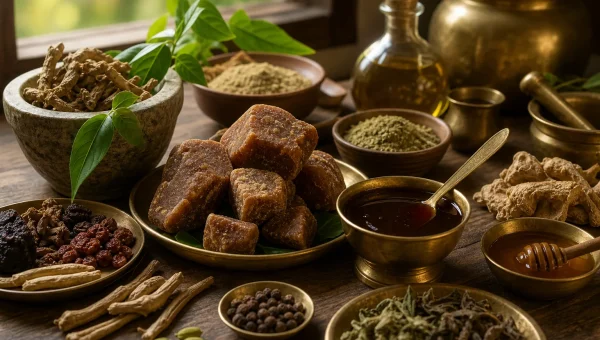
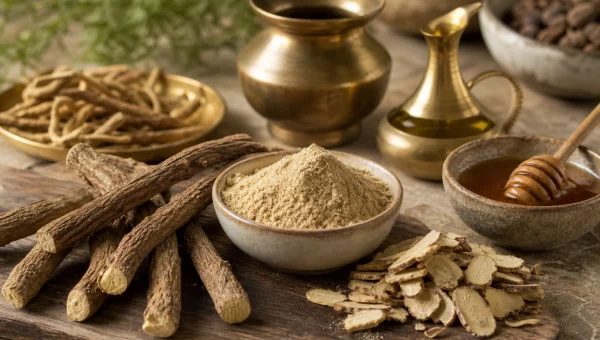
In many Ayurvedic kitchens, Haritaki is treated less like a dramatic remedy and more like a steady household staple. The dried, ridged fruit of Terminalia chebula is known in Sanskrit as Haritaki, Abhaya, Pathya, and Vijaya, names that point to its long-standing place in classical materia medica.
Calling Haritaki only a constipation herb misses the broader Ayurvedic view. The Ayurvedic Pharmacopoeia of India describes it as anulomana for supporting the proper downward movement of Vata, but also as dipana, hridya, medhya, chakshushya, rasayana, and sarvadosha-prashamana. In plain language, Ayurveda places it among herbs used for digestion, channels, sensory strength, mind, rejuvenation, and systemic balance.
Charaka Samhita’s Rasayana chapter gives Haritaki special prominence, describing it as having five tastes, lacking only salty taste, and placing it among the important Rasayana fruits. The same chapter presents Haritaki as a medicine whose use depends on digestive strength, constitution, timing, and suitability rather than on casual high-dose self-medication.
What Makes Haritaki Exceptional
Haritaki consists of the mature fruit pericarp of Terminalia chebula Retz. The Ayurvedic Pharmacopoeia of India lists its constituents as tannins, anthraquinones, and polyphenolic compounds. Modern phytochemical reviews further describe phenolic acids, hydrolysable tannins, chebulagic acid, chebulinic acid, chebulic acid, gallic acid, ellagic acid, corilagin, and related compounds, which help explain why the fruit has been studied across digestive, metabolic, oral, microbial, inflammatory, hepatic, and neuroprotective contexts.
Classically, Haritaki has five of the six tastes: sweet, sour, pungent, bitter, and astringent; it lacks only salty taste. Its guna are laghu and ruksha, its virya is ushna, and its vipaka is madhura. This combination gives it a distinctive Ayurvedic profile: light and drying in quality, warming in potency, and sweet in post-digestive effect.
The 9 Clinical Uses
The following uses preserve Haritaki’s traditional benefit-oriented role while keeping the language aligned with classical indications and available pharmacological evidence. These are educational descriptions, not a substitute for individualized diagnosis or treatment.
1. Digestive Motility and Regular Elimination
Haritaki’s best-known daily use is for vibandha, sluggish bowel movement, and udavarta, disturbed upward or obstructed Vata movement. The Ayurvedic Pharmacopoeia lists anulomana among its actions and includes vibandha, udavarta, aruchi, and abdominal disorders among its therapeutic uses. This makes Haritaki especially relevant when elimination is irregular, appetite is dull, and the abdomen feels heavy or obstructed.
A classical adult powder dose listed in the Ayurvedic Pharmacopoeia of India is 3-6 grams. For routine digestive support, many practitioners use the lower end of the range with warm water at bedtime, adjusting to constitution, stool pattern, strength, and dryness.
2. Blood Sugar and Prameha Support
Ayurveda includes prameha among Haritaki’s traditional indications. Prameha is a broad Ayurvedic category involving urinary and metabolic disturbance, and it overlaps in clinical discussion with diabetes-like presentations. Haritaki is not a replacement for diabetes medication, but its traditional use in prameha is consistent with modern interest in Terminalia chebula constituents and glucose-related pathways such as alpha-glucosidase inhibition, insulin resistance, oxidative stress, and inflammatory markers.
Anyone with diabetes, prediabetes, hypoglycemia, or use of glucose-lowering medicines should treat Haritaki as a practitioner-guided herb. Consult your healthcare provider before adding Haritaki if you take diabetes medication or monitor blood sugar medically.
3. Oral Health and Gum Support
Haritaki’s astringent taste and tannin-rich composition make it relevant in oral care. Extracts and mouthrinse preparations of Terminalia chebula have been evaluated against Streptococcus mutans, a major caries-associated organism, and against oral bacterial growth and inflammatory mediators. In Ayurvedic practice, a mild Haritaki decoction may be used as a rinse and spit preparation, not as a swallowed dose.
A practical home-style rinse is a weak decoction prepared from a small amount of Haritaki powder boiled in water, cooled, strained very carefully, and used only for rinsing the mouth. It should not replace brushing, flossing, dental cleaning, or periodontal care. See also our complete guide on Ayurvedic oral health and the Danta Swasthya protocol.
4. Wound Healing and Skin Repair
Haritaki appears in classical and pharmacopoeial contexts connected with shotha and formulations such as Pathyadi Lepa. Its tannins and polyphenols give it an astringent, cleansing, and protective profile. Preclinical wound models using Terminalia chebula have reported faster wound contraction, shorter epithelialization time, and improved collagen-related markers, which aligns with its traditional external use in selected skin and wound contexts.
External application should be handled carefully. Open wounds, burns, infected lesions, ulcers, diabetic wounds, and spreading skin disorders require professional care. Internal use for skin support is usually chosen only after assessing digestion, bowel pattern, Pitta, Rakta involvement, dryness, and overall constitution.
5. Eye Health
The Ayurvedic Pharmacopoeia of India lists Haritaki as chakshushya, meaning beneficial for the eyes, and includes netraroga-related usage in related classical contexts. This does not mean that crude Haritaki water should casually be put into the eyes. Eye preparations require sterility, correct filtration, correct strength, and clinical judgment.
For general wellness, Haritaki’s eye-health relevance is better understood through the Ayurvedic lens of Rasayana, digestion, channels, and antioxidant-rich plant chemistry. Direct eye washes, collyria, or ophthalmic applications should only be used under the guidance of a qualified practitioner trained in Ayurvedic eye care.
6. Respiratory Health
The Ayurvedic Pharmacopoeia lists kasa and tamaka shvasa among Haritaki’s therapeutic uses, and Haritaki is an important ingredient in classical formulations such as Agastya Haritaki Rasayana and Chitraka Haritaki. This places it in the respiratory tradition for cough, breathlessness patterns, Kapha-Vata obstruction, and chronic channel congestion when the patient’s strength and digestion permit.
In practice, respiratory use is rarely just “Haritaki alone for every cough.” The vehicle and combination matter. Honey, Pippali, Shunthi, ghee, or other herbs may be selected depending on whether the presentation is dry, phlegmatic, weak, hot, inflamed, chronic, or associated with poor digestion. More herbal approaches to lung health are covered in our post on Ayurvedic herbs for asthma and allergies.
7. Cognitive Function and Memory
Haritaki is listed as medhya in the Ayurvedic Pharmacopoeia, indicating traditional use for intellect, cognition, and mental clarity. Charaka’s Rasayana discussion also links Rasayana therapy with strength of senses, memory, intellect, and long-term vitality. This supports Haritaki’s place in rejuvenative formulas rather than limiting it to bowel care.
Modern neuroprotective discussions of Terminalia chebula focus on antioxidant, anti-inflammatory, and neuronal stress-protective mechanisms. In Ayurvedic application, the cognitive angle depends on correcting digestion, removing obstruction, supporting Vata movement, and choosing the right vehicle, often milk, ghee, or a formulation rather than harsh cleansing in a dry or depleted person.
8. Liver and Metabolic Support
Haritaki is traditionally used in broad digestive-metabolic contexts, including prameha, abdominal disorders, chronic fever patterns, and channel obstruction. Experimental hepatoprotective work with Terminalia chebula has focused on oxidative stress, membrane stabilization, and toxin-induced liver injury models. This supports its traditional reputation as a cleansing and metabolic herb while still leaving clinical use to practitioner judgment.
Haritaki should not be used as a self-treatment for hepatitis, fatty liver disease, jaundice, high liver enzymes, alcohol-related liver disease, or drug-induced liver injury. Anyone using liver-metabolized medicines, multiple prescriptions, or long-term supplements should seek professional guidance.
9. Anti-Aging and Longevity Rasayana
Haritaki’s Rasayana status is central to its identity. Charaka Samhita’s Rasayana chapter gives Haritaki and Amalaki special attention and describes Rasayana therapy as a path for long life, strength, youthfulness, sensory capacity, memory, and resilience. The Ayurvedic Pharmacopoeia also lists rasayana among Haritaki’s actions.
This is not a promise that Haritaki prevents aging. In Ayurveda, Rasayana works through suitability, digestion, tissue quality, channels, season, dose, and disciplined use. Haritaki’s antioxidant-rich chemistry and preclinical work on oxidative stress and SIRT1-related pathways are best understood as supportive mechanisms, not as a license for high-dose or unsupervised longevity experimentation. For a broader view of Rasayana science, see our post on Rasayana therapy and what modern longevity research shows.
Dosage Reference Table
The Ayurvedic Pharmacopoeia of India lists 3-6 grams of Haritaki powder as the classical adult dose. The following table is a practical educational reference; individualized dose may be lower, especially in dry, lean, elderly, sensitive, or medically complex people.
| Use | Form | Typical Adult Range | Timing | Anupana (Vehicle) |
|---|---|---|---|---|
| General digestion and bowel regularity | Powder | 1-3g to start; classical range 3-6g | Bedtime | Warm water |
| Prameha and metabolic support | Powder or practitioner-selected formulation | Practitioner-guided | Depends on digestion and medicines | Warm water, honey, or other selected vehicle |
| Oral hygiene rinse | Weak decoction | Rinse and spit only | After brushing or as advised | Water decoction |
| Skin and wound support | Internal powder or external preparation | Practitioner-guided | Depends on condition | Warm water, ghee, milk, or topical base as appropriate |
| Respiratory support | Classical formulation such as Agastya Haritaki Rasayana | Product- and patient-specific | As prescribed | Honey, warm water, or formulation-specific vehicle |
| Rasayana use | Powder, Triphala, or classical Rasayana formulation | Usually lower and sustained, not excessive | Often bedtime or morning, depending on plan | Warm water, milk, ghee, or seasonal vehicle |
Choosing Between Haritaki Forms
Classical texts and pharmacopoeial sources recognize Haritaki under several Sanskrit names, including Abhaya, Pathya, and Vijaya. In modern use, the most common forms are powder, tablets, capsules, decoction, and compound formulas such as Triphala, Agastya Haritaki Rasayana, Chitraka Haritaki, and Abhayarishta.
- Haritaki churna: The most flexible form for classical dosing and vehicle selection.
- Haritaki tablets or capsules: Convenient, but less adaptable than powder for changing dose and anupana.
- Triphala churna: A balanced formula containing Haritaki, Amalaki, and Bibhitaki; often preferred for gentle digestive and Rasayana support.
- Classical avaleha or arishta preparations: Used when the aim is respiratory, digestive, metabolic, or Rasayana support in a more complete formula.
Choose products that clearly identify Terminalia chebula, use mature fruit pericarp, avoid unnecessary fillers, and come from manufacturers that follow recognized quality standards. The Ayurvedic Pharmacopoeia lists identity, purity, strength, extractive values, and dose standards for the raw drug.
Who Should Use Caution
Haritaki’s ruksha quality and bowel-moving action make caution important in people with dehydration, active diarrhea, marked dryness, severe depletion, very low body weight, or intense Vata aggravation. Charaka’s Rasayana chapter also cautions against prolonged use in people with indigestion, rough-food depletion, emaciation from excess strain, and those afflicted by hunger, thirst, or heat.
Pregnant or breastfeeding women, children, people taking diabetes medicines, people preparing for surgery, and anyone with chronic disease or multiple prescriptions should consult a qualified Ayurvedic practitioner or healthcare provider before using Haritaki. Stop use and seek care if it causes diarrhea, abdominal pain, dizziness, excessive dryness, weakness, or unstable blood sugar.
Haritaki is best understood as a classical Rasayana and digestive-channel herb whose benefits depend on the right person, dose, timing, form, and vehicle.
That is why the kitchen-shelf view of Haritaki makes sense in Ayurveda: it is not merely a laxative reserved for emergencies, nor is it a cure-all to take carelessly. Used with respect for constitution, digestion, season, and medical context, Haritaki remains one of the most versatile fruits in Ayurvedic practice.
Consult your Ayurvedic practitioner or healthcare provider before starting Haritaki supplementation, especially if you have diabetes, take prescription medications, are pregnant or breastfeeding, have active diarrhea or dehydration, or are using it for a diagnosed medical condition.
References
- Ayurvedic Pharmacopoeia of India
- Charaka Samhita — Rasayana Adhyaya
- Cell (cell.com)
- Link (link.springer.com)
- Anti-hyperglycemic effect of chebulagic acid from the fruits of Terminalia chebula Retz (2012), PubMed
- Mdpi (mdpi.com)
- LWW Journals
- Effectiveness of Mouthrinse formulated from Aqueous Extract of Terminalia chebula on Salivary Streptococcus mutans Count and pH among 8- to 12-year-old School Children of Karnataka: A Randomized Clinical Trial (2016), PubMed Central
- Onlinelibrary (onlinelibrary.wiley.com)
- Influence of Terminalia chebula on dermal wound healing in rats (2002), PubMed
- SAGE Journals
- Hepatoprotective Effect of Terminalia chebula against t-BHP-Induced Acute Liver Injury in C57/BL6 Mice (2015), PubMed
- Terminalia chebula extract protects OGD-R induced PC12 cell death and inhibits lps induced microglia activation (2013), PubMed Central
- Frontiersin (frontiersin.org)
- Webmd (webmd.com)


Your grandmother keeping haritaki in the kitchen with the spices is exactly right. In my family it was the same, my Ammachi called it the house doctor and took it every night with warm water. She lived to 93 with better cognition than most people half her age.
The distinction between haritaki as a laxative versus haritaki as a Rasayana is what most people miss. If you’re taking it only when constipated you’re using 10% of what it offers. What dose and timing would you recommend for the full Rasayana application?
The eye health application surprised me. I was expecting digestion, immunity, longevity. But Triphala contains haritaki and the eye wash application for Alochaka Pitta support is actually documented in several classical sources. I hadn’t connected the haritaki component to the ophthalmic use.
Is there seasonal guidance for haritaki? I’ve seen references to taking it with different anupanas in different seasons, honey in some months, ghee in others. Can you clarify the classical seasonal protocol?
The tannin content and its documented antimicrobial activity against H. pylori is the clinical application I find most compelling. H. pylori is increasingly resistant to first-line antibiotics and any adjunct with documented activity against it deserves serious attention.
what form is most effective for someone who can’t tolerate the taste? i’ve tried haritaki powder directly and the astringency is too much for me. capsules seem weaker. is there a preparation method that makes it more palatable without reducing the activity?
Reading this later and the Haritaki Beyond Laxative advice still feels relevant. This is the kind of detail readers can test slowly.
I loved the story about the grandmother keeping haritaki on the kitchen shelf next to turmeric and cumin it made me think about how we store our spices
Two months on nightly haritaki for chronic constipation and my digestion is qualitatively different. Not just more regular but the whole digestive experience feels cleaner. Whatever the mechanism, the effect is real.
The point about haritaki not being just a laxative but also toning the intestinal wall was new to me and makes sense why it feels gentler than senna
Reading this later and the Haritaki Beyond Laxative advice still feels relevant. I appreciate that it does not oversell the result.
I wonder if the three to five grams dose at bedtime would work for someone who usually takes a fiber supplement in the morning
The King of Medicines designation is impressive but also a bit grandiose. Ashwagandha gets that title from some texts too, as does Shilajit. The superlative designations in Ayurveda are numerous enough that they stop being meaningfully distinguishing.
The blood sugar trial showing a 14% drop in fasting glucose over twelve weeks is interesting but I would want to see longer term data before trying it
The wound healing application is something my grandmother used directly. She would make a paste with haritaki powder and apply it to slow-healing cuts and skin irritations. At the time I thought it was folk medicine. The antibacterial and tissue-regenerating mechanisms you describe explain why it worked.
Using haritaki decoction as a mouth rinse for gingivitis sounds like a natural alternative to chlorhexidine I might ask my dentist about it
Reading this later and the Haritaki Beyond Laxative advice still feels relevant. The safety notes could be expanded a little.
The wound healing section reminded me of the old Sushruta reference and I appreciate the note about combining haritaki with neem and manjistha for skin paste
Eye wash preparation with haritaki decoction needs sterile handling I would definitely consult an Ayurvedic practitioner before trying that
Reading this later and the Haritaki Beyond Laxative advice still feels relevant. The main idea is clear even if someone is new to Ayurveda.
The respiratory blend with pippali and shunthi taken twice daily before meals seems like a simple routine to try during allergy season
I found the cognitive function part compelling especially the idea of taking haritaki with warm milk at night for a ninety day course
Liver protection using haritaki with katuki and bhumi amla makes me cautious about interactions with any meds I am on so I would seek professional advice
The part about Haritaki Beyond Laxative feels realistic. I appreciate that it does not oversell the result.
The part about Haritaki Beyond Laxative feels realistic. This would be easier to follow with a one-week sample plan.
The part about Haritaki Beyond Laxative feels realistic. The timing advice is the part I would start with.
The rasayana discussion linking haritaki to SIRT1 activation and telomere protection ties ancient texts to modern research in a way that feels credible
The part about Haritaki Beyond Laxative feels realistic. The safety notes could be expanded a little.
The part about Haritaki Beyond Laxative feels realistic. The examples make the advice less abstract.
The part about Haritaki Beyond Laxative feels realistic. The main idea is clear even if someone is new to Ayurveda.
The part about Haritaki Beyond Laxative feels realistic. I would like to know how long to try it before judging results.
The part about Haritaki Beyond Laxative feels realistic. This feels more usable than a long list of herbs.
The part about Haritaki Beyond Laxative feels realistic. Good starting point for a cautious reader.
This makes sense for Haritaki Beyond Laxative. A few more examples would still help.
This makes sense for Haritaki Beyond Laxative. The practical details matter more than people think.
This makes sense for Haritaki Beyond Laxative. Small daily changes are easier to follow than a perfect plan.
This makes sense for Haritaki Beyond Laxative. Would be useful to see a short checklist next.
This makes sense for Haritaki Beyond Laxative. I would still ask a practitioner before changing medicines.
This makes sense for Haritaki Beyond Laxative. I appreciate that it does not oversell the result.
This makes sense for Haritaki Beyond Laxative. This is the kind of detail readers can test slowly.
This makes sense for Haritaki Beyond Laxative. The article avoids making it sound like a quick fix.
This makes sense for Haritaki Beyond Laxative. The timing advice is the part I would start with.
This makes sense for Haritaki Beyond Laxative. The safety notes could be expanded a little.
This makes sense for Haritaki Beyond Laxative. The examples make the advice less abstract.
This makes sense for Haritaki Beyond Laxative. This would be easier to follow with a one-week sample plan.
This makes sense for Haritaki Beyond Laxative. The main idea is clear even if someone is new to Ayurveda.
This makes sense for Haritaki Beyond Laxative. This feels more usable than a long list of herbs.
This makes sense for Haritaki Beyond Laxative. I would like to know how long to try it before judging results.
This makes sense for Haritaki Beyond Laxative. Good starting point for a cautious reader.
I would like more detail on Haritaki Beyond Laxative. Would be useful to see a short checklist next.
I would like more detail on Haritaki Beyond Laxative. The article avoids making it sound like a quick fix.
I would like more detail on Haritaki Beyond Laxative. A few more examples would still help.
I would like more detail on Haritaki Beyond Laxative. The practical details matter more than people think.
I would like more detail on Haritaki Beyond Laxative. Small daily changes are easier to follow than a perfect plan.
I would like more detail on Haritaki Beyond Laxative. I would still ask a practitioner before changing medicines.
I would like more detail on Haritaki Beyond Laxative. This is the kind of detail readers can test slowly.