
Last winter, I kept my hands hidden. I wore gloves indoors at work, kept my arms crossed at dinner, and avoided handshakes whenever I could. The skin across my knuckles had split into fine red lines, and the skin around my thumbs was so dry it would catch on fabric. I was spending real money on hand creams that smelled lovely and did absolutely nothing by morning.
I grew up watching my grandmother treat her hands with pure ghee at night. She would scoop a small amount from a little brass container on her dresser, warm it between her palms, and massage it in before wrapping her hands in thin cotton mitts she had stitched herself. I had always thought of that ritual as old-fashioned. That winter, I finally came back to it.
If your hands are cracked, peeling, rough, or stubbornly dry, this post gives you three practical overnight Ayurvedic hand-care treatments. They are built around classical Ayurvedic ideas of snehana—oleation, softness, and protection—using simple kitchen and herbal ingredients with clear safety limits.
Why Your Hands Keep Getting Dry
In Ayurveda, rough, tight, dry skin is commonly interpreted through the qualities of aggravated Vata, especially ruksha meaning dry and khara meaning rough. Cold weather, wind, irregular routines, over-cleansing, and loss of natural oil all increase the same dry, light, rough qualities that Ayurveda tries to soften with warm, unctuous care.
Modern skin care describes the same problem in barrier language. Frequent handwashing, hot water, detergents, wet work, winter air, low humidity, and repeated friction can leave the hands dry, irritated, cracked, or painful. Lighter lotions can help, but very dry hands often need richer oils or ointment-like layers applied while the skin is slightly damp and protected overnight with cotton gloves.
Why Ayurveda Uses Oils and Fats for Dry Hands
Classical Ayurvedic texts place oil massage, or abhyanga, within daily self-care and describe it as especially beneficial for the skin and for calming Vata. Charaka Samhita also describes ghee and sesame oil among important lipid substances: ghee is described as softening and Vata-Pitta pacifying, while sesame oil is described as Vata pacifying and beneficial for the skin.
For hand care, that translates into a simple principle: use a warm, lipid-rich base, massage it patiently into the skin, seal it with cotton gloves, and let the hands rest from washing and friction while you sleep.
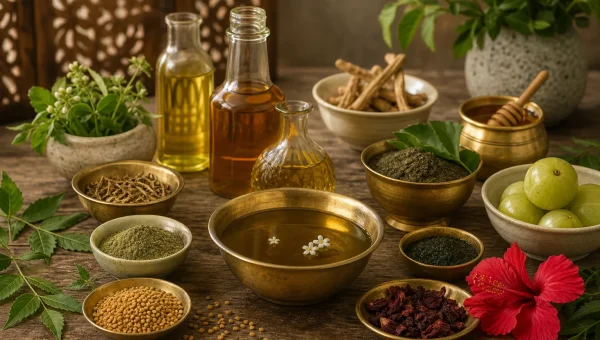
The 5 Core Ingredients You Need
These five ingredients are enough for all three treatments below. Choose clean, fresh ingredients, and avoid any herb, oil, or food substance that has irritated your skin in the past.
- Ghee: A rich lipid base used in Ayurveda for softness and oleation. It is especially useful when the hands feel dry, tight, and depleted.
- Turmeric (Haridra): The dried rhizome of Curcuma longa. Use only a small pinch in hand masks because it can stain skin, gloves, and fabric, and some people are sensitive to it.
- Sesame Oil (Tila Taila): A traditional Ayurvedic oil expressed from sesame seeds. It is a strong choice for Vata-type dryness and for massage-based care.
- Ashwagandha (Withania somnifera): A classical strengthening and rasayana herb. In this hand paste, it is used in a small amount, blended into ghee and sesame oil for a richer overnight mask.
- Neem (Nimba): A bitter Ayurvedic herb traditionally used in skin and wound-related contexts. Use it sparingly and only on non-bleeding, superficial dryness or closed fissures.
Before You Start: Patch Test and Protect Broken Skin
Before applying any overnight treatment, test a tiny amount on the inner forearm or one small area of the hand and wait 24 hours. Do not apply turmeric, neem powder, honey, or herbal pastes into deep, bleeding, infected, or very painful cracks. If the skin is open, hot, swollen, spreading red, oozing pus, or repeatedly bleeding, use plain protection only and consult a qualified healthcare provider or dermatologist.
Treatment 1: Classic Ghee and Turmeric Overnight Mask
This is the best starting treatment for hands that are dry, dull, rough, and tight but not actively bleeding or infected. It is simple, rich, and deeply comforting in cold weather.
What You Need
Measure a small quantity so the mask is rich without dripping or staining everything around you.
- 2 teaspoons pure ghee
- 1 small pinch turmeric powder, about 1/16 teaspoon
- 2 drops vitamin E oil, optional
How to Make and Apply
Apply this after your last hand wash of the night, when you will not need to wash dishes, handle a phone, or touch fabrics you care about.
- Gently warm the ghee until it softens. It should feel warm, not hot.
- Mix in the turmeric until the ghee turns pale golden. Keep the turmeric amount very small.
- Wash your hands with lukewarm water and pat them dry, leaving them slightly damp.
- Massage the mixture into the backs of the hands, knuckles, cuticles, and fingertips for 3 to 5 minutes.
- Put on clean cotton gloves and leave the mask on overnight.
- In the morning, rinse gently with lukewarm water and mild soap only if needed.
Use this treatment 3 nights per week for two weeks, then once or twice weekly as maintenance. Use old cotton gloves, because turmeric can leave a yellow tint.
Treatment 2: Sesame, Ghee, Honey, and Neem Balm for Rough Cracked Hands
This treatment is for rough hands with shallow, closed fissures, sore knuckles, or dryness that feels tight after washing. It avoids salt and strong essential oils, which can sting and irritate cracked skin.
What You Need
Use finely sifted neem powder, and keep the amount small. For very sensitive skin, omit neem and use only sesame oil, ghee, and honey.
- 1 tablespoon cold-pressed sesame oil
- 1 teaspoon ghee
- 1/4 teaspoon raw honey
- 1 tiny pinch neem powder, optional
How to Make and Apply
This balm works best when applied gently after a brief lukewarm soak that softens surface dryness without overheating the skin.
- Place your hands in lukewarm water for 2 minutes, then pat them mostly dry.
- Warm the sesame oil and ghee together between your palms or in a small bowl set over warm water.
- Stir in the honey until the mixture looks glossy.
- Add a tiny pinch of neem powder only if your skin tolerates neem well.
- Apply over rough areas, knuckles, cuticles, and the backs of the hands. Do not pack the mixture into open or bleeding cracks.
- Cover with cotton gloves and leave on overnight.
- In the morning, rinse gently and apply a small amount of plain sesame oil or ghee to slightly damp hands.
Use this treatment nightly for up to 5 nights during a rough patch, then reduce to 1 or 2 nights per week. If it stings, burns, itches, or worsens redness, wash it off and stop using it.
Treatment 3: Ashwagandha, Ghee, and Sesame Repair Paste for Very Dry Hands
This is the richest treatment of the three. Choose it when your hands feel depleted, rough, over-washed, winter-worn, or chronically dry, but avoid it on actively open or infected skin.
What You Need
The paste should be soft and spreadable, not gritty. Use finely powdered ashwagandha from a reputable source.
- 1 tablespoon ghee
- 1 teaspoon sesame oil
- 1/4 teaspoon ashwagandha root powder
- 1 tiny pinch turmeric powder, optional
How to Make and Apply
Use a thicker layer than you would with a daytime moisturizer, and protect your sheets with cotton gloves.
- Soften the ghee and mix it with sesame oil.
- Stir in ashwagandha powder until a smooth paste forms.
- Add the tiny pinch of turmeric only if you tolerate turmeric well and do not mind light staining.
- After washing with lukewarm water, pat hands slightly damp.
- Apply a generous layer over the hands, especially the knuckles, fingertips, and cuticles.
- Cover with cotton gloves overnight.
- In the morning, rinse gently and apply a thin layer of plain ghee or sesame oil if the skin still feels tight.
Use this treatment 2 nights per week. If the paste feels too heavy, reduce the ghee to 2 teaspoons and increase sesame oil slightly.
Comparison: Which Treatment Is Right for You?
Pick the treatment that matches your hands today rather than trying all three at once. Simple and consistent is better than layering too many herbs on irritated skin.
| Condition | Best Treatment | Suggested Use | Best For |
|---|---|---|---|
| General dryness and roughness | Treatment 1: Ghee + Turmeric | 3 nights per week | Cold-weather Vata dryness |
| Shallow closed fissures and sore roughness | Treatment 2: Sesame + Ghee + Honey + Neem | Up to 5 nights, then reduce | Hands irritated by washing and friction |
| Very dry, depleted, over-washed hands | Treatment 3: Ashwagandha + Ghee + Sesame | 2 nights per week | Rich overnight repair care |
Daytime Support Between Overnight Treatments
Overnight treatments work better when your daytime habits protect the skin barrier. The goal is not to avoid hand hygiene, but to make each wash less stripping and to restore a protective layer afterward.
- Wash with lukewarm water instead of hot water.
- Pat hands dry, leaving a little moisture on the skin, then apply a small amount of ghee, sesame oil, or a fragrance-free ointment.
- Wear protective gloves for dishwashing, cleaning, gardening, and detergent exposure.
- Use plain cotton gloves at night after applying your treatment.
- Avoid fragranced products, harsh scrubs, lemon juice, baking soda, and strong essential oils on cracked hands.
- If sanitizer stings, treat that as a sign that the skin barrier is already cracked or irritated; moisturize after it dries.
A Note on Managing Expectations
Ayurvedic hand care is not instant magic. The first morning, your hands may simply feel less tight. With repeated care, less hot water, and fewer irritants, roughness often becomes easier to manage. The biggest change usually comes from consistency: oiling after washing, protecting the hands during chores, and using cotton gloves at night.
If your cracking is severe, deep, painful, recurrent, bleeding, or accompanied by warmth, spreading redness, swelling, pus, thick scaling, numbness, or intense itching, consult a dermatologist or qualified healthcare provider. Persistent hand cracking can come from eczema, allergic contact dermatitis, irritant dermatitis, psoriasis, fungal infection, diabetes-related dryness, or occupational exposure, and those need proper diagnosis.
Your hands cook, clean, hold, comfort, and carry you through the day. A small nightly ritual of warmth, oil, and protection can be a beautiful way to give them back some of the care they give everyone else.
Disclaimer: This post is for general wellness and educational purposes only and is not a substitute for professional medical or dermatological advice. Consult a qualified healthcare provider before trying new topical treatments if you have eczema, psoriasis, diabetes, allergies, open wounds, infection signs, pregnancy-related concerns, or a chronic skin condition. Always patch test first, and stop use if irritation occurs.
References
- Charaka Samhita — Vata dosha
- Charaka Samhita — Matrashiteeya Adhyaya
- Charaka Samhita — Snehadhyaya
- Ia800501 (ia800501.us.archive.org)
- Blogs (blogs.cdc.gov)
- Aad (aad.org)
- Aad (aad.org)
- Mayoclinic (mayoclinic.org)
- Mayoclinic (mayoclinic.org)
- Effects of Turmeric (Curcuma longa) on Skin Health: A Systematic Review of the Clinical Evidence (2016), PubMed
- Clinical Studies on Topical Curcumin (2023), PubMed
- Healthline (healthline.com)
- An Insight into the Dermatological Applications of Neem: A Review on Traditional and Modern Aspect (2021), PubMed
- The Antimicrobial Potential of the Neem Tree Azadirachta indica (2022), PubMed Central
- Honey in dermatology and skin care: a review (2013), PubMed
- Mayoclinic (mayoclinic.org)
The hiding hands detail is something I completely relate to. I’m a nurse and my winter cracked hands were embarrassing at work. The overnight ghee treatment from week two has been transformative.
My wife had severe hand cracking and the commercial hand creams she was buying were actually making it worse. The moisture trapping and then evaporation cycle damages the skin barrier. The ghee overnight approach fixed what 12 products hadn’t.
As a dermatologist the occlusive overnight treatment recommendation is sound. Ghee has a similar fatty acid profile to the skin’s own lipids. The Ayurvedic tradition arrived at a good emollient without the science.
What’s the typical duration of the treatment before reassessing? 🌿
The Shatadhauta Ghrita 100-washed formulation is different from regular ghee and the article should clarify this for readers who might try the regular cooking variety first and find it less effective.
Which of the three overnight treatments is most appropriate for cracking at the knuckle joints specifically vs general dryness? They seem to be addressing slightly different presentations.
The ghee and turmeric mask sounds like a simple night routine I could try with ingredients already in my pantry.
The Vata imbalance explanation for winter hand condition is something my grandmother communicated without those words. She just said dry skin needs fat and warmth. Classical wisdom from non-classical language.
I wonder if using raw honey in the sesame neem balm might attract ants if left out overnight.
I used the Neem and coconut oil combination overnight for split thumbs that had been bleeding for three winters. Healed completely within 10 days. Nothing I’d tried before lasted through more than one day.
Applying a thin layer of plain sesame oil after washing hands seems like an easy daytime habit to keep moisture in.
I liked the practical side of Hand Care. I appreciate that it does not oversell the result.
The explanation about Vata imbalance helping explain why regular lotions fail makes a lot of sense to me.
Has anyone tried the ashwagandha ghee paste and noticed less tightness around the knuckles after a few nights?
The internal Vata correction piece for seasonal hand cracking is the part I hadn’t considered. Treating from the outside helped temporarily. Adding warm sesame internally changed the pattern.
I like that the recipes give exact measurements makes it feel less like guesswork.
Same here
tried putting ghee on hands under gloves overnight, three nights, huge difference in dryness
How long typically before seeing results with this approach?
This explains something I’ve experienced but couldn’t name. Good validation 💯
Does this protocol change if someone is pregnant or breastfeeding? धन्यवाद
The internal herb protocol alongside external treatment that approach is what makes Ayurveda different
I appreciate how specific the instructions are compared to most Ayurveda articles
Workers who wash hands frequently does the coconut oil barrier hold up with frequent washing?
The contraindications section was important and often missing from similar articles
Useful post
Last winter was rough for my hands too — the cracking around the knuckles was bad enough that typing became uncomfortable. I tried a ghee and turmeric paste overnight on a friend’s suggestion and saw improvement within a week, but I could never figure out the right ratio. Is the ghee doing the heavy lifting here or is it mainly acting as a carrier for the turmeric?
Using cotton gloves overnight feels a bit old school but the article says they were stitched by the grandmother which adds a nice personal touch.
The connection between dry hands and internal dryness/Vata is interesting. Drink more water?
Is the morning or evening timing more important for this protocol overall?
Nice article but the pictures of hand conditions would really help with self-diagnosis
Having some neem powder for oral care makes me curious if it works the same way on skin.
I tried a similar approach last year but without the specific sequencing. Wonder if that’s why it didn’t work
I’m curious whether the vitamin E oil optional step really changes the texture of the ghee turmeric mix.
Warming the ghee just until liquid seems like a crucial step to avoid burning the delicate fats.
started this 3 weeks ago, too early to say but the process itself feels right
@Nicole The section on dosage was the most practically useful for me
The tip about applying oil right after hand washing while skin is still damp reminds me of how I treat my face after cleansing.
Can this be combined with modern medication or is it better standalone?
Anyone else tried this for longer than 6 months? Wondering about long-term effects
The seasonal variation angle is underused in most health content. Good to see it here 🙏
Doing this
If the cracks are sore, skipping the salt in the sesame neem balm makes sense to avoid stinging.
The beeswax + sesame oil overnight treatment you described does it stain cotton gloves badly?
Shared this with my Ayurveda practitioner. She agreed with most points
I appreciate the warning to see a dermatologist if there are signs of infection, it keeps the advice responsible.
The connection between gut health and this condition is the angle most allopathic doctors miss
My doctor dismissed this as pseudoscience. Going to try it anyway and report back
Is there a daytime version that doesn’t leave hands too greasy for work?
Thanks!
The historical reference to Charaka Samhita gave me confidence that ghee has been used for skin care for a long time.
The Hand Care section feels grounded enough to try carefully. Would be useful to see a short checklist next.
Will try
Would love a follow-up article going deeper on the herb preparation methods
Trying the sesame oil alone as a daytime moisturizer could be a low effort way to see if my hands improve before committing to the overnight masks.
tbh wasnt expecting much from this but the specifics are actually helpful
Did this for 6 weeks exactly as described, going to update here with results
The traditional context helps understand why it’s done this way. Not just ‘eat this herb’
Does this apply to children or only adults?
My 70 year old mother’s hands crack every winter. Sending this to her
Been following Ayurveda for 5 years and this article still taught me something new
good info, sharing with my father who has been looking for something like this
For eczema-prone hands, is sesame oil safe or can it aggravate?
Not skeptical about Ayurveda generally but some claims here need stronger evidence
Is this suitable for elderly patients or does the dosage need adjustment?
The Ayurvedic framing made this topic much easier to understand than the Western medical version
Are there clinical studies backing the specific herb combination you mentioned?
Where do you recommend sourcing the herbs mentioned here in India?
The dosage range given is wide. Is there a way to determine where in the range I should start?
Good information on this topic. 🙌
Helpful article, thank you.
Tried this, results were good.
Interesting perspective here.
Will try this approach soon.
Thanks for the clear explanation.
This helped clarify my doubts. 💯
Useful and actionable.
Following this protocol now.