
Three years of thinning hair can make an old routine feel suddenly urgent: the morning oil massage that once left almost no shed hair in the fingers may begin to reveal diffuse shedding, a wider part line, and a scalp that feels dry, hot, itchy, or easily irritated. In Ayurveda, a hair-supportive routine is not limited to stopping fall; it aims to nourish Kesha through the scalp, digestion, sleep, daily rhythm, and carefully chosen herbs. Here, Kesha Vardhini is used in that practical sense: a consistent, hair-nourishing protocol that supports density, scalp comfort, and strand quality while staying within safe limits.
Female hair density loss can arise from stress, postpartum shifts, nutritional deficiency, thyroid disease, PCOS, autoimmune alopecia, genetic female-pattern hair loss, medication changes, crash dieting, and chronic illness. Ayurveda can be used as supportive care, but sudden, severe, patchy, or rapidly progressive hair loss should be assessed by a dermatologist or qualified healthcare provider.
Root-Cause Diagnosis: The Ayurvedic Framework for Female Hair Loss
Classical Ayurvedic discussions of Khalitya describe a doṣic process in which disturbed Pitta, Vata, Kapha, and Rakta affect the hair roots and the channels of the scalp. In practical assessment, the practitioner looks beyond the number of hairs shed and studies the scalp, digestion, sleep, menstrual history, stress pattern, diet, bowel habits, and signs of heat, dryness, oiliness, inflammation, or depletion.
| Dominant Pattern | Typical Scalp and Hair Clues | Supportive Ayurvedic Emphasis | Common External Base |
|---|---|---|---|
| Vata emphasis | Dry scalp, brittle strands, rough texture, breakage, irregular routine, poor sleep, or stress-related depletion | Warm oiling, regular meals, sleep restoration, gentle massage, nourishing rasayana support | Sesame oil, often combined with Vata-supporting herbs |
| Pitta emphasis | Heat, tenderness, redness, burning sensation, premature greying tendency, or a scalp that becomes easily inflamed | Cooling oils, avoidance of excess heat and harsh cleansing, Pitta-pacifying herbs such as Bhringaraja and Amalaki | Coconut oil or Bhringaraja oil in a cooling base |
| Kapha emphasis | Heavy, oily scalp, sticky scaling, sluggishness, and shedding that worsens when the scalp is congested | Light cleansing, avoiding heavy product build-up, improving digestion, and using lighter oils sparingly | Light sesame oil or medicated oils chosen by a practitioner |
| Pitta-Vata emphasis | Diffuse thinning with both sensitivity and dryness, often seen when heat, stress, irregular routine, and tissue depletion coexist | Cooling yet nourishing care: gentle Bhringaraja-based oiling, sleep support, Amalaki, and stable daily rhythm | Bhringaraja oil in coconut or a coconut-sesame blend |
For many women with stress-linked diffuse thinning, the pattern is not purely one doṣa. A scalp may be dry yet inflamed, shedding may increase after illness or emotional stress, and the hair may lose weight and shine before obvious bald patches appear. That mixed presentation calls for a calm, consistent protocol rather than aggressive scrubbing, frequent product changes, or overheated treatments.
The Four Pillars of Kesha Vardhini
A complete Kesha Vardhini routine combines external scalp care, internal nourishment, diet, and a gentle cleansing rhythm. The goal is to support the scalp without irritating it, nourish the body without overloading digestion, and give the hair cycle enough time to respond.
Pillar 1: Scalp Oil Protocol (Murdhni Taila and Shiro Abhyanga)
Murdhni Taila, the application of oil to the head, is described in the Ayurvedic daily-care tradition through forms such as head massage, pouring, soaking, and retention of oil on the head. For a home routine, the simplest form is Shiro Abhyanga: gentle oil massage of the scalp. It is traditionally valued for supporting hair, calming the head, and maintaining the sense organs, while in modern practical terms it encourages regular scalp contact, reduces harsh handling, and can make the scalp more comfortable.
A small standardized scalp-massage trial used four minutes of daily massage for 24 weeks and reported increased hair thickness in healthy male participants. This does not make massage a cure for female hair loss, but it supports the practical value of gentle, consistent mechanical stimulation as part of a broader routine.
Bhringaraja (Eclipta alba / Eclipta prostrata) is one of the central Ayurvedic herbs for hair care. The Ayurvedic Pharmacopoeia of India lists Bhringaraja with the synonym Kesharaja and the action Keshya, meaning beneficial for hair. It is also included in classical medicated oils such as Bhringaraja Taila, Bhringamalakadi Taila, and Nili Bhringadi Taila. Preclinical work on topical extracts of Eclipta alba has evaluated hair-growth activity in animal models, so it is reasonable to keep Bhringaraja as the foundational external herb while avoiding exaggerated promises.
Simple Bhringaraja Oil for Pitta-Vata Hair Support:
- Use 1 cup coconut oil for a more cooling base, or 3/4 cup coconut oil with 1/4 cup sesame oil when dryness and Vata signs are also present.
- Add 3-4 tablespoons dried Bhringaraja powder and 1-2 tablespoons Amalaki powder.
- Warm on the lowest possible heat until the herbs are well infused and the oil is aromatic; avoid smoking, frying, or overheating the oil.
- Cool completely and strain through clean muslin so that no gritty powder remains on the scalp.
- Store in a clean dark glass bottle and use with clean, dry fingers or a spoon to avoid contamination.
Application protocol: Warm 1-2 tablespoons of oil by placing the bowl in hot water. Apply to the scalp with the fingertips and massage gently for four to five minutes. Leave for one to three hours, or overnight only if the scalp tolerates it well and the oil does not trigger itching or heaviness. Use two times weekly for the first eight to twelve weeks, then once weekly for maintenance. Avoid tight hairstyles, vigorous rubbing, and scratching after oiling.
Pillar 2: Internal Rasayana Herbs
Ayurveda connects hair with deeper tissue nourishment. A common classical teaching describes hair as a Mala, or by-product, of Asthi Dhatu; therefore, hair care is not treated as a purely cosmetic issue. The internal plan must support digestion, tissue nutrition, sleep, and the individual doṣa pattern. Herbs should be selected with a qualified practitioner, especially for women who are pregnant, postpartum, trying to conceive, taking medication, or managing chronic disease.
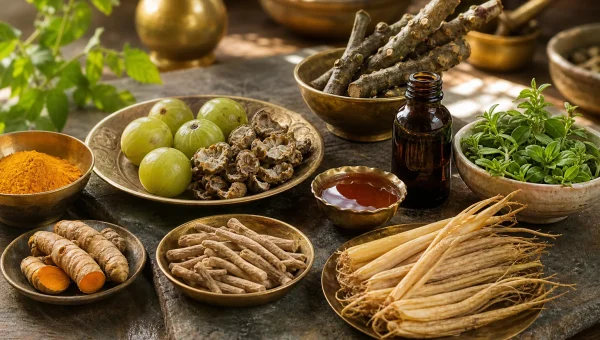
Amalaki (Emblica officinalis): Amalaki is a major Ayurvedic rasayana. The Ayurvedic Pharmacopoeia of India lists it as Rasayana, Tridoshajit, and cooling in potency. It contains ascorbic acid and tannins, and it is traditionally used when heat, depletion, and oxidative stress patterns are part of the presentation. For hair-supportive care, Amalaki is most useful when the scalp shows Pitta signs or when the diet is low in fresh, nourishing, sour-sweet fruits.
Shatavari (Asparagus racemosus): Shatavari is described in the Ayurvedic Pharmacopoeia of India as sweet, cooling, unctuous, nourishing, Balya, Rasayana, and Stanyakara. It is especially considered when dryness, depletion, poor sleep, postpartum weakness, or Pitta-Vata disturbance is present. It should be used carefully and individually rather than as a universal hair supplement.
Yashtimadhu (Glycyrrhiza glabra): Yashtimadhu is sweet, cooling, unctuous, Balya, Varnya, Vatapittajit, and Raktaprasadana in the Ayurvedic Pharmacopoeia of India. It may suit Pitta-dominant presentations when selected by a practitioner, but it is not appropriate for everyone. Licorice can raise blood pressure and may be unsafe in heart disease, kidney disease, pregnancy, or when combined with certain medicines; it should not be taken long term without professional guidance.
Pillar 3: Dietary Foundations for Kesha Vardhini
Diet is the daily rasayana for hair. A Kesha Vardhini diet should be warm, regular, digestible, mineral-rich, and suited to the person’s doṣa pattern. Skipping meals, crash dieting, low protein intake, chronic digestive disturbance, and excessive stimulants can all weaken the nutritional foundation needed for healthy hair cycling.
- Black sesame seeds (Tila): The Ayurvedic Pharmacopoeia of India lists sesame as Keshya, Rasayana, Balya, Snehana, and Kesha Krishnakara, with therapeutic use in Khalitya and Palitya. For many people, 1-2 teaspoons of roasted black sesame with food is a practical way to include it; those with strong Pitta heat, digestive sensitivity, or sesame allergy should avoid unsupervised use.
- Coconut: Coconut is cooling and useful in Pitta-type scalp care. As an external pre-wash oil, coconut oil has been shown to reduce protein loss from hair fibers, which makes it especially suitable for dry, damaged, or frequently washed hair.
- Pomegranate (Dadima): Dadima is listed in the Ayurvedic Pharmacopoeia of India as Balya, Hridya, Dipana, Pachana, Rucya, and supportive for both Pitta and Vata. It is a useful fruit when the goal is to support appetite, digestion, and tissue nourishment without adding heaviness.
- Daily protein and iron support: Hair shedding can worsen when overall nutrition is poor. Women with heavy periods, postpartum depletion, vegetarian diets low in iron-rich foods, or chronic fatigue should consider appropriate medical testing rather than relying only on oils and herbs.
- Reduce aggravating habits: For Pitta-Vata hair loss, reduce excessive chilli, alcohol, very sour foods, late nights, fasting, overheated styling, tight hairstyles, and frequent harsh shampooing.
Pillar 4: The Scalp Care Routine (Shiro Abhyanga and Washday Protocol)
The washday principle is simple: protect first, cleanse gently, and dry without trauma. Pre-oiling can reduce friction and, with coconut oil, helps protect hair protein. Cleansing should remove sweat, oil, and build-up without leaving the scalp raw or stripped. The best wash frequency depends on climate, sweat, dandruff tendency, oil tolerance, and scalp condition.
Ayurvedic hair-wash alternatives:
- Reetha and Shikakai wash: Reetha (Sapindus mukorossi) and Shikakai (Acacia concinna) are traditional plant cleansers. Shikakai pods contain saponins, which act as natural cleansing agents. A mild wash can be made by soaking reetha and shikakai overnight, simmering briefly, cooling, straining very well, and using the liquid on the scalp. Avoid contact with the eyes.
- Amalaki rinse: Amalaki can be used in hair-wash blends when the scalp is heat-prone or the hair feels dull. It should be strained carefully so that powder does not remain stuck to the scalp.
- Gentle shampoo option: If herbal cleansers irritate the scalp or leave residue, use a mild shampoo instead. Ayurveda does not require forcing a cleanser that does not suit the person.
After washing, pat the hair with a soft towel and let it dry without vigorous rubbing. Wet hair is more vulnerable to mechanical damage, so detangle gently with fingers or a wide-tooth comb only when necessary. Avoid tight buns, tight ponytails, rough brushing, and sleeping with wet hair tied tightly.
The Six-Month Kesha Vardhini Timeline
Hair restoration requires patience because scalp hair follows a cycle. The anagen growth phase can last several years, while telogen shedding often reflects triggers that occurred weeks or months earlier. A realistic timeline prevents panic and helps distinguish normal cycle changes from worsening disease.
- Weeks 1-4: The first changes are usually scalp comfort, less dryness, less roughness, and better manageability. Shedding may not change immediately.
- Months 2-3: If the trigger is improving and the routine suits the scalp, shedding may begin to feel steadier. Telogen effluvium often takes months to settle, so daily counting can create unnecessary anxiety.
- Months 4-6: Visible density changes become easier to judge through part-line photos, hairline photos, and ponytail feel. New short hairs may appear, but they should not be confused with broken strands from rough handling.
- After 6 months: If shedding continues, the part keeps widening, or patches appear, medical review is important. Iron studies, thyroid testing, androgen-related evaluation, medication review, and scalp examination may be needed.
A Simple Starting Protocol
Begin with one step rather than a complicated shelf of products. Twice weekly, warm 1 tablespoon of coconut oil for Pitta signs, sesame oil for Vata dryness, or a Bhringaraja oil suited to your constitution. Massage the scalp gently for four to five minutes, leave it for one to three hours, and wash with a mild cleanser. Keep the rest of the routine steady: regular meals, adequate protein, sufficient sleep, loose hairstyles, and no harsh scalp scrubbing.
After four weeks, assess the scalp rather than judging only the number of hairs in the drain. A suitable protocol should make the scalp calmer, the hair softer, and the routine easier to maintain. If oiling increases itching, heaviness, dandruff, acne, or shedding, stop and consult a qualified practitioner.
Disclaimer: Female hair density loss can have multiple causes including thyroid dysfunction, iron deficiency, PCOS, autoimmune alopecia, medication effects, postpartum changes, and genetic factors. If hair loss is severe, sudden, patchy, rapidly progressive, or accompanied by pain, scaling, fatigue, menstrual changes, or other symptoms, please seek evaluation from a dermatologist, trichologist, or qualified healthcare provider.
Nothing in this article diagnoses or treats a medical condition. Use it as educational information and consult a qualified Ayurvedic practitioner or physician before starting herbs, supplements, essential oils, detoxes, or therapeutic protocols, especially if pregnant, postpartum, managing a condition, or taking medication.
References
- Aad (aad.org)
- Dermnetnz (dermnetnz.org)
- NCBI
- Recentscientific (recentscientific.com)
- Easyayurveda (easyayurveda.com)
- Interscience (interscience.org.uk)
- Standardized Scalp Massage Results in Increased Hair Thickness by Inducing Stretching Forces to Dermal Papilla Cells in the Subcutaneous Tissue (2016), PubMed Central
- Standardized Scalp Massage Results in Increased Hair Thickness by Inducing Stretching Forces to Dermal Papilla Cells in the Subcutaneous Tissue (2016), PubMed
- Ayurvedic Pharmacopoeia of India
- Hair growth promoting activity of Eclipta alba in male albino rats (2008), PubMed
- Eclipta alba extract with potential for hair growth promoting activity (2009), PubMed
- Ayurveddarpan (ayurveddarpan.com)
- Ia800501 (ia800501.us.archive.org)
- Ayurvedic Pharmacopoeia of India
- Ayurvedic Pharmacopoeia of India
- NCCIH
- Effect of mineral oil, sunflower oil, and coconut oil on prevention of hair damage (2003), PubMed
- Natural alternatives from your garden for hair care: Revisiting the benefits of tropical herbs (2023), PubMed Central
- Ijapr (ijapr.in)
- NCBI
- Bad (bad.org.uk)
The pencil ponytail description is where I was three years ago. The emotional devastation of watching your hair thin at 34 while everyone tells you it’s stress is its own kind of exhausting. The protocol here mirrors what I followed and my density is back to about 80% of where it was.
The thyroid and ferritin testing recommendation in the first paragraph is the correct starting point. Too many women spend a year applying oils while an undiagnosed thyroid condition quietly worsens. The honest framing here is responsible medicine.
The part about diffuse thinning being dismissed as ‘just stress’ resonated deeply — I heard that from two different dermatologists before I started looking elsewhere. The Nasya oil suggestion in the protocol is new to me. Is the intent there to address the scalp indirectly through marma points, or is it more about systemic Vata reduction?
The Bhringraj and Amla combination has been part of my grandmother’s weekly champi since before I can remember. She has hair density at 70 that most people her age envy. The generational evidence is compelling even without clinical trials.
The Pitta-type hair loss (thinning at the crown, early graying, inflammation at the scalp) is my presentation and nothing in the conventional dermatology toolkit addressed it specifically. The Pitta-pacifying dietary changes made more difference than any topical treatment.
The part about Pitta Vata combined loss really resonated with my own experience after switching jobs.
My wife asked me to find something for her hair thinning after the minoxidil prescription. The scalp inflammation photograph comparison in this article matched her presentation so closely that we booked a consultation. The practitioner confirmed Pitta scalp type and the protocol has been more effective than the pharmaceutical option.
I’m about six weeks into a similar approach after a period of significant hair fall post-illness. The Bhringraj oil has been the most consistent part of my routine. Curious whether others noticed an initial increase in shedding during the first two weeks — I’ve read this can happen as weaker strands clear before regrowth, but it’s still unsettling to see in your comb.
The ponytail measurement idea is something I’m going to start doing — I never thought to track it that way. I’m a 38-year-old man and I know this protocol is framed for women, but diffuse thinning from stress doesn’t discriminate. Is the Bhringraj oil component something that needs to be heated before application, or does room-temperature application give similar results?
I tried the DIY Bhringraj oil recipe last month and noticed less itching after two weeks.
The weekly oil protocol requires more time than most working women have. The biweekly modified version in the article is what I’ve been following and it’s more sustainable than the classical recommendation.
How long should the oil be left on before washing if I have a busy morning schedule?
Tracking hair density objectively is something I’ve struggled with. The ponytail circumference method described here is practical, but do you find it accurate enough for fine hair? Mine is fine and very long and the measurement varies depending on how tightly I gather it. Also wondering whether the Shatavari component is essential or optional for someone who is already getting adequate protein.
Adding rosemary essential oil to the mix sounds like a nice touch for fragrance.
I tried the stress approach described and it genuinely worked. Simple, not expensive, and it addressed what was actually causing the problem.
The explanation of why hair density differs from just preventing fall clarified a lot for me.
The Hair Density Restoration angle is useful here. The examples make the advice less abstract.
I appreciate the warning to check with a dermatologist before starting any home treatment.
The emotional dimension of women’s hair loss is something this article handles with more sensitivity than most clinical content. Hair loss at 34 is a grief that most medical professionals don’t acknowledge and it affects adherence to any treatment protocol.
Black sesame seeds with jaggery and ghee sound like a tasty daily ritual to try.
Does the Shatavari dose need to be taken with warm milk every night or can it be water?
The six month timeline helps set realistic expectations for new growth.
I liked the emphasis on scalp massage increasing thickness through mechanical stress.
Using a wide tooth wooden comb after washing seems like a gentle habit to adopt.
The distinction between Vata Pitta and Kapha patterns makes it easier to pick herbs.
I wonder if the protocol works equally well for women with thyroid medication already.
Storing the oil in a dark glass bottle for three months seems practical.
The scientific citations are helpful. Are there any RCTs specifically for the combination therapy mentioned?
added Amla powder to my diet and the hair texture change was visible within 3 months, more shine and less breakage
2 weeks in n no change yet. maybe giving up soon
how long u take this before seeing results? asking for my dad
Starting with just coconut oil Bhringraj and Amalaki powder feels like an easy first step.
tried it, didnt work for me. maybe need proper vaidya supervision
This helped me understand Hair Density Restoration without too much jargon. The main idea is clear even if someone is new to Ayurveda.
I’m skeptical of the causal claims here. Symptom improvement after starting a protocol can easily be a placebo response or regression to the mean.
The article would benefit from more rigorous sourcing. The studies referenced are mostly observational, not randomized controlled.
I appreciate the distinction between the acute and chronic management approaches. That nuance matters a lot. ❤️
I started this protocol last month. Would it be acceptable to continue Triphala alongside it or would that be too much?
Could you clarify whether the herbal preparation needs to be freshly made each day or if a week’s batch is acceptable?
This helped me understand Hair Density Restoration without too much jargon. Good starting point for a cautious reader.
shared this with my mom, she has been struggling with this for years and finally has a proper plan
some of the herb names in english vs sanskrit are confusing, i ended up buying the wrong thing
what brand of ashwagandha do you recommend? KSM-66 or Sensoril or just regular churna?
The section on timing was exactly what I was missing. Started the morning dose earlier and sleep improved.
The article does not address androgenetic alopecia specifically. For women with DUPA pattern loss, the protocol here would be insufficient.
honestly i’ve been doing this for 2 months and the results are underwhelming. might just be my body type
I notice the article doesn’t address interactions with thyroid medication. Is there a concern there?
does anyone know if this works the same way for Kapha types? feels like the article is more Vata focused
Been following this for 3 weeks and my energy levels are noticeably steadier throughout the day.
tried multiple protocols for hair density, honestly none of them worked dramatically for me. hair loss has genetic components this doesn’t address
finally something that explains the dosage properly instead of just saying ‘take as needed’
is the overnight oiling recommended or just 30 minutes before wash? leaving oil overnight can cause folliculitis in some people
started the scalp oil routine with Bhringraj and my hair fall reduced noticeably within 6 weeks
The Hair Density Restoration section feels grounded enough to try carefully. The safety notes could be expanded a little.
what’s the recommended dose for someone with a Pitta constitution? the article mentions general ranges but i want to confirm 💯
the digestive angle makes sense to me but i’m curious about the topical applications mentioned briefly at the end
which oil base is better, sesame or coconut? I have Pitta constitution and pitta scalp
where do u buy quality herbs in India? the market stuff seems adulterated
The timeline expectations seem unrealistic for a chronic condition. Most patients I’ve spoken to report much longer recovery arcs.
finding the herbs in my city is nearly impossible, the ones available are often low quality
The Hair Density Restoration section feels grounded enough to try carefully. Good starting point for a cautious reader.
The article mentions Kesha Vardhini as a protocol but doesn’t specify which formulation to use for different hair types. More clarity would help.
I was looking for a plain explanation of Hair Density Restoration. The timing advice is the part I would start with.
finally growing new baby hairs!! 4 months in
My Ayurvedic practitioner recommended the same protocol. Good to see it written out clearly with timings.
the dose ranges seem very broad, like 1 to 3 grams is quite a big difference. would be more helpful with narrower guidance
same issue here, doc said try ayurveda. will try this n update
Just found this searching for alternatives to long-term medication. How does one find a qualified Ayurvedic practitioner to supervise this?
I have a question about the duration. Is the 30-day protocol meant to be repeated or is one cycle sufficient for chronic cases? ❤️
can kids take this? what age is safe
The advice around Hair Density Restoration is specific enough to be useful. The practical details matter more than people think.
I tried a similar protocol for 6 weeks and saw no improvement. It may depend heavily on individual constitution.
good artcle, bookmarked. will share w/ my doctor next visit
Is this protocol safe to follow alongside standard allopathic treatment, or does it need to be spaced out?