
There is a quiet mismatch in the Ayurvedic supplement world: some herbs with constant online visibility have a thinner traditional and clinical record, while Vijaysar — also known as Asana, Bijaka, Bijasara, Pterocarpus marsupium, or Indian Kino tree — remains much less familiar outside specialist circles. For metabolic health and Prameha care, Vijaysar deserves a more serious place in the conversation because classical Ayurvedic sources identify its heartwood for Prameha and meda-related disorders, and human clinical work has evaluated it in adults with type 2 diabetes.
This review keeps Vijaysar in its proper frame: not as a replacement for diabetes medication, not as a universal remedy for every form of Prameha, and not as a social-media miracle herb. Its value lies in the meeting point between classical Kapha-Medo Prameha logic, the pharmacology of its heartwood, and older but meaningful clinical trials using Vijayasar preparations in newly diagnosed or uncontrolled type 2 diabetes.
The Ayurvedic Identity of Vijaysar
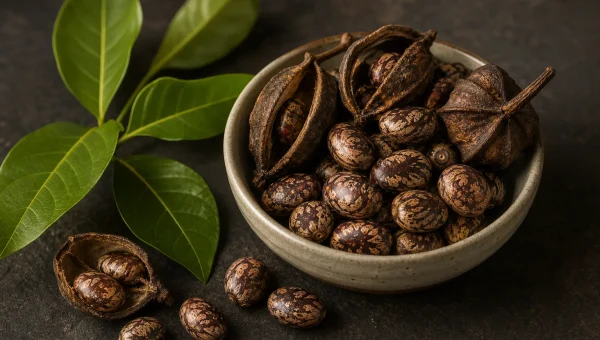
The Ayurvedic Pharmacopoeia of India identifies Asana as the heartwood of Pterocarpus marsupium Roxb., family Leguminosae. The same monograph lists its Sanskrit names as Bījaka, Pītasāra, Asanaka, and Bījasāra, with common English identification as Indian Kino Tree and Hindi names including Vijayasara and Bija. The part used is the heartwood, not the leaf, bark mixture, or an unidentified wooden substitute.
Classically, Vijaysar is best understood through its drying, scraping, Kapha-reducing profile. The official Ayurvedic Pharmacopoeia profile gives its rasa as tikta and kashāya; guna as laghu and rūksha; virya as śīta; and vipāka as katu. Its listed actions include kaphapitta-śāmaka and rasāyana, and its therapeutic uses include Prameha, Medodoṣa, Pāṇḍu, Kṛmiroga, and Kuṣṭha. This makes the herb especially relevant where excess Kapha, meda, and kleda dominate the clinical picture.
The traditional practice of keeping water in a Vijaysar wooden cup overnight belongs to the same broad Ayurvedic logic as a cold infusion. Charaka’s general pharmaceutic discussion includes śīta preparations, in which a substance is kept in water overnight and used after filtration. The Ayurvedic Pharmacopoeia also notes that Asana heartwood gives a yellow-coloured solution with blue fluorescence when soaked in water, which fits the familiar colour change seen with authentic heartwood.
Why Vijaysar Fits Kapha-Medo Prameha
Prameha in Ayurveda is not a single disease label. Charaka describes twenty varieties of Prameha, grouped by doshic predominance into ten kaphaja, six pittaja, and four vataja forms. The early and more manageable presentations are Kapha-dominant, with involvement of meda, kleda, and disturbed urinary characteristics. Later or depleted patterns involve more Pitta and Vata and need different clinical judgment.
Vijaysar’s kashāya, tikta, laghu, rūksha, and śīta profile makes it a natural fit for Kapha-Medo Prameha: heaviness, excess adiposity, sluggish metabolism, excessive kleda, and insulin-resistance-like patterns. It is less suitable as a blanket recommendation for depleted, underweight, insulin-dependent, or strongly Vata-aggravated presentations unless a qualified practitioner specifically judges it appropriate. Modern diabetes categories and Ayurvedic Prameha categories are not one-to-one equivalents, so clinical supervision matters.
The Phytochemical Profile
Vijaysar heartwood contains multiple phenolic and flavonoid constituents. Modern phytochemical work has isolated flavonoid C-glucosides from its aqueous heartwood extract, and other work has described phenolic compounds such as marsupsin, pterosupin, pterostilbene, liquiritigenin, epicatechin, and related constituents. This supports the traditional preference for the heartwood and helps explain why water-based and extract-based preparations have been used in metabolic contexts.
Pterostilbene is one of the better-known compounds associated with Pterocarpus marsupium. It is structurally related to resveratrol, and an animal pharmacokinetic study reported markedly higher oral bioavailability for pterostilbene than resveratrol. Phenolic constituents from Vijaysar, including marsupsin and pterostilbene, have also been evaluated in experimental hyperglycaemia models. These findings should be read as pharmacological support for the herb’s traditional use, not as a substitute for patient-level clinical outcomes.
Laboratory work on heartwood extracts has also described antioxidant activity and improved glucose uptake in HepG2 cell models. Such cellular findings are useful for understanding possible mechanisms, but the practical Ayurvedic relevance remains centred on authenticated heartwood, correct preparation, appropriate patient selection, and careful glucose monitoring.
The Human Clinical Record
The most important human work on Vijaysar is older and less visible than many modern supplement claims, but it is directly relevant. An Indian Council of Medical Research open trial evaluated Vijayasar in newly diagnosed, previously untreated non-insulin-dependent diabetes mellitus over 12 weeks across four Indian centres. Among 93 participants who completed the trial, fasting and post-prandial blood glucose fell significantly, with mean reductions of about 32 mg/dL and 45 mg/dL respectively. Most participants achieved control with 2 g/day, while some required 3–4 g/day; routine laboratory parameters remained stable during the trial.
A later multicentre, flexible-dose, double-blind randomized trial compared Vijayasar with tolbutamide in newly diagnosed, untreated type 2 diabetes over 36 weeks. Participants received Vijayasar 2–4 g/day or tolbutamide 0.75–1.5 g/day. The published abstract reports that mean fasting and post-prandial glucose reductions were not significantly different between groups, and that glycaemic control was achieved in most participants in both arms. This places Vijaysar among the few Ayurvedic single herbs with direct human comparative data in type 2 diabetes.
Additional clinical work has examined Vijaysar as an add-on in uncontrolled type 2 diabetes and as a comparator against other herbal interventions. One open, non-randomized study used Pterocarpus marsupium wood powder at 2–4 g/day for 12 weeks in patients already taking common oral antidiabetic combinations and reported improvements in fasting glucose, post-prandial glucose, and HbA1c from baseline. A randomized single-blind comparative study in newly diagnosed type 2 diabetes evaluated Aloe vera, Vijaysar, Aloe plus Vijaysar, and glimepiride over 13 weeks, reporting glucose and HbA1c reductions in all groups, with glimepiride remaining the strongest comparator.
A broad 2022 systematic review of Ayurvedic medicines for type 2 diabetes reviewed many randomized trials across numerous Ayurvedic preparations. It was not a Vijaysar-only meta-analysis, but it helps place Vijaysar within a larger field of Ayurvedic diabetes interventions where trial quality, standardization, and adverse-event reporting still need more consistency. Vijaysar’s strongest human support remains the direct Vijayasar trials rather than broad claims borrowed from unrelated herbs.
Preparation Forms and Practical Doses
Vijaysar should be used as an authenticated heartwood preparation and not as an unidentified wooden cup or generic “diabetes wood.” The dose and form should be selected by a qualified Ayurvedic practitioner or physician, especially for anyone already taking antidiabetic medication.
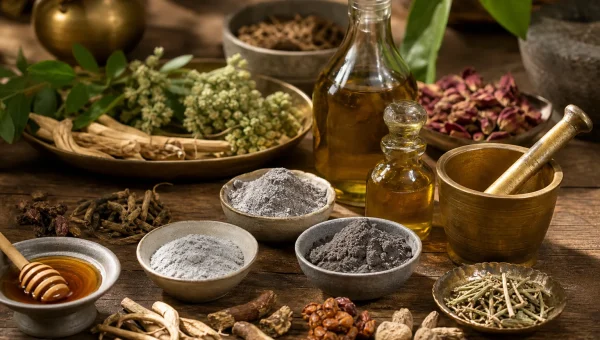
| Preparation Form | Preparation Method | Typical Use | Clinical Context |
|---|---|---|---|
| Wood cup or heartwood water | Water is kept overnight in an authenticated Vijaysar heartwood cup or with clean heartwood, then taken in the morning | Common traditional household form; best used with practitioner guidance | Traditional form; not identical to the dried extract doses used in the main ICMR trials |
| Heartwood decoction | Heartwood is prepared as kwatha according to classical decoction principles | The Ayurvedic Pharmacopoeia lists 50–100 ml as the dose of the prepared decoction (kwatha) | Practitioner-supervised form, especially where stronger Kapha-Medo scraping action is desired |
| Dried extract or powder | Authenticated Vijaysar preparation taken in measured doses | Human trials commonly used flexible dosing around 2–4 g/day | Best-documented form in the older clinical diabetes trials |
| Capsules or standardized products | Commercial preparation with botanical authentication, batch testing, and clear plant-part labelling | Follow the practitioner’s dose and the manufacturer’s verified composition | Not automatically equivalent to trial material unless the extract type and dose match |
Who Is the Best Fit for Vijaysar?
The best Ayurvedic fit is a Kapha-Medo dominant Prameha presentation: heaviness, excess adiposity, sluggish digestion, high kleda, sweet or excessive urine patterns, and early or middle-stage metabolic disturbance. This is also close to the population represented in the main human trials: adults with newly diagnosed or type 2 diabetes-like presentations, rather than children, pregnancy-related diabetes, type 1 diabetes, or advanced insulin-dependent depletion.
When the picture is dry, depleted, underweight, neuropathic, strongly Vata-aggravated, or marked by rapid weight loss and weakness, Vijaysar should not be chosen casually. Its rūksha and kashāya nature can be useful in Kapha-Medo excess but may be poorly matched to Vata depletion unless balanced within a broader formula and diet plan.
Safety, Monitoring, and Interactions
Clinical reports on Vijaysar have generally described good tolerability, but the most important safety issue is additive glucose lowering. Anyone taking metformin, sulfonylureas, insulin, GLP-1 medicines, SGLT2 inhibitors, or other diabetes drugs should add Vijaysar only with medical supervision and more frequent glucose monitoring.
- Do not replace prescribed diabetes medication: Vijaysar is an adjunctive Ayurvedic herb, not a substitute for prescribed treatment.
- Monitor for low blood sugar: Sweating, shaking, hunger, dizziness, confusion, palpitations, or unusual weakness need prompt glucose checking and medical advice.
- Use caution with strong antidiabetic regimens: Insulin and sulfonylureas carry a higher hypoglycaemia risk when combined with additional glucose-lowering agents.
- Watch digestion: Mild gastrointestinal upset can occur with many herbal preparations; persistent diarrhoea, nausea, rash, or discomfort should lead to stopping the product and consulting a clinician.
- Special groups need direct supervision: Pregnancy, lactation, children, frail elders, kidney disease, liver disease, and complex multi-drug regimens require individualized professional advice.
Sourcing Quality Vijaysar
Quality starts with botanical identity. The product should clearly state Pterocarpus marsupium Roxb., heartwood, and preferably the Ayurvedic name Asana, Bijaka, or Bijasara. Powders, decoction material, cups, and capsules should come from licensed manufacturers that can provide batch identity, cleanliness, and heavy-metal or contaminant testing where appropriate.
A genuine wooden cup should not be treated as automatically medicinal forever. Wood can crack, absorb residues, grow mould, or be substituted with another species. If using the traditional cup method, keep it clean and dry between uses, replace it when damaged, and avoid products that do not identify the species and plant part.
Bottom Line
Vijaysar is one of the more grounded Ayurvedic herbs for Kapha-Medo Prameha and type 2 diabetes support. Its strength is the alignment of classical indication, authenticated heartwood pharmacology, and direct human clinical work using Vijayasar preparations. Used carefully, it belongs in serious Ayurvedic metabolic care; used casually, especially alongside diabetes medication, it can create avoidable risk.
For related Ayurveda reading, see Berberine and Daruharidra versus metformin, Ayurvedic adjunct support in type 1 diabetes, and metabolomics and Ayurvedic treatment validation.
This article is educational and does not diagnose, treat, or replace medical care. Vijaysar should not replace prescribed diabetes medication. Never adjust antidiabetic medication doses without physician guidance. Consult a qualified Ayurvedic practitioner or healthcare provider before starting Vijaysar, especially if pregnant, managing diabetes, taking medication, or monitoring abnormal blood glucose.
References
- Ayurvedic Pharmacopoeia of India
- Charaka Samhita — Shadvirechanashatashritiya Adhyaya
- Charaka Samhita — Prameha Nidana
- Charaka Samhita — Prameha Chikitsa
- Flexible dose open trial of Vijayasar in cases of newly-diagnosed non-insulin-dependent diabetes mellitus. Indian Council of Medical Research (ICMR), Collaborating Centres, New Delhi (1998), PubMed
- Researchgate (researchgate.net)
- Ijbcp (ijbcp.com)
- Ijbcp (ijbcp.com)
- Ayushdhara (ayushdhara.in)
- Frontiersin (frontiersin.org)
- Constituents of Pterocarpus marsupium: an ayurvedic crude drug (2004), PubMed
- Antihyperglycemic activity of phenolics from Pterocarpus marsupium (1997), PubMed
- Heartwood Extract of Pterocarpus marsupium Roxb. Offers Defense against Oxyradicals and Improves Glucose Uptake in HepG2 Cells (2022), PubMed Central
- Pharmacokinetics, oral bioavailability, and metabolic profile of resveratrol and its dimethylether analog, pterostilbene, in rats (2011), PubMed
The combination with Karela and Jamun you mention, is that daily or cycled?
Late to this post, found it via Google. Is this still the recommended approach in 2027?
🌿 धन्यवाद for explaining this so clearly
The classical references you include make this more credible than most Ayurveda blogs.
Been using Vijaysar tumbler for 4 months. Fasting blood sugar went from 134 to 112. Still monitoring.
Useful
Are you planning to try it then? I’ve been using the Vijaysar wood cup method for about six weeks now alongside my regular medication and my fasting numbers have actually come down a bit — would be curious to compare notes.
Same here
bought a vijaysar tumbler online, no idea if its genuine wood or imitation
Why is this herb not mainstream? The evidence looks comparable to Metformin in mild cases.
The Pterocarpus marsupium water glass I use daily, do I need to rotate the glass or get a new one periodically?
My endocrinologist was genuinely interested when I showed him the flavonoid analysis section. That’s rare.
That’s honestly remarkable — most endocrinologists I’ve encountered dismiss anything outside the metformin line. Did he have any concerns about interaction with existing medication, or was he open to concurrent use? My own doctor has been more cautious but I’m hoping a detailed paper might help the conversation.
Vijaysar is worth looking into for blood sugar specifically — Pterocarpus marsupium has some of the strongest trial data of any Ayurvedic herb. For fatty liver there are other herbs that come up more often, like Katuki or Bhumi Amla, though I’d check with an Ayurvedic practitioner before starting anything alongside other treatments.
Welcome to commenting! Hair loss is a different area but if you’re already exploring Ayurveda there’s a lot written about Bhringraj and Amalaki for that. This post is specifically about Vijaysar for blood sugar — worth reading if diabetes runs in your family.
That’s actually encouraging to hear. Most conventional doctors I’ve spoken to dismiss the herbal angle entirely, so an endocrinologist engaging seriously with the flavonoid research — and specifically asking follow-up questions — feels like a shift worth noting.
Just found this. Really helpful for my situation.
Will try
vijaysar water is common in my family but nobody talks about glucose monitoring with it. that part should be louder
What I didn’t expect was the point about how much clinical trial data Vijaysar actually has compared to ashwagandha or turmeric, which get all the attention. My doctor had never heard of Pterocarpus marsupium when I mentioned it but seemed genuinely interested when I described the RCT data.
The wood cup method was something I’d only heard about from my grandmother and assumed was folklore. Seeing the mechanism explained — the pterostilbene and epicatechin leaching into the water overnight — makes it a lot easier to take seriously. 🙌
Been managing Type 2 since 2021 and the thing that frustrates me most is exactly what this post describes — herbs with zero evidence dominate the conversation while something like Vijaysar with actual RCT backing is almost impossible to find in most stores. Does anyone know a reliable source in India for genuine Pterocarpus marsupium wood cups?
The wood cup preparation described sounds simple yet intriguing.
The comparison to berberine in the comments section is what I kept thinking about while reading this. Both seem to work through similar insulin-sensitizing pathways but Vijaysar has an Ayurvedic tradition behind it that berberine doesn’t. Has anyone tried them together, or is that not advisable? 💯
Found this helpful. The Vijaysar section was particularly useful fpr my situation. 💯
Managing blood sugar since 2020 and I’ve tried a lot of what gets recommended online — most of it is hype. The evidence standard you apply here is different from most Ayurveda content I’ve read. The discussion of the beta cell regeneration studies in particular is something I’m going to bring to my next appointment. 💯
Found this helpful. The Vijaysar section was particularly useful fpr my situation. (asking as someone dealing with this since 2022)
I wonder how the taste of the amber water compares to regular herbal teas.
Started looking into this after a Type 2 diagnosis in 2022 and I wish I had found this post earlier. The section explaining why this herb stays obscure despite its evidence base is almost more useful than the clinical information itself — it reframes how I evaluate everything I read about Ayurvedic supplements going forward. 🌿
Only recently diagnosed (2023) so still in the early stages of figuring out what actually works versus what’s marketing. The way this post separates the evidence hierarchy — RCTs versus case series versus traditional use — is something I hadn’t seen applied to Ayurveda before. Makes me trust the recommendation a lot more. 🙏
It’s interesting that Vijaysar has more RCT data than bitter melon yet stays under the radar.
I’ve been following blood sugar management content for a few years now and the Instagram-popularity-versus-evidence inversion you describe is so accurate. Jardiance gets a post from every wellness influencer and Vijaysar gets almost nothing despite studies going back decades. Sharing this one widely. 🙌
My father-in-law has been using a Vijaysar cup for years based on village practice but none of us knew there was actual clinical backing for it. Showing him this article was a strange moment — he’s been right all along but for reasons he never knew. ❤️
The pterostilbene bioavailability point makes me curious about dosing consistency across powders.
The point about the flavonoid content varying significantly by source and preparation is something most posts completely skip over. If the wood quality matters that much to the therapeutic effect, buying powdered supplements from an unknown source seems like it defeats the purpose. Is there any way to verify potency without lab testing? 🌿
❤️ What struck me most is the point about RCT data — I had no idea Vijaysar had been studied in actual randomised trials while herbs with massive social media followings have almost nothing behind them. That gap between evidence and visibility is genuinely frustrating.
🙏 The comparison to better-known Ayurvedic herbs really landed for me. I’ve spent years hearing about ashwagandha and turmeric from every wellness influencer, yet Vijaysar — apparently with more diabetes-specific trial data — was completely off my radar until this post.
✨ Does anyone know if the Vijaysar tumbler method (soaking overnight in the wooden cup) is considered equivalent to a standardised bark extract in terms of the active compounds? The post explains the evidence well but I’m curious whether the traditional preparation delivers a consistent dose.
Has anyone tried combining Vijaysar with metformin and noticed any change in energy levels?
The systematic review showing a 0.52% HbA1c drop seems promising for adjunct use.
I’m cautious about the hypoglycemia risk when pairing it with sulfonylureas, as noted.
The GLP-1 receptor potentiation finding could explain why effects differ from typical insulin sensitizers.
Traditional texts like Charaka Samhita specifying Kapha dominant Prameha aligns with the trial populations.
Sourcing authentic heartwood seems crucial, I’d look for GMP certified suppliers before trying the powder.
🙏 Managing blood sugar for a while now and I’ve tried a few different things over the years. Vijaysar is the first I’ve come across where someone actually walks through the trial methodology rather than just listing benefits. That makes a real difference to how seriously I take it.
The minor GI side effects reported were mild and resolved on their own, which is reassuring.
I appreciate the warning about warfarin interaction, and monitoring INR would be essential if combined.