A friend texted me last month: “I booked a vaginal steam at the new wellness spa. They said it balances hormones and detoxifies the uterus. What do you think?” I paused before typing back, because the honest answer is complicated. Yoni Swedana – vaginal fomentation – is a real Ayurvedic therapy. But what’s being sold in most spas has about as much in common with the classical procedure as instant ramen has with a slow-cooked bone broth.
I’ve been studying this gap between traditional practice and commercial trend for a while now, and it’s one of those areas where both sides get it wrong. The skeptics dismiss vaginal steaming as dangerous pseudoscience. The enthusiasts claim it “detoxes” the uterus (which is self-cleaning, thank you). The truth sits somewhere between, and getting there requires understanding what Ayurveda actually prescribes versus what Instagram sells.
What Classical Texts Actually Say About Yoni Swedana
Yoni Swedana appears in several classical texts, most notably in the Charaka Samhita’s Yoni Vyapad Chikitsa (treatment of vaginal disorders) and in the Kashyapa Samhita’s gynecological chapters. It’s not a standalone “wellness” treatment. It’s a therapeutic intervention prescribed for specific conditions.
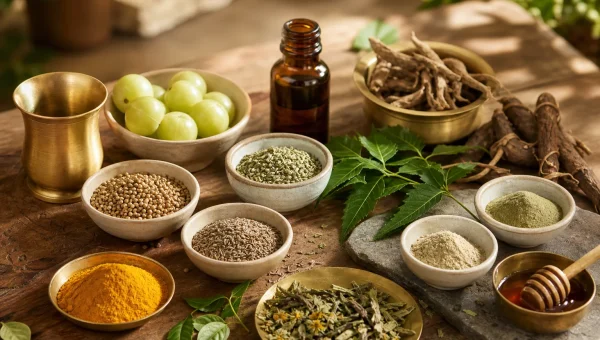
Charaka describes it as part of a broader treatment sequence – typically following Snehana (oleation) and preceding local medication (Yoni Pichu or Yoni Varti). The herb selection is condition-specific, and the procedure has clear contraindications.
| Classical Indication | Herbs Used | Duration | Text Reference |
|---|---|---|---|
| Yoni Shula (vaginal/pelvic pain) | Dashamoola decoction | 10-15 minutes | Charaka Samhita, Chikitsa Sthana 30 |
| Kaphaja Yoni Vyapad (Kapha-type vaginal disorder) | Neem, Triphala, Haridra (turmeric) | 10-15 minutes | Charaka Samhita, Chikitsa Sthana 30 |
| Vandhyatva (infertility support) | Shatavari, Ashoka, Bala | 10-15 minutes, specific cycle days | Kashyapa Samhita, Revati Kalpa |
| Post-delivery perineal healing | Triphala, Neem, Manjistha | 5-10 minutes | Ashtanga Hridaya, Uttara Tantra |
| Yoni Kandu (vaginal itching) | Nimba (Neem), Karanja, Panchavalkala | 10 minutes | Sushruta Samhita |
Notice what’s not on this list: “hormone balancing,” “uterine detox,” or “fertility boosting” as generic claims. Every indication is specific, and the herb formulation changes accordingly. A Kaphaja Yoni Vyapad calls for astringent, drying herbs. Yoni Shula requires warming, anti-spasmodic Dashamoola. Using the wrong herbs for the wrong condition would, in an Ayurvedic framework, make the problem worse.
How the Spa Version Diverges
The commercial vaginal steam experience typically involves sitting on a perforated chair or open-seated stool over a pot of boiling herb-infused water. Common additions include lavender, rosemary, mugwort, and rose petals. The session lasts 20-45 minutes, and marketing claims often include hormone regulation, menstrual cycle normalization, fertility enhancement, and “uterine cleansing.”
Here’s where my chemistry brain kicks in. Several problems emerge:
- Temperature control: Steam from boiling water can reach 100 degrees C. Vaginal and vulvar tissue is among the most sensitive on the body. A 2019 case report in the Journal of Obstetrics and Gynaecology Canada documented a second-degree burn from a vaginal steam session. Classical Yoni Swedana explicitly calls for Mridu Sweda (mild fomentation), not direct steam contact. Traditional practitioners test the temperature with the back of the hand before the patient sits.
- Duration: 45-minute sessions are nowhere in classical protocols. Sushruta recommends fomentation until Sweda (sweating) appears and symptoms reduce, typically 10-15 minutes maximum.
- Essential oils: Adding concentrated essential oils to vaginal steam can disrupt vaginal pH and irritate mucous membranes. Ayurvedic Yoni Swedana uses whole herb decoctions, not isolated volatile compounds. The distinction matters – whole Neem leaf decoction at 500 ml strength behaves very differently from Neem essential oil.
The Microbiome Question
The vaginal microbiome is a finely balanced ecosystem, and anything that changes vaginal pH, temperature, or moisture levels can disrupt it. The healthy vagina maintains a pH of 3.8-4.5, primarily through Lactobacillus species that produce lactic acid. Heat and steam exposure can temporarily raise this pH.
A 2020 cross-sectional study published in Culture, Health & Sexuality (n=132 women in the US who practiced vaginal steaming) found that regular vaginal steaming was associated with increased risk of vaginal infections compared to non-users. However, this was observational data with significant confounders – self-reported, uncontrolled for other hygiene practices, and not differentiating between brief and prolonged sessions.
Interestingly, Ayurvedic Yoni Swedana’s emphasis on antimicrobial herbs like Neem (Azadirachta indica), Panchavalkala (five bark decoction), and Triphala may partially mitigate this concern. Neem’s antimicrobial properties have been documented in over 200 studies – a 2015 review in the Asian Pacific Journal of Tropical Biomedicine confirmed broad-spectrum activity against Candida albicans, E. coli, and Staphylococcus. The classical herb choices aren’t random; they were selected for local antimicrobial and anti-inflammatory action.
Who Should Absolutely Avoid It
Both classical Ayurvedic texts and modern gynecological reasoning converge on several clear contraindications:
- Pregnancy – at any stage. Heat application to the pelvic region during pregnancy is contraindicated in Ayurveda (Garbhini Paricharya) and in modern obstetrics
- Active infections – bacterial vaginosis, yeast infections, or STIs. Heat can worsen infection and spread pathogens
- During menstruation – Ayurveda considers Rajahkala (menstrual period) a time for rest, not active treatment. Swedana during bleeding can increase flow excessively
- IUD in place – no clinical data exists on heat effects on IUD placement or function
- Post-cervical procedures – after biopsy, LEEP, or any cervical intervention
- Pitta-dominant conditions – heavy bleeding, inflammation, burning sensations. Adding heat to a Pitta imbalance worsens it
- Open wounds or sores in the perineal area
If You Choose to Try It: Safety Protocol
I’m not going to tell you never to try vaginal steaming. But I am going to tell you how to do it with common sense and alignment with classical principles, not spa marketing.
The Temperature Test
Your steam should feel warm and comfortable on the inner wrist, never hot enough to cause discomfort. Let the decoction cool for 5-7 minutes after boiling before positioning yourself above it. The goal is Mridu Sweda (mild warmth), not Tikshna Sweda (intense sweating).
A Basic Home Protocol (Kaphaja Indication Only)
- Boil 2 liters of water with 30 g Dashamoola powder (available at Ayurvedic pharmacies), 10 g Triphala powder, and 5-6 Neem leaves
- Reduce to 1.5 liters
- Transfer to a wide vessel, let it cool to comfortable steam temperature
- Sit on a perforated stool or open chair wrapped in a towel to contain steam
- Duration: 10 minutes maximum
- Frequency: Once weekly for 3-4 weeks, then assess
- Follow with coconut oil application to the vulvar area to prevent dryness
Dosage Specifics
Dashamoola at 30 g per 2 liters is the standard decoction strength (1:16 kashaya ratio, reduced to 1:8). Triphala at 10 g adds astringent and antimicrobial action. Neem leaves at 5-6 provide local antiseptic properties. These are therapeutic dosages as described in Sharangadhara Samhita’s guidelines on Kwatha preparation.
What About the “Detox” Claims?
Your uterus doesn’t need detoxing. It has a built-in monthly cleansing mechanism. The endometrium sheds, regenerates, and maintains itself without external intervention. No amount of steam is going to “release” toxins from uterine tissue, because that’s not how uterine physiology works.
What steam can do is increase local blood circulation. That’s not detox – it’s vasodilation, a basic physiological response to heat. This increased blood flow may help with certain types of pelvic pain or cramping, similar to how a warm bath helps muscle tension. Ayurveda frames this as “opening the Srotas” (channels) – reducing Srotorodha (channel obstruction) in the Artava Vaha Srotas (reproductive channels). The language differs from modern physiology, but the physiological mechanism of improved local circulation overlaps.
A small pilot study published in The Journal of Alternative and Complementary Medicine (2021, n=28) evaluated herbal pelvic steam baths for chronic pelvic pain and found modest improvements in pain scores at 4 weeks, though the study lacked a control group and blinding, making the results preliminary at best.
The Bottom Line
Yoni Swedana, performed correctly with appropriate herbs, appropriate temperature, appropriate duration, and appropriate indication, is a legitimate Ayurvedic external therapy. It’s not a wellness ritual for everyone, and it’s definitely not something to do weekly at a spa because an influencer recommended it.
If you’re experiencing pelvic pain, menstrual irregularity, or fertility concerns, see a qualified Ayurvedic gynecologist (Stree Roga specialist) who can determine whether Yoni Swedana is appropriate for your specific condition, select the correct herbs, and supervise the procedure. And please, for the love of everything, do not add lavender essential oil to boiling water and sit over it for 45 minutes. Your vaginal microbiome and I will both thank you.
“The application of Swedana (fomentation) to the Yoni should be gentle, medicated with appropriate herbs, and stopped at the appearance of perspiration or relief of symptoms.” – Charaka Samhita, Chikitsa Sthana 30
Disclaimer: This article is for educational purposes only and does not constitute medical advice. Do not attempt any vaginal treatment without consulting a qualified healthcare provider. Pregnant women, those with active infections, and individuals with known gynecological conditions should not attempt vaginal steaming in any form without professional guidance.
Nothing in this article diagnoses or treats a medical condition. Use it as educational information and consult a qualified Ayurvedic practitioner or physician before starting herbs, supplements, detoxes, or therapeutic protocols, especially if pregnant, managing a condition, or taking medication.