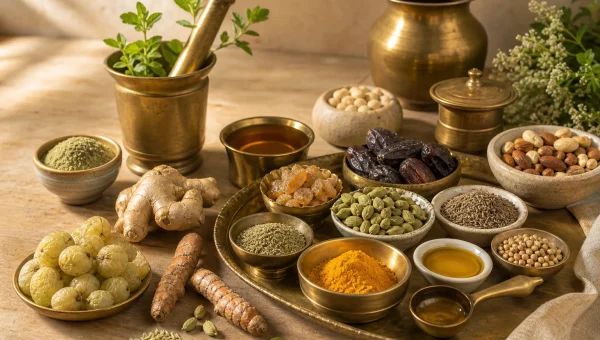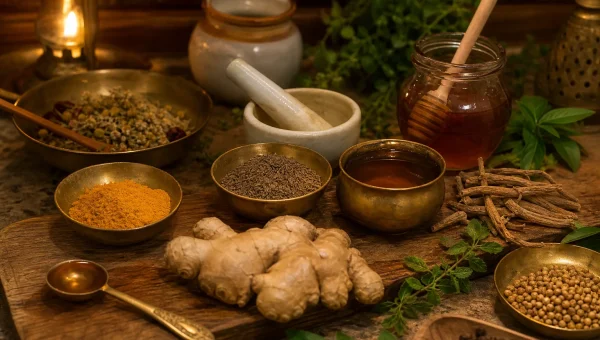
My grandmother kept a brass pot on the stove through every illness our family faced. Fever? Porridge. Post-surgery? Porridge. My cousin’s recovery from dengue? You guessed it. That thin, aromatic rice gruel – sometimes barely more than flavored water – was her first prescription, long before the doctor’s medicines kicked in. She called it “peya,” and she’d adjust the thickness, the spices, and the fat content based on how sick you were.
Years later, when I studied Ayurvedic dietetics formally, I found her instincts perfectly mirrored in classical texts. Charaka Samhita describes a precise hierarchy of convalescent foods: Manda (rice water), Peya (thin gruel), Vilepi (thick porridge), and then gradually heavier preparations. This isn’t guesswork – it’s a calculated reintroduction system designed to rekindle Agni without overwhelming a weakened digestive system.
Why Porridge Is the First Food After Illness
When you’ve been sick, your Agni – your digestive fire – doesn’t just slow down. It practically goes dormant. Think of it like a campfire that’s been rained on. You can’t throw a log on wet embers and expect flames. You need kindling first. Dry grass. Small twigs. That’s what Peya does for your gut.
A 2019 study published in the Journal of Ayurveda and Integrative Medicine (n=60) confirmed that patients recovering from acute gastroenteritis who followed a graded reintroduction diet modeled on the Peya-Vilepi protocol showed faster recovery of digestive function compared to those given standard hospital diets. The starch in well-cooked rice acts as a prebiotic, feeding beneficial gut bacteria during recovery.
There’s a reason every traditional food culture has a healing porridge: congee in Chinese medicine, chicken rice soup in Western homes, kanji across South India. The principle is universal, but Ayurveda’s version comes with specific rules about when to use each consistency.
The Classical Hierarchy: Manda to Odana
| Preparation | Rice:Water Ratio | Consistency | When to Use | Agni Level |
|---|---|---|---|---|
| Manda | 1:14 | Strained rice water only | Day 1-2 of recovery, acute fever | Severely low (Manda Agni) |
| Peya | 1:14 (unstrained) | Thin gruel with some grain | Day 2-4, appetite returning | Low (Vishama Agni) |
| Vilepi | 1:4 | Thick porridge | Day 4-7, stable appetite | Moderate (improving) |
| Odana | 1:2 | Soft cooked rice | Day 7+, near-normal digestion | Adequate (Sama Agni) |
The secret my grandmother knew instinctively: you move through these stages based on hunger signals, not on a fixed schedule. If the person has zero appetite, stay with Manda. If they’re asking for food, move to Peya. Rushing through this sequence is the most common mistake I see.
Recipe 1: Basic Cumin-Ginger Peya (The Foundation)
This is your starting point. It’s what I make for anyone who’s just been through a bad fever or stomach upset.
- 1/4 cup aged Basmati rice (washed three times)
- 3.5 cups water
- 1/2 tsp dry ginger powder (Shunti) – 500 mg
- 1/4 tsp cumin seeds, lightly crushed
- 1 pinch Saindhava (rock salt)
- 1/2 tsp ghee (added at the end)
Cook the rice in water on low heat for 40-45 minutes until it completely breaks down. Add ginger powder and cumin in the last 10 minutes. Don’t strain – you want those soft grain fragments. Stir in ghee and rock salt just before serving. Serve warm, not hot.
Shunti at this dosage – roughly 500 mg – acts as a deepana (appetizer) without being too stimulating for a depleted system. A systematic review in Food Science and Nutrition (2019) found dry ginger effective for nausea and digestive recovery at doses between 250 mg and 1 g daily.
Recipe 2: Pippali-Turmeric Vilepi for Post-Surgical Recovery
After surgery, the body needs anti-inflammatory support alongside gentle nourishment. This thicker porridge works for anyone past the acute phase.
- 1/3 cup rice
- 1.5 cups water
- 1/4 tsp Pippali (long pepper) powder – about 250 mg
- 1/4 tsp turmeric
- 1/2 tsp ghee
- 4-5 Munakka (large raisins), chopped
- Pinch of black pepper
Cook rice until thick and creamy. Add Pippali and turmeric five minutes before removing from heat. The Munakka adds natural sweetness and is classified as a Rasayana (rejuvenative) in Ayurveda. Pippali at 250 mg enhances bioavailability of turmeric’s curcumin by improving absorption – something research on piperine has demonstrated since the late 1990s.
Recipe 3: Ashwagandha-Date Porridge for Deep Fatigue
This one’s for the person who’s been sick for weeks, lost weight, can’t seem to bounce back. It’s heavier, so only use it when basic appetite has returned.
- 1/4 cup rice
- 1/4 cup split mung dal (washed)
- 3 cups water
- 1/2 tsp Ashwagandha powder (approximately 500 mg)
- 2 Medjool dates, finely chopped
- 1/4 tsp cardamom powder
- 1 tsp ghee
- Pinch of nutmeg
Cook the rice and mung together until soft and porridge-like. Add Ashwagandha and cardamom in the last 5 minutes. Stir in chopped dates and ghee. The combination of mung dal protein with Ashwagandha creates what Ayurveda calls a Brimhana (nourishing-building) preparation. A 2021 study in Cureus (n=50) found Ashwagandha at 600 mg daily improved recovery from fatigue and enhanced quality of life scores.
Recipe 4: Saffron-Almond Milk Porridge (Ksheer Peya)
When someone’s ready to graduate beyond basic gruel but still needs gentle food, I bring out this beauty. It’s essentially rice cooked in diluted milk with saffron – a classical Rasayana preparation.
- 1/4 cup rice
- 1 cup water + 1 cup milk (or use 2 cups diluted milk)
- 5-6 saffron strands (roughly 20 mg)
- 5 blanched almonds, ground to paste
- 1/2 tsp Yashtimadhu (licorice) powder – about 500 mg
- 1 tsp ghee
Soak saffron in 2 tablespoons warm milk for 10 minutes. Cook rice in water-milk mixture until creamy. Add almond paste, saffron milk, and Yashtimadhu in the final minutes. Yashtimadhu has demonstrated gastroprotective properties in multiple studies and is considered one of the best herbs for rebuilding Ojas (the body’s essential vigor) in classical texts.
Recipe 5: Tulsi-Black Pepper Peya for Respiratory Recovery
Coming off a bad cold or bronchitis? This one’s targeted. My mother used to make it with fresh Tulsi from the courtyard plant, and the aroma alone felt medicinal.
- 1/4 cup rice
- 3.5 cups water
- 8-10 fresh Tulsi leaves (or 1/2 tsp dried Tulsi)
- 1/4 tsp black pepper, freshly ground
- 1/4 tsp turmeric
- 1/2 tsp ghee
- Pinch of rock salt
Cook rice until fully broken down. Add Tulsi leaves, pepper, and turmeric in the last 10 minutes. The classical kanji preparation uses a similar base but this version adds the specific respiratory-clearing combination of Tulsi and black pepper. Tulsi’s eugenol content provides both antimicrobial and expectorant action, making this ideal during the winter congestion season when Kapha tends to block the respiratory channels.
Recipe 6: Jaggery-Fenugreek Vilepi for Postpartum Mothers
This is a preparation I learned from a traditional Dai (midwife) in Kerala. New mothers need warmth, iron, and galactagogue support – and this thick porridge delivers all three.
- 1/4 cup rice
- 2 tbsp fenugreek seeds (soaked overnight)
- 2 cups water
- 1 tbsp organic jaggery
- 1/2 tsp dry ginger powder
- 1 tsp ghee
- 1/4 tsp cinnamon
Grind soaked fenugreek to a coarse paste. Cook with rice until thick. Add jaggery, ginger, and cinnamon. The fenugreek-jaggery combination has been used across South India for centuries. A 2011 study in Phytotherapy Research showed fenugreek supplementation significantly increased breast milk production. The iron content of jaggery, while modest, adds up over daily consumption during the vulnerable postpartum period.
Timing and Serving Guidelines
| Condition | Best Porridge | Serving Size | Frequency | Duration |
|---|---|---|---|---|
| Acute fever (day 1-2) | Basic Cumin-Ginger Peya | 1/2 cup | Every 3-4 hours | Until fever breaks |
| Post-surgery (day 3-7) | Pippali-Turmeric Vilepi | 1 cup | 3 times daily | 5-7 days |
| Chronic fatigue | Ashwagandha-Date Porridge | 1 cup | 2 times daily (breakfast + dinner) | 2-3 weeks |
| Respiratory recovery | Tulsi-Black Pepper Peya | 3/4 cup | 3-4 times daily | Until congestion clears |
| Postpartum | Jaggery-Fenugreek Vilepi | 1 cup | 2 times daily | First 40 days |
A Few Rules My Grandmother Would Insist On
- Always serve warm – never cold or reheated. Make each batch fresh.
- Don’t add too many spices at once – the sick body can’t process complexity.
- Ghee goes in last – adding it to boiling liquid changes its properties according to Ayurvedic pharmacology.
- Use aged rice if possible – rice stored for at least a year (Purana Shali) is lighter to digest, a fact noted in Ashtanga Hridaya.
- Watch for hunger – serve only when the person feels genuine hunger, not on a clock.
When Porridge Isn’t Enough
These recipes support recovery, but they’re not a complete nutritional solution for serious or prolonged illness. If someone has been unable to eat properly for more than a week, shows signs of severe dehydration, or has lost more than 10% body weight, they need medical evaluation alongside any traditional dietary support.
The beauty of the Peya-Vilepi system is its simplicity. You don’t need a pharmacy. You need rice, water, a few spices, and the patience to feed someone slowly back to strength. That brass pot on my grandmother’s stove wasn’t fancy, but it carried the same principles that Charaka laid out thousands of years ago: start with the lightest food possible, and let the body tell you when it’s ready for more.
“Peya is the best food for the sick. It kindles Agni, satisfies thirst, removes fatigue, and gives strength to the weak.” – Charaka Samhita, Sutra Sthana 27
Disclaimer: This article is for educational purposes only and does not replace professional medical advice. Consult a qualified Ayurvedic practitioner or physician before using any herbal preparation, especially during illness recovery. Specific dosages mentioned should be validated by your healthcare provider for your individual condition.