Understanding Rosacea Through Pitta, Rakta and Facial Skin
Rosacea ayurvedic treatment begins by recognizing persistent facial redness as a recurring inflammatory skin pattern, not just a cosmetic surface issue. Dermatology describes rosacea with flushing, persistent centrofacial redness, visible small vessels, papules or pustules in some people, and possible eye involvement. Ayurveda does not need to rename rosacea as a single classical disease to treat it intelligently; the useful clinical lens is aggravated Pitta affecting Rakta dhatu and Tvak, with Bhrajaka Pitta showing heat, redness, burning and sensitivity through facial skin.
Classical Raktapitta is a Pitta-Rakta disorder and is traditionally a bleeding disorder, so it should not be equated directly with rosacea. The shared Ayurvedic principle is still valuable: when heat, redness and burning dominate, management should reduce excess ushna, tikshna, amla, katu and lavana influences, protect Rakta, calm Bhrajaka Pitta and rebuild skin tolerance rather than repeatedly irritating the face with harsh topical measures.
Identifying Your Rosacea Triggers Through a Dosha Lens
Before selecting herbs or lepas, map your personal triggers for at least three to four weeks. Rosacea flares commonly follow sun exposure, heat, cold, wind, alcohol, spicy foods, hot drinks, intense exercise and emotional stress. Ayurveda reads these triggers by observing which qualities repeatedly aggravate the face: heat and burning point toward Pitta, sudden flushing and sensitivity suggest Vata reactivity, while papules, oiliness and tissue thickening suggest Kapha or Meda participation alongside Pitta.
| Modern Rosacea Presentation | Ayurvedic Reading | Common Flare Pattern | Supportive Focus |
|---|---|---|---|
| Flushing, persistent redness and visible vessels | Pitta-Rakta with Vata reactivity | Sun, heat, wind, temperature shifts, alcohol, hot drinks | Trigger control, mineral sun protection, Sariva, Chandana, Amalaki |
| Papules and pustules on a red base | Pitta with Kapha involvement in Tvak srotas | Spicy food, heat, unsuitable oily products, Demodex-linked inflammation | Gentle cleansing, non-irritating lepa, Manjistha, Nimba, Lodhra under guidance |
| Thickened or enlarged skin, especially around the nose | Chronic Kapha-Meda change with Pitta redness | Long-standing inflammation and tissue overgrowth | Dermatology care first; Ayurvedic support for digestion, weight, heat and inflammation |
| Eye redness, burning, dryness, gritty feeling or light sensitivity | Pitta affecting the eye region with dryness or irritation | Dry air, heat, wind, prolonged irritation, uncontrolled facial flares | Ophthalmology evaluation; avoid self-applying herbs into the eyes |
The Sariva-Centered Rakta-Pitta Support Protocol
Sariva (Hemidesmus indicus) is a key Ayurvedic herb for Pitta-Rakta patterns where heat, redness, burning, itching or recurrent skin sensitivity are prominent. The Ayurvedic Pharmacopoeia of India describes Sariva root as madhura in rasa, guru and snigdha in guna, shita in virya and madhura in vipaka, with actions that include Raktashodhaka and uses that include raktavikara, kandu and kushtha. This makes it a suitable anchor herb when rosacea presents as heat-dominant facial reactivity.
For internal use, Sariva should be individualized by a qualified practitioner rather than taken as a generic internet protocol. The pharmacopeial decoction dose is listed as 20-30 g of the drug, but form, dose, duration and combinations depend on digestion, bowel pattern, medications, pregnancy status, body strength and whether the presentation is dry, oily, papular or burning.
A practitioner may combine Sariva with the following herbs according to the pattern:
- Amalaki (Emblica officinalis): shita virya, rasayana and chakshushya, traditionally used in Pitta-associated conditions such as raktapitta, amlapitta and daha.
- Manjistha (Rubia cordifolia): described with kaphapittashamaka, varnya, shothaghna, kushthaghna and shonitasthapana actions; useful when redness is accompanied by papules, swelling tendency or slow-clearing discoloration.
- Shvetachandana (Santalum album) or Raktachandana (Pterocarpus santalinus): cooling woods used in Pitta and Rakta presentations, especially where daha and visible heat are prominent.
- Nimba (Azadirachta indica): tikta and shita, with pittahara, kandughna, kushthaghna and vishaghna actions; best reserved for itchy, papule-prone or oily patterns rather than very dry, fragile skin.
- Kutki (Picrorhiza kurroa): a strong tikta-katu herb with dipani, bhedini and pittahara actions; it belongs in clinician-guided care when digestive or liver-associated Pitta signs are present, not as routine self-treatment.
Cooling Lepa Formulations for External Care
External lepa should calm facial heat without damaging the already reactive rosacea barrier. Short-contact, patch-tested, fragrance-free and non-scrubbing applications are safer than strong masks, acids, essential oils or abrasive powders. Apply any new lepa behind the ear or along the jaw for 24 hours before using it on the central face.
Basic cooling lepa for heat and redness:
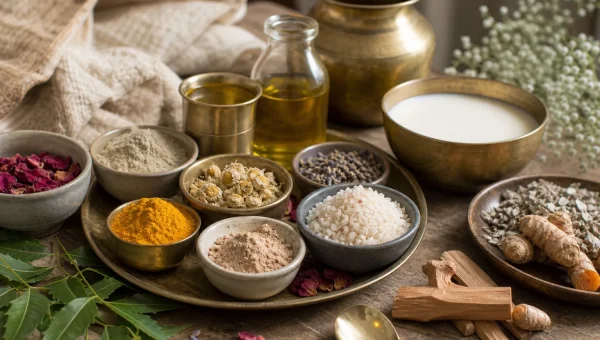
- Shvetachandana or Raktachandana powder: 1 teaspoon
- Lodhra powder: 1/2 teaspoon
- Fresh aloe gel, plain cooled water or pure rose hydrosol: enough to make a thin paste
Apply a very thin layer for 5-10 minutes and rinse with lukewarm water before the paste dries hard. Use one to three times weekly if tolerated. Lodhra is kashaya and shita, while Chandana is shita and pittahara, making this combination appropriate for facial heat when the skin is not cracked, actively burning or infected.
Papule-prone lepa for oilier Pitta-Kapha patterns:
- Lodhra powder: 1 teaspoon
- Nimba leaf powder: 1/4 teaspoon
- Aloe gel or plain cooled water: enough to make a soft paste
- Optional Haridra: a tiny pinch only if previously tolerated
Use this only as a short-contact application and keep it away from the eyelids. Haridra is ushna in virya, so it is not the first choice for very hot, burning rosacea even though it has classical use in tvagroga and kushtha. Avoid lemon juice, vinegar, baking soda, scrubs, steam, essential oils and long drying masks, as these commonly aggravate sensitive rosacea skin.
Dietary Management: The Pitta-Cooling Plate
Dietary management is central when the face flares after heat, alcohol, spice, sour foods or heavy late meals. Classical Pitta-Rakta guidance emphasizes reducing hot, sharp, sour, pungent and salty excess; modern rosacea care also recognizes alcohol, spicy foods and hot drinks as common triggers. The goal is not a rigid universal diet but a calm, repeatable food pattern that lowers heat load and supports digestion.
Foods and drinks to minimize when they trigger flushing:
- Alcohol, especially wine, beer and spirits that reliably provoke flushing
- Very hot tea, coffee, soups and other steaming drinks
- Chili, cayenne, mustard, excess black pepper and very pungent masalas
- Vinegar-heavy foods, very sour pickles and excess fermented condiments
- Deep-fried, reheated or very oily foods that create heaviness and heat after meals
- Large late-night meals, overeating after long fasting and foods that provoke reflux or burning
Therapeutic foods to emphasize when suitable:
- Regular cooked meals with a mild taste profile rather than extreme spice or extreme cold
- Coriander, fennel, cilantro and small amounts of mint in place of chili-heavy seasoning
- Cooling, water-rich vegetables such as cucumber, bottle gourd, ridge gourd and ash gourd
- Bitter greens in moderate amounts, especially when papules and oiliness are present
- Amalaki or pomegranate as tolerated, particularly when sour foods do not worsen flushing
- A small amount of cow’s ghee with meals if digestion accepts it and it does not worsen heaviness or congestion
Agni and Gut-Skin Support
Rosacea care often includes gut and diet review because food-related flares, digestive symptoms and gut microbiome associations are common in this condition. Ayurveda approaches this through agni: meals should be regular, digestible and suited to the person’s bowel pattern rather than excessively heating, irregular or heavy. Reflux, suspected SIBO, chronic constipation, loose stools or persistent bloating should be assessed by a healthcare provider instead of being treated with strong purgatives or antimicrobial herbs at home.
Simple agni support for rosacea is deliberately gentle: eat at consistent times, stop before heaviness, avoid lying down immediately after meals, reduce late-night snacking, and use mild digestive spices such as coriander and fennel rather than aggressive heating spices. When digestive Pitta is strong, the face often does better with steady cooling regulation than with harsh detox routines.
Lifestyle Triggers and Dinacharya Modifications
Daily routine should reduce rapid vascular swings and environmental heat. Rosacea-prone skin often reacts to sun, heat, cold, wind, friction and irritating products, so dinacharya must be gentler than ordinary cosmetic skin care.
- Morning face wash: Use lukewarm or room-temperature water, fingertips and a mild fragrance-free cleanser. Avoid hot water, ice rubbing, scrubs, harsh toners and repeated washing.
- Sun protection: Use broad-spectrum SPF 30 or higher daily. Mineral sunscreens with zinc oxide or titanium dioxide are usually better tolerated by sensitive rosacea skin than many chemical sunscreens.
- Wind and temperature protection: Use a hat, shade, scarf or physical barrier when sun, wind or cold repeatedly provoke flushing.
- Exercise timing: Choose cooler hours, moderate intensity and gradual cool-down. Sudden overheating followed by ice-cold rinsing can provoke rebound redness.
- Stress heat: Practice calm nasal breathing or cooling pranayama such as Sheetali only if it suits your constitution, season and respiratory health. Stop if it causes discomfort, cough, dizziness or throat irritation.
- Product discipline: Patch test all creams, masks and oils. Avoid fragranced products, essential oils, alcohol-heavy toners and topical steroid use unless prescribed by a physician.
When Panchakarma and Virechana May Be Considered
For recurrent, heat-dominant Pitta patterns that do not settle with diet, routine, gentle topical care and individualized herbs, a qualified Ayurvedic physician may consider Virechana. Virechana is a Panchakarma procedure aimed at eliminating aggravated Pitta through therapeutic purgation after proper preparation and assessment.
This is not an at-home cleanse and should not be used during pregnancy, dehydration, marked weakness, active acute illness, uncontrolled bowel disease, or without medical review. In rosacea, Virechana should be viewed as a supervised Pitta-management option, not a guaranteed cure and not a replacement for dermatological treatment when medicines, eye care or procedures are needed.
Ocular, Phymatous and Severe Rosacea: Do Not Treat at Home
Eye involvement changes the risk profile. Red, burning, gritty, dry, light-sensitive or painful eyes require ophthalmology evaluation, especially if vision is blurred or symptoms are persistent. Do not put herbal powders, oils, rose water or lepa into the eyes unless an eye specialist or qualified Ayurvedic physician trained in netra care has specifically prescribed it.
Thickening of the nose or other facial skin, rapidly worsening papules, recurrent infections, severe burning, swelling, or visible progression despite home care should be managed with a dermatologist. Ayurvedic treatment can still support heat, digestion, triggers and recovery, but phymatous and ocular rosacea require medical monitoring to prevent avoidable complications.
Monthly Monitoring and Expectations
Rosacea usually improves gradually when the correct triggers are removed and the skin barrier is protected. Track flushing frequency, burning intensity, papules, dryness, eye symptoms, alcohol or spice reactions, sun exposure and product changes. This record helps both the Ayurvedic practitioner and dermatologist adjust treatment without guessing.
- Weeks 1-4: Trigger reduction, mineral sun protection and gentler cleansing often reduce flare intensity and stinging.
- Months 2-3: Individualized Rakta-Pitta herbs and consistent diet may steady baseline redness and reduce papule frequency.
- Months 4-6: Deeper work on agni, stress heat, sleep, bowel pattern and supervised therapies may improve resilience, though visible vessels and tissue thickening may need dermatological procedures.
- Ongoing: Continue monitoring because rosacea is relapsing; stopping all protection once the face improves often allows triggers to rebuild the flare cycle.
Medical Disclaimer: This article is for educational purposes only and does not constitute medical advice. Consult a qualified Ayurvedic practitioner, dermatologist and appropriate healthcare provider before beginning any treatment protocol. Ocular rosacea symptoms require ophthalmological care. Herbs such as Kutki, Nimba, Manjistha and Haridra may be unsuitable during pregnancy, breastfeeding, anticoagulant use, liver or kidney disease, digestive weakness, or alongside certain medications. Patch test all topical applications and stop immediately if burning, swelling or worsening redness occurs.
References
- Aad (aad.org)
- Rosacea (rosacea.org)
- NHS
- Rosacea (rosacea.org)
- Aad (aad.org)
- Aad (aad.org)
- Aad (aad.org)
- Aad (aad.org)
- Ocular Rosacea: An Updated Review (2025), PubMed Central
- The Pathogenic Role of Demodex Mites in Rosacea: A Potential Therapeutic Target Already in Erythematotelangiectatic Rosacea? (2020), PubMed Central
- Evidence of Barrier Deficiency in Rosacea and the Importance of Integrating OTC Skincare Products into Treatment Regimens (2021), PubMed
- Rosacea Is Characterized by a Profoundly Diminished Skin Barrier (2020), PubMed
- Rosacea and Diet: What is New in 2021? (2021), PubMed Central
- Rosacea and the Microbiome: A Systematic Review (2021), PubMed Central
- Role of the skin microbiota and intestinal microbiome in rosacea (2023), PubMed Central
- Charaka Samhita — Raktapitta Chikitsa
- Ayushdhara (ayushdhara.in)
- Ayurvedic Pharmacopoeia of India
- Ayurvedic Pharmacopoeia of India
- Ayurvedic Pharmacopoeia of India
- Ayurvedic Pharmacopoeia of India
- Clinical study to evaluate the effect of Virechanakarma on serum electrolytes (2013), PubMed Central
- Charaka Samhita — Pitta dosha
- Banyanbotanicals (banyanbotanicals.com)