
There is a photograph of my great-grandmother – the only one we have – taken at her wedding in 1949. She is wearing a kunkuma tilak between her eyebrows, her hair is oiled and braided with jasmine, and her skin has the particular glow that old black-and-white photographs somehow still capture. She had no access to serums, acids, retinoids, or modern cosmetic routines. What she had was a morning ritual performed with deliberate care, and the understanding, passed to her from her own mother, that preparing the body could be an act of devotion rather than vanity.
I grew up watching my own mother do a version of the same ritual: the small silver bowl of rose water, the sandalwood paste applied at the forehead before temple, the way she never rushed the oil through her hair but always took exactly as long as the prayer she was saying. She told me, “Ayurveda does not separate the mind from the skin.” I used to hear this as poetry. Now I understand it as a practical way of living: the state of the body, the senses, the breath, and the mind are treated together.
Alankara: Adornment as Sacred Preparation
Alankara means ornamentation, embellishment, or adornment. In an Ayurvedic beauty ritual, this idea becomes more than decoration. It is the art of making the body clean, fragrant, oiled, settled, and ready for the day. The classical daily routine described in Aṣṭāṅga Hṛdaya places oil massage, cleansing, bathing, grooming, fragrance, and right conduct in the same rhythm of life. The body is not prepared separately from the mind; the hands, senses, speech, and attention are all trained toward steadiness.
This is the part modern beauty culture often forgets. A face oil, paste, braid, tilak, or flower garland is not powerful only because of the ingredient. It becomes meaningful because it is applied at the right time, in the right quantity, with clean materials, and with a mind that is not scattered.
The Classical Ground: Dinacharya, Varnya, and Marma
Aṣṭāṅga Hṛdaya Sutrasthāna 2 describes Dinacharya, the daily regimen for a healthy person. It includes practices such as waking before dawn, oral care, anjana, nasya, gandusha, abhyanga, exercise, udvartana, bathing, personal cleanliness, fragrance, proper dress, and sadvritta, the ethical and mental discipline of daily life. Within this structure, beauty is not isolated from health; it belongs to disciplined self-care.
Charaka Samhita Sutrasthāna 4 gives the category of Varnya dravyas, herbs used to support natural complexion and clarity of skin. Examples discussed in the Ayurvedic tradition include chandana, ushira, manjishtha, and sariva. This does not mean that a paste can replace medical care for skin disease, but it does show that classical Ayurveda had a clear category for complexion-supporting herbs long before modern cosmetic language.
Sushruta Samhita describes 107 marma points, the vital anatomical sites formed by the meeting of muscles, vessels, ligaments, bones, and joints. In the region above the clavicle, the classical list includes points such as Phana, Apanga, Shankha, Sthapani, and Adhipati. For daily beauty ritual, this means the head and face are handled with reverence and gentleness, never with harsh pressure or aggressive manipulation.
The Marma Points of the Face: Gentle Attention, Not Force
Facial marma practice should be soft, slow, and respectful. The purpose is not to press hard or “activate” the face by force, but to bring attention to sensitive areas while applying oil, paste, or water. The most useful instruction is simple: let the hands become quieter than the mind.
- Phana – traditionally associated with the sides of the nose and the nasal passages. During face oiling, use only light circular touch around the nostril base, especially if using aromatic preparations.
- Apanga – associated with the outer corners of the eyes. This area should be treated with extreme care. Do not apply homemade kajal, herbal powders, or non-sterile products into the eyes.
- Shankha – the temple region. Slow circular movement here with a small amount of suitable oil can make the ritual feel grounding, especially when the jaw, eyes, or forehead are tense.
- Sthapani – the point between the eyebrows, the traditional tilak location. Apply sandalwood paste, kumkuma, or another safe tilak material here as a moment of pause before entering the day.
- Adhipati – the crown region of the head. In head oiling, begin gently at the crown and move outward, keeping the touch steady rather than vigorous.
The Morning Ritual: A Sequence That Builds
This is not a generic skincare routine. It is a Dinacharya-inspired beauty sequence adapted for a warm-season, Pitta-sensitive person. It keeps the classical spirit of oiling, cleansing, udvartana, bathing, head care, fragrance, and tilak, while using household preparations cautiously. Adjust the oil, herbs, and frequency for your prakriti, season, age, skin sensitivity, and medical condition.
Step 1: Mukha Abhyanga – Gentle Face Oiling
Begin before washing the face, using only a few drops of oil. For dry or Vata-prone skin, a mild sesame-based or almond-based preparation may suit. For heat-sensitive or Pitta-prone skin, a lighter, cooling preparation may be preferred. Kumkumadi Taila is a classical Ayurvedic facial oil associated with complexion care, but its ingredients vary across textual and pharmacy traditions, so use a trusted preparation and avoid overuse.
Warm 3-5 drops between the fingertips. Apply from the center of the face outward: forehead to temples, nose to cheeks, chin to jaw, and neck downward with a soft hand. Pause briefly at Sthapani, Shankha, Phana, and the jawline. The face should feel nourished, not greasy or congested. If you are acne-prone or highly sensitive, use less oil, leave it briefly, and wash it off rather than keeping it on all day.
Step 2: Udvartana – Herbal Cleansing Paste Once or Twice Weekly
Udvartana is described in Aṣṭāṅga Hṛdaya as powder massage that supports Kapha balance, firmness of the body, and clarity of the skin. For the face, it must be much gentler than body udvartana. Never scrub the face as if polishing metal; the paste should glide.
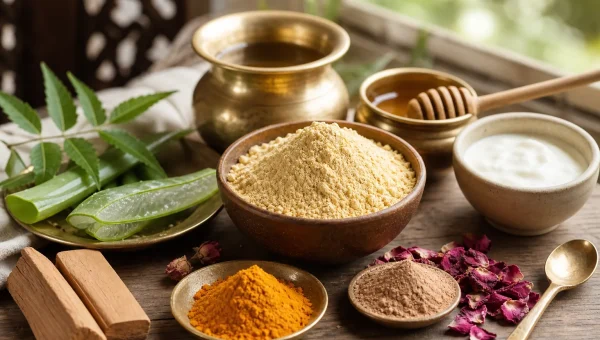
- 2 tablespoons chickpea flour or fine gram flour – a mild cleansing base.
- A small pinch of sandalwood powder – traditionally cooling and used in seasonal anointing.
- Rose water or plain water – enough to make a soft paste.
- A few drops of milk, coconut milk, or aloe gel – optional, for dryness-sensitive skin.
- A tiny pinch of turmeric – optional and minimal, because it can stain and may irritate some skin types.
Apply the paste with upward and outward movements, including the neck if tolerated. Leave it only until slightly tacky, not fully cracked and dry. Rinse with cool or lukewarm water. The skin should feel clean and calm; if it feels hot, tight, itchy, or red, simplify the formula and stop the irritating ingredient.
Step 3: Shiro Abhyanga – Head Oiling
Aṣṭāṅga Hṛdaya gives special importance to oiling the head, ears, and feet. For hair care, Bhringaraja oil is a traditional choice because Bhringaraja is identified in the Ayurvedic Pharmacopoeia of India as Eclipta alba, also known by names such as Kesharaja. It is not the only possible oil; the right base depends on the person and season.
Warm the oil mildly. Apply 1-2 tablespoons to the scalp, beginning at the crown and moving outward in small circles. Work through the scalp first, then the hair length if desired. Leave for 20-30 minutes before washing, or longer if your scalp tolerates it. Avoid heavy overnight oiling if you get dandruff, folliculitis, sinus congestion, or acne along the hairline.
Step 4: Bathing and Cooling Finish
After oiling and cleansing, bathe or rinse according to season. Classical Dinacharya praises bathing for removing sweat, dirt, fatigue, itching, and burning sensation. It also warns against hot water poured over the head, while warm water below the neck is treated differently. In practical terms, use warm water for the body when needed, but keep the head and face cooler, especially in hot weather.
For a summer finish, rinse the face with cool water or rose water if tolerated. In very hot months, a thin sandalwood paste at the forehead, a jasmine flower in the hair, or a light natural fragrance can serve the same purpose as the old household rituals: cooling the senses and making the transition from private practice to public life graceful.
Step 5: The Tilak Application
The daily tilak is the most visible and least understood part of the ritual. Whether it is sandalwood paste, kumkuma, vibhuti, or another traditional mark, its power in this routine is the pause. At Sthapani, the point between the eyebrows, the hand stops, the breath settles, and the day is consciously begun.
Use only clean, skin-safe material. Avoid powders with synthetic dyes, unknown metals, or strong fragrance. If using commercial kumkuma, choose a reputable product and discontinue if it causes burning, itching, or rash. A tilak should leave the mind clearer, not the skin inflamed.
Seasonal Variations in Ritual Beauty Preparations
Ayurveda adjusts daily care according to ritu, the season. In much of the Indian seasonal calendar, June falls within Grishma, the hot summer period. Aṣṭāṅga Hṛdaya describes Grishma as a time when heat is strong, Kapha decreases, Vata increases, strength is lower, and cooling, light, sweet, liquid, and gentle measures are favored. This corrects the common oversimplification that summer is only a Pitta season; Pitta becomes especially prominent in the classical autumn period after the rains.
| Seasonal Context | Ritual Beauty Emphasis | Suggested Preparation | Reason for Change |
|---|---|---|---|
| Grishma – hot summer | Cooling, light, non-irritating care | Rose water, sandalwood paste, light oil used sparingly | Heat and dryness increase strain; heavy scrubbing and sun exposure are avoided |
| Vasanta – spring | Kapha-lightening cleansing | Gentle udvartana with gram flour and mild herbs | Spring routines traditionally emphasize Kapha reduction through dry massage and lighter habits |
| Sharad – autumn | Pitta-pacifying clarity | Chandana, ushira, amla-oriented diet support, cooling evening routine | Classical ritucharya describes Pitta aggravation in autumn after the rains |
| Hemanta and Shishira – cold season | Warmth, oiliness, protection | Sesame-based abhyanga, warmer bath below the neck, richer hair oiling | Cold and dryness call for more unctuous, Vata-pacifying care |
The Consciousness Component: The Pause Is Part of the Medicine
The ritual changes when attention enters it. A distracted hand applies a product; an attentive hand performs care. Classical Dinacharya does not end with cosmetics or hygiene alone; it moves into sadvritta, the discipline of conduct, speech, restraint, kindness, and mental steadiness. This is why the beauty ritual is not separate from character. Clean skin with an agitated mind is incomplete; fragrance without steadiness is decoration without depth.
Practically, this means the phone stays away. The oil is warmed before touching the skin. The breath slows. The face is not pulled or punished. The paste is not used to erase the body but to honor it. The tilak is not an accessory but a threshold. This is what my mother meant when she said that what you place on the body carries the state in which you place it.
For a fuller daily oiling practice, see our guide to Abhyanga self-massage ritual. For the mental-health side of Ayurvedic self-care, see our discussion of Sattva, mind, and immune balance.
Safety note: Herbs, oils, powders, fragrances, kumkuma, sandalwood, turmeric, and rose preparations can irritate sensitive skin or trigger allergy. Patch-test new preparations before applying them to the face. Avoid homemade or traditional kajal, surma, kohl, or eye powders unless they are sterile and verified lead-free. Do not apply powders into the eyes. If you are pregnant, have eczema, acne, rosacea, eye disease, skin infection, known allergies, or are using prescription dermatology medicines, consult a qualified Ayurvedic practitioner and healthcare provider before beginning a new ritual.
References
- Wisdomlib — classical text
- Easyayurveda (easyayurveda.com)
- Wisdomlib — classical text
- Easyayurveda (easyayurveda.com)
- Charaka Samhita — Shadvirechanashatashritiya Adhyaya
- Ijapr (ijapr.in)
- Ayurvedic Pharmacopoeia of India
- Ayurvedic Pharmacopoeia of India
- Eclipta alba extract with potential for hair growth promoting activity (2009), PubMed
- Easyayurveda (easyayurveda.com)
- Aad (aad.org)
- FDA
This helped me understand Ritual Beauty Practices in Ayurveda without too much jargon. I would like to know how long to try it before judging results.
The kohl Kajal eye preparation in traditional recipes contains antimony sulfide which has known toxicological concerns at high exposure. The article recommends it without flagging the modern safety literature on heavy metal content in traditional eye preparations. That needs a disclaimer.
The rose water as toner function in Ayurvedic skincare predates modern toner by centuries. The pH-balancing and mild astringent properties of Rosa Damascena hydrosol are validated in cosmetic chemistry. When traditional preparations align with modern formulation science it strengthens both.
The seasonal ritual adjustment in this article is the piece most modern beauty guides ignore. Winter Snehana heaviness versus summer Ruksha lightness applying to skincare, not just diet, is a sophisticated framework. My skin stops reacting to seasonal changes when I follow this.
The ubtan paste for exfoliation using besan, turmeric, and milk cream has been in my family forever. My mother used it before her wedding and my sister used it before hers. Reading the mechanism of the Kapha-reducing exfoliation effect gives scientific grounding to something I grew up watching.
The Panchakarma seasonal detox as a beauty protocol foundation is interesting. The skin improvements from Virechana that many practitioners report make sense if the liver-skin axis is real. Western dermatology is increasingly interested in gut-skin and liver-skin connections.
The Ritual Beauty Practices in Ayurveda section feels grounded enough to try carefully. I would still ask a practitioner before changing medicines.
My partner started the full Dinacharya beauty ritual described here. Six months in and her skin and hair quality are genuinely better than when she used high-end commercial products. The cost reduction is also significant since the ingredients are kitchen basics.
The photo of the great grandmother really stuck with me
The face steam with herbs before Ubtan application is a step that most people skip because it’s time-consuming. The article correctly identifies it as the step that opens pores and increases the efficacy of what follows. Without it the Ubtan is less effective.
The article should distinguish between procedures that anyone can safely do at home versus those that require practitioner guidance. Nasya oil with Anu Taila deep into the nasal cavity is probably fine done gently but the article doesn’t clarify depth or frequency limits.
How often do you recommend doing the Udwartana paste for someone with oily skin?
The ghee for lips during winter and the sesame oil for feet before sleep are the two practices I implemented first because they’re quick and require nothing special. Both worked better than commercial products for the same issues. Simple interventions, real results.
I wonder if the marma point stimulation really makes a noticeable difference in daily skin texture.
I tried applying sandalwood paste at my temples before work and noticed less tension.
I felt calmer after focusing on my breath while massaging the face oil.
skeptical about Ayurveda in general but this is presented honestly enough that I’ll try it.
the Q&A format at the end would make this even more useful. Would love a FAQ section.
Coming from a conventional medicine background this article impressed me with its rigor.
as someone who does both allopathy and Ayurveda I appreciate that this article doesnt demonize either.
too theoretical without enough concrete steps. The ‘what’ is clear but the ‘how exactly’ is missing.
The Ritual Beauty Practices in Ayurveda section feels grounded enough to try carefully. This would be easier to follow with a one-week sample plan.
tried this for 6 weeks without the results described. Maybe the protocol needs personalizing.
The combination of classical reasoning and practical steps is exactly what I was looking for.
I was looking for a plain explanation of Ritual Beauty Practices in Ayurveda. I would like to know how long to try it before judging results.
Real information. Not fluff. Rare.
Late to this discussion but the question in the first comment is still unanswered anyone have more info?
Will come back to this when I hit the cooling phase very detailed.
My Ayurvedic practitioner of 12 years said this is one of the better online resources she’s seen on the topic.
Would like to see the contraindications section expanded. Too brief for something being suggested for health issues.
pitta burning its way through this article and finding useful info 🔥 just kidding but yes helpful.
skeptical but curious. trying the minimal version first.
my doctor actively discouraged this after I mentioned it. Getting conflicting guidance is difficult to navigate.
do the ratios change if you are doing this as preventive care versus active treatment?
reading this in 2027 are the herb sourcing recommendations still valid?
Going to share this at my wellness group meeting next week. Very useful.
i was prescribed this by a practitioner 2 years back but never understood why. now i do.
is the preparation method different if using organic versus conventional tirmeric?
this site is different from other ayurveda blogs. feels researched not just copied.
can this be taken in summer or only winter months?
The classical text quotes are helpful context but I’d like to understand the modern interpretation better.
The dosage for children per kg bodyweight would be useful to add.
the reference to Ashtanga Hridayam which Sutrasthana chapter? Would like to read the original.
the sourcing of quality herbs in my city is impossible. Makes these protocols academic for many readers.
Three months later: the results held. Happy to report.
Finally!
shrd with my family group and three people r already trying it.
my Ayurvedic practitioner told me something different about the timing. Confusing to get conflicting guidance.
does this protocol need modification for someone who is fasting during Navratri?
does this work for people over 60? The age range in the examples skews younger.
Good info
first comment here. been lurking for months. this is the one that made me want to say thank u
old post but still helpful. could you address the quality certification issue in a future article? Third-party tested herbs are hard to find.
For Kapha-dominant types is the warm water recommendation essential or can it be room temp?
Been following this blog for six months and the quality is consistently high. ✨
could u address the quality certification issue in a future article? Third-party tested herbs r hard to find.
how long before seeing results with the kumkumadi protocol? Ive been using it 2 weeks with no change yet.
my western trained MD friend looked at this and said the pharmacology section was reasonable.
The safest part of the Ritual Beauty Practices in Ayurveda advice is keeping it simple. The article avoids making it sound like a quick fix.
tried this for 6 weeks without the results described. Maybe the protocol needs personalizing. ✨
Is the guidance here applicable for elderly patients or is it designed for younger adults?
would love a video version of the preparation method
found this article after searching for 3 days. Exactly what I needed.
the classical text reference to Charaka Samhita gave this article more credibility in my eyes.
never thought I’d become an Ayurveda convert but here I am reading every atricle. ❤️
I appreciate the acknowledgment that this isn’t a substitute for professional consultation.
Too many ingredients that are hard to source outside India. Needs a substitution guide.
finally something that explains the why, not just the what.
The advice around Ritual Beauty Practices in Ayurveda is specific enough to be useful. The article avoids making it sound like a quick fix.
Can someone here who has tried this protocol confirm the timeline? Two weeks vs six weeks? 🙏
can this be done alongside an allopathic treatment or should there be a gap?
tried the protocol. Week 2 no change yet but following through to the full period.
can someone here who has tried this protocol confirm the timeline? Two weeks vs six weeks?
Good reminder on Ritual Beauty Practices in Ayurveda. Would be useful to see a short checklist next.
Been meaning to try this for two years. This article finally pushed me to start.
nani used to say the same things in different words. There’s real wisdom here. 🙌
for men with sensitive skin is the protocol different from what’s described here?
brilliant breakdown. Forwarding this.
what’s the shelf life of homemade preparations? The article doesnt mention storage.
i broke out badly after trying the recommended oil. It may not suit all skin types.
Is the preparation method different if using organic versus conventional turmeric?
the sourcing of quality herbs in my city is impossible. Makes these protocols academic for many readers. ✨
Perfect timing
the comments section here is almost as useful as the article itself
u said it better than my 45-min consult with the vaidya tbh
how long does a typical protocol like this take to show results? 🌿
Never thought I’d become an Ayurveda convert but here I am reading every article.
does anyone know a practitioner in Hyderabad who works with this kind of protocol?
Late to this but coming from a conventional medicine background this article impressed me with its rigor.
For Ritual Beauty Practices in Ayurveda, consistency seems like the hard part. The main idea is clear even if someone is new to Ayurveda.
people should know this. Sharing everywhere.
Thanks for the clear writing. This isn’t easy material to explain simply.
Will try
practical + scientific = rare combo in Ayurveda content. Good work.
forwarded to my whole family WhatsApp group. Three replies already asking for more details.
Will try for a month and report back here. ✨
Reading this in 2027, i appreciate that the dosages are given in actual mg not just ‘a pinch’ or ‘as needed’.
the combination of theory and practical steps is what I appreciate most about this blog. 🙌
just found this through Google. Is this still the current recommendation?
found this searching for answers, the integration of modern evidence with traditional practice is the right approach.
Reading this in 2027, never thought I’d become an Ayurveda convert but here I am reading every article.
Will try for a month and report back here.
Trying this
reading this in 2027, nani used to say the same things in different words. There’s real wisdom here.
three herbs three outcomes surprisingly simple when laid out like this
I appreciate that the dosages are given in actual mg not just ‘a pinch’ or ‘as needed’.
late to this but does anyone know a practitioner in Hyderabad who works with this kind of protocol?
brilliant breakdown. Forwarding this. 🙏
could u address the quality certification issue in a future atricle? Third-party tested herbs r hard to find.
could you address the quality certification issue in a future article? Third-party tested herbs are hard to find.
i’m in the US and getting authentic herbs here is hard. Any trusted online sources?
Late to this but started following this a month ago. small but real difference. thank u
the dosage for children per kg bodyweight would be useful to add. ✨
How does weather and season affect the protocol? I’m in a hot humid climate.
reading this in 2027, i asked my dr about this. she said she doesnt have enough info on it but didnt say no
Useful
reading this in 2027, brilliant breakdown. Forwarding this. ✨
old post but still helpful. my yoga teacher recommended this site and now I see why.
Shared this with my 68-year-old father. He said it’s exactly what his vaidya prescribed 30 years ago.
the dose specificity here is what makes this actionable. Vague ‘take regularly’ instructions r useless.
This is the clearest explanation of this topic I’ve found. Bookmarked for reference.
Old post but still helpful. as someone who does both allopathy and Ayurveda I appreciate that this article doesn’t demonize either.
Old post but still helpful. starting today. Fingers crossed.
The part about Ritual Beauty Practices in Ayurveda feels realistic. This is the kind of detail readers can test slowly.
my western trained MD friend looked at this and said the pharmacology section was reasonable. 🙏
i took notes from this and created a personal protocol. Three weeks in, positive changes. 💯
late to this but is there a children’s version of this protocol? My daughter has a similar issue.
The seasonal protocol is smart. Most people try to use the same routine all year.
Old post but still helpful. is the preparation method different if using organic versus conventional turmeric?
does this work for people over 60? The age range in the examples skews unger.
i took notes from this and created a personal protocol. Three weeks in, positive changes.
is there a children’s version of this protocol? My daughter has a similar issue.
my constitution changed after pergnancy. Is there a reassessment protocol for Prakriti after major life events?
Useful post on Ritual Beauty Practices in Ayurveda. I would still ask a practitioner before changing medicines.
my grandma was right about all of this. just didnt have the explanation.
Useful post on Ritual Beauty Practices in Ayurveda. Good starting point for a cautious reader.
found this searching for answers, can this be done alongside an allopathic treatment or should there be a gap?
Helpful
the ubtan recipe sounds good but saffron is expensive. Is there a substitute that achieves similar results?
Found this searching for answers, forwarded to my whole family WhatsApp group. Three replies already asking for more details. 🙌
how does weather and season affect the protocol? Im in a hot humid climate.
started following this a month ago. small but real difference. thank u
My dermatologist was skeptical but she admitted the results after 6 weeks were real.
for men with sensitive skin is the protocol different from what’s described here? 🙌
does ghee quality affect results significantly? I use store-bought A2 ghee. धन्यवाद
i dont comment usually but this was actually helpful ठीक है
does this protocol need modification for someone who is fasting during Navratri? नमस्ते
reading this in 2027, the practical implementation section is what separates this from other Ayurveda sites.
I liked the practical side of Ritual Beauty Practices in Ayurveda. This would be easier to follow with a one-week sample plan.
The safest part of the Ritual Beauty Practices in Ayurveda advice is keeping it simple. Would be useful to see a short checklist next.
my experience perfectly matches what is described in the long-term use section.
old post but still helpful. for Kapha-dominant types is the warm water recommendation essential or can it be room temp?
This helped me understand Ritual Beauty Practices in Ayurveda without too much jargon. Would be useful to see a short checklist next.
would like to see the contraindications section expanded. Too brief for something being suggested for health issues. 🙌
does this protocol need modification for someone who is fasting during Navratri? 💯
Late to this but my grandma was right about all of this. just didn’t have the explanation.
finally an article that doesnt treat Ayurveda as magic and also doesnt dismiss it entirely
i appreciate the acknowledgment that this isnt a substitute for professional consultation.
late to this but finally an article that doesn’t treat Ayurveda as magic and also doesn’t dismiss it entirely ✨
I was looking for a plain explanation of Ritual Beauty Practices in Ayurveda. The timing advice is the part I would start with.
I was looking for a plain explanation of Ritual Beauty Practices in Ayurveda. The examples make the advice less abstract.
does this work for people over 60? The age range in the examples skews younger. ✨
the language is accessible which is rare for classical Ayurveda writing 🌿
Old post but still helpful. how long before seeing results with the kumkumadi protocol? I’ve been using it 2 weeks with no change yet.
i appreciate that the dosages r given in actual mg not just ‘a pinch’ or ‘as needed’.
the section on seasonal skincr adjustment was something I hadn’t seen anywhere else. Very practical.
late to this discussion but the question in the first comment is still unanswered anyone have more info? ❤️
my Ayurvedic practitioner of 12 years said this is one of the better online resources she’s seen on the topic. ✨