Mouth Ulcers Ayurvedic Treatment: Beyond Symptom Relief
Mouth ulcers ayurvedic treatment is most useful when it looks beyond the sore itself and asks why the same pattern keeps returning. Recurrent aphthous stomatitis (RAS), often called canker sores or recurrent mouth ulcers, is a recurring painful ulceration of the oral mucosa. Population estimates vary, but RAS is commonly cited around one-fifth to one-quarter of people. Standard care often uses pain-relieving gels, antimicrobial mouthwashes, or topical corticosteroids for severe episodes; the Ayurvedic approach adds pattern recognition, diet correction, oral-care modification, digestion support, and tissue-healing care.
In Ayurvedic language, the practical category is Mukha Paka or Sarvasara Mukha Roga. Sushruta describes diseases affecting the whole mouth and notes that Sarvasara is called Mukhapaka by some authorities. The classical presentations include Vataja, Pittaja, Kaphaja, and Raktaja patterns: pricking eruptions for Vata, red or yellow burning eruptions for Pitta, itchy and mildly painful eruptions for Kapha, and a Rakta pattern resembling Pittaja. This makes mouth ulcer treatment more precise than applying the same cooling remedy to every case.
A practical biomedical addition is nutritional assessment. In a six-month randomized, double-blind trial, sublingual vitamin B12 at 1000 mcg daily reduced outbreak duration, ulcer number, and pain by the fifth and sixth months, and 74.1% of the B12 group reached “no aphthous ulcers” status in the last month compared with 32.0% in the placebo group. For recurrent ulcers, B12, folate, and ferritin/iron evaluation belongs beside Ayurvedic assessment rather than outside it.
Identifying Your Mukha Paka Type
The table below is a practical guide to pattern recognition. It should not replace diagnosis, because recurring or unusual mouth ulcers may also be linked with anemia, hematinic deficiency, inflammatory bowel disease, celiac disease, medication reactions, dental trauma, infection, or other systemic causes.
| Mukha Paka Pattern | Typical Appearance and Feeling | Common Trigger Pattern | Treatment Emphasis |
|---|---|---|---|
| Vataja | Dryness, roughness, pricking or sharp pain, sensitivity to talking and chewing | Stress, travel, poor sleep, irregular meals, dryness, overwork | Gentle unctuous care, ghee if tolerated, calm routine, warm soft foods |
| Pittaja | Redness, yellowish or whitish center, clear burning, heat, thirst, irritability | Spicy, sour, salty, fried, very hot foods; summer heat; anger; acidity | Yashtimadhu, Shatavari, Amalaki if tolerated, cooling and non-irritating diet |
| Kaphaja | Pale or whitish coating, heaviness, itching, mild pain, slow healing | Heavy dairy excess, cold foods, sluggish digestion, poor oral clearance | Khadira, gentle decoction rinses, lighter meals, oral hygiene correction |
| Raktaja / Pitta-Rakta | Raw redness, burning, inflamed-looking mucosa, possible gum sensitivity | Heat, inflammation, blood-vitiating diet, recurrent irritation | Pitta-Rakta cooling, Rakta-prasadana herbs, practitioner-guided care |
| Mixed / recurrent presentation | Multiple ulcers, frequent recurrence, variable pain, mixed dryness, burning, or coating | Multiple triggers, deficiencies, stress, gut symptoms, immune or systemic factors | Full protocol: topical care, diet, Agni support, oral-care changes, and medical workup |
Yashtimadhu: The Primary Topical Healing Agent
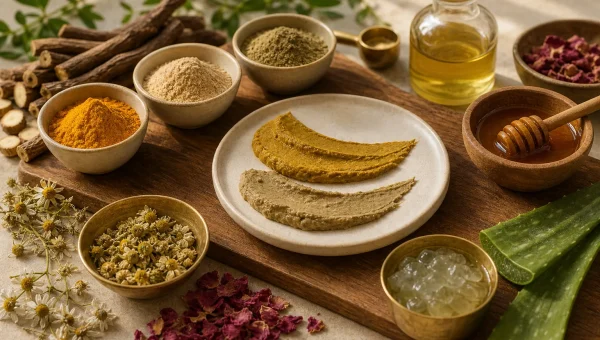
Yashtimadhu (Glycyrrhiza glabra, licorice root) is a central herb for burning, tender Mukha Paka. The Ayurvedic Pharmacopoeia of India describes Yashti/Yashtimadhu as Madhura in rasa, Guru and Snigdha in guna, Sita in virya, and Madhura in vipaka, with actions including Vatapittajit and Raktaprasadana, and therapeutic use in Vrana. These properties fit Pittaja and Pitta-Rakta mouth ulcers where heat, rawness, and tenderness dominate.
Simple local use during active ulcers:
- Mix a small pinch to 1/4 teaspoon Yashtimadhu powder with cooled boiled water, honey, or a little ghee to make a smooth paste.
- Apply gently with a clean cotton swab directly over the ulcer.
- Keep contact for 10-15 minutes without eating or drinking, then spit or rinse gently if needed.
- Repeat 2-3 times daily during active ulceration, stopping if irritation increases.
- For multiple ulcers, prepare a mild Yashtimadhu decoction, cool it fully, hold it in the mouth for 30-60 seconds, and spit it out.
For dry, burning ulcers, a very thin smear of plain ghee at night may be soothing if dairy is tolerated. Ashtanga Hridaya describes holding ghee or milk in the mouth for burning and ulcerative conditions, and honey gargling for mouth cleanliness, mouth ulcers, and burning. These are best used gently; forceful rubbing on an open ulcer should be avoided.
The Internal Pitta-Cooling and Mucosa-Support Protocol
Topical treatment helps the surface lesion, but frequent recurrence needs internal assessment. In Ayurvedic practice, the internal plan is chosen according to dosha dominance, digestion, bowel pattern, sleep, stress, diet, menstrual or hormonal timing, and nutritional status. The herbs below should be individualized by a qualified practitioner, especially when there are medicines, pregnancy, hypertension, kidney disease, liver disease, or autoimmune conditions.
- Shatavari: The Ayurvedic Pharmacopoeia of India describes Shatavari as Madhura-Tikta in rasa, Guru-Snigdha in guna, Sita in virya, Madhura in vipaka, and Pittahara and Rasayana in action. It suits depleted, dry, heat-aggravated patterns where nourishment and Pitta cooling are both needed.
- Guduchi: Guduchi is described as Tikta-Kashaya in rasa, Laghu in guna, Ushna in virya, Madhura in vipaka, and Rasayana, Tridoshashamaka, Raktashodhaka, and Balya in action. It is often selected when recurrence is accompanied by low resilience, inflammatory tendency, or a need for deeper systemic balancing.
- Amalaki: Amalaki is described as cooling, Rasayana, and Tridoshajit, and the pharmacopoeial monograph lists ascorbic acid and tannins among its constituents. It is useful in Pitta-prone patterns, but fresh sour preparations may sting during an active ulcer; use milder forms and practitioner guidance.
- Khadira: Khadira is especially suited to mucus-coated, slow-healing, Kapha-Pitta presentations. The pharmacopoeial monograph describes it as Tikta-Kashaya, Laghu-Ruksha, Sita in virya, Katu in vipaka, Kaphapittahara, Raktashodhaka, and Dantya, with catechin, catechu-tannic acid, and tannin listed as constituents.
The Gut-Mouth Ulcer Connection
Ayurveda treats the mouth as part of a larger digestive and systemic pattern. Ashtanga Hridaya’s discussion of mouth diseases includes dietary factors, oral hygiene factors, and improper therapeutic exposures among causative influences. In practical care, this means that recurrent mouth ulcers should not be treated only with a paste; meal timing, bowel regularity, acidity, oral hygiene, sleep, stress, and repeated dietary irritants all need review. The agni restoration protocol is a useful foundation when ulcers appear with acidity, irregular hunger, bloating, constipation, loose stools, or strong food-trigger patterns.
From a medical perspective, sudden, severe, frequent, or adult-onset recurrent aphthous ulcers deserve evaluation for nutritional deficiencies and systemic conditions such as celiac disease, inflammatory bowel disease, Behçet disease, and anemia. This is not separate from root-cause Ayurveda; it helps define the terrain that the Ayurvedic plan must work with.
Kavala and Gandusha for Mukha Paka
Kavala and Gandusha should be modified during active ulceration. Ashtanga Hridaya describes Gandusha as full-mouth holding and Kavala as moving a smaller quantity of liquid in the mouth. It also describes different types of Gandusha, including Shamana for pacifying, Shodhana for cleansing, and Ropana for healing. During active ulcers, gentle holding is preferable to vigorous swishing because raw mucosa is easily irritated.
- During active ulcers: Use a cooled Yashtimadhu or Khadira decoction as a gentle mouth hold for 30-60 seconds, then spit. Do not scrape, rub, or swish forcefully.
- For burning ulcers: Ghee or milk Gandusha may be considered when tolerated and appropriate to the person’s digestion and diet.
- For mucus-coated ulcers: Khadira or Triphala-based rinsing may be selected by a practitioner for astringent support.
- Between outbreaks: Sesame oil Kavala may be used as oral hygiene support. Start with 3-5 minutes rather than forcing a long session, spit the oil out, rinse, and brush gently.
Oil pulling should be understood as oral hygiene support, not a stand-alone cure for recurrent aphthous stomatitis. If ulcers worsen with oil, burning, nausea, jaw fatigue, or coating, stop and reassess the method.
Dietary Triggers and the Mukha Paka Diet
Dietary correction is most effective when it is specific. During an active ulcer, the oral lining is sensitive, so hot, spicy, salty, acidic, and rough foods can intensify pain and delay comfort. Rough toast, crisps, hard snacks, sharp-edged foods, very hot drinks, acidic fruit juices, and strongly sour preparations should be paused until the ulcer closes.
- Remove oral irritants: Use a soft-bristled toothbrush and avoid toothpaste containing sodium lauryl sulphate (SLS), especially during a recurrence-tracking trial.
- Reduce direct heat: Avoid very spicy, salty, sour, fried, fermented, and very hot foods during active Pittaja ulcers.
- Prevent trauma: Check for cheek biting, sharp teeth, braces, rough fillings, and hard snack foods that repeatedly injure the same area.
- Support recovery foods: Choose soft, non-irritating foods such as well-cooked rice, mung soup, soft vegetables, mild stews, and room-temperature drinks.
- Track recurrence: Keep a simple diary of ulcers, sleep, stress, menstrual timing, bowel changes, toothpaste, and foods from the previous 48 hours.
Between outbreaks, the preventive diet should be nourishing rather than excessively restrictive. If B12, folate, ferritin, iron, zinc, or vitamin D deficiency is suspected or confirmed, correction should be done through diet, supplementation, or medical treatment as appropriate. Vitamin B12 naturally occurs in animal-origin foods and is added to some fortified foods; vegetarians and vegans should discuss reliable B12 sources with a healthcare provider.
The B12 and Nutritional Assessment
For recurrent mouth ulcers, a sensible basic workup includes complete blood count, serum B12, folate, and ferritin/iron studies. A meta-analysis of recurrent aphthous ulceration found higher rates of hematinic deficiencies involving vitamin B12, folic acid, ferritin, and hemoglobin in affected groups. Correcting a deficiency is not a cosmetic add-on; it supports the mucosa’s ability to repair and may reduce recurrence in deficient individuals.
B12 absorption depends on digestive physiology, including intrinsic factor from the stomach and absorption in the small intestine. People with long-term acid-suppressing medicine use, metformin use, stomach or intestinal surgery, celiac disease, Crohn’s disease, strict vegetarian or vegan diets, or unexplained fatigue and neurological symptoms should seek medical guidance before relying on diet alone.
When to Seek Medical Care
Most simple mouth ulcers settle within one to two weeks, but ulcers lasting longer than three weeks, unusually large ulcers, ulcers near the back of the throat, bleeding ulcers, ulcers that become more painful and red, recurrent clusters, genital or skin ulcers, painful swollen joints, weight loss, bowel changes, fever, or marked fatigue require evaluation by a dentist, physician, or qualified healthcare provider. A long-lasting mouth ulcer should be checked to exclude serious disease, including oral cancer.
Medical Disclaimer: This article is educational and does not diagnose or treat a medical condition. Consult a qualified Ayurvedic practitioner, dentist, or physician before starting herbs, supplements, detoxes, or therapeutic protocols, especially if pregnant, breastfeeding, managing hypertension, heart disease, kidney disease, liver disease, autoimmune disease, recurrent infection, unexplained systemic symptoms, or taking medication. Yashtimadhu/licorice should not be used in high doses or long-term without professional guidance.
References
- Prevalence and risk factors of recurrent aphthous stomatitis among college students at Mangalore, India (2023), PubMed Central
- NCBI
- NHS
- Easyayurveda (easyayurveda.com)
- Easyayurveda (easyayurveda.com)
- Easyayurveda (easyayurveda.com)
- Ayurvedic Pharmacopoeia of India
- Ayurvedic Pharmacopoeia of India
- Ayurvedic Pharmacopoeia of India
- Jabfm (jabfm.org)
- Nature (nature.com)
- NIH Office of Dietary Supplements
- Effect of sodium lauryl sulfate on recurrent aphthous stomatitis: a randomized controlled clinical trial (2012), PubMed
- NCCIH
- Effect of oil pulling on Streptococcus mutans count in plaque and saliva using Dentocult SM Strip mutans test: a randomized, controlled, triple-blind study (2008), PubMed