
If you’re spotting for 2, 3, or even 5 days before your period actually starts, you know how disorienting it is. The spotting that isn’t quite bleeding, the uncertainty about when to say your period has actually begun, the low-grade cramping that lingers without resolution. For years, I heard variations of the same dismissal from conventional medicine: “spotting before your period is normal, lots of women have it.” But when I started connecting it to what I now understand as luteal phase insufficiency and a specific Pitta-Vata imbalance pattern in the Artava Vaha Srotas, I had something to work with. And when clients follow the protocol I’m going to share, most of them see significant reduction in pre-period spotting within two to three cycles.
In Ayurvedic gynecology, premenstrual spotting is classified under Rakta Pradara (excessive or inappropriate blood discharge from the uterine channels), specifically the Alpa Rakta Pradara (light, inappropriate uterine bleeding outside the normal period) type. The Charaka Samhita Chikitsa Sthana 30 describes this as arising primarily from Pitta and Rakta vitiation in the Artava Vaha Srotas (the channels governing menstrual blood), aggravated by Vata’s irregular and mobile quality disrupting the Apana Vata function that should maintain clean channel boundaries between the luteal phase and the menstrual flow.
The Luteal Phase Connection: Modern and Ayurvedic Perspectives
Modern reproductive endocrinology identifies premenstrual spotting as most commonly related to:
- Luteal phase deficiency (inadequate progesterone production after ovulation)
- Estrogen withdrawal spotting mid-luteal phase
- Suboptimal corpus luteum function
- Uterine causes (polyps, fibroids near the cavity, endometriosis)
- Thyroid dysfunction
The Ayurvedic Pitta-Vata vitiation model maps to these mechanisms reasonably well. Progesterone deficiency in Ayurvedic terms is a Rakta-Artava Dhatu insufficiency in the luteal phase, where adequate Kapha-nourishing quality has not been established in the post-ovulatory phase. Pitta excess directly stimulates early uterine contractions and Artava channel permeability that allows premature bleeding. Vata’s irregular movement disrupts the timing.
A 2017 review in Gynecological Endocrinology found that luteal phase deficiency is far more common than previously recognized, affecting an estimated 8-10% of menstrual cycles even in otherwise healthy women. This gives the Ayurvedic treatment target a clear modern correlate.
Ruling Out Structural Causes First
This is a step I take seriously with every patient: premenstrual spotting that is new-onset or has changed significantly requires gynecological evaluation before herbal treatment. An ultrasound (ideally a transvaginal scan during the luteal phase) and thyroid function tests should be done. Spotting can be the presenting symptom of:
- Uterine polyps (common, benign, treatable)
- Submucosal fibroids
- Endometriosis (where ectopic endometrial tissue bleeds from locations that empty before the main uterine cavity)
- Cervical ectropion or polyps
- Hypothyroidism (which directly impairs luteal phase function)
Once structural causes are ruled out, the herbal management approach described here is appropriate for functional premenstrual spotting.
The Primary Herbs: Stambhana and Rakta-Pitta Management
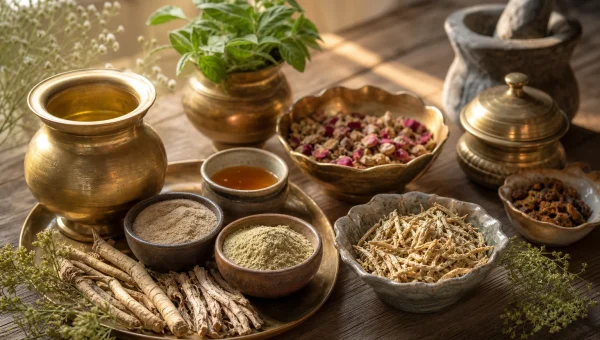
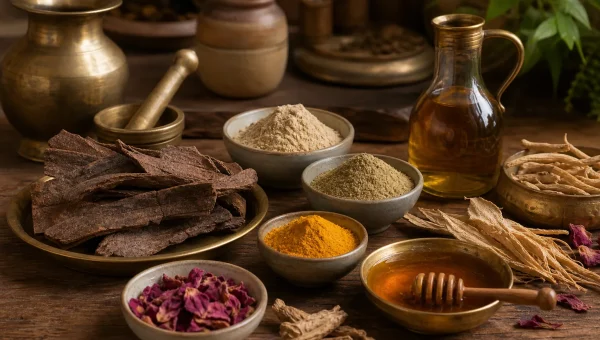
Ashoka (Saraca asoca): This is the foremost uterine tonic in Ayurvedic gynecology. The Sushruta Samhita Sutra Sthana 38 describes Ashoka as specifically indicated for all conditions of Artava Vaha Srotas vitiation with inappropriate bleeding. The bark contains tannins, flavonoids, and glycosides that have documented effects on uterine smooth muscle and endometrial function. A 2013 study in the Ancient Science of Life confirmed Ashoka bark extract’s significant uterine tonic and anti-proliferative effects relevant to irregular endometrial bleeding. Dose: 3-5g of Ashoka bark powder in warm milk or water twice daily, taken from ovulation (day 14) through the onset of proper menstrual flow. In the luteal phase focus.
Lodhra (Symplocos racemosa): Specifically mentioned in Charaka Samhita for Rakta Pradara and excessive uterine bleeding. Lodhra’s astringent quality (Kashaya rasa) reduces excess Pitta in the Artava channels and supports endometrial stability. A 2014 NCBI-indexed study documented Lodhra’s estrogenic-modulating effects through phytoestrogen compounds that help normalize the estrogen-progesterone balance in the luteal phase. Dose: 3g of Lodhra powder twice daily in warm water, from days 14-28 of the cycle.
Shatavari (Asparagus racemosus): The premier female reproductive tonic. Its steroidal saponins support corpus luteum function (the post-ovulatory structure responsible for progesterone production) and provide phytoestrogenic balancing effects throughout the cycle. A 2017 review in the Journal of Ethnopharmacology documented Shatavari’s multiple effects on reproductive endocrinology, including enhancement of luteal phase hormone production. Dose: 5g of Shatavari powder in warm milk twice daily, taken throughout the full cycle (not just the luteal phase).
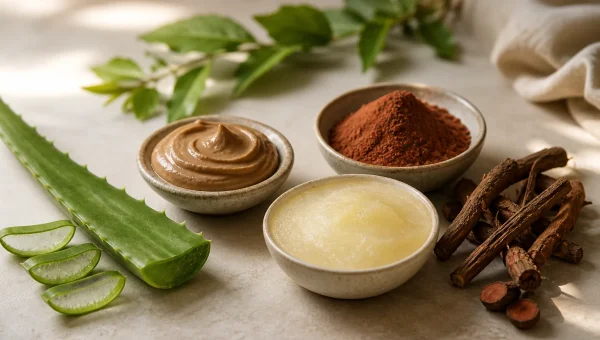
Manjistha (Rubia cordifolia): For the Rakta Pitta component, Manjistha addresses the blood vitiation that drives excess permeability in the Artava channels. Particularly indicated when the spotting is bright red or when there is a Pitta pattern (heat sensations, irritability, skin inflammation) in the premenstrual phase. Dose: 2g twice daily in warm water, away from meals. Use during days 1-14 of the cycle (follicular phase) to address the blood quality in preparation for ovulation.
The Cycle-Phase Protocol
| Cycle Phase | Approximate Days | Herbs | Purpose |
|---|---|---|---|
| Menstruation | Days 1-5 | Rest herbs; light moong soup; warm sesame oil massage on lower belly | Support natural flow; reduce cramps |
| Follicular (Post-menstrual) | Days 6-13 | Shatavari 5g twice daily; Manjistha 2g twice daily; Triphala at bedtime | Build blood quality; prepare for ovulation |
| Ovulation | Days 13-15 | Continue Shatavari; add Ashoka 3g once daily | Support corpus luteum formation |
| Luteal (Early) | Days 15-21 | Shatavari 5g twice; Ashoka 5g twice; Lodhra 3g twice | Strengthen corpus luteum; stabilize endometrium |
| Luteal (Late, pre-menstrual) | Days 22-28 | Continue above; reduce Pitta foods; castor oil pack on lower belly 3x/week | Prevent spotting; prepare for clean onset |
Additional Herbs for Specific Presentations
Nagkesar (Mesua ferrea): Specifically for bright-red spotting with heat sensation in the pelvic area. Nagkesar is a specific Pitta-Rakta herb for uterine conditions. Dose: 1-2g of powder twice daily during the luteal phase, in milk.
Kushtha (Saussurea lappa): For spotting associated with endometriosis or fibroids. Has direct effects on reducing aberrant uterine proliferation. Requires physician guidance for appropriate use.
Punarnava (Boerhavia diffusa): When spotting is accompanied by water retention and puffiness in the luteal phase, Punarnava addresses the Kapha-water component while also supporting Artava channel health. Dose: 3g twice daily in warm water.
The Castor Oil Pack: An Underused Home Treatment
This is one of the most practical interventions for premenstrual spotting that I recommend to clients. The castor oil pack (Eranda taila application with warm compress) applied to the lower abdomen in the late luteal phase (days 22-26) works through several mechanisms:
- Local increase in circulation to the uterus and ovaries
- Reduction of pelvic congestion and Srotovibandha (channel blockage)
- Pacification of Apana Vata through the warm, heavy quality of the castor oil
- Lymphatic drainage improvement in the pelvic region
Method: Soak a folded flannel cloth in cold-pressed castor oil. Place over the lower abdomen. Cover with plastic wrap to prevent staining. Place a hot water bottle over this for 30-45 minutes. Do this while lying down, 3 times per week in the late luteal phase only. Do not use during menstruation itself or during pregnancy.
Dietary Adjustments for the Luteal Phase
The luteal phase diet should be warming, grounding, and specifically Pitta-reducing during the week before expected spotting:
- Emphasize: sweet potato, pumpkin, cooked beets, dates, ghee, warm milk with Shatavari
- Reduce: spicy foods, alcohol, fermented vinegar, tomatoes (all increase Pitta-Rakta vitiation in the luteal phase)
- Avoid completely: caffeine in excess of one cup daily during days 22-28; excess salt which worsens luteal phase fluid retention
- Warm sesame oil application to the lower belly in the evenings during the 5 days before your expected period: this gentle external Snehana pacifies Apana Vata locally
The connection between premenstrual spotting and overall menstrual health is explored in our broader article on Rajonivritta Paricharya and post-menopausal self-care, which provides the classical framework for understanding the trajectory of Artava health across a woman’s lifecycle. For related hormonal concerns, see our article on hormone-disrupting foods that Ayurvedic texts warn women to avoid.
Research: Luteal phase deficiency and premenstrual spotting (PubMed), Ashoka and Shatavari in uterine disorders (NCBI PMC), Ayurvedic gynecology: Artava and Rakta Pradara (PubMed).
Disclaimer: Premenstrual spotting can have multiple causes, some of which require medical evaluation. This article is for educational purposes about traditional Ayurvedic approaches. If spotting is new, heavy, painful, or accompanied by other symptoms, consult your gynecologist before starting herbal treatment. Ashoka should not be used during pregnancy. Lodhra may have estrogenic effects and should be used with caution by women with estrogen-sensitive conditions. This is not medical advice. Herb-drug interactions are possible if you take hormonal contraceptives or blood thinners; consult your physician.
what investigation is recommended before starting this protocol? should a pelvic ultrasound be done to rule out polyps or fibroids first?
premenstrual spotting can indicate endometrial pathology, cervical issues, or hormonal dysfunction. a gynecological workup should precede any herbal protocol.
the cooling diet for Pitta-Rakta type does this change during winter months when cooling foods might aggravate Vata?
Pradara classification Rakta Pradara vs Shweta Pradara. does the article’s protocol apply to both or primarily Rakta type?
the article conflates different causes of Pradara under one treatment approach. cervical vs uterine vs hormonal causes need different interventions. नमस्ते
is Ashoka Ghrita safe if someone is also on oral contraceptives? the hormonal interaction concerns me.
the OCP interaction question is one I’d really like to see addressed too. I asked my gynaecologist and she wasn’t familiar with Ashoka Ghrita at all, so there was no useful answer there. has anyone had a conversation with an Ayurvedic practitioner specifically about combining it with hormonal contraception?
the article addresses spotting before periods. does the same protocol apply for mid-cycle spotting (ovulation spotting) or is the dosha analysis different?
Doing this.
Noted. 🌿
Makes sense. 🙌
ashoka Ghrita plus dietary changes from this article reduced my premenstrual spotting from 4 days to 1 day within 2 cycles. the Rakta-Pitta explanation matched my constitutional pattern.
pradara classification Rakta Pradara vs Shweta Pradara. dpes the article’s protocol apply to both or primarily Rakta type?
The article made me wonder if my occasional mid cycle spotting could be linked to luteal phase insufficiency as described.
Noted.
Same here. नमस्ते
Has anyone tried the Ashoka bark powder routine starting at ovulation and noticed a change in pre period spotting?
spotting before periods gets ignored so much. good that Rakta Pradara is separated from just normal PMS
is Ashoka Ghrita safe if someone is also on oral contrsceptives? the hormonal interaction concerns me.
@John premenstrual spotting can indicate endometrial pathology, cervical issues, or hormonal dysfunction. a gynecological workup should precede any herbal protocol.
is Ashoka Ghrita safe if someone is also om oral contraceptives? the hormonal interaction concerns me.
pradara classification Rakta Pradara vs Shweta Pradara. does the article’s protocol aoply to both or primarily Rakta type?
I appreciate the clear cycle phase protocol, especially the castor oil pack suggestion for days 22 26.
what struck me in this article was the validation of the spotting experience itself — the part about years of being told it’s ‘normal’ really resonated. the Rakta Pradara classification at least gives language to something that felt undefinable before.
The explanation of Rakta Pradara and its classification in the Charaka Samhita helped clarify why light spotting isn’t just normal.
@Prakash premenstrual spotting can indicate endometrial pathology, cervical issues, or hormonal dysfunction. a gynecological workup should precede any herbal protocol.
It seems Lodhra’s astringent quality could be useful for balancing Pitta in the luteal phase, but I’d want to check with a practitioner first.
Shatavari taken throughout the cycle sounds like a gentle way to support corpus luteum function without over stimulating anything.
I’m curious about the Nagkesar dose for bright red spotting; has anyone used it during the luteal phase only?
The advice to rule out structural causes like polyps or fibroids before herbs feels like a responsible first step.
Using warm sesame oil on the lower belly in the evenings before my period seems like a soothing habit to try.
The article’s note about avoiding excess caffeine and salt in the late luteal phase matches what I’ve read about Pitta aggravating foods.