
Joint Hypermobility Ayurvedic Treatment: The Chala Vata and Sandhi-Sthairya Framework
Joint hypermobility Ayurvedic treatment is best framed as support for stability, strength, pain regulation, digestion, and recovery rather than as a simple flexibility problem. In modern clinical language, hypermobile Ehlers-Danlos syndrome (hEDS) and hypermobility spectrum disorders (HSD) involve symptomatic joint hypermobility with features such as joint instability, recurrent sprains, subluxations or dislocations, chronic musculoskeletal pain, fatigue, and sometimes digestive or autonomic symptoms. Ayurveda does not require a one-to-one classical disease label for this presentation; it assesses the pattern through qualities, tissues, strength, digestion, and function.
The Ayurvedic lens most useful here is excess expression of Vata’s mobile quality, chala, acting in tissues that require steadiness: sandhi (joints), asthi (bone), snayu (binding fibrous structures such as ligaments and tendons), and mamsa (muscle). The goal is therefore not to increase range of motion. The goal is sandhi-sthairya—joint steadiness—along with mamsa-bala—muscle strength—healthy agni, regular rest, and carefully chosen Vata-pacifying support that does not encourage further end-range laxity.
Why Standard Vata-Pacifying Protocols Need Modification
General Vata care emphasizes warmth, oil, regular routine, adequate nourishment, and calm pacing. Those principles remain useful in hypermobility, but they must be paired with stabilization. A hypermobile person may feel temporarily better after warmth or massage, yet the vulnerable joint still needs strength, proprioception, alignment, and avoidance of repeated end-range loading. Oil, heat, and relaxation should support the muscles around the joint; they should not be used to push the joint deeper into its most mobile range.
This is the practical modification: internal care may be brimhana and balya, while movement and bodywork should be stability-oriented. Avoid aggressive passive stretching, forceful spinal or neck manipulation, deep traction, and massage directly through a suspected subluxation or acute injury. Favor warm but controlled care: gentle oiling of surrounding muscles, prescribed braces or compression when appropriate, slow strengthening, and rest before exhaustion. In Ayurvedic terms, the plan should reduce unsteady Vata while rebuilding the stable qualities that joints, muscles, and connective tissues need.
Internal Stabilizing Herb Framework
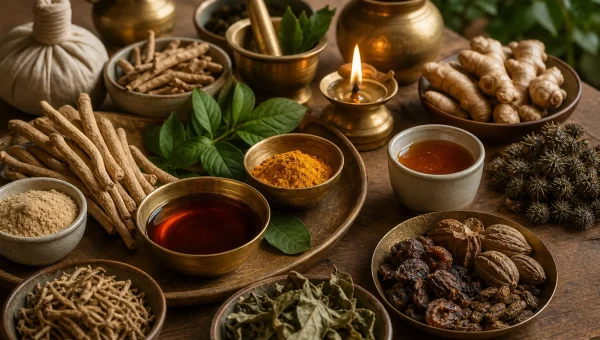
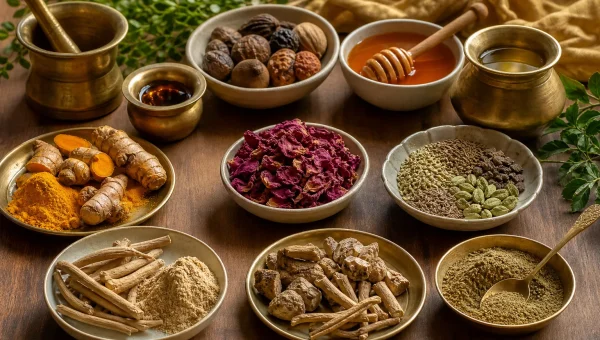
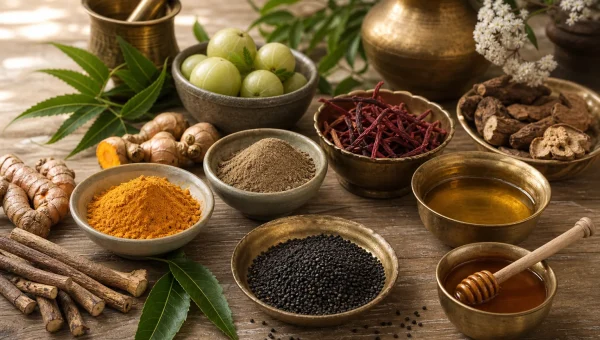
Internal herbal support should be individualized by a qualified Ayurvedic practitioner after assessing constitution, digestive capacity, bowel pattern, sleep, pain quality, liver history, pregnancy status, medications, and coexisting medical conditions. The herbs below are relevant because classical and Ayurvedic Pharmacopoeia sources describe them with actions such as balya, rasayana, vataghna, snehana, or asthisandhanakara. They should not be read as disease-specific cures for hEDS or HSD.
| Herb or Food-Herb | Practitioner-Guided Use | Classical/API Relevance | Key Precautions |
|---|---|---|---|
| Ashwagandha (Withania somnifera root) | Classical powder dose in the API is 3-6 g per day; extracts should be dosed by a practitioner according to product strength. | Balya, rasayana, Vata-kapha-hara; traditionally used in weakness, wasting, and Vata disorders. | Avoid in pregnancy or breastfeeding unless medically supervised. Use caution with thyroid disease, autoimmune disease, liver disease, sedatives, anticonvulsants, blood pressure medicines, diabetes medicines, and before surgery. |
| Asthisamharaka (Cissus quadrangularis stem) | API dose: fresh juice 10-20 ml or powder 3-6 g per day when suitable. | Asthisandhanakara; listed for bone fracture and joint displacement contexts, making it a logical classical support where bone-joint integrity is the therapeutic focus. | Use with practitioner supervision, especially during pregnancy, while taking medication, or when there is a history of kidney stones or complex medical illness. |
| Shallaki / Kunduru (Boswellia serrata exudate) | API dose for the exudate is 1-3 g per day; standardized extracts vary and should be chosen carefully. | Balya and Vatahara; used in joint-pain formulas when pain, stiffness, or inflammatory features accompany instability. | Discuss with a healthcare provider during pregnancy, breastfeeding, before surgery, or when taking multiple medicines or blood-thinning medicines. |
| Guduchi (Tinospora cordifolia stem) | API dose: powder 3-6 g per day or decoction prepared from 20-30 g of the crude drug. | Balya, dipana, rasayana, sangrahi, and tridosha-shamaka; useful when tissue support must be combined with digestive and systemic regulation. | Avoid unsupervised use with liver disease, prior herb-related liver injury, autoimmune disease, immunosuppressive therapy, pregnancy, or complex medication regimens. |
| Tila (Sesamum indicum seed and sesame oil) | API dose for sesame seed powder is 5-10 g per day; culinary sesame, tahini, and sesame oil may be used when digestion and allergy status allow. | Snigdha, ushna, balya, rasayana, snehana, and vataghna; a core nourishing Vata support for dryness and depletion. | Avoid with sesame allergy. Adjust in high-heat states, reflux, acne flares, or when heavy oils worsen digestion. |
| Amalaki (Emblica officinalis / Phyllanthus emblica fruit) | API dose: fresh fruit pulp 10-20 g per day or juice 5-10 ml per day when suitable. | Rasayana and tridoshajit; naturally contains ascorbic acid, and vitamin C is required for normal collagen formation. | Use carefully with reflux, sensitive teeth, sour preparations, diabetes medications, or sweetened commercial products. |
A practical protocol usually does not combine all of these at once. A measured plan may select one nourishing rasayana, one joint-pain support when needed, and one food-based daily support, then review tolerance after several weeks. In hypermobile patients with irritable bowel patterns, reflux, postural symptoms, medication sensitivity, or fatigue flares, the gentlest effective plan is usually better than a large stack of herbs.
Basti and Panchakarma for Connective Tissue Support
Basti is a central Vata therapy in classical Ayurveda and includes unctuous and decoction-based forms. In a hypermobility presentation, basti should be approached as physician-managed Vata regulation and nourishment, not as a home enema or generic detox. The selection of anuvasana, niruha, timing, dose, medicine, and sequence depends on strength, dryness, bowel pattern, ama, menstrual or pregnancy status, autonomic symptoms, and medical history.
For depleted, dry, painful Vata presentations, a practitioner may consider gentle unctuous and nourishing approaches; for clear ama or heaviness, the sequence may be different. Strong cleansing is not automatic simply because Vata is involved. Basti and other panchakarma procedures should be performed only by trained practitioners in a clinical setting, with medical coordination when hEDS, HSD, POTS, gastrointestinal dysmotility, mast-cell symptoms, anticoagulant use, pregnancy, or significant chronic illness is present. The broader panchakarma framework is introduced in the panchakarma complete guide.
External Applications: Warmth, Support, and Careful Oil Use
External oil therapy can be helpful when it calms pain, reduces guarding, and supports the muscles around vulnerable joints. Sesame oil is a logical base in Vata-dominant presentations because Ayurvedic Pharmacopoeia sources describe sesame as unctuous, warming, strengthening, nourishing, and Vata-pacifying. Apply warm oil to surrounding muscles rather than forcing the joint itself, using slow firm-to-comfortable strokes on limbs and gentle circular work around non-inflamed joints.
During acute swelling, heat, suspected dislocation, new neurological symptoms, skin infection, rash, or unexplained severe pain, skip oiling and seek appropriate medical care. After mild oiling, a warm cloth, clinician-prescribed compression, or a brace may support body awareness and joint position. Avoid forceful adjustments, especially at the neck and spine, and avoid any bodywork that increases the desire to stretch into the joint’s end range.
Movement Practice: Stability Over Flexibility
The movement emphasis for hypermobility is stability over flexibility. Many hypermobile people are naturally drawn to yoga, dance, or gymnastics because their range is praised, but repeated loading at end range can aggravate pain and instability. The safer direction is mid-range control: isometric holds, slow eccentric strengthening, closed-chain exercises, balance work, proprioceptive drills, trunk control, hip and scapular strengthening, and aquatic exercise when water support is helpful.
Classical Ayurveda advises vyayama according to capacity, traditionally stopping at about half strength rather than pushing to exhaustion. For hypermobility, this principle is clinically sensible: fatigue reduces joint control, and poor control increases the risk of flare, sprain, or subluxation. Practice should feel steady, pain-free, and repeatable the next day. Avoid ballistic stretching, aggressive hands-on assists, repeated deep backbends or splits, high-impact exercise, and contact sports until strength, alignment, and joint control are adequate under professional guidance.
Dietary and Agni Support for Dhatu Quality
Ayurvedic care for joint stability depends on healthy agni because poorly digested food cannot properly nourish the tissues. Favor regular meals, warm cooked foods, adequate protein, mineral-rich foods, healthy fats suited to digestion, and enough hydration and electrolytes when medically appropriate. Sesame, mung dal, well-cooked grains, ghee when tolerated, milk preparations when appropriate, soups, stews, and easy-to-digest protein foods can be used to support mamsa, asthi, and general tissue strength.
Collagen-rich foods such as bone broth may be used by those who tolerate and choose them; vegetarian plans should emphasize adequate protein, legumes prepared for digestibility, dairy if suitable, nuts and seeds, and vitamin-C-rich foods. Amalaki is especially useful in an Ayurvedic diet because it is a classical rasayana and a natural source of ascorbic acid; vitamin C is required for normal collagen biosynthesis. When reflux, IBS-type symptoms, gastroparesis, mast-cell reactivity, or postural symptoms are present, dietary building must be gradual and individualized. The relationship between digestion and tissue quality is covered in the agni digestive fire foundation.
Medical Disclaimer: This content is for educational purposes only and does not diagnose or treat a medical condition. hEDS and HSD are complex connective tissue disorders that may require coordinated care with physiotherapy, pain medicine, primary care, cardiology, gastroenterology, genetics, or other specialists. Consult a qualified Ayurvedic practitioner and a licensed healthcare provider before starting herbs, supplements, basti, panchakarma, detoxes, braces, or exercise protocols, especially if pregnant or breastfeeding, managing liver, thyroid, autoimmune, cardiovascular, neurological, gastrointestinal, or connective tissue conditions, or taking prescription medication.
Use Ayurvedic products only from reputable sources and inform all members of your healthcare team about herbs, supplements, oils, and procedures you use.
References
- Ehlers-danlos (ehlers-danlos.com)
- Ehlers-danlos (ehlers-danlos.com)
- NCBI
- Ehlers-danlos (ehlers-danlos.com)
- Charaka Samhita — Guna
- Charaka Samhita — Dosha
- Charaka Samhita — Asthi dhatu
- Ijcrt (ijcrt.org)
- Ayurvedic Pharmacopoeia of India
- Ayurvedic Pharmacopoeia of India
- Ayurvedic Pharmacopoeia of India
- NCCIH
- NCCIH
- NCBI
- Charaka Samhita — Basti
- Charaka Samhita — Panchakarma
- Charaka Samhita — Vyayama
- Ehlers-danlos (ehlers-danlos.com)
- Ehlers-danlos (ehlers-danlos.org)
- NIH Office of Dietary Supplements
- My (my.clevelandclinic.org)
- NCCIH
The Bala-Ashwagandha protocol for connective tissue has reduced my subluxation frequency. 🌿
Non-specific Vata treatment protocols may lead hypermobile patients to take on activities that further destabilise their joints.
The mast cell activation and dysautonomia components of hEDS are completely unaddressed here.
Is Vata Sara the same as hEDS specifically or does it include all hypermobility spectrum disorders?
Does Ayurveda address the mast cell activation component that often accompanies hEDS?
hEDS has no approved disease-modifying treatment and the guide should be explicit that management not cure is the goal.
hEDS diagnosed two years ago and the Vata Sara constitutional framework really maps well onto the hypermobility presentation.
My physiotherapist and I are now integrating the proprioception training with the Ayurvedic grounding practices.